
利率决策

Search documents
The Best Financial ETF to Buy Before the Next Rate Decision
The Motley Fool· 2026-04-01 06:00
Core Viewpoint - Regional banks have faced significant challenges recently, with the State Street SPDR S&P Regional Banking ETF experiencing a decline from $74 to around $63 due to geopolitical risks and yield volatility [1] Group 1: Market Performance - Regional bank stocks were up approximately 13% year-to-date at one point in February, driven by expectations of lower interest rates, improving profit margins, and a shift away from growth and tech stocks [2] - The ETF currently trades at a forward price/earnings (P/E) ratio of 10.5, compared to 20.7 for the S&P 500 ETF, and a price/book (P/B) ratio of 1.1 versus 4.8 for the S&P 500 ETF, indicating a strong value proposition [13] Group 2: Economic Indicators - The onset of the war in Iran has increased inflation risks, diminishing the likelihood of a rate cut in 2026, while key economic indicators suggest a slowing U.S. economy [3] - Regional banks are particularly sensitive to economic conditions, focusing on local business lending, which makes them vulnerable to economic and borrower-specific risks [9] Group 3: Risks and Opportunities - The potential for inflation and interest rate shocks poses a significant risk to regional banks, as evidenced by the past collapses of Silicon Valley Bank and Signature Bank due to overextension in long-term bonds [10] - However, a resolution to the Iran conflict could lead to a bullish market reaction, potentially prompting the Federal Reserve to reconsider rate cuts later this year, which would benefit regional banks by widening the spread between short-term and long-term rates [11][15] Group 4: Investment Considerations - Current valuations make the investment case for the State Street SPDR S&P Regional Banking ETF compelling, despite existing risks [12] - Investors are encouraged to consider buying regional banks before the Federal Reserve's next meeting at the end of April, as a de-escalation of geopolitical tensions could lead to favorable market conditions [14][15]


Federal Reserve holds interest rates steady
Fox Business· 2026-03-18 18:16
Core Viewpoint - The Federal Reserve has decided to keep interest rates unchanged amid a softening labor market and uncertainties related to the situation in Iran [2][5]. Group 1: Interest Rate Decision - The Federal Reserve's benchmark federal funds rate remains in the range of 3.5% to 3.75% following a pause in rate cuts after three consecutive 25-basis-point reductions in the latter part of the previous year [2][4]. - The Federal Open Market Committee (FOMC) voted 11-1 to maintain the current rates, with one dissenting vote advocating for a 25 basis point cut [4]. Group 2: Economic Indicators - Economic data indicates a slowdown in the labor market, with inflation continuing to exceed the Fed's 2% target, prompting the decision to pause further rate cuts [2][4]. - The FOMC noted that economic indicators suggest solid economic expansion, albeit with low job gains and somewhat elevated inflation levels [4]. Group 3: Uncertainty Factors - The FOMC highlighted that uncertainty regarding the economic outlook remains high, particularly concerning the implications of developments in the Middle East for the U.S. economy [5].

The Federal Reserve Meets March 18 and Wall Street Has Completely Given Up on Rate Cuts
Yahoo Finance· 2026-03-18 10:35
Core Viewpoint - The Federal Reserve's decision on the Federal funds rate is crucial for market dynamics, with expectations leaning towards maintaining the current rate amid inflationary pressures from geopolitical events [1][2]. Interest Rate Outlook - Investors anticipate the Fed will keep the Fed funds rate steady at 3.5%-3.75% during its upcoming meeting, with a 98.9% probability of no change according to CME FedWatch [2][3]. - There is a projected 30% chance that rates will remain unchanged by the end of the year, while a 41% probability suggests rates could drop to between 3.25%-3.5% [6]. Economic Influences - The ongoing conflict in Iran has led to rising oil prices, which may increase inflation and complicate the Fed's ability to cut rates while aiming for a 2% inflation target [2][5]. - Higher fertilizer prices due to the region's significance in exports could also contribute to increased food prices, further impacting inflation [5]. Future Scenarios - The most likely scenario is that rates will hold steady through the end of the year, with market movements driven by economic strength, corporate earnings, and investor confidence [7]. - An unlikely scenario involves an emergency rate cut due to a recession, reminiscent of actions taken during the COVID-19 pandemic and the financial crisis, which could negatively affect stock markets despite lower rates being generally favorable for stocks [8].
How Iran Strikes Affect The Fed's Rate Decision
Youtube· 2026-03-17 16:17
Economic Outlook - The Federal Reserve is cautious about the economic outlook, particularly due to the ongoing war in Iran, which is expected to impact inflation and unemployment [1][2] - Inflation has remained persistently high, and the Fed's basis for addressing it is not entirely clear [1][2] Interest Rates - The Fed is not expected to cut interest rates in the upcoming meeting, but it will provide insights on how it is responding to the current economic shocks [2][10] - Current interest rates are set between 3.5% and 3.75%, which is relatively low historically and not constraining businesses significantly [3][4] Inflation and Energy Prices - Concerns regarding the war in Iran have increased inflation expectations for the next few years, contributing to a rise in the ten-year Treasury yield, which influences credit card and mortgage rates [5] - The Fed typically excludes energy prices from its core inflation measures, focusing on core PCE, which has shown higher increases than the headline PCE [7][8] Economic Forecast - The Fed is expected to release its economic forecast, with potential interest rate cuts ranging from 1 to 3 later this year, contingent on the economic outlook [10] - Incoming potential chair Kevin Warsh may advocate for quicker interest rate cuts, contrasting with current chair Jerome Powell's approach [11][12] Nomination and Confirmation - Kevin Warsh's confirmation as the next chair of the Federal Reserve is uncertain due to political hurdles, particularly a Republican senator's stance on not voting for Fed nominees until a criminal investigation is resolved [12][13]
Brutal week of major announcements and rising energy costs
Yahoo Finance· 2026-03-16 19:09
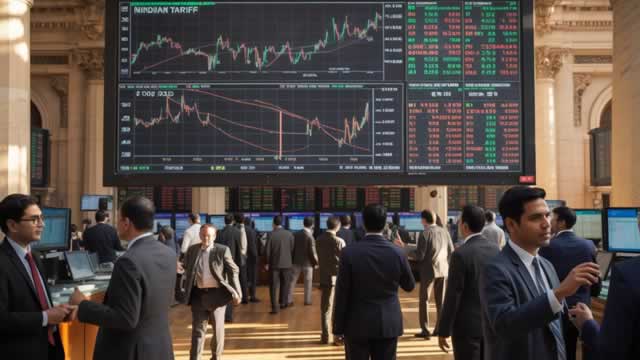
Central Banks and Interest Rates - The global financial system is preparing for significant interest rate decisions from seven major central banks, including the U.S. Federal Reserve, amidst rising oil prices and geopolitical tensions [2][3] - The week of March 16 will see rate decisions from the Reserve Bank of Australia, the U.S. Federal Reserve, the Bank of Canada, and Sweden's Sveriges Riksbank, followed by the European Central Bank, the Bank of Japan, the Bank of England, and the Swiss National Bank on March 19 [3][4] - Most experts anticipate a "wait and see" approach from these central banks regarding the situation in Iran, although recent military actions by U.S. forces have heightened market concerns [4] Oil Prices and Inflation - Crude oil prices have surpassed $100 per barrel, reigniting concerns about inflation and its potential impact on monetary policy [1] - Any disruption in the Strait of Hormuz, a critical passage for global energy, could significantly influence market dynamics [4] Cryptocurrency Market - The digital asset market experienced a notable increase, adding approximately $70 billion to its total market capitalization, which now stands at $2.54 trillion [6] - Bitcoin reached a peak of $74,000 before facing resistance, while Ether surpassed $2,200 for the first time in months [6] - Traders are cautious about potential volatility in the crypto market as they await insights from Federal Reserve Chair Jerome Powell regarding the war's impact on global inflation [7]
美联储重磅发声,AI投资2026年将超7000亿美元,两股力量博弈决定利率走向
Sou Hu Cai Jing· 2026-02-17 22:29
Group 1 - The core viewpoint is that large-scale investment in artificial intelligence (AI) can drive total demand growth, but this demand expansion may also exacerbate inflationary pressures [1] - The Federal Reserve must conduct in-depth research on the impact of AI to make correct interest rate decisions, with approximately 75 basis points of room remaining to reach neutral interest rate levels [1] - Most sectors of the U.S. economy are facing employment pressures, excluding healthcare and education [1] Group 2 - Federal Reserve Governor Barr noted that current investments in AI are not influenced by short-term credit costs set by the Fed, indicating a persistent investment trend regardless of interest rate cycles [2] - Global tech companies are expected to invest over $700 billion in AI infrastructure by 2026, with significant funds directed towards core hardware such as accelerators and central processing units [2] - The substantial capital expenditure in AI is a key source of demand-side inflation pressure, which is a concern for policymakers [2]
美联储戴利:美联储需深入研究人工智能影响,才能做出正确利率决策
Sou Hu Cai Jing· 2026-02-17 19:57
Core Viewpoint - The Federal Reserve must analyze data to determine if artificial intelligence is driving productivity growth, enabling faster economic growth without triggering inflation or requiring policy tightening [1] Group 1 - Daly noted that most macro productivity research to date has found limited evidence of significant impacts from artificial intelligence [1] - Improvements from localized investments in various industries may take time to manifest [1] - There may be a need to reach a critical threshold before comprehensive economic transformation becomes evident [1]
Juno markets 官网:通胀与就业数据如何影响利率决策
Sou Hu Cai Jing· 2026-02-11 03:30
Group 1 - The speeches from two Federal Reserve officials provide important insights into the future direction of monetary policy [1][2] - Dallas Fed President Logan expressed cautious optimism about the current policy rate's ability to bring inflation back to target while maintaining labor market stability, highlighting concerns over persistent high inflation rather than labor market risks [1] - Cleveland Fed President Harmack stated that current monetary policy is in a good position and predicted that the Fed may maintain the status quo for a considerable time, with inflation expected to remain around 3% this year [2] Group 2 - The timing of the officials' speeches is significant as the U.S. Labor Department is set to release the January non-farm payroll report, which was delayed due to a government shutdown [2] - The current data environment for the Fed is complex, with stable employment market signs but persistent inflation challenges, leading to a cautious approach of maintaining interest rates to observe economic data developments [2] - As of the day of the speeches, the futures market indicated an over 80% probability that interest rates would remain unchanged in March, reflecting investors' understanding of the "data-dependent" policy framework [2]

TMGM外汇:欧盟通胀继续降温 欧洲央行预计维持利率不变
Sou Hu Cai Jing· 2026-02-05 05:38
Group 1: Eurozone Inflation Data - The Eurozone's Consumer Price Index (CPI) for January showed a year-on-year rate of 1.7%, down from 1.9% in December and below the market expectation of 1.8% [1] - Core CPI decreased from 2.3% to 2.2%, while services CPI slowed to 3.2%, indicating a continued easing of price pressures across various sectors [1] - There are significant disparities in inflation rates among member countries, with Germany's inflation at 2.1%, slightly above expectations, and France's inflation unexpectedly dropping to 0.4%, marking a nearly five-year low [1] Group 2: European Central Bank (ECB) Meeting Expectations - The market widely anticipates that the ECB will maintain the key interest rate at 2% for the fifth consecutive time during its upcoming meeting, reaffirming the assessment that monetary policy is "in a good place" [3] - The release of inflation data serves as an important reference for the ECB's decision-making ahead of the interest rate meeting [1][3] Group 3: U.S. Economic Context - U.S. Treasury Secretary Becerra's comments on the President's influence over the Federal Reserve's decision-making have raised concerns about the independence of U.S. monetary policy [3] - The U.S. dollar index experienced a slight increase, trading around 97.60, supported by short covering and better-than-expected performance in the January ISM non-manufacturing Purchasing Managers' Index [3] - The market is closely monitoring support levels below 97.00 and resistance around 98.00 for the dollar index [3] Group 4: Currency Market Dynamics - The euro/dollar exchange rate showed slight declines, trading around 1.1800, influenced by the dollar's rebound and the drop in Eurozone core inflation to a near five-year low [3][4] - The British pound/dollar also experienced a slight decline, trading around 1.3650, with pressure from a strong dollar and weak UK economic data, although expectations of the Bank of England maintaining its current stance provided some support [4][5]

邦达亚洲:沃什获美联储主席提名 黄金大幅下挫
Xin Lang Cai Jing· 2026-02-02 09:19
Group 1: US Economic Data - The US December PPI year-on-year increased by 3%, exceeding the expected 2.8% and matching the previous value of 3% [1] - The core PPI for December rose by 3.3% year-on-year, above the expected 2.9% and the previous value of 3% [1] - Month-on-month, the PPI increased by 0.5%, higher than the expected 0.2% and the previous value of 0.2% [1] - The core PPI month-on-month rose by 0.7%, significantly above the expected 0.2% and the previous value of 0% [1] - Service costs saw a notable increase, with trade profit margins rising to the highest level since mid-2024, driven mainly by wholesale machinery equipment profit margins [1] - Overall commodity prices remained stable due to a decline in energy prices, but core commodity prices continued to accelerate [1] Group 2: Canadian Economic Data - In November 2025, Canada's GDP stagnated at zero, following a 0.3% decline in October [2] - The growth in the service sector offset the decline in goods production, including manufacturing [2] - Overall manufacturing decreased by 1.3%, with durable goods production experiencing the largest drop of 1.9%, affecting sectors like transportation equipment, machinery, and automotive parts [2][7] - The durable goods sector fell to its lowest level since mid-2011, excluding the impact of COVID-19 in early 2020 [7] Group 3: Currency Market Movements - The gold price dropped significantly, reaching an 8-day low, trading around 4550, influenced by profit-taking and the hawkish nomination of Kevin Warsh as Fed Chair [9] - The USD/JPY pair rebounded significantly, reaching a 3-day high at 154.90, supported by short covering and a strong dollar index recovering above 97.00 [10] - The USD/CAD pair also saw a substantial rebound, recovering the 1.3600 level and trading around 1.3660, supported by short covering and a strong dollar index [11]