
咖啡因

Search documents
霸王茶姬“涉毒” ?造谣者已被警方采取刑事强制措施
Guo Ji Jin Rong Bao· 2026-03-01 04:40
Core Viewpoint - A rumor regarding a well-known tea beverage brand, "霸王茶姬," being associated with drugs has been debunked by authorities, leading to legal actions against the individual who spread the false information [2][4]. Group 1: Incident Overview - The incident traces back to December 26, 2025, when a netizen claimed on a social media platform that "霸王茶姬" and other high-caffeine beverages were akin to drugs, which led to widespread panic among consumers and negatively impacted the brand's reputation and stock price [4]. - The Shanghai Anti-Drug Office quickly refuted the claims, stating that caffeine in beverages comes from natural sources and adheres to safety standards, dismissing the notion of caffeine being a "quasi-drug" [4]. Group 2: Company Response - "霸王茶姬" responded promptly, clarifying that the caffeine content in their tea is comparable to that of a latte and significantly lower than that of an Americano, and announced that their legal department is taking action to protect the brand [4]. - The company launched a "CHAGEE Health Calculator" program for consumers to check the caffeine content and other nutritional information of their products, and introduced a "Light Caffeine Zone" in their ordering app featuring lower-caffeine options [5]. Group 3: Consumer Reactions and Expert Opinions - Some consumers reported experiencing insomnia after consuming drinks like "伯牙绝弦" and "万里木兰," which contributed to the rumor's spread [5]. - Experts in food nutrition indicated that caffeine is a natural component of tea and its effects vary based on individual sensitivity, advising against consumption in the afternoon and evening for those sensitive to caffeine [5].


JAMA:华人学者研究发现,每天2-3杯咖啡或1-2杯茶,痴呆风险更低、大脑认知功能更好
生物世界· 2026-02-13 03:20
Core Viewpoint - The study published by Harvard University indicates that the consumption of caffeinated coffee and tea is associated with a reduced risk of dementia and slightly better cognitive function, while decaffeinated coffee shows no significant association with dementia risk [2][4][10]. Group 1: Study Overview - The research involved a prospective cohort study with 131,821 participants from two cohorts: the Nurses' Health Study (NHS) and the Health Professionals Follow-up Study (HPFS), with a follow-up period of up to 43 years [4][5]. - Participants were free of cancer, Parkinson's disease, or dementia at baseline, and dietary intake was assessed every 2-4 years using validated food frequency questionnaires [4][5]. Group 2: Key Findings - During the follow-up, 11,033 new cases of dementia were recorded among participants [5]. - The analysis showed that the highest quartile of caffeinated coffee consumption had a significantly lower dementia risk compared to the lowest quartile (141 cases vs 330 cases per 100,000 person-years; risk ratio 0.82) [6]. - Subjective cognitive decline was lower in the highest caffeinated coffee consumption group (7.8% vs 9.5%; prevalence ratio 0.85) [6]. Group 3: Consumption Patterns - No significant association was found between decaffeinated coffee and dementia risk or cognitive function [7]. - A non-linear inverse relationship was observed between the intake of caffeinated coffee and tea and cognitive outcomes, with the most significant protective effects noted at moderate consumption levels (2-3 cups of caffeinated coffee and 1-2 cups of tea daily) [7][10]. Group 4: Implications - The results suggest that higher consumption of caffeinated coffee and tea is linked to a lower risk of dementia and better cognitive function, highlighting caffeine as a potential key active ingredient, while polyphenols in tea may also play a synergistic role [10].

禁毒部门回应“奶茶等于准毒品”说法不实——辟谣
Xin Lang Cai Jing· 2026-01-08 04:34
Group 1 - The Shanghai Narcotics Control Committee clarified that claims linking certain milk tea brands to drugs are incorrect, emphasizing that caffeine in beverages comes from natural sources or compliant additives, regulated by national standards [2] - Caffeine is a natural alkaloid found in tea leaves, produced by the tea plant to deter pests, and consumers can ingest caffeine from various sources including coffee, tea, energy drinks, and chocolate [2] - The recommended safe caffeine intake is 400 milligrams per day for healthy adults and approximately 175 milligrams for individuals under 18, with tea and tea beverages being the primary sources of dietary caffeine in China [2] Group 2 - The article warns against associating naturally occurring caffeine in tea with strictly regulated psychoactive substances, urging the public to remain vigilant against drug-related misinformation [3]

禁毒部门回应“奶茶等于准毒品”:不实
Xin Lang Cai Jing· 2026-01-02 02:00
Core Viewpoint - The Shanghai Narcotics Control Committee clarified that claims linking a certain milk tea brand to drug-like effects due to caffeine are incorrect, emphasizing that caffeine is naturally occurring and regulated for safety [1] Group 1: Caffeine and Its Sources - Caffeine is a natural alkaloid found in tea leaves, with a higher concentration (2%-5%) in dried tea compared to coffee beans (1%-2%) [2] - Various teas have different caffeine content, with black tea averaging 40-50 mg per 200-250 ml, while green tea averages 20-30 mg [3] - Common foods like chocolate and carbonated drinks also contain caffeine, with dark chocolate (≥70% cocoa) having 80-120 mg per 100 grams, and a 330 ml can of cola containing 30-40 mg [4] Group 2: Caffeine Consumption Guidelines - The recommended safe caffeine intake for healthy adults is 400 mg per day, while for individuals under 18, it is about 175 mg [5] - A 60 kg adult can consume approximately 969 grams of liquid coffee or 1524 grams of liquid milk tea daily without exceeding safe caffeine levels [5] Group 3: Caffeine Sensitivity and Risks - Pregnant women and breastfeeding mothers should limit caffeine intake due to potential effects on fetal development and infant health [6] - Individuals with gastrointestinal issues, high blood pressure, or heart rhythm disorders are advised against high caffeine consumption due to its stimulating effects [6] Group 4: Milk Tea Caffeine Content - Some milk tea brands use whole tea leaves instead of tea powder, resulting in caffeine content in a 500 ml serving potentially exceeding that of a similar volume of coffee [7] - For example, a 470 ml tea drink from a specific brand contains 90-160 mg of caffeine, while a latte has about 100 mg and an Americano around 150 mg [8] - The industry is considering implementing a "red-yellow-green light" system to indicate caffeine levels in beverages, aiding consumer awareness [8]
禁毒部门回应“奶茶等于准毒品”
券商中国· 2026-01-01 15:41
Core Viewpoint - The article clarifies that claims linking a certain milk tea brand to drug-like properties due to caffeine content are incorrect, emphasizing that caffeine is naturally occurring and regulated within safe limits [1][24]. Group 1: Caffeine Sources and Content - Caffeine is a natural alkaloid found in tea leaves, which contain 2%-5% caffeine by dry weight, higher than coffee beans at 1%-2% [3]. - The caffeine content in various teas (per 200-250ml serving) is as follows: black tea: 25-110mg (average 40-50mg), oolong tea: 12-55mg (average 30mg), green tea: 8-30mg (average 20-30mg), and white tea/Pu-erh: about 10-20mg [3]. - Tea and tea beverages are the primary sources of dietary caffeine for consumers in China, contributing 74.80% to adult caffeine intake, followed by milk tea and coffee [6]. Group 2: Health Implications of Caffeine - Moderate caffeine intake can enhance alertness, but excessive consumption may lead to dependence, characterized by withdrawal symptoms such as headaches and fatigue [4]. - The recommended safe caffeine intake is 400mg per day for healthy adults and approximately 175mg for individuals under 18 [12]. - For a 60kg adult, this translates to consuming 969g of liquid coffee or 1524g of liquid milk tea daily without exceeding safe caffeine levels [12]. Group 3: Caffeine in Milk Tea - Some milk tea brands use whole tea leaves instead of tea powder, resulting in caffeine content that can exceed that of coffee; for example, a 470ml serving can contain 90-160mg of caffeine [21]. - A typical latte contains about 100mg of caffeine, while an Americano has around 150mg, indicating that milk tea can sometimes deliver higher caffeine levels than these coffee drinks [23]. Group 4: Consumer Awareness and Regulation - The beverage industry is moving towards better transparency regarding caffeine content, with some brands adopting a "red-yellow-green light" system to indicate caffeine levels [21]. - The Chinese Tea Association plans to release standards for tea beverages, which will help consumers make informed choices about caffeine intake [21].

禁毒部门回应“奶茶等于准毒品”
Xin Lang Cai Jing· 2026-01-01 14:35
Core Viewpoint - The Shanghai Narcotics Control Committee clarified that claims linking a certain milk tea brand to drug-like properties due to caffeine are incorrect, emphasizing that caffeine is naturally occurring and regulated within safe limits [2][17]. Group 1: Caffeine Sources and Content - Caffeine is a natural alkaloid found in tea leaves, which produce it to deter pests, with true teas (black, green, oolong, white) containing 2%-5% caffeine by dry weight, higher than coffee beans [4]. - The caffeine content in various teas (200-250ml servings) is as follows: black tea: 25-110mg (average 40-50mg), oolong tea: 12-55mg (average 30mg), green tea: 8-30mg (average 20-30mg), and white tea/Pu-erh: about 10-20mg [5]. - Common foods containing caffeine include chocolate, carbonated drinks, and energy drinks, with a 330ml can of cola containing 30-40mg and a 250ml energy drink containing 50-80mg [6][8]. Group 2: Caffeine Consumption Guidelines - The recommended safe caffeine intake is 400mg per day for healthy adults and about 175mg for individuals under 18 [9]. - For a 60kg adult, this translates to approximately 969g of liquid coffee or 1524g of liquid milk tea per day, assuming no other caffeine sources are consumed [9]. - Certain populations, such as pregnant women, nursing mothers, and individuals with specific health conditions, should limit caffeine intake due to potential adverse effects [11][12]. Group 3: Industry Standards and Consumer Awareness - The beverage industry is moving towards better regulation of caffeine content, with some brands already using a "red-yellow-green light" system to indicate caffeine levels [16]. - The China Tea Association plans to release a standard for freshly made tea beverages, which will require clear labeling of ingredients and caffeine content [16]. - There is a call for improved transparency in caffeine information disclosure across the beverage industry to help consumers make informed choices [16].

新茶饮因为咖啡因上热搜,但对于中国茶来说,这不一定是坏事
3 6 Ke· 2025-12-30 10:24
Core Viewpoint - The recent discussions around caffeine content in milk tea have sparked public concern, highlighting a significant gap in consumer awareness regarding caffeine in tea-based beverages [1][4][16]. Group 1: Caffeine Awareness - Many consumers are unaware that milk tea contains caffeine, with over 52.15% not knowing that tea also has caffeine [4]. - Tea is a major source of caffeine for adult consumers in China, contributing 74.80% to caffeine intake, significantly more than other sources like coffee [3][10]. Group 2: Caffeine Safety and Regulation - Caffeine in food is fundamentally different from controlled substances, and approved caffeine in food products meets national safety standards [5][10]. - The safe daily caffeine intake for healthy adults is established at 400 mg, which allows for the consumption of one cup of milk tea without health concerns [11]. Group 3: Industry Response and Consumer Education - The new tea beverage industry is evolving towards transparency, with brands like Heytea and Bawang Tea Princess introducing caffeine grading systems and low-caffeine products [14][19]. - Recent public discourse has served as an educational opportunity, raising awareness about caffeine content and the need for caution among specific demographics such as children and pregnant women [16][19].
喝奶茶,更易“咖啡因”过量?
3 6 Ke· 2025-12-30 02:09
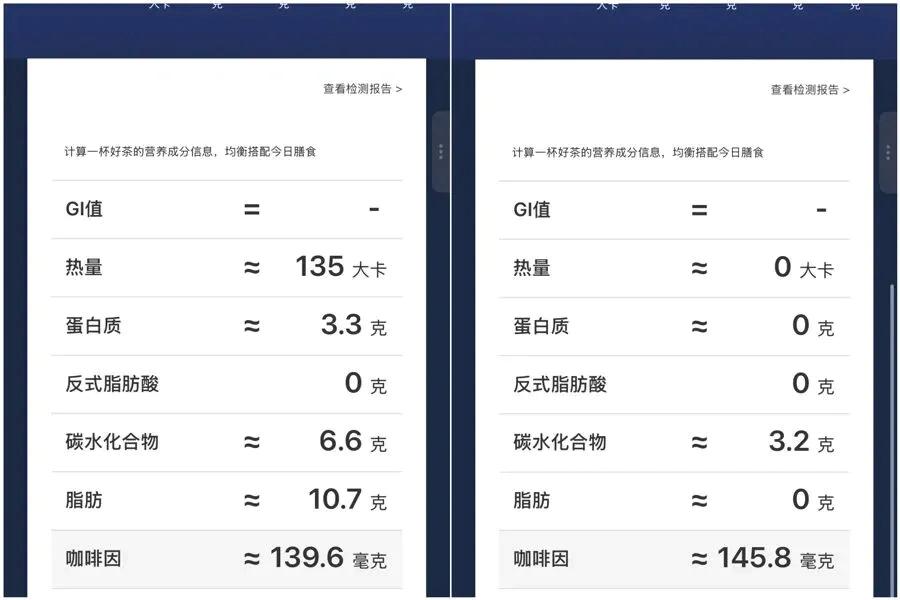
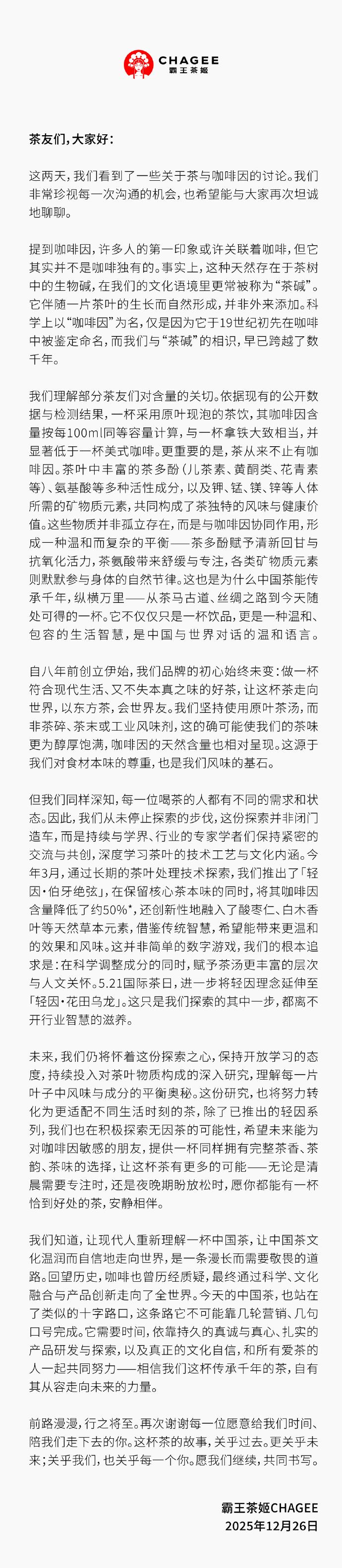
Core Viewpoint - The controversy surrounding BaWang Tea Ji's high caffeine content in its beverages has sparked significant public discussion, leading to a notable drop in its stock price. The company clarified that caffeine is naturally present in tea, similar to coffee, and provided data to support its claims about caffeine levels in its drinks [1][4]. Group 1: Company Response and Market Reaction - BaWang Tea Ji's stock fell over 14% following public concerns about its caffeine content [1]. - The company issued a statement emphasizing that caffeine is not exclusive to coffee and is naturally occurring in tea, which is often referred to as "theine" in cultural contexts [1]. - BaWang Tea Ji introduced a new product with approximately 50% less caffeine, named "Light Caffeine · Bo Ya Jue Xuan" [1]. Group 2: Caffeine Content in Tea Beverages - Caffeine in tea is not a new concept, and many brands, including BaWang Tea Ji, openly disclose the caffeine content in their products [4]. - BaWang Tea Ji's drinks have caffeine levels ranging from 89.2 mg to 241.3 mg per cup, depending on the product [4][5]. - Other brands, such as Heytea, have implemented a "Caffeine Traffic Light" system to categorize their drinks based on caffeine content, with red indicating over 100 mg, yellow between 50 mg and 100 mg, and green below 50 mg [7][9]. Group 3: Caffeine in Tea and Its Sources - Caffeine is a natural compound found in about 100 plant species, including coffee and tea, and is chemically identical in both [18]. - Research indicates that tea leaves can contain higher caffeine levels than coffee beans, with the order of caffeine content being tea leaves > coffee leaves > coffee beans [18]. - Factors such as tea variety, harvesting time, and environmental conditions significantly influence the caffeine content in tea leaves [20]. Group 4: Consumer Awareness and Recommendations - BaWang Tea Ji's app provides information on caffeine content and advises consumers to manage their intake based on personal sensitivity [5]. - Other brands also provide caffeine content labels and recommendations for consumption timing to help consumers make informed choices [9][11]. - It is suggested that individuals sensitive to caffeine should limit their intake, especially close to bedtime, to avoid potential negative effects [25].
霸王茶姬对“奶茶比作准毒品”争议表态 “上海禁毒”回应
Xi Niu Cai Jing· 2025-12-29 12:23
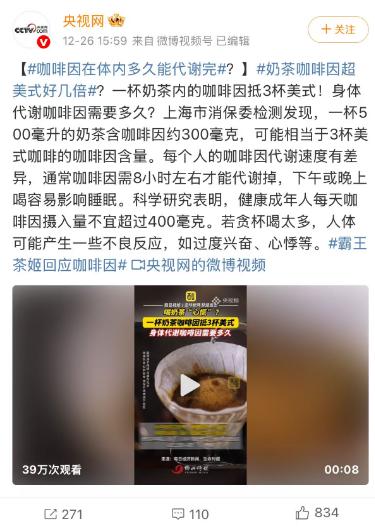
Core Viewpoint - The recent controversy surrounding "霸王茶姬" (Bawang Tea) and its caffeine content has sparked significant online discussion, with the company responding to allegations that its high-caffeine beverages are akin to "quasi-drugs" [2][5]. Group 1: Incident Background - A social media post claimed that high-caffeine drinks like those from Bawang Tea are exploiting a "quasi-drug" narrative, leading to public panic [5]. - Bawang Tea issued a statement on December 26, asserting that it is taking legal action against the spread of false information that harms its reputation [5]. Group 2: Company Response and Education - On December 26, Bawang Tea further clarified the relationship between tea leaves and caffeine, explaining that natural tea contains polyphenols and theobromine (caffeine), and that the term "caffeine" was first identified in coffee in the early 19th century [7]. - The "Shanghai Anti-Drug" WeChat account emphasized that all true teas (including black, green, oolong, and white teas) contain caffeine, with only a few herbal teas (like rose and chrysanthemum tea) being caffeine-free [7]. Group 3: Caffeine Regulation and Safety - According to legal definitions, caffeine is classified as a second-class psychoactive substance in China, and high-purity caffeine preparations can be highly addictive and dangerous [7]. - Historical context was provided, noting that in the 1980s, there was a significant issue in Shanxi with the abuse of caffeine mixed with other substances, leading to high addiction rates [7]. - A study indicated that adults can safely consume up to 1524g of liquid milk tea daily without exceeding caffeine limits, provided they do not consume other caffeine-containing foods [7].
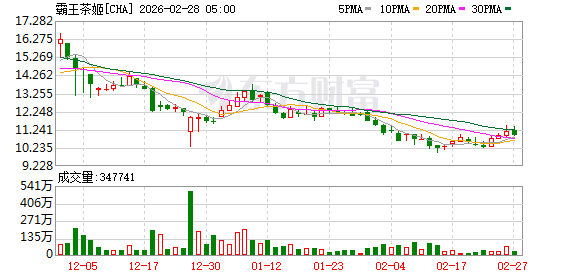
股价一度跌超15%,霸王茶姬深夜回应“咖啡因”问题
2 1 Shi Ji Jing Ji Bao Dao· 2025-12-27 02:45
Core Viewpoint - The stock of Bawang Chaji experienced significant volatility, with a drop of over 15% on December 26, reaching a new low since its listing, before closing down 2.54% at $11.90 per share, resulting in a market capitalization of $2.18 billion [1][2]. Group 1: Stock Performance - On December 26, Bawang Chaji's stock fell by more than 15% during trading, marking a new low since its IPO [1]. - The stock closed at $11.90 per share, with a total market value of $2.18 billion [1][2]. - The stock's trading volume was 5.02 million shares, with a price-to-earnings ratio of 9.03 [2]. Group 2: Consumer Concerns - On December 26, "Bawang Chaji caffeine" became a trending topic on Weibo, with multiple users reporting symptoms such as palpitations and insomnia after consumption [3]. - Bawang Chaji responded to the caffeine controversy, stating that the caffeine content in their tea is comparable to that of a latte and significantly lower than that of an Americano [3]. Group 3: Financial Performance - Bawang Chaji reported its Q3 2025 financial results on November 28, showing a total GMV of 7.93 billion yuan and net revenue of 3.21 billion yuan [4]. - The company achieved an adjusted net profit of 503 million yuan and has maintained profitability for 11 consecutive quarters [4]. - The overseas GMV exceeded 300 million yuan in Q3, reflecting a year-on-year increase of 75.3% and a quarter-on-quarter growth of 27.7% [4].
