通用处理器

Search documents
CPU荒来了,但英特尔却涨不动:谁偷走了估值?
美股研究社· 2026-03-25 11:50
Core Viewpoint - The semiconductor industry is experiencing a shift by 2026, characterized by a "passive shortage" of traditional computing components and an "active expansion" of new computing architectures. The market is questioning who will define the rules for the next generation of computing power, indicating a transfer of industry power rather than a simple supply-demand dynamic [1][18]. Group 1: Market Dynamics - The price of general-purpose processors from Intel and AMD has increased by 10%-15%, with delivery times extending to three to four months, yet the stock market has reacted indifferently, contrasting with the positive market response to shortages in memory chips and optical modules [3][4]. - The key factor influencing market reactions is not merely the presence of shortages but rather the identity of the companies experiencing these shortages and the reasons behind them [4][6]. - The current shortage of CPUs is driven not by a surge in demand but by supply being "squeezed" for advanced chips prioritized for AI applications and custom accelerators, relegating general-purpose processors to a secondary role [6][14]. Group 2: Profitability and Cost Structure - Despite the price increases, the profitability of Intel and AMD is limited due to high capital expenditures and fixed costs associated with domestic manufacturing initiatives, leading to negative operating margins in manufacturing [10][11]. - The most critical shortage is not in high-end AI server processors but in mid-range general-purpose models, which have lower profit margins and are more susceptible to customer price sensitivity [12][13]. - Price increases are more about cost transfer rather than value enhancement, as the market recognizes that general-purpose processors are becoming less central to computing power [13][17]. Group 3: Architectural Shifts - The dominance of the X86 architecture is beginning to wane, with Arm architecture gaining traction in both server and personal computer markets, driven by better energy efficiency and customization capabilities [20][21]. - Major tech companies are moving towards "de-generalization" of processors, developing specialized chips that bypass traditional architectures, which enhances efficiency in specific applications [22][24]. - This shift indicates that general-purpose processors are no longer the "entry point" to computing power but are becoming mere "supporting roles," leading to a revaluation of related infrastructure components [24][27]. Group 4: Investment Implications - Investors should recognize that the current processor price increases will lead to limited profit recovery and are unlikely to support a revaluation of stocks, as the market has already priced in the cost transfer logic [28]. - In the medium term, the X86 ecosystem will face ongoing challenges from Arm architecture and self-developed chips, while the long-term focus should be on new computing types and infrastructure that define the next generation of architecture [29][30]. - The essential takeaway is that this is not merely a "processor market" but a "de-generalization market," emphasizing the importance of understanding who will define the next generation of computing architecture [31][32].

兆芯集成、盛合晶微、中图科技科创板IPO已问询
Xin Lang Cai Jing· 2026-02-02 01:39
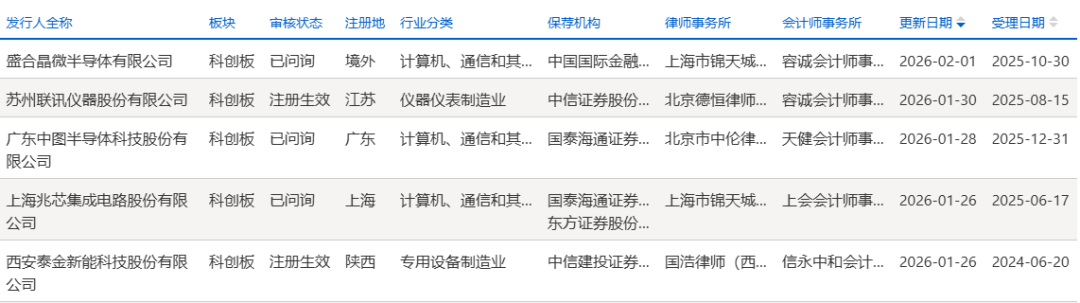
Core Viewpoint - This week, five companies are making progress in their IPO applications for the Sci-Tech Innovation Board, with two companies, Taijin New Energy and Lianxun Instruments, having their registrations effective, while three others, Zhaoxin Integrated, Shenghe Jingwei, and Zhongtu Technology, are under inquiry [2][15]. Group 1: Taijin New Energy - Taijin New Energy's IPO registration has officially become effective, marking it as the first company accepted by the Shanghai Stock Exchange since the release of the new "National Nine Articles" [4][17]. - The company, established through the transformation of scientific research achievements from the Northwest Nonferrous Metal Research Institute, focuses on high-end intelligent electro-copper foil equipment and titanium electrode materials [6][19]. - Financial data shows that from 2021 to the first three quarters of 2025, Taijin New Energy achieved revenues of 1.004 billion, 1.669 billion, 2.194 billion, and 1.713 billion yuan, with net profits of 98.29 million, 155 million, 195 million, and 141 million yuan respectively [6][19]. - The company expects to achieve a revenue of 2.377 billion yuan in 2025, with a year-on-year growth of 8.34% [6][19]. - The initial fundraising target was 1.5 billion yuan, later adjusted to 990 million yuan for projects related to high-end intelligent equipment for green electrolysis [7][20]. Group 2: Lianxun Instruments - Lianxun Instruments' IPO application was registered effective on January 29, 2026, making it the first company to pass the review for the Sci-Tech Innovation Board in 2026 [7][20]. - The company specializes in high-end testing instruments for high-speed communication and semiconductor sectors, providing various core testing equipment [9][21]. - From 2022 to 2024, Lianxun Instruments' revenue grew from 214 million to 789 million yuan, with a compound annual growth rate of 91.79% [10][21]. - The company plans to raise 1.711 billion yuan for the development and industrialization of next-generation optical communication testing equipment and other projects [10][21]. Group 3: Zhaoxin Integrated - Zhaoxin Integrated's IPO status was updated to "under inquiry" on January 28, 2026, being the third unprofitable company accepted for the Sci-Tech Innovation Board in 2025 [12][22]. - Established in 2013, Zhaoxin Integrated focuses on the research and design of general-purpose processors and system platform chips, aiming to provide comprehensive computing solutions [24][22]. - Financial data indicates that from 2022 to the first half of 2025, the company reported revenues of 340 million, 555 million, 889 million, and 341 million yuan, with net losses of 727 million, 676 million, 951 million, and 427 million yuan respectively [24][22]. Group 4: Shenghe Jingwei - Shenghe Jingwei's IPO was accepted on October 30, 2025, and it is one of the first companies in mainland China to achieve mass production of 12-inch high-density bump manufacturing [13][26]. - The company reported revenues of 1.632 billion, 3.038 billion, and 4.705 billion yuan from 2022 to 2024, with a compound annual growth rate of 69.77% [14][26]. - Shenghe Jingwei plans to raise 4.8 billion yuan for investments in advanced packaging projects to expand its production capacity [14][26]. Group 5: Zhongtu Technology - Zhongtu Technology's IPO was accepted on December 31, 2025, and it is making a second attempt after withdrawing its first application in 2022 [15][27]. - The company is a major manufacturer of patterned substrate materials, with products widely used in Mini/MicroLED and automotive lighting applications [15][27]. - Zhongtu Technology aims to raise approximately 1.05 billion yuan for projects related to the industrialization of patterned substrates and semiconductor substrate material research [15][27].
龙芯中科(688047.SH):暂无量子芯片的相关规划
Ge Long Hui· 2026-01-13 09:53
Group 1 - The core viewpoint of the article is that Longxin Zhongke (688047.SH) has no current plans for quantum chips, which are primarily used in specific fields, unlike general processors that have a wide range of applications [1] Group 2 - Longxin Zhongke stated that quantum chips are mainly applicable in specialized areas [1] - The company emphasizes the distinction between quantum chips and general processors in terms of their application scope [1]

芯片就像重庆,英特尔说的
量子位· 2025-11-20 04:09
Core Insights - The article discusses Intel's innovative approaches and technological advancements in the semiconductor industry, particularly in relation to AI and PC platforms, as highlighted during the recent technology innovation conference in Chongqing [6][10][12]. Group 1: Intel's Technological Innovations - Intel's next-generation AI PC platform, Panther Lake, has entered mass production, marking the company's entry into the "Aemi era" (1 Aemi = 0.1 nm) [9]. - The Intel 18A process technology enables over 15% performance improvement at the same power consumption, or a 25% reduction in power consumption at the same performance level, with a 30% increase in transistor density [10]. - Panther Lake is expected to deliver a 50% increase in multi-core and graphics performance, alongside a 40% reduction in power consumption, with an overall AI computing power of 180 TOPS [14][15]. Group 2: AI and Edge Computing - The article emphasizes the transformation of AI PCs from mere tools to partners, with future AI-native PCs expected to possess five core capabilities: perception, cognition, execution, memory, and learning [17][18]. - Intel is addressing the growing demand for edge computing by integrating SoC solutions to assist partners like CVTE in transitioning from traditional operations to comprehensive AI solutions [25]. - The emergence of generative AI and the integration of AI with control systems are identified as key trends in edge computing [24]. Group 3: Collaboration and Ecosystem Development - Intel is focusing on building a robust local ecosystem in China, collaborating with various partners to enhance the capabilities of domestic AI models through instruction set optimization and quantization techniques [27]. - A notable example includes a specialized re-ranking model that improved accuracy from 85% to 96% after fine-tuning, surpassing some larger general models [28]. - The strategy of leveraging "small models with significant impact" is seen as crucial for the widespread adoption of AI PCs [29]. Group 4: Data Center and Power Consumption - The article highlights the exponential growth of data, with predictions indicating a 3.5-fold increase in global power consumption to support AI over the next five years, alongside an estimated $7 trillion investment in data centers [34]. - Intel's Xeon 6 processors are designed to complement GPUs in AI model training, featuring enhanced data transfer capabilities and dedicated AI acceleration [38]. - The focus on reliability aims for a 99.999% uptime in data centers, ensuring continuous operation and security [39].


Jim Keller:AI芯片很简单
半导体行业观察· 2025-10-20 01:47
Core Insights - The development of AI chips will become easier and cheaper through open-source technology, as stated by chip expert Jim Keller [2] - Keller emphasizes that AI processors are simpler than commonly perceived and that significant investment is not necessarily required for their development [2] - Keller's company, Tenstorrent, is focused on open-source technology for AI processors and compilers, which lowers costs and increases accessibility [2] Group 1: Open-Source Technology - Open-source chips are more cost-effective and accessible, allowing for greater creativity in developing new solutions [2] - Tenstorrent plans to open-source its AI software stack, aiming to create a successful open-source software company [4] - Keller believes that the demand for AI technology is immense and that the next five years will be particularly interesting for the industry [2][4] Group 2: Industry Trends and Future Outlook - Keller predicts that RISC-V architecture will dominate data centers within the next 5 to 10 years, especially in scientific and high-performance computing [4] - The interest from clients in Tenstorrent's IP cores has been described as surprising, indicating a strong market demand [4] - Keller highlights the challenges in the edge AI market, noting that existing IP products are overly concentrated and difficult to program [5] Group 3: Company Background and Leadership - Jim Keller has a notable background, having worked at AMD, Apple, and Tesla, and he became CEO of Tenstorrent in early 2023 [3] - Keller advocates for an open environment where engineers can learn and innovate freely [3] - Tenstorrent recently licensed its Tensix AI accelerator core IP to LG Electronics for use in embedded edge computing applications [4]
黄仁勋“推票”:台积电是人类历史上最伟大的公司之一,聪明人都想买他们股票
Hua Er Jie Jian Wen· 2025-08-22 05:59
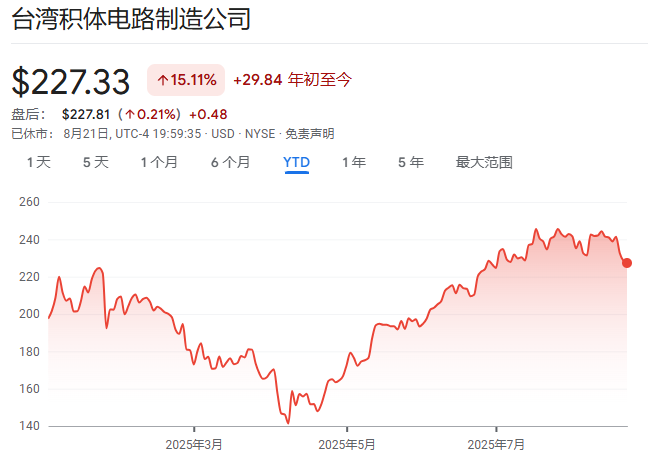
Group 1 - CEO Jensen Huang praised TSMC, stating that anyone looking to invest in the company is "very smart" [1] - TSMC is manufacturing six new products for NVIDIA, including new CPUs and general-purpose processors for advanced computing, particularly AI [1] - TSMC's stock has risen by 15% this year, reflecting its strong market position as the largest chip foundry globally [1] Group 2 - NVIDIA announced its expansion plan in Taiwan, named the "NVIDIA Constellation" project, which includes a new office to accommodate local employees [3] - The company is collaborating with various chip companies, system suppliers, and manufacturers in Taiwan, indicating a busy supply chain and a need for a large number of engineers [3]


中芯国际设备供应商冲刺IPO!
是说芯语· 2025-06-22 10:02
Core Viewpoint - The article highlights the recent IPO progress of several semiconductor companies in China, indicating a growing trend in the semiconductor industry and potential investment opportunities. Group 1: IPO Progress of Semiconductor Companies - Multiple semiconductor companies, including equipment manufacturers and material suppliers, have announced their IPO advancements, such as Zhongke Instrument, Chengdu Super Pure, and Xinshi Technology [1] - Zhongke Instrument has completed its IPO counseling report and plans to list on the Beijing Stock Exchange after previously attempting to list on the Shanghai Stock Exchange [2] - Chengdu Super Pure has initiated its IPO counseling with Huatai United Securities, focusing on semiconductor etching devices and high-power laser devices [5][6] - Xinshi Technology's IPO application has been accepted by the Shanghai Stock Exchange, aiming to raise 785 million yuan for two major projects [8][12] Group 2: Company Profiles and Market Position - Zhongke Instrument specializes in dry vacuum pumps and vacuum instruments, essential for semiconductor manufacturing processes [3] - Chengdu Super Pure is recognized for its advanced surface treatment processes and high-purity materials, contributing to the semiconductor etching device market [5] - Xinshi Technology is a leading domestic manufacturer of semiconductor-grade perfluoroether rubber seals, breaking the monopoly of foreign companies in this sector [9][11] Group 3: Financial Performance and Projections - Xinshi Technology projects revenues of 130.47 million yuan and 207.55 million yuan for 2023 and 2024, respectively, with a net profit of 32.81 million yuan and 63.09 million yuan [12] - Zhongke Instrument's IPO journey reflects its strategic adjustments and readiness for the capital market, indicating strong governance and compliance [2] Group 4: Industry Trends and Competitive Landscape - The semiconductor industry in China is witnessing a shift towards domestic production capabilities, with companies like Xinshi Technology achieving significant market share and technological advancements [11][24] - The competitive landscape is evolving, with domestic firms increasingly challenging foreign dominance in critical components and technologies [11][19]