
量子云印章

Search documents
时代新动能2025:量子传信 密不可破
Zheng Quan Ri Bao· 2025-11-28 04:12
Core Viewpoint - Quantum technology has become a focal point in global technological competition, with quantum communication emerging as a significant branch that is transitioning from laboratory settings to everyday applications, enhancing communication security through its unique encryption advantages [1] Industry Progress - The industrialization of quantum communication is steadily advancing, with applications now integrated into daily scenarios [1] - Companies such as China Telecom Quantum Information Technology Group Co., Ltd. and Keda Xunfei Quantum Technology Co., Ltd. have successfully developed technologies like quantum secure calls, secure messages, and quantum cloud seals [1] Market Potential - Quantum information technology is on the verge of entering a trillion-level market, injecting robust technological momentum into industry upgrades [1]
打造新技术新产品产业化“加速器”
Ren Min Ri Bao· 2025-11-11 06:41
Core Viewpoint - The State Council of China has issued a systematic deployment plan for scene cultivation and openness, aiming to accelerate the large-scale application of new scenarios, thereby enhancing the integration of technology and industry [1][2]. Group 1: Scene Cultivation and Open Policy - The main objective of the new policy is to leverage China's vast market and diverse application scenarios to facilitate the industrialization of new technologies and products, acting as a "testing ground" and "accelerator" for emerging industries [2][3]. - The policy emphasizes the importance of collaboration among various stakeholders and the establishment of a comprehensive application scenario list to enhance production, work, and life scenarios [2][4]. Group 2: Focus Areas for New Scene Applications - Key areas for application scene cultivation include "5G+", "Artificial Intelligence+", "Robotics+", "Industrial Internet+", and "Beidou+" to promote large-scale development in emerging industries [3][4]. - Specific initiatives include the promotion of 5G factory construction, the integration of AI in manufacturing processes, and the application of industrial robots in various operational scenarios [3][4]. Group 3: Role of Central Enterprises - Central enterprises are identified as crucial players in providing key infrastructure and industry data resources, facilitating the innovation of the industrial chain through scene and application empowerment [4][5]. - The State-owned Assets Supervision and Administration Commission (SASAC) has organized numerous activities to promote supply-demand matching in key industry chains, with over 10,000 items listed for collaboration [4]. Group 4: Technological Advancements and Local Adaptation - The development of new application scenarios is driven by breakthroughs in frontier technologies, with a focus on strategic emerging industries such as new energy, aerospace, and quantum technology [6][7]. - The approach emphasizes localized strategies that consider regional resources and reform foundations to optimize the layout of scene openness [6][7].
首次在国家层面对场景培育开放进行系统部署——打造新技术新产品产业化“加速器”
Ren Min Ri Bao· 2025-11-11 00:09
Core Viewpoint - The State Council has issued a systematic deployment plan for scene cultivation and openness, aiming to accelerate the large-scale application of new scenes in various industries, thereby enhancing innovation vitality and economic development [1][2]. Group 1: Scene Cultivation and Open Policy - The main goal of the new policy is to leverage China's vast market and diverse application scenarios to facilitate the transformation of technological innovations into productive forces [2][3]. - The policy emphasizes the importance of creating specific application scenarios for new technologies and products to overcome market entry barriers and enhance their industrialization process [2][3]. Group 2: Focus Areas for New Scene Applications - Key areas for application scene cultivation include "5G+", "Artificial Intelligence+", "Robotics+", "Industrial Internet+", and "Beidou+" to promote large-scale development of emerging industries [4]. - Specific initiatives include promoting 5G factory construction, integrating AI into manufacturing processes, and enhancing the application of industrial robots in various production scenarios [4]. Group 3: Role of Central Enterprises - Central enterprises are identified as crucial players in providing key infrastructure and industry data resources, facilitating scene supply and innovation in the industrial chain [5]. - The State-owned Assets Supervision and Administration Commission has organized enterprises to empower key industry segments through scene and application development [5]. Group 4: Technological Advancements and Local Adaptation - The application of new scenes is driven by breakthroughs in frontier technologies, which require dual empowerment from both technology and scene cultivation [7]. - The policy advocates for a localized approach to scene cultivation, taking into account regional resources and reform foundations to ensure effective implementation [7][8]. Group 5: Collaborative Efforts and Regional Initiatives - Collaborative efforts among regions, such as the Yangtze River Delta, are encouraged to share opportunities and co-build significant application scenarios [8]. - Guangdong province is highlighted for its proactive approach in establishing application scenarios in areas like intelligent manufacturing and deep-sea resource development [8].
首次在国家层面对场景培育开放进行系统部署 打造新技术新产品产业化“加速器”
Ren Min Ri Bao· 2025-11-10 23:35
Core Viewpoint - The State Council of China has issued a systematic deployment plan for scene cultivation and openness, aiming to accelerate the large-scale application of new scenarios, thereby enhancing the integration of technology and industry [1][2]. Group 1: Scene Cultivation and Open Policy - The main objective of the new policy is to leverage China's vast market and diverse application scenarios to facilitate the transformation of technological innovations into productive forces [2][3]. - The policy aims to create a "testing ground" for new technologies and products, acting as an accelerator for emerging industries and a litmus test for institutional reforms [2][3]. Group 2: Focus Areas for Application Scenarios - Key application scenarios include "5G+", "Artificial Intelligence+", "Robotics+", "Industrial Internet+", and "Beidou+" to promote large-scale development in emerging industries [4]. - Specific initiatives involve enhancing 5G factory construction, promoting AI in manufacturing, deploying industrial robots in specific tasks, and implementing industrial internet solutions in key industries [4]. Group 3: Role of Central Enterprises - Central enterprises are seen as a rich resource for scene supply, with efforts to empower the innovation chain through collaboration in key industries [5]. - The State-owned Assets Supervision and Administration Commission has organized numerous activities to facilitate supply-demand matching in application scenarios [5]. Group 4: Technological Advancements and Local Adaptation - The application of cutting-edge technologies is essential for the large-scale deployment of new scenarios, with a focus on strategic emerging industries such as new energy and quantum technology [7]. - The approach emphasizes local adaptation, coordinating regional scene openness based on local resources and reform foundations [7][8]. Group 5: Regional Initiatives - Provinces like Anhui and Guangdong are actively developing application scenarios, with initiatives to create project-based systems and enhance regional collaboration [8]. - Guangdong aims to leverage its early start in application scenarios to drive innovation in areas like intelligent manufacturing and deep-sea resource development [8].
打造新技术新产品产业化“加速器”(权威发布)
Ren Min Ri Bao· 2025-11-10 23:20
Core Viewpoint - The State Council of China has issued a systematic deployment plan for scene cultivation and openness, aiming to accelerate the large-scale application of new scenes, thereby enhancing the integration of technology and industry [1][2]. Group 1: Scene Cultivation and Open Policy - The main objective of the new policy is to leverage China's vast market and diverse application scenarios to facilitate the transformation of technological innovations into productive forces [2][3]. - The policy aims to create a "testing ground" for new technologies and products, acting as an accelerator for emerging industries and a litmus test for institutional reforms [2][3]. Group 2: Focus Areas for Application Scenarios - Key application scenarios include "5G+", "Artificial Intelligence+", "Robotics+", "Industrial Internet+", and "Beidou+" to promote large-scale development in emerging industries [4]. - Specific initiatives involve enhancing 5G factory construction, promoting AI in manufacturing, deploying industrial robots in various applications, and implementing industrial internet projects across key industries [4]. Group 3: Role of Central Enterprises - Central enterprises are seen as a rich resource for scene supply, with efforts to empower the innovation chain through collaboration in key industries [5]. - The State-owned Assets Supervision and Administration Commission has organized numerous activities to facilitate supply-demand matching in application scenarios [5]. Group 4: Technological Advancements and Local Adaptation - The application of cutting-edge technologies is essential for the large-scale deployment of new scenes, with a focus on strategic emerging industries such as new energy and quantum technology [7]. - The approach emphasizes local adaptation, coordinating regional scene openness based on local resources and reform foundations [7][8]. Group 5: Regional Initiatives - Provinces like Anhui and Guangdong are actively developing application scenarios, with Anhui focusing on quantum technology and Guangdong leveraging its position in the Greater Bay Area to promote innovation [8].
首次在国家层面对场景培育开放进行系统部署 打造新技术新产品产业化“加速器”(权威发布)
Ren Min Ri Bao· 2025-11-10 22:19
Core Viewpoint - The Chinese government has issued a systematic deployment plan for scene cultivation and openness, aiming to accelerate the large-scale application of new scenarios, thereby enhancing the integration of technology and industry [1][2]. Group 1: Scene Cultivation and Open Policy - The main objective of the new policy is to leverage China's vast market and diverse application scenarios to facilitate the transformation of technological innovations into productive forces [2][3]. - The government plans to enhance collaboration and mobilize various stakeholders, focusing on creating a list of application scenarios and supporting the construction of significant integrated scenes [3]. Group 2: Focus Areas for New Scene Applications - Key areas for application scene cultivation include "5G+", "Artificial Intelligence+", "Robotics+", "Industrial Internet+", and "Beidou+" to promote large-scale development of emerging industries [4]. - Specific applications such as machine vision quality inspection, remote equipment control, and flexible manufacturing will be prioritized under the "5G+" initiative [4]. Group 3: Role of Central Enterprises - Central enterprises are seen as crucial players in providing key infrastructure and industry data resources, facilitating the innovation chain through scene and application empowerment [5]. - The State-owned Assets Supervision and Administration Commission has organized numerous activities to promote supply-demand matching in key industry chains [5]. Group 4: Technological Advancements and Local Adaptation - The application of cutting-edge technologies in strategic emerging industries like new energy and quantum technology is essential for driving new economic growth points [7]. - The approach to scene cultivation and openness will be tailored to local conditions, emphasizing regional coordination and unique characteristics [7][8]. Group 5: Regional Initiatives - Provinces like Anhui and Guangdong are actively developing application scenarios, focusing on areas such as quantum information and intelligent manufacturing [8]. - Guangdong aims to leverage its early start in application scenarios to enhance the role of major scenes in developing new productive forces [8].
中国电信江苏公司织牢AI时代数字安全网
Xin Hua Ri Bao· 2025-09-15 00:41
Core Viewpoint - The articles highlight the efforts of Jiangsu Telecom in enhancing cybersecurity through innovative technologies and collaborative initiatives, focusing on AI-driven solutions and comprehensive fraud prevention systems to protect citizens and businesses in the digital landscape [1][2][4][8]. Group 1: Cybersecurity Initiatives - Jiangsu Telecom is actively participating in the National Cybersecurity Awareness Week, emphasizing the importance of cybersecurity for high-quality development [1]. - The company is implementing a dual-driven model of "using AI to strengthen security" and "relying on security to protect AI," achieving significant results in AI security applications [2][3]. - A comprehensive fraud prevention system has been established, utilizing advanced technologies to reduce fraud rates and enhance public safety [4][5]. Group 2: AI and Technology Integration - Jiangsu Telecom has developed a self-research "micro" security model that integrates deep learning and log analysis, improving threat assessment accuracy to 90.21% [2]. - The company has created a high-risk number card prediction system using spatiotemporal convolutional neural networks, achieving over 85% accuracy in predicting potential fraud risks [5]. - The "1+1+3+N" low-code AI platform has been recognized as an excellent case by the International Telecommunication Union (ITU), facilitating AI technology applications across various industries [3]. Group 3: Collaborative Efforts and Industry Impact - Jiangsu Telecom has formed a network security innovation studio alliance, uniting 13 cities and professional units to enhance cybersecurity through collaborative innovation [8]. - The company has established a comprehensive defense system that includes a command and dispatch system for fraud prevention, significantly reducing complaint rates [4][6]. - Jiangsu Telecom's security services have generated over 600 million yuan in annual revenue, serving more than 20,000 clients, demonstrating its market expansion and commitment to cybersecurity [7].

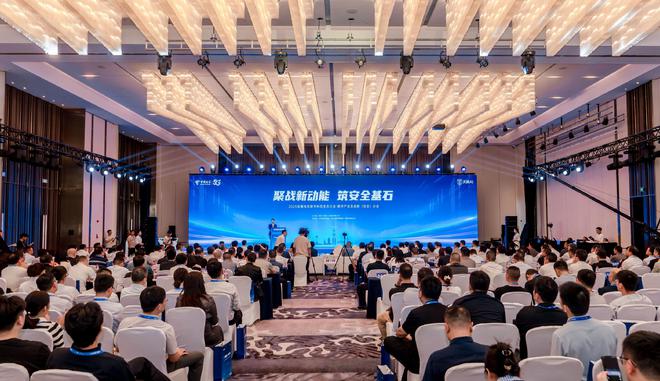
聚战新动能 筑安全基石 | 安徽电信举办数字产业及战新(安全)主题会议
Ren Min Wang· 2025-06-27 02:42
Core Insights - The conference focused on exploring key technologies and innovative applications in fields such as intelligent computing, low-altitude economy, security, and quantum technology to promote high-quality development of the digital industry [1][5]. Group 1: Technological Innovations - China Telecom Anhui Company announced its latest technological achievements in quantum communication, digital security protection, and low-altitude economy during the conference [3][5]. - The company introduced a comprehensive AI-enabled product service system for the low-altitude economy, structured as "1+1+3+N" AI+FaaS (Fly as a Service) [5]. - New products in the quantum encryption field were launched, including quantum cloud seals and OTN quantum encryption dedicated lines [5]. Group 2: Strategic Collaborations - China Telecom Anhui Company signed strategic cooperation agreements with 14 leading domestic manufacturers, including Huawei and ZTE, to create an innovative development ecosystem [5][7]. - The conference also saw the establishment of the "Artificial Intelligence Anhui Joint Innovation Center" and the "Fuyang Cybersecurity Practice Center," indicating a commitment to resource integration and technological complementarity [7][9]. Group 3: Future Directions - China Telecom Anhui Company aims to leverage its advantages in technological innovation and industry chain integration to accelerate the formation of digital industry capabilities [9]. - The company is focused on promoting multi-industry integration and upgrading industries to contribute to the high-quality development of Anhui's digital industry [9].


加快建设科技创新共同体 共同打造统一大市场先行区 跨省“高效办成一件事” 长三角携手打造高质量发展动力源
Jie Fang Ri Bao· 2025-06-07 02:48
Group 1: Economic Development and Innovation - The Yangtze River Delta (YRD) region has achieved a GDP exceeding 33 trillion yuan, accounting for approximately 25% of the national total, establishing itself as a new highland for productive development [1] - High-tech enterprises in the YRD account for over 30% of the national total, with R&D expenditure reaching 3.34% of GDP in 2023, surpassing the national average by nearly 0.7 percentage points [2] - The YRD has formed a "double triangle" network system around key cities, enhancing innovation-driven effectiveness [3] Group 2: Infrastructure and Connectivity - The establishment of a unified operation for cross-regional railways between Jiangsu and Anhui is expected to improve transportation efficiency and connectivity in the YRD [4] - The integration of logistics services has led to a nearly 30% reduction in ground logistics costs for businesses, enhancing operational efficiency [4] - The YRD is developing a comprehensive public service platform with over 200 online government services, improving efficiency for residents and businesses [7] Group 3: Environmental Quality and Public Services - The YRD has achieved an average of 84.5% for days with good air quality in 2024, an increase of 10.4 percentage points since 2018, indicating significant environmental improvements [8] - Collaborative governance mechanisms have been established to enhance public service quality, including cross-province cooperation in law enforcement and public administration [7][8] - The region is utilizing advanced technologies for environmental monitoring, contributing to improved ecological conditions [7]

携手打造高质量发展动力源——长三角一体化发展新观察
Xin Hua She· 2025-06-06 12:28
Core Viewpoint - The integration of the Yangtze River Delta region has become a national strategy, leading to significant advancements in technology innovation, industrial transformation, and public service efficiency, ultimately contributing to high-quality economic development [1][10]. Group 1: Technological and Industrial Innovation - The Yangtze River Delta has established a smart aquaculture platform, "Zhanjiang Bay No. 1," which showcases the benefits of regional integration in technology, funding, and market collaboration, achieving construction from start to launch in just 11 months [2]. - The region's high-tech enterprises account for over 30% of the national total, with R&D expenditure reaching 3.34% of GDP in 2023, surpassing the national average by nearly 0.7 percentage points [3]. - Twelve innovation alliances have been formed to tackle core technologies in integrated circuits, artificial intelligence, and biomedicine, with 305 technical demands identified and 72 joint projects initiated [4]. Group 2: Economic Growth and Trade - The Yangtze River Delta's GDP has surpassed 33 trillion yuan, accounting for approximately 25% of the national total, indicating a robust economic foundation for high-quality development [1]. - In the first four months of this year, Suzhou's imports and exports grew by 5.6%, while Jiangsu and Zhejiang also reported growth rates of 5.7% and 6.6%, respectively, with Anhui achieving a remarkable 14.1% increase [10]. Group 3: Public Service and Governance - The "One Network for All" platform has launched over 200 government services, enhancing public service efficiency and convenience for residents and businesses [11]. - Cross-province cooperation has been established in public service areas, allowing for seamless processing of various administrative tasks, significantly improving service delivery [11]. Group 4: Environmental and Ecological Development - The region has achieved a 10.4 percentage point improvement in the proportion of days with good air quality, reaching 84.5% by 2024, and a historical high of 94.3% for surface water quality [12].