
5G

Search documents
美国特别竞争研究项目:《中美技术竞争中谁领先、谁落后及未来走向》
欧米伽未来研究所2025· 2026-03-19 15:40
Core Viewpoint - The SCSP report highlights the competitive landscape between the U.S. and China in key technology sectors, indicating a complex, fluid, and uncertain multi-dimensional competition rather than a clear-cut dominance by either side [2]. Group 1: China's Strengths - China leads in four strategic technology areas: advanced batteries, advanced manufacturing, commercial drones, and 5G infrastructure, with high confidence ratings [4]. - In the battery sector, China's manufacturing capacity reached 1,705 GWh in 2023, compared to the U.S. at 93 GWh, marking an 18-fold difference. China controls 80% of global lithium-ion battery component shipments and holds about 60% of the global electric vehicle battery market [4]. - China accounts for approximately 35% of global manufacturing output, while the U.S. is at about 12%. The number of industrial robots deployed by Chinese companies in 2023 matches the total of all other countries combined [5]. - China has deployed over 4 million 5G base stations, averaging 206 per 100,000 people, compared to the U.S. with about 100,000 base stations or 77 per 100,000 people. By 2024, China is expected to have over 1 billion 5G users, covering 88% of its mobile users [5]. Group 2: U.S. Strengths - The U.S. maintains a lead in artificial intelligence, quantum computing, semiconductors, fusion energy, and internet platforms, relying on foundational research breakthroughs and private sector innovation [6]. - In AI, U.S. private investment reached $67.2 billion in 2023, compared to China's $7.76 billion, a nearly 9-fold difference. Most foundational AI models have originated from U.S. private companies [6]. - The semiconductor sector is rated as "U.S. leading, high confidence," with the CHIPS Act expected to drive over $400 billion in private investment, projecting that the U.S. will hold 28% of global advanced logic chip capacity by 2032 [7]. Group 3: Structural Weaknesses - A recurring structural pattern is observed: U.S. innovation versus Chinese commercialization. The U.S. holds 39% of global biotechnology patents but has seen a shift in the production side, with Chinese companies supplying about 17% of U.S. active pharmaceutical ingredients (APIs) [9]. - In synthetic biology, the U.S. market is valued at $16.3 billion compared to China's $1.05 billion, yet China controls 70% of global fermentation capacity, highlighting a significant production bottleneck for U.S. firms [10]. - DJI dominates the global consumer drone market with over 90% share, raising national security concerns for the U.S. as it lacks comparable domestic alternatives [10]. Group 4: Strategic Recommendations - The report suggests establishing a "Technology Competition Council" to unify strategic direction and coordinate responses across departments, addressing the misalignment between private sector focus and government priorities [11]. - The trajectory of fusion energy illustrates the competitive dynamics, with the U.S. currently leading but facing significant investment from China, which may narrow the gap in the coming years [12].


NextNav to Participate in the 38th Annual Roth Conference
Businesswire· 2026-03-11 20:31
Group 1 - NextNav Inc. will participate in the 38th Annual Roth Conference on March 23rd-24th, 2026, with CFO Tim Gray representing the company [1] - NextNav is a leader in next-generation terrestrial Positioning, Navigation, and Timing (PNT) and 3D geolocation solutions, holding the largest license in a spectrum band for terrestrial positioning services [1] - The company aims to provide a reliable 3D PNT solution that enhances national security, public safety, and economic stability by leveraging licensed low-band spectrum and the global 5G ecosystem [1] Group 2 - NextNav will release its financial results for the fourth quarter and full year ended December 31, 2025, after market close on March 17, 2026, followed by a conference call at 5:00 PM ET [1] - Lisa Hook has been appointed to the Board of Directors of NextNav, effective February 24, 2026, and will serve as Lead Independent Director [1] - Hook will also be a member of the Technology and National Defense and Compensation and Human Capital Committees [1]


2月收官!委内瑞拉暴涨82%夺冠,港股科技股“走熊”
Ge Long Hui· 2026-02-27 14:49
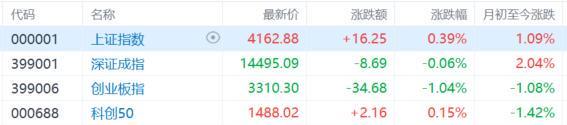
Market Performance - A-shares showed mixed performance in February, with the Shanghai Composite Index rising 1.09% to close at 4162 points, while the Shenzhen Component Index increased by 2.04% to 14495 points, and the ChiNext Index fell by 1.08% to 3310 points [2][3] - The Hong Kong stock market experienced a significant decline, with all three major indices dropping, particularly the Hang Seng Tech Index, which plummeted over 10% [6][7] Global Market Comparison - Venezuela's stock market led global gains in February with an increase of 82.77%, followed by South Korea's KOSPI (+19.52%), Thailand's SET Index (+15.69%), Taiwan's Weighted Index (+10.45%), and Japan's Nikkei 225 (+10.37%) [1] - In contrast, U.S. markets showed divergence, with the Dow Jones Industrial Average rising slightly by 1.24%, while the S&P 500, Nasdaq, and Nasdaq 100 experienced declines of 0.43%, 2.49%, and 2.03% respectively [1] Sector Performance - In the A-share market, the top three performing sectors over the last 20 trading days were: Comprehensive (+18.4%), Steel (+10.02%), and Building Materials (+8.15%), while the worst-performing sectors were: Media (-4.95%), Retail (-3.54%), and Non-bank Financials (-3.33%) [3] - In the Hong Kong market, the top five performing industries included Smart Grid (+30.4%), Power Equipment (+27.93%), Esports (+27.41%), 5G (+22.69%), and Wuhan Local (+20.08%) [6] Individual Stock Performance - The top five A-share stocks in February were: Electric Science Blue Sky (+640.97%), Aide Technology (+153.46%), Haiseng Medical (+149.92%), Beixin Life (+135.05%), and YN Energy (+115.16%) [4] - In the Hong Kong market, the top five stocks with significant gains included Zhihui (+154.2%), Junyu Foundation (+80.65%), Changfei Optical Fiber (+77.78%), Tianshu Zhixin (+75.84%), and Xunce (+72.48%) [9] Future Market Outlook - Analysts from multiple brokerages suggest that March may see continued active capital flow in the A-share market, driven by the upcoming Two Sessions and macroeconomic policies aimed at boosting growth [11] - The Hong Kong market is expected to remain volatile, influenced by A-share trends and external factors such as U.S. Federal Reserve policies and the upcoming Two Sessions [11]
后怕!当初决策层要是相信了许小年,中国可能会比现在落后二十年
Sou Hu Cai Jing· 2026-02-07 15:06
Group 1 - Xu Xiaonian is a prominent economist advocating for market self-regulation and minimal government intervention in China's economic development [2][4] - He believes that China's industrial base is still weak and that the country should not rush into high-end technologies like high-speed rail, chips, and new energy vehicles [4][9] - Xu has expressed concerns about the financial risks associated with high-speed rail investments, suggesting that the government should tighten funding and avoid blind expansion [6][7] Group 2 - In the semiconductor sector, Xu argues that China should not aggressively pursue advancements and should allow the market to determine capable enterprises [9][12] - He criticizes the new energy vehicle subsidy policies, suggesting they lead to inefficient spending and do not guarantee competitiveness for private companies [11][12] - Xu has voiced similar concerns regarding solar energy and 5G investments, warning that state-led initiatives could result in overcapacity [12][18] Group 3 - Despite Xu's warnings, China's high-speed rail network has expanded significantly since 2008, with projections to exceed 50,000 kilometers by 2025, accounting for over 70% of the global total [16][23] - The semiconductor industry has seen improvements, with companies like Huawei and SMIC making strides in technology and production capabilities [18][23] - The new energy vehicle market has grown substantially, with BYD surpassing Tesla in global sales, supported by government subsidies [19][23] Group 4 - The solar industry has become a global leader, with China accounting for 85% of component exports and significant cost reductions in production [21][23] - The 5G infrastructure has rapidly developed, with over 400,000 base stations built, enhancing automation in factories and contributing to industrial growth [23][25] - Overall, the combination of state investment and market competition has led to significant advancements in various sectors, countering Xu's more cautious approach [23][29]

东西问|徐飞:中国三大国际科创中心如何成为全球创新“关键极”?
Zhong Guo Xin Wen Wang· 2026-02-07 13:50
Core Viewpoint - The construction of three major international science and technology innovation centers in China—Beijing-Tianjin-Hebei, Yangtze River Delta, and Guangdong-Hong Kong-Macau Greater Bay Area—is a strategic choice to enhance global competitiveness and foster new productive forces, aiming to secure a leading position in future development [1][3]. Group 1: International Innovation Centers - Top international innovation centers serve as hubs for global innovation elements, sources of industrial transformation, and embodiments of national core competitiveness, as evidenced by Silicon Valley and Boston [3][6]. - The three chosen regions in China form a "golden triangle" for international science and technology innovation, leveraging their unique core advantages [3][5]. - Beijing, as the core of the Beijing-Tianjin-Hebei region, boasts the best research resources in China, with top universities and research institutions, ranking third in the GIHI2025 index [5][7]. Group 2: Regional Strengths - The Yangtze River Delta, centered in Shanghai, has a complete industrial system and competes in integrated circuits and biomedicine, ranking 10th globally in the GIHI2025 index [5][7]. - The Guangdong-Hong Kong-Macau Greater Bay Area utilizes its "one country, two systems" advantage to create a unique model of "Hong Kong-Macau R&D + mainland transformation," achieving leadership in 5G and new energy applications [5][7]. Group 3: Challenges and Opportunities - Despite significant advancements, China's three major innovation centers still face structural gaps compared to top global clusters like Silicon Valley and Boston, particularly in original innovation capabilities and high-end resource allocation [7][8]. - The need for enhanced original innovation capabilities, talent development mechanisms, and deeper integration of innovation and industrial chains is critical for future growth [8][9][11]. Group 4: Strategic Focus Areas - Strengthening original innovation capabilities by increasing investment in basic research and fostering long-term scientific exploration is essential [8]. - Transitioning from "policy-driven talent attraction" to "environment-driven talent aggregation" is necessary to build a robust local talent development system [8][9]. - Enhancing the integration of innovation and industrial chains to facilitate the conversion of research outcomes into competitive industrial advantages is crucial [9][11]. - Building an open and collaborative innovation ecosystem to improve global resource allocation and avoid homogeneous competition among regions is vital for the success of these innovation centers [11].
中国三大国际科创中心如何成为全球创新“关键极”?
Xin Lang Cai Jing· 2026-02-06 13:45
Core Insights - The article emphasizes the establishment of three major international technology innovation centers in China: Beijing (Jing-Jin-Ji), Shanghai (Yangtze River Delta), and the Guangdong-Hong Kong-Macau Greater Bay Area, which are seen as strategic choices to enhance China's global competitiveness and foster new productive forces [1][3]. Group 1: Regional Advantages - The Jing-Jin-Ji region, centered in Beijing, boasts the highest quality research resources in China, including top universities and research institutions, and is at the forefront of basic research in fields like artificial intelligence and quantum information [3][5]. - The Yangtze River Delta, leveraging Shanghai's resource aggregation capabilities, has formed a complete industrial system that competes with global leaders in integrated circuits and biomedicine, with Shanghai ranked 10th globally in the GIHI2025 index [5][6]. - The Guangdong-Hong Kong-Macau Greater Bay Area utilizes its unique "one country, two systems" advantage to lead in applications like 5G and new energy, achieving a global ranking of 2nd in innovation hubs [5][6]. Group 2: Global Innovation Dynamics - The article draws parallels with international innovation centers, highlighting that successful models like Silicon Valley and Boston are characterized by deep integration of top research institutions and enterprises, open markets for innovation factors, and a culture that tolerates failure [6][7]. - China's innovation cities are transitioning from "catching up" to "keeping pace" and even "leading" in certain areas, with 21 cities making it to the global top 100, second only to the United States [7][8]. Group 3: Future Development Strategies - To build globally influential innovation centers, China must focus on enhancing original innovation capabilities, improving talent attraction and development mechanisms, and deepening the integration of innovation and industrial chains [8][11]. - The article suggests constructing an open and collaborative innovation ecosystem to enhance global resource allocation capabilities, breaking down regional administrative barriers and fostering cooperation with top global innovation clusters [11].
2025年GDP50强城市大调整:深圳近4万亿,青岛逼近天津,温州大连突破万亿!
Sou Hu Cai Jing· 2026-02-05 18:55
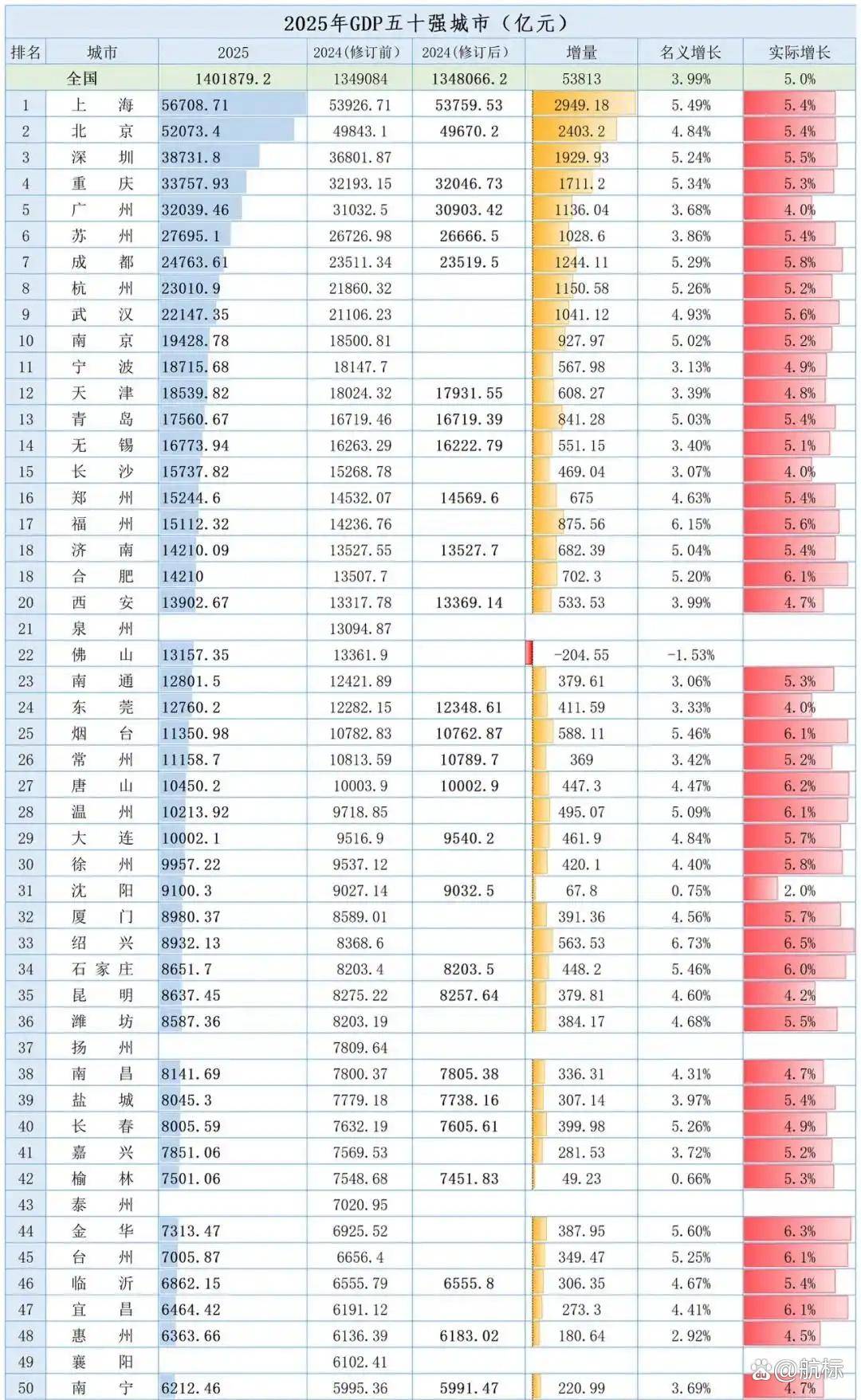
Core Insights - The 2025 GDP rankings of Chinese cities reveal significant shifts, indicating intense competition among cities to enhance their economic foundations and future prospects [1] Group 1: Economic Performance - Shenzhen's GDP reached 38,731.8 billion, with a nominal growth rate of 5.34%, positioning it as a leader among first-tier cities [3][4] - Qingdao's GDP is projected at 17,560.67 billion, closing the gap with Tianjin, which has a GDP of 18,539.82 billion, indicating a competitive economic landscape in northern China [6] - Wenzhou and Dalian both entered the "trillion club" with GDPs of 10,213.92 billion and 10,002.1 billion respectively, marking significant milestones for their regional economies [8][10] Group 2: Key Economic Drivers - Shenzhen's economic growth is driven by its innovation ecosystem, with over 23,000 high-tech enterprises and a dominant position in PCT international patent applications [3][4] - Qingdao's economic strength is bolstered by its maritime economy, with a port handling over 700 million tons of cargo, and a focus on high-end manufacturing and services [6] - Wenzhou's growth is attributed to its vibrant private sector, with over 1.3 million market entities and a significant increase in digital retail sales [8] - Dalian's economic expansion is linked to its focus on high-end equipment manufacturing and petrochemical industries, alongside a strong performance in foreign investment and trade [10] Group 3: Future Competitiveness - The evolving GDP rankings reflect deeper competitive dynamics among cities, emphasizing the importance of leveraging unique advantages to build sustainable competitive strengths [12]
2024年中美经济总量差异解析,明年数据预测,实际差距是多少
Sou Hu Cai Jing· 2026-02-01 09:44
Economic Comparison - The economic strength comparison between China and the United States is not a simple race but a complex international chess game [1] - In 2024, China's GDP is projected to reach approximately $18.93 trillion, ranking second globally, while the U.S. GDP is expected to be around $29.18 trillion, with a growth rate of 6.9% [3] - The gap in GDP between the two countries is significant, with the U.S. expected to reach $30.6 trillion by 2025, while China may reach $19.63 trillion, resulting in an $11 trillion difference [3] Industry Structure - The U.S. service sector accounts for over 80% of its economy, with finance, technology, and high-end services contributing nearly half of the global output [5] - China's service sector has increased to 54.6% of its GDP in 2023, but it still lags behind the U.S. in high-value and high-end service industries [5] - The transition from being the "world's factory" to an "innovation engine" is a critical challenge for China, as it faces "bottleneck" issues in technology [5] Technological Innovation - The semiconductor industry is a key battleground in U.S.-China competition, with U.S. companies holding over 60% of the global high-performance chip market [6] - In 2023, the top ten global R&D investors included five U.S. companies and only two from China, indicating a significant gap in innovation capabilities [8] - The future economic fate of both countries will hinge on their ability to innovate and achieve breakthroughs in technology [8] Income Disparity - In 2024, the per capita GDP in the U.S. is expected to exceed $86,000, while China's is around $13,000, representing only about 15% of the U.S. figure [9] - This income disparity reflects significant differences in living standards, healthcare, and educational resources between the two countries [9] Soft Power and Global Influence - The U.S. maintains control over major global financial systems, with the dollar as the world's primary reserve currency [12] - China is expanding its global influence through initiatives like the Belt and Road Initiative and the Asian Infrastructure Investment Bank [12] - The competition for soft power has evolved into a multi-faceted contest, where gaining international support is crucial for future global positioning [12] Trade Relations and Global Supply Chains - Trade tensions and tariff wars between the U.S. and China have led to adjustments in global supply chains, with many manufacturing orders shifting to emerging markets [14] - In 2023, China set a record for foreign direct investment, as companies seek to mitigate external risks [14] - The ongoing trade disputes have direct impacts on consumer prices and employment, affecting ordinary citizens [14] Future Economic Landscape - The global economic landscape is shifting from a U.S.-China dominance to a more diversified and complex structure, with countries like India and the EU seeking to close the gap [16] - The competition between China and the U.S. is not just about GDP figures but encompasses comprehensive national strength, innovation capacity, and the well-being of citizens [16] - The ability to improve technological strength and soft power while ensuring that more people benefit from economic growth is essential for China's long-term success [19]
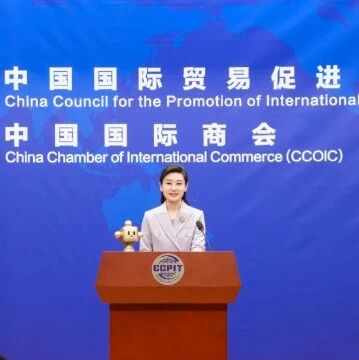
贸促会发布新一期全球经贸摩擦指数,欧盟升至榜首
第一财经· 2026-01-28 11:31
Core Viewpoint - The article highlights the increasing trade friction between the EU and China, driven by the EU's recent measures that disproportionately affect Chinese companies, particularly in key industries such as semiconductors and rare earth materials [3][4][5]. Group 1: Trade Friction and Measures - The EU has recently intensified its trade friction measures, surpassing the US in the amount of anti-subsidy and anti-dumping investigations initiated, marking a significant shift in the global trade landscape [3]. - In November 2025, the trade friction index for China recorded a high of 101, with the EU having the highest index among 19 countries, particularly affecting critical sectors like semiconductors and rare earth magnets [3][4]. - Despite the high index, the absolute monetary value of trade friction measures against China decreased by 12.4% year-on-year and 2.4% month-on-month [3]. Group 2: Discriminatory Measures Against Chinese Companies - The EU has increased unreasonable discriminatory measures against Chinese enterprises, including the implementation of the Carbon Border Adjustment Mechanism (CBAM), which sets excessively high default values for carbon emissions from Chinese products [5]. - New EU regulations require member states to exclude "high-risk suppliers" in 18 critical industries, unjustly labeling certain Chinese companies as high-risk and limiting their participation in 5G infrastructure [6]. - The Chinese Ministry of Commerce has criticized these actions as unfair and discriminatory, urging the EU to provide a fair and transparent business environment for Chinese companies [6]. Group 3: Chinese Companies' Investment Outlook - In 2025, China's foreign direct investment grew by 7.1%, indicating a strong demand for Chinese companies to expand internationally [8]. - A survey of over 1,200 Chinese companies revealed that nearly 80% intend to maintain or expand their foreign investment, with 90% expressing optimism about the future of Chinese overseas investments [8]. - The Chinese government is enhancing its overseas service systems to support companies in their international ventures, with initiatives like the "Thousand Groups Going Abroad" program facilitating business negotiations in 92 countries [9].
欧盟将部分中国企业列为关键领域高风险供应商,商务部回应
Nan Fang Du Shi Bao· 2026-01-22 11:05
Core Viewpoint - The Chinese government expresses serious concern over the European Union's classification of certain Chinese companies as high-risk suppliers, which restricts their participation in 5G infrastructure development [1][2] Group 1: EU's Actions - The European Commission proposed a new amendment to the Cybersecurity Act on January 20, aiming to phase out components and equipment from high-risk suppliers in critical infrastructure [1] - The EU's requirement for member states to exclude high-risk suppliers from 18 key industries, including energy, transportation, and ICT services, is viewed as a direct action against Chinese companies [1] Group 2: China's Response - The Chinese government emphasizes that its companies have been operating in Europe in compliance with local laws, providing quality products and services that contribute to the development of the European telecommunications and digital industries [1] - The Chinese government firmly opposes the EU's discriminatory actions against Chinese companies and the politicization of economic issues [1] Group 3: Market Implications - The use of non-technical standards by the EU to restrict or prohibit market access is seen as a significant distortion of fair competition, which could harm both parties and create risks in the digital supply chain [1] - The Chinese government urges the EU to adhere to the principle of technological neutrality in cybersecurity and avoid excessive security measures that could hinder normal economic cooperation between China and the EU [2]