金刚石铜

Search documents
算力狂飙下:金刚石铜迎来“必选项”时刻
半导体行业观察· 2026-03-18 00:50
Core Viewpoint - Nvidia's founder Jensen Huang's visit to China in early 2026 is focused on finding ultimate solutions for high-end cooling for the next generation of chips, particularly through a partnership with Henan Chaoying Diamond Technology [1] Group 1: AI Computing and Cooling Crisis - The surge in AI model training and inference demands has led to increased transistor density and operating frequency, making heat accumulation a core bottleneck for computing power release [2] - Over 35% of electronic device failures are due to overheating, and 40% of energy consumption in AI data centers is used for cooling [2] - Traditional cooling solutions are reaching their physical limits, unable to meet the cooling demands of ultra-high power chips [3] Group 2: Diamond-Copper Composite Material - Diamond-copper composite material offers a breakthrough with ultra-high thermal conductivity and adjustable thermal expansion coefficients [5] - The theoretical thermal conductivity of diamond can reach 2200 W/(m·K), and when combined with copper, the thermal conductivity can exceed 600-1000 W/(m·K) [5] - This material addresses cooling pain points by rapidly conducting high heat flow density and significantly reducing thermal resistance [6] Group 3: Integration of Cooling Solutions - Nvidia may adopt an integrated solution combining both primary and secondary packaging for cooling, optimizing performance and cost [7] - The integration of micro-channel structures in silicon chips with diamond-copper heat spreaders aims to enhance cooling efficiency [7] - The traditional CoWoS packaging system has limitations that the new integrated design seeks to overcome [7] Group 4: Huatai Electronics' Strategic Position - Huatai Electronics has established a dual-track strategy for diamond-copper technology, entering customer sampling and performance validation stages [10] - The company has completed key simulation validations showing significant advantages of diamond-copper over pure copper [10] - Huatai's comprehensive product matrix includes various thermal materials and core processing technologies, positioning it as a leading player in the market [12] Group 5: Commercialization Challenges - The application of diamond-copper in data centers is still in the early verification stage, facing challenges in technology, cost, and industry collaboration [17] - Huatai has made breakthroughs in interface bonding and production processes to enhance performance and reduce costs [19] - The supply chain for diamond-copper is fully localized, mitigating risks associated with external dependencies [20] Group 6: Future Outlook - The market for diamond-copper is expected to see explosive growth, particularly in data centers, with 2026 anticipated as a pivotal year for commercialization [23] - Huatai plans to extend its offerings from single-chip cooling solutions to comprehensive system-level cooling solutions [24] - The company aims to position itself as a global leader in high-end diamond-copper solutions, focusing on both domestic and international markets [21]


从铜到金刚石铜、石墨烯铜、SiC,液冷板“新”材料的未来
DT新材料· 2026-03-09 16:04
Core Viewpoint - The article discusses the evolution of cooling technologies in response to increasing chip power densities, highlighting the limitations of traditional copper cooling solutions and the emergence of advanced materials like diamond and graphene composites for effective thermal management [2][4][28]. Group 1: Chip Power Trends - The power consumption of GPUs has escalated from 700W to 1400W, with future models potentially reaching 4000W, necessitating a shift from optional to mandatory liquid cooling solutions [4][10]. - The maximum system power for cabinets is projected to increase from approximately 140kW to around 600kW by 2027, indicating a significant rise in thermal management challenges [3][4]. Group 2: Material Limitations and Innovations - Traditional pure copper cooling solutions have a thermal conductivity of 380-400 W/mK, which may not suffice for the heat dissipation required at higher power levels, leading to potential heat accumulation [5][28]. - The article emphasizes the need for new materials as traditional metals reach their physical limits, with a focus on high thermal conductivity composite materials like diamond and graphene [8][28]. Group 3: Advanced Cooling Technologies - The evolution from single-phase to two-phase cooling technologies is highlighted, with companies like 双鸿科技 proposing a roadmap for material optimization in thermal management [8][10]. - Diamond composites can achieve thermal conductivities of 600-800 W/mK, significantly enhancing heat dissipation capabilities compared to copper [11][12]. - Graphene-copper composites are positioned as a key technology for 2025-2026, offering improved thermal performance while maintaining compatibility with existing manufacturing processes [21][22]. Group 4: Future Directions in Thermal Management - The article suggests a trend towards heterogeneous integration in cooling solutions, where different materials are used strategically across various components to optimize thermal management [28]. - The use of composite phase change materials (CPCM) is proposed as a method to absorb transient heat spikes, providing additional thermal stability during peak loads [27][28].
华为哈勃再落一子,投资一家半导体相关厂商
Sou Hu Cai Jing· 2026-02-27 06:27
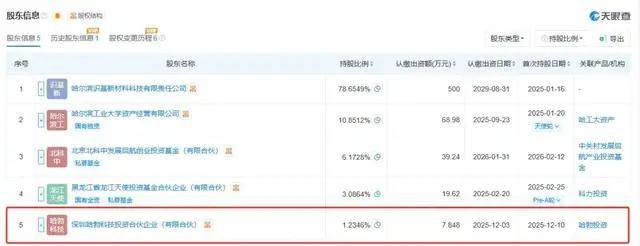
Core Viewpoint - Huawei has made a strategic investment in Harbin Yisheng New Materials Technology Co., Ltd., a high-tech company focused on the research and production of metal-based thermal management materials, indicating confidence in the company's technological capabilities and growth potential [1][4]. Company Overview - Harbin Yisheng New Materials was established in September 2024 with a registered capital of 6.3569 million yuan, focusing on new material technology research and development, integrated circuit chip manufacturing, and sales [2]. - The company has completed several rounds of financing since its establishment, with notable investors including Huawei's Harbo Investment and Harbin Institute of Technology Asset Management Co., Ltd. [5]. Investment Details - Harbo Investment, a subsidiary of Huawei, is now the fifth-largest shareholder in Yisheng New Materials, holding approximately 1.23% of the company with a subscribed capital of 78,500 yuan [2][5]. - The investment amount from Harbo Investment is not high, but it reflects Huawei's recognition of Yisheng's technological strength [4]. Shareholder Structure - Yisheng New Materials has five shareholders, with the largest being Harbin Shiji New Materials Technology Co., Ltd., holding 78.65% of the shares, followed by Harbin Institute of Technology Asset Management and Beijing Beike Zhong Development Fund, holding 10.85% and 6.17% respectively [5][6]. Technological Background - The technology of Yisheng New Materials is derived from Harbin Jinwei New Materials Co., Ltd., established in 2018, and is supported by a team led by Professor Wu Gaohui from Harbin Institute of Technology [7]. - The company has developed high thermal conductivity materials such as diamond copper and diamond aluminum, which are crucial for next-generation electronic devices and have filled a domestic gap in this product category [7]. Future Plans - The recent financing round will primarily be used for the procurement of production line equipment, capacity expansion, and the research and development of next-generation thermal control materials [8]. - The investment from Huawei and other state-owned enterprises is expected to accelerate Yisheng's capacity expansion and R&D efforts, promoting advancements in the semiconductor industry towards higher performance and reliability [9].
上证早知道|沐曦股份 申购日定了;广联达 回应供货谷歌;工业富联 上调回购价格
Shang Hai Zheng Quan Bao· 2025-11-26 23:13
Group 1 - The establishment of the Industrial Artificial Intelligence Research Institute in Nanjing aims to drive high-quality development in the manufacturing sector through a collaborative innovation system [1] - Guangdong's financial management bureau has released a plan to support enterprises in industry chain integration and mergers, focusing on enhancing the strength and efficiency of key segments within the industry chain [1] - The Ministry of Industry and Information Technology reported that telecommunications revenue reached 1.467 trillion yuan in the first ten months of the year, a year-on-year increase of 0.9% [1] Group 2 - The National Development and Reform Commission announced new guidelines for credit repair management, detailing public disclosure periods for different levels of credit violations [2] - The launch of the Liaoning Computing Power Platform is part of a national initiative to integrate computing resources and enhance data flow and utilization [2] Group 3 - A new consumption promotion plan aims to optimize the supply structure of consumer goods by 2027, with a focus on developing new business models such as live e-commerce and instant retail [3] - The plan encourages the use of AI and other digital technologies to enhance consumer experiences and promote high-quality consumer goods [3] Group 4 - Reports indicate that regions like Zhejiang, Shanghai, Beijing, and Guangdong are implementing innovative measures to boost digital trade, including policy optimization and support for cross-border data flow [4] - Overall consumer demand is showing positive trends, with recommendations to focus on e-commerce platforms' supply chain capabilities and AI integration [4] Group 5 - The China Automotive Engineering Society plans to release standards for "vehicle-road-cloud integration" by the end of the year, emphasizing the need for data sharing and infrastructure classification [5] - The integration of smart vehicles with roadside and cloud systems is expected to enhance safety and traffic efficiency [6] Group 6 - Muxi Co. plans to issue 40.1 million shares in its initial public offering on the Sci-Tech Innovation Board [7] - Industrial Fulian has adjusted its share repurchase price cap to a maximum of 75 yuan per share, significantly higher than the previous limit [7] - Alibaba Health reported a revenue of 16.697 billion yuan for the first half of the fiscal year 2026, marking a 17% year-on-year increase [7] Group 7 - The first batch of robotics ETFs has been submitted for approval, indicating a potential influx of capital into the technology sector [9] - Institutional investors have shown interest in CIMC Group, with a net purchase of 187 million yuan, reflecting confidence in the company's long-term growth prospects [10]

立讯精密:微通道技术预计明年量产
Zheng Quan Shi Bao Wang· 2025-11-26 07:52
Core Viewpoint - Lixun Precision (002475) is strategically shifting its focus from traditional fan cooling to advanced liquid cooling technologies, aligning its product offerings with the growing demands of AI applications [1] Group 1: Product Development - Lixun Precision has formed a comprehensive product "family" for thermal management through acquisitions and the establishment of a top-tier R&D team [1] - The company is transitioning from fan cooling to liquid cooling solutions, which include cold plate cooling, two-phase cooling, spray cooling, and immersion cooling [1] - The microchannel technology, which was laid out two years ago, is expected to enter mass production next year [1] Group 2: Research and Innovation - The diamond copper project, a leading industry research initiative, demonstrates superior thermal conductivity compared to standard copper and has a thermal expansion coefficient that matches silicon, significantly reducing thermal resistance [1] - The R&D team's simulation capabilities are industry-leading, with actual measurements differing from simulations by only ±1 degree [1]

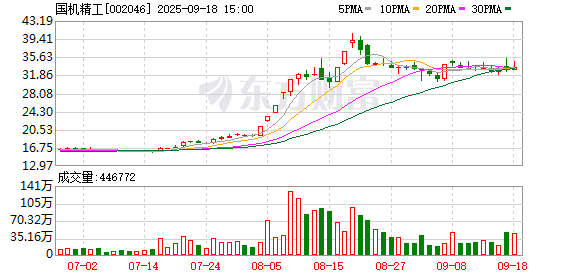
国机精工:金刚石铜导热系数大约800W/m·K
Mei Ri Jing Ji Xin Wen· 2025-09-18 08:33
Group 1 - The company has developed a diamond-copper hybrid heat dissipation product, which shows a significant improvement in thermal conductivity compared to pure copper [2] - The thermal conductivity of diamond-copper is approximately 800 W/m·K, while that of copper is about 400 W/m·K, indicating a 100% increase in efficiency [2] - The company has been questioned about the price increase of pure copper and its impact on the new product's competitiveness [2]