
长安十二时辰主题街区

Search documents
【省文化和旅游厅】陕西立足深厚文化根脉与资源优势
Shan Xi Ri Bao· 2026-01-28 00:37
Core Perspective - Shaanxi is leveraging its cultural resources as a strategic asset to enhance its identity and promote economic development through cultural heritage protection and innovation [1] Group 1: Cultural Heritage Protection - Shaanxi has completed a census of 1 million ancient books across 75 storage units, establishing a database of 100,000 records to ensure the preservation of key ancient texts [3] - The province has recognized 5 units as national key protection units for ancient books, with 162 ancient texts included in the National Precious Ancient Books Directory [3] - The restoration of the Song and Yuan editions of the "Qisha Cang" has been completed, extending the lifespan of these texts and setting a foundation for further ancient book protection efforts [2] Group 2: Cultural and Technological Integration - The Shaanxi AR Interactive Experience Exhibition has attracted over 10,000 visitors since its opening, utilizing AI and AR technologies to enhance the presentation of intangible cultural heritage [5] - The province's digital initiatives have generated over 2 billion yuan in revenue from performances like the "Chang Hen Ge" and attracted over 2 million visitors to themed districts [6] - Shaanxi is establishing a digital ecosystem for cultural tourism, including the launch of the first provincial-level cultural tourism AI model, "Bo Guan," which has served over 6.5 million tourists [6] Group 3: International Cultural Exchange - The 11th Silk Road International Arts Festival attracted over 80,000 attendees and reached over 100 million people online, showcasing Shaanxi as a key player in international cultural exchange [8] - Shaanxi has hosted 28 major cultural exchange events, including the first China-Central Asia Summit and the 14th China-U.S. Tourism High-Level Dialogue [9] - The province is preparing for the "Happy Spring Festival" event abroad, aiming to present Shaanxi's cultural heritage to international audiences during the 2026 Lunar New Year [9]
关于推进文旅深度融合的思考
Xin Lang Cai Jing· 2026-01-25 23:27
Core Viewpoint - The construction of a tourism powerhouse in China requires a transition from "scale expansion" to "quality efficiency" and from "resource advantages" to "cultural advantages," with cultural and tourism integration serving as a vital link throughout this process [1][2]. Economic Dimension - Cultural and tourism integration is a key engine for building a new development pattern, responding to the need for improved consumption mechanisms and stimulating private investment [2]. - The Taizhou Cultural Tourism Area in Zhejiang has seen a significant increase in visitor numbers, reaching 15.37 million in 2023 (up nearly 100% year-on-year) and projected to reach 23.45 million in 2024 (up approximately 53%) [2]. Cultural Dimension - Cultural and tourism integration serves as a vibrant carrier for the inheritance and innovation of civilization, allowing traditional culture to engage with younger generations through immersive experiences [3]. - Examples include the popularity of the Yuncheng Wooden Pagoda due to the game "Black Myth: Wukong" and the use of digital technology to bring Dunhuang murals to life [3]. Social Dimension - Cultural and tourism integration is an effective path to promote common prosperity, connecting urban and rural areas and driving economic growth through events like the "Village Super" and "Village BA" [4]. - In places like Sichuan's Gulu Village, improved infrastructure has transformed it into a tourism hub, showcasing how cultural tourism can address urban-rural development imbalances [4]. International Dimension - Cultural and tourism integration is a crucial window for telling China's story internationally, with iconic sites attracting more foreign tourists and enhancing cross-cultural exchanges [4]. Practical Examples - In Xi'an, immersive cultural experiences have transformed traditional sightseeing into interactive engagements, blending history with modern entertainment [6]. - In Guizhou, the "Village Super" sports events have integrated local culture, benefiting the community economically while preserving its heritage [6]. - Technological innovations in places like Yangzhou and Hangzhou have enhanced visitor experiences through digital and smart solutions [7]. Pathways for Deepening Integration - Despite progress, challenges such as homogenization and insufficient public service supply remain, necessitating reforms to enhance the quality and depth of cultural and tourism integration [8]. - Emphasizing unique cultural identities and avoiding superficial integration can help create distinctive tourism experiences [9]. - Leveraging technology to enhance both virtual and real-world experiences is essential for improving the quality of cultural tourism [10]. Talent Development - The integration of culture and tourism requires a skilled workforce that understands both cultural heritage and tourism operations, necessitating educational reforms and talent cultivation [11].
经济日报:精准施策持续扩大消费
Xin Lang Cai Jing· 2026-01-11 01:43
Group 1 - The core viewpoint of the article emphasizes the importance of consumption in economic development and improving people's livelihoods, highlighting a steady performance in China's consumption market with a retail sales total of 45.6 trillion yuan, a year-on-year growth of 4.0%, which is 0.5 percentage points faster than the same period last year [2] - The article discusses the implementation of various policies since the beginning of 2025, such as the "Special Action Plan to Boost Consumption," which aims to create a comprehensive support system for consumption through financial and fiscal collaboration, including government subsidies and financial support [3] - It notes a recent slowdown in consumption growth, particularly in retail sales, which have seen a decline for six consecutive months, indicating that insufficient domestic demand remains a prominent issue in the current economic landscape [3] Group 2 - The article highlights a shift in consumer behavior from primarily goods consumption to a balanced focus on both goods and service consumption, with strong demand in areas such as cultural tourism and elderly care services [4] - It emphasizes the potential for service consumption to drive economic growth, citing examples like immersive cultural experiences and community-based elderly care facilities that cater to evolving consumer needs [4] - The article concludes that expanding domestic demand is a top priority for 2026, with boosting consumption being crucial for this goal, and stresses the need to enhance residents' income and strengthen the service consumption sector to unlock the market's potential [4]

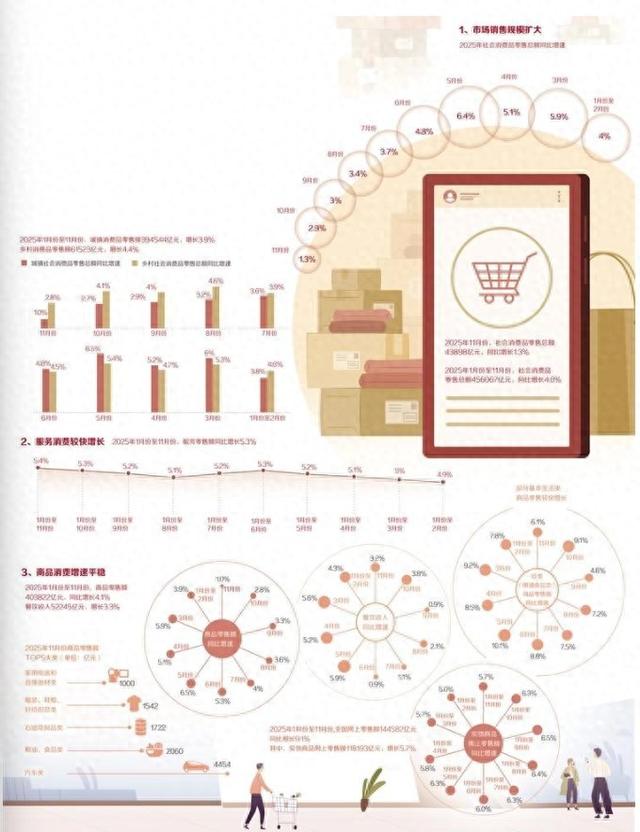
精准施策持续扩大消费
Jing Ji Ri Bao· 2026-01-10 22:00
Group 1 - The core viewpoint of the articles emphasizes the importance of consumption in economic development and improving people's livelihoods, highlighting a steady performance in China's consumption market with a retail sales total of 45.6 trillion yuan, a year-on-year growth of 4.0%, which is 0.5 percentage points faster than the same period last year [1] - Various policies, such as the "Special Action Plan to Boost Consumption," have been implemented to support consumption through multiple dimensions, including income increase, supply upgrades, and environmental optimization, creating a comprehensive support system for consumption [1][2] - Despite the positive trends, there has been a recent slowdown in consumption growth, particularly with retail sales growth declining for six consecutive months, indicating persistent issues with domestic demand [1][2] Group 2 - The articles suggest that stable income leads to stable consumption, and income growth drives consumption, with current consumer confidence being affected by slow income growth and uncertain future expectations [2] - There is a shift in consumption patterns from goods to a balance between goods and services, with strong demand in service sectors such as cultural tourism and elderly care, indicating significant potential for service consumption [2][3] - Expanding domestic demand is identified as a top priority for 2026, with boosting consumption being crucial for this goal, leveraging the large population and the irreversible trend of consumption upgrading [3]
全省文化“两创”工作座谈会上,与会人员热议新时代文化“两创”——解码文化“两创”的生动样本
Da Zhong Ri Bao· 2025-11-27 01:09
Core Viewpoint - The revitalization of the Chinese nation is supported by the prosperity of Chinese culture, and Shandong is committed to deepening cultural development and innovation, contributing to the modern civilization of the Chinese nation [1] Group 1: Cultural Innovation Practices - Shandong's cultural innovation practices serve as a vivid example of the methodology of decoding, translating, developing, and revitalizing traditional culture [2] - The province is focusing on creating new benchmarks for cultural innovation, including projects like the "Shandong Cultural Heritage" initiative and the "Shandong Handcrafted" brand [2] - Shandong has produced award-winning cultural works, with several dramas and radio plays receiving national accolades, showcasing the province's commitment to cultural excellence [2] Group 2: Integration of Culture and Daily Life - The Shandong Cultural Tourism Group is enhancing the integration of culture, tourism, and education, creating replicable models for rural revitalization [3] - Various cultural performances and projects are being developed, including large-scale water performances and community cultural activities, to engage the public [3] Group 3: Digital Transformation in Culture - The establishment of the Shandong Digital Culture Group aims to leverage technology to enhance cultural innovation and create new cultural dissemination ecosystems [4] - Digital transformation of traditional arts is underway, with significant data digitization efforts being made to preserve and promote cultural resources [4] Group 4: Cultural Industry Development - Local governments are developing cultural industries that make traditional culture accessible and engaging for the public [5] - Qingdao is revitalizing its historical areas and creating immersive cultural experiences to enhance urban memory and tourism [5] Group 5: Promoting Local Cultural Heritage - Various cities in Shandong are focusing on promoting local cultural heritage through innovative projects and exhibitions, such as the development of museums and cultural routes [6][7] - The city of Heze has achieved significant economic output from its cultural products, showcasing the potential of cultural industries [7] Group 6: International Cultural Communication - Experts emphasize the importance of storytelling and cultural exchange in promoting Chinese culture internationally, advocating for a humanized and relatable approach [8] - The integration of cultural tourism and film industries is seen as a way to enhance the vitality of cities and create immersive experiences for visitors [8] Group 7: Non-Material Cultural Heritage - The integration of non-material cultural heritage with existing tourism projects is highlighted as an effective way to enhance visitor experiences [9] - Innovative approaches to cultural communication, such as engaging and relatable messaging, are being adopted to attract younger audiences [9]
千年古都的“文化破圈”与“经济新生”
Zhong Guo Jing Ji Wang· 2025-11-14 08:16
Group 1: Cultural and Tourism Development - The Qujiang Flying Theatre, which opened in late September, utilizes naked-eye 3D technology to immerse visitors in the grandeur of the Tang Dynasty, attracting over ten thousand tourists within its first month [1] - In the first half of 2025, Xi'an received 160.11 million tourists, with total spending reaching 202.41 billion yuan, marking an 8.03% increase, establishing itself as a new engine for economic growth [1] - The "Cultural Prosperity" strategy in Xi'an aims to deepen the integration of culture and tourism, innovate cultural formats, and enhance digital empowerment to transform historical cultural resources into high-quality development momentum [1] Group 2: Cultural Heritage and Preservation - Xi'an City Wall, as the most complete ancient city wall in China, has established a system for cultural heritage protection that includes monitoring, environmental improvement, and active utilization [2] - The use of AR technology to recreate Tang Dynasty defense scenes and 3D printing to restore ancient structures demonstrates innovative approaches to cultural preservation [2] Group 3: Cultural Events and Engagement - The "Daming Palace Night City" features performances that combine Tang poetry with modern stage technology, attracting over one million viewers annually [4] - The Qin Terracotta Army Museum's "Digital Terracotta Warriors" project allows global users to participate in the restoration of terracotta figures, enhancing visitor engagement [4] Group 4: Economic Impact of Cultural Industries - The "Chang'an Twelve Hours" themed street has become a cultural phenomenon, receiving over 7 million visitors since its opening and significantly boosting local dining, accommodation, and traditional clothing industries [5] - The street's unique integration of Tang culture with modern entertainment has generated a total revenue of 230 million yuan in 2024 [5] Group 5: Digital Content and Innovation - Xi'an has established a Digital Content Industry Research Institute, attracting 32 companies and generating over 100 million yuan in revenue through original XR projects and over 500 micro-short films [7] - The city has hosted 12 large concerts in the first half of the year, attracting 200,000 attendees and generating an additional 170 million yuan in consumer spending [7] Group 6: Community Engagement and Quality of Life - The development of a "15-minute convenient living circle" in Xi'an has integrated cultural activities into daily life, enhancing community engagement and quality of life for residents [8] - Local performances and events have become more accessible, with venues hosting an average of 560 performances in 2025, achieving an 85% occupancy rate [10] Group 7: Cultural Exchange and Global Recognition - Xi'an serves as a key node in the "Belt and Road" initiative, promoting cultural exchange and mutual understanding through events like the Silk Road International Arts Festival [11] - The city's efforts to balance historical preservation with modern innovation provide a model for other cities aiming to enhance their cultural identity and economic vitality [11]
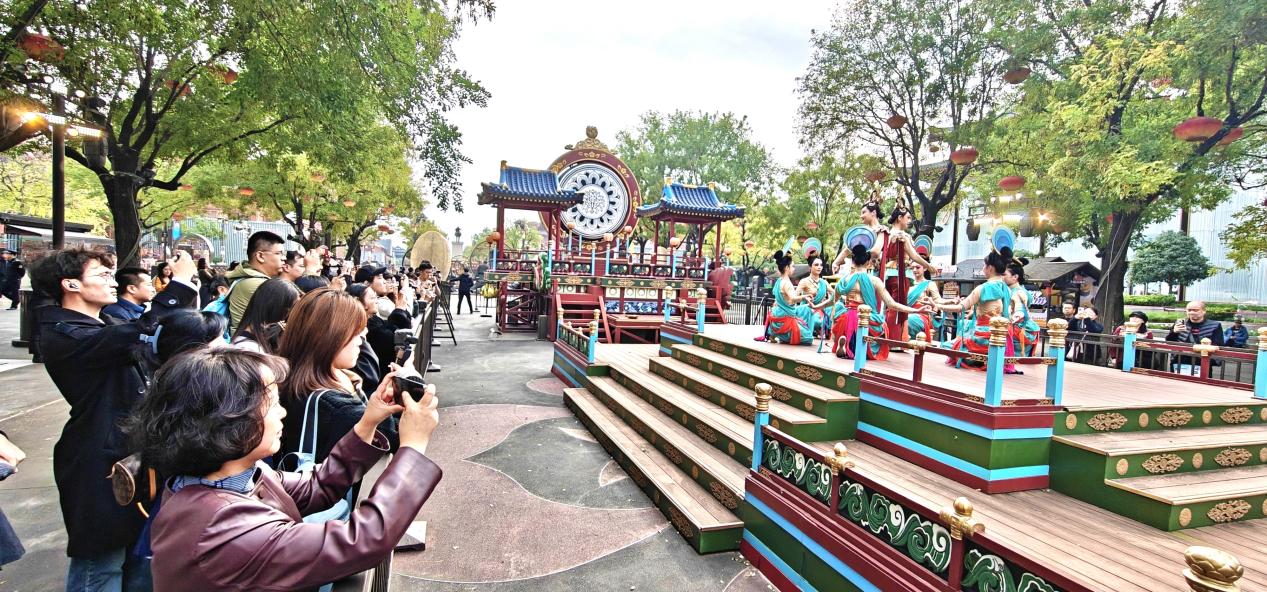
西安:盛唐之韵邂逅秋日诗意 沉浸式文旅催热长假游
Zhong Guo Xin Wen Wang· 2025-10-02 02:22
Core Insights - The article highlights the immersive cultural tourism project "Chang'an Twelve Hours" in Xi'an, which aims to deepen the experience of Tang culture and explore new expressions of it [1][3] - The project launched a series of activities titled "Full Moon Mid-Autumn, Dream Chang'an" during the Mid-Autumn Festival and National Day, enhancing the visitor experience with a blend of technology and cultural elements [1][3] Group 1 - The "Chang'an Twelve Hours" theme district is focused on creating an immersive experience that integrates traditional culture with modern technology [1][3] - During the National Day holiday, the district featured performances by nearly a hundred NPC actors, enhancing visitor interaction and recreating the grandeur of the Tang dynasty [3] - The district is recognized as one of the first pilot projects for smart tourism immersive experience spaces in China, showcasing a blend of virtual and physical elements [3] Group 2 - The activities during the double festival significantly improved visitor engagement and satisfaction, validating the concept of "cultural empowerment of tourism" [3] - The district's future plans include further exploration of Tang culture experiences to contribute to the high-quality development of Shaanxi's cultural tourism industry [3]
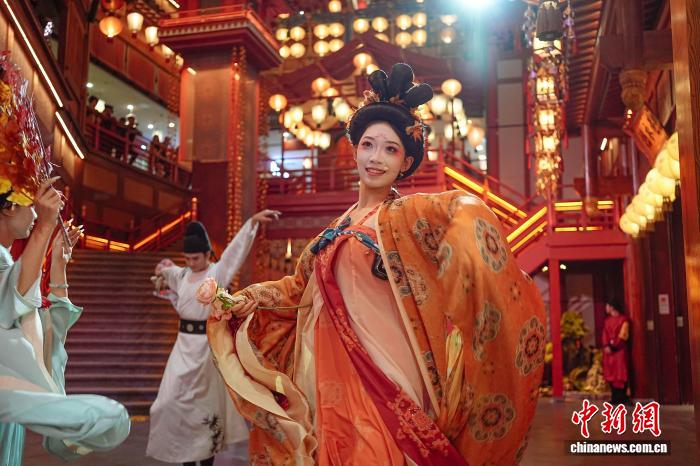
新时代中国调研行之文化中华|在长安十二时辰主题街区记者感受唐风唐韵
Xin Hua She· 2025-09-24 11:30
Core Insights - The article highlights the immersive experience of visitors in recreating the cultural charm of the ancient capital during the Tang Dynasty through various activities and exhibitions [2] Group 1 - The exploration includes street stalls and intangible cultural heritage performances that replicate a day in the prosperous Chang'an of the Tang Dynasty [2]

文旅创新融合激活消费市场
Shan Xi Ri Bao· 2025-08-23 00:18
Group 1 - The "Chang'an Twelve Hours" themed district has become a new landmark for cultural tourism in Xi'an, attracting an average of 8,000 visitors daily this summer, with operating income increasing by 12% year-on-year [2] - The Shaanxi Provincial Party Committee has approved a plan to accelerate the construction of a culturally strong province, emphasizing the deep integration of culture and tourism [2] - The integration of culture and tourism in Shaanxi is being driven by "cultural+" initiatives, contributing to high-quality economic development [2] Group 2 - The newly established Shaanxi Intangible Cultural Heritage Experience Center has become a popular destination, attracting nearly 40,000 visitors in two months, showcasing around 2,000 exhibits of Shaanxi's intangible cultural heritage [3] - The immersive performances such as "The Song of Everlasting Regret" and "The Legend of the Camel Bell" have maintained high attendance rates, indicating a successful blend of performance and tourism [3] - The "Xi'an Lantern Festival" has seen over a 200% increase in visitor numbers compared to the same period last year, enhancing the cultural landscape of the ancient city [4] Group 3 - The Shaanxi Provincial Tourism Department has issued 20 million yuan in tourism consumption vouchers during the summer tourism season, promoting 1,216 cultural tourism activities across the province [4] - The development of unique cultural tourism products and services is significantly enhancing the cultural satisfaction and happiness of the local population [4]
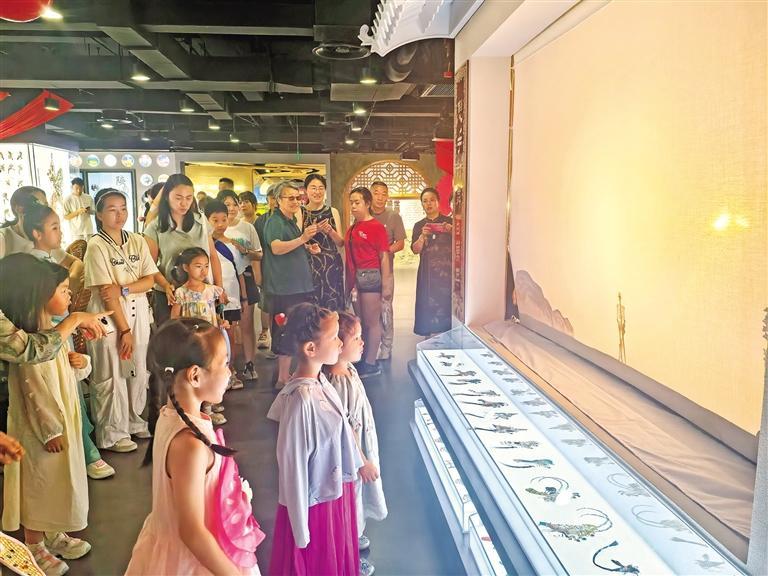
陕西旅游景区在焕新中蓬勃发展
Shan Xi Ri Bao· 2025-07-17 23:45
Core Insights - The article highlights the innovative transformation and development of tourism attractions in Shaanxi, particularly focusing on the Long'an Twelve Hours theme district and the Qian Nian Jiu Cheng Gong performance, which enhance the cultural experience and attract both domestic and international tourists [1][7][9] Group 1: Cultural Appeal - The Long'an Twelve Hours theme district has seen a surge in foreign visitors, drawn by the charm of Tang culture and improved payment services, showcasing that the more national the culture, the more global its appeal [1][2] - Tourists engage in immersive experiences, such as wearing traditional costumes and capturing moments to share on social media, enhancing the cultural exchange [1] Group 2: Technological Integration - The integration of technology in tourism, exemplified by the use of VR experiences and AI in the Yongxingfang area, has revitalized cultural presentations and attracted more visitors [5][6] - Yongxingfang has transformed from a food street into a multifaceted cultural experience, combining local cuisine with various non-heritage projects and tech-driven attractions [5][6] Group 3: Unique Cultural IP Development - The Qian Nian Jiu Cheng Gong performance offers a unique cultural experience that combines historical storytelling with modern artistic elements, significantly enhancing the nighttime economy and visitor engagement in Linyou [7][8] - The performance is based on the historical significance of the Jiu Cheng Gong and incorporates various art forms, making it a must-see for tourists [7] Group 4: Investment and Growth - Linyou County has invested over 30 million yuan in cultural heritage protection and is set to open a new museum project worth 320 million yuan, indicating a strong commitment to cultural tourism development [8] - The county's branding as a cultural tourism destination is supported by various initiatives, including sports and cultural events, aimed at boosting tourism consumption [8][9]