
青年鸡

Search documents
晓鸣股份20260326
2026-03-26 13:20
Summary of the Conference Call for Xiaoming Co., Ltd. Industry Overview - The egg-laying chicken industry in 2025 is characterized by overproduction due to excessive replenishment in the first half of the year, with over 600 million chickens added, leading to a supply surplus that is expected to last until July-August 2026 [2][3][4]. - The second half of 2026 is anticipated to shift towards a tight balance in supply and demand, primarily due to insufficient replenishment in the latter half of 2025 and the first half of 2026, alongside expectations of a rebound in pork prices [2][5]. - The average laying hen stock in 2025 remained high, exceeding 1.3 billion, indicating a significant overcapacity [3][4]. Key Points on Xiaoming Co., Ltd. - Xiaoming Co., Ltd. aims for a chick sales target of 350 million in 2026, capturing a 30% market share, with orders extending to late May 2026 [2][9]. - The company’s core growth driver is the young chicken business, targeting sales of 10 million in 2026, doubling from the previous year, with plans to reach 50 million in 3-4 years [2][14]. - The company has implemented a strategy to convert low-cost chicks into branded eggs when chick prices fall below production costs, allowing for a price premium of 20%-30% [2][16]. - Digitalization and ESG initiatives are accelerating, with plans to establish a "Future Farm" by July 2026, incorporating AI and robotics for farm management [2][6]. Financial Performance and Market Dynamics - The average cost per chick is expected to stabilize around 3.2 yuan, with the company managing to keep costs in check despite rising feed prices [2][10][21]. - The company experienced a loss in January and February 2026 but anticipates profitability starting in March, with orders already booked through May [9][10]. - The young chicken business has shown resilience, with prices recovering in March 2026 after a slight loss in the previous months [13][14]. Market Trends and Consumer Behavior - The egg market is expected to see two small peaks in 2026, with prices fluctuating around the cost line in the first half and potentially rising in the second half due to reduced supply and increased demand for high-quality and branded eggs [5][8]. - There is a growing trend towards quality and brand differentiation in egg consumption, with a shift from traditional markets to supermarkets [5][18]. - The non-caged egg segment is anticipated to grow, although current supply is significantly below demand, indicating a potential market opportunity [18][19]. Strategic Initiatives and Future Outlook - The company plans to expand its "concentrated breeding, decentralized hatching" model, which has proven effective in ensuring biosecurity and operational efficiency [16][17]. - Future growth in the non-caged egg market will depend on legislative progress, increased food safety recognition, and transparency in procurement information [19]. - Xiaoming Co., Ltd. is exploring overseas investment opportunities, with potential developments expected in 2026 [20]. Conclusion - Xiaoming Co., Ltd. is positioned to navigate the challenges of the egg-laying chicken industry through strategic growth in young chicken sales, digital transformation, and a focus on high-quality products. The company is also preparing for potential international expansion while managing costs effectively amidst rising feed prices.
晓鸣股份20260302
2026-03-03 02:52
Summary of the Conference Call for Xiaoming Co. Company Overview - The conference call was held for Xiaoming Co., with Chairman Guo providing insights into the company's recent operational performance and future outlook [1] Key Points on Company Performance - Xiaoming Co. anticipates a net profit attributable to shareholders in the range of 71 million to 92 million for 2025, marking one of the best performances since its listing [2] - The company experienced a significant increase in managerial performance, with growth rates exceeding 60% and 90% in different segments [3] - The first half of 2025 saw sales of approximately 1.5 to 1.6 billion, driven by a strong demand from farmers who are financially stable after a recovery in the previous year [4] - The second half of 2025 is expected to face challenges due to a downturn in the market, with egg prices dropping to around 2.8 to 3.0, which is below the cost line for many farmers [5][7] Industry Insights - The egg industry faced significant losses in 2025, with 8 out of 12 months reporting negative performance [2] - The consumption of eggs is primarily driven by household purchases (51-52%), followed by the catering industry (28%) and processed food (18%) [12] - The market is shifting, with a decline in purchases from traditional markets and an increase in supermarket sales [12] - Future growth in the egg market is expected to come from changes in consumer behavior, such as increased demand for takeout and convenience foods [13] Market Dynamics - The industry is currently experiencing a tight supply situation, with a significant number of farmers holding back on inventory due to previous losses [6][10] - The expected peak in egg production is projected for August 2026, as new high-yield breeds come into production [8] - The overall market for eggs is anticipated to remain volatile, with prices fluctuating around the cost line for producers [10] Future Projections - Xiaoming Co. aims to maintain a sales target of 1 billion units for its products, with a focus on increasing market share and pricing strategies [25][14] - The company is optimistic about the upcoming peak seasons, particularly around the National Day holiday, expecting a balanced supply-demand situation [10][11] - The integration of smaller producers into larger firms is expected to continue, reshaping the competitive landscape of the industry [21] Additional Insights - The company is preparing for potential price increases in the future, driven by rising costs in feed and production [28] - The demand for chicks is currently high, with a tight balance in supply, indicating a potential for price increases in the near term [18] - The overall sentiment in the industry remains cautiously optimistic, with expectations for recovery in the second half of the year [30] This summary encapsulates the key points discussed during the conference call, highlighting the performance of Xiaoming Co. and the broader industry dynamics affecting the egg market.
晓鸣股份20260129
2026-01-30 03:11
Summary of Xiaoming Co. Conference Call Company Overview - **Company**: Xiaoming Co. (晓鸣股份) - **Industry**: Egg production and poultry farming Key Points Financial Performance and Projections - Xiaoming Co. expects a net profit of **71 million to 92 million** yuan for 2025, slightly below market expectations due to low chick sales prices in January and February, leading to a **14 million** yuan inventory impairment provision in Q4, which is expected to reverse after March, boosting profits [3][2] - The company sold **156 million** chicks in the first half of 2025, capturing approximately **27%** of the national market share, with a peak monthly sales of **29 million** chicks [3][2] - Total sales of chicken products for the year reached **278 million** chicks, accounting for over **25%** of the national commercial egg-laying hen population [3][2] Industry Insights - The egg industry is projected to face overall losses in 2025, with only minor profits in January, February, August, and September, while the rest of the year is expected to be unprofitable [5][2] - The egg price increase during the Spring Festival is deemed temporary, with a warning of potential price declines post-holiday due to sufficient inventory of laying hens, approximately **1.25 billion** [6][2] - The supply of egg-laying hens in 2026 will primarily depend on the 2024 batch, with a forecasted **4%** decrease in replenishment compared to the previous year [10][2] Strategic Goals and Expansion - Xiaoming Co. aims to achieve a **3.5 billion** yuan expenditure ratio and a **30%** production rate over the next five years, with plans for capacity expansion of **40 to 50 million** additional hens [7][2] - The company is actively developing non-caged brand eggs (welfare eggs) to mitigate overall loss risks and plans to expand its premix feed business to **5,000 to 6,000 tons** by 2026 [4][2][13][2] Digital Transformation and Management - The company is undergoing digital transformation by developing its own OA, HR, CRM, and farming management systems, aiming to enhance operational efficiency through AI and data analysis [4][22][23] - The implementation of a "Future Farm" concept is in progress, utilizing technology to improve management and efficiency [23][2] Market Dynamics and Future Outlook - The market is expected to experience a tight supply-demand balance starting in July 2026, potentially leading to a price recovery due to insufficient production from the previous year's replenishment [10][11][2] - The company has secured orders through April 2026, with March prices ranging from **3.4 to 3.8** yuan per egg, indicating a positive sales trend [9][2] - The outlook for 2026 suggests a cautious optimism for price recovery, supported by a potential increase in demand and a decrease in supply [24][2] Challenges and Risks - The ongoing threat of avian influenza poses significant risks to the industry, with potential impacts on future supply and pricing [16][17][2] - The reliance on older breeding stock may lead to supply shortages in 2026, as new breeding stock will not be available until 2027 [8][2] International Expansion - Xiaoming Co. is focusing on international markets with a young population and low protein intake, particularly in Southeast Asia and Africa, where there is significant growth potential [19][2][20][2] Youth Chicken Business - The youth chicken business has shown resilience, with sales exceeding expectations in 2025, and plans to increase sales to **8 million** in 2026 [21][2] This summary encapsulates the key insights and projections from Xiaoming Co.'s conference call, highlighting the company's strategic direction, market conditions, and future outlook in the egg production industry.
鸡蛋:情绪抬头,压力后移
Wu Kuang Qi Huo· 2026-01-27 00:59
Report Summary 1. Report Industry Investment Rating No relevant content provided. 2. Core Viewpoint of the Report - Pre - holiday inventory accumulation falling short of expectations, the late Spring Festival and other supply - demand mismatch factors led to an unexpected increase in egg spot prices during the pre - holiday stocking period. The near - term contracts on the futures market followed the increase rationally. However, after the egg - farming industry returned to profitability, the market's inventory accumulation sentiment has clearly emerged. It is highly likely that the supply - side pressure will be postponed, which may keep the egg prices under pressure in the first half of the year after the Spring Festival. Considering the limited decline in the current inventory and the uncertainty of future capacity reduction, under the assumption of low and relatively stable cost, the post - holiday near - term contracts are more likely to be anchored to the cost. For the far - end contracts, due to the expectation of recovery in chicken replenishment, it is difficult to achieve excess profits. Currently, the premiums of each futures contract are still relatively high. The recommended strategy is to short on rebounds [2][17]. 3. Summary by Sections 3.1 Pre - holiday Stocking Period: Spot Prices Rose More than Expected - Since New Year's Day, stimulated by pre - holiday stocking sentiment, egg spot prices have been rising continuously, with the increase approaching that of the peak season in the first half of September. As of late January, the price in Hebei Guantao, an external - sales production area, was above 3.6 yuan per catty, a nearly 30% increase from the low point at the beginning of the month. In Henan, an internal - sales production area, the spot price has exceeded 4 yuan per catty. As a result, the egg - farming industry returned to profitability after 3 months [4]. - The abnormal rise in egg prices was driven by several factors: a. The production capacity decreased month - on - month. The inventory scale peaked and declined in September last year. The number of newly - hatched chickens since July last year decreased year - on - year and month - on - month. The number of slaughtered laying hens increased significantly, and the average age of hens dropped below 490 days. The proportion of small eggs dropped to 13.81%, significantly lower than the peak of 18.86% last year, while the proportion of large eggs rose to 42.81% [5]. b. The late Spring Festival led to a delay in demand, and the hoarding sentiment boosted the price increase. Due to the late Spring Festival and insufficient early - stage inventory accumulation, there was an unexpected price increase, and local hoarding speculation further amplified the short - term increase. c. The continuously strong prices of substitutes such as vegetables and pork also supported the rise in egg prices. Since January, short - sellers in the futures market have covered their positions to repair the basis, and the near - term contracts have been particularly strong, but still more restrained compared to the spot market [5]. 3.2 Market Inventory Accumulation Sentiment Emerged - The unexpected price increase brought the egg - farming industry back to the profit range. The current high spot valuation and high premium of the far - end futures contracts on the market reflect the market sentiment. However, the inventory is still high and the age structure of hens is young, and there is still uncertainty in the supply - side rhythm. If the market's optimistic expectations are over - advanced, the expected capacity reduction may slow down or even stop. Currently, signs of inventory accumulation sentiment have emerged [10]. - a. The age of slaughtered hens has risen counter - seasonally from 484 days to 490 days, and the number of slaughtered hens has decreased, indicating an increase in the sentiment of delaying hen slaughter. Considering the young age structure of hens, molting during the festival and a new peak in egg - laying after the festival are common practices, which will increase the post - festival supply pressure [10]. b. The sentiment of replenishing chicken chicks and young hens has emerged. The prices of chicken chicks and egg - laying chicks have risen for 4 consecutive weeks. In December, the number of replenished chickens stopped falling and increased. Xiaoming Co., Ltd.'s chicken chick sales and prices increased by 8.3% and 19.6% respectively in December, and the utilization rate of breeding eggs at sample points has risen from 57% at the beginning of the year to 68% currently, indicating that the market's replenishment sentiment is on the rise [13]. 3.3 Post - festival and Longer - term Egg Prices will be Anchored to the Cost - The market is closely watching the changes in inventory. However, inventory changes are uncertain and will be dynamically adjusted based on current and future expected profits. As long as there is an expectation of profit, the reduced production capacity can be quickly replenished through increased replenishment or delayed hen slaughter. The key factor is the change in the cost. As long as the cost remains at the current low level and there is a profit in expectation or reality, it is difficult to achieve future capacity reduction [16]. - In the short - term, although the spot price increased more than expected during the pre - holiday stocking period, during the festival, demand will disappear while supply remains the same, so inventory accumulation is inevitable. Except in extremely short - supply years, egg prices will almost always fall below the cost line. In the long - term, with the upcoming spring chick - replenishing season, considering the low cost, high expectations, and a 4 - 5 - month egg - laying period after hatching, it is not necessary or inevitable for the production capacity to continue to decline. Under the condition of low cost, it is difficult to achieve excess profits in the far - end contracts [16].
晓鸣股份20151223
2025-12-24 12:57
Summary of the Conference Call for Xiaoming Co., Ltd. Industry Overview - The poultry industry is currently experiencing fluctuations due to factors such as avian influenza and market dynamics affecting chick prices and egg supply. [2][3] Key Points and Arguments Chick Prices and Market Dynamics - In the first half of 2025, chick prices surged due to supply constraints caused by avian influenza, leading to strong performance for Xiaoming Co., Ltd. in the first three quarters. However, a decline in egg prices in the second half of 2025 has resulted in a drop in chick prices. [2][3] - A supply gap for quality chicks remains, and it is anticipated that chick prices will rebound once the downstream egg market stabilizes. [2][3] Supply and Demand Forecast - The supply of eggs is expected to be sufficient in the first half of 2026, with improvements in market conditions anticipated in the second half. The highest expected price for eggs is around 4 RMB, unlikely to exceed 4.5 RMB. [2][6] - In the second half of 2026, a decrease in the number of laying hens is expected, which may lead to an increase in egg prices, although the increase may not exceed 10 RMB. [7] Chick Production and Cost Control - Xiaoming Co., Ltd. has introduced 45,000 Hy-Line breeding hens from France, which are expected to have improved disease resistance compared to previous imports from the U.S. [4] - The company’s cost control in chick production relies on economies of scale, with costs decreasing as sales volume increases. Costs are approximately 3.2 RMB for sales of 18-20 million chicks, dropping to around 2.8 RMB for sales exceeding 23 million. [10] Industry Trends and Competition - Large-scale farms like Zhengda and Deqingyuan can sustain operations despite losses due to brand egg sales covering costs, while smaller farms are facing severe losses and are likely to exit the market, leading to further industry consolidation. [9][12] - The current market structure shows that large-scale farms account for less than 20% of the total, but this is expected to evolve to 40% in the future, enhancing industry consolidation. [12] Sales and Market Share Goals - Xiaoming Co., Ltd. aims to maintain a target of 350 million chicks and a 30% market share, with plans to increase production from 235 million in 2024 to 290 million by 2026. [14] - Current orders show a completion rate of about 70% for January and 46% for February, with an upward trend in order prices expected to exceed 3.5 RMB per chick by March. [13] Youth Chicken Profitability - The profitability of young chickens is expected to remain flat or slightly negative in 2025, with a projected profit of 1 to 1.5 RMB per chick if market conditions improve in 2026. [15][16] Disease Impact on Supply - Winter diseases, particularly infectious bronchitis, are anticipated to impact supply, potentially reducing it by about 10%. [17] Strategic Planning and Market Expansion - The company has set ambitious goals for the "14th Five-Year Plan" period, including expanding into emerging markets in Africa and Central Asia, focusing on brand promotion and food safety standards. [18][19] Additional Important Information - The industry is witnessing a trend towards larger, more efficient operations, with smaller farms struggling to compete. This could lead to a significant shift in market dynamics and pricing strategies in the coming years. [9][12]
晓鸣股份20251024
2025-10-27 00:31
Summary of Xiaoming Co. Conference Call Company Overview - **Company**: Xiaoming Co. - **Industry**: Poultry and Egg Production Key Points and Arguments Financial Performance - Xiaoming Co. reported a loss of 1.65 million yuan in Q3 2025, primarily due to falling egg prices, weak seasonal demand, and increased R&D expenses related to digital upgrades like Max and ERP systems [2][4][3] - For the first three quarters of 2025, the company achieved a net profit of 183 million yuan, a significant turnaround from previous losses, driven by tight supply conditions due to overseas avian influenza affecting breeding imports [3][4] Market Conditions - The egg market is experiencing oversupply, with the number of laying hens exceeding average levels by 5% to 8%, leading to unfavorable pricing conditions [5][6] - The demand for eggs has not met expectations, particularly during the Mid-Autumn Festival and National Day holidays, resulting in a lackluster consumption pattern [6][9] Strategic Adjustments - Xiaoming Co. has adjusted its strategy to maintain a monthly sales volume of over 20 million chicks to sustain market share, anticipating a market recovery in the second half of 2026 [2][7] - The company is committed to green development and digital transformation to enhance operational efficiency and competitiveness [7] Future Market Outlook - Short-term expectations indicate a slight increase in egg demand in Q4 2025, particularly in December due to pre-holiday stocking, but overall consumption remains weak [9][10] - Long-term projections suggest that the interruption of breeding imports will create a supply gap, supporting market prices in the coming years [8][10] Cost and Pricing Dynamics - The cost of chick production in September 2025 was approximately 3.4 yuan, influenced by increased management and R&D costs [19] - Current orders for commercial chicks are concentrated in early December, with prices for different types of chicks ranging from 3.0 to 3.8 yuan [16] Production and Capacity - Xiaoming Co. has introduced over 41,000 grandparent stock this year, with a total of about 50,000 sets of grandparent stock currently held [12] - The company plans to establish a fully automated hatchery to improve efficiency and reduce labor costs [14] Youth Chicken Business - The youth chicken sales target for 2025 is 5 million, with current monthly sales around 400,000, although a decline is expected in September and October [17][18] - The company aims for significant growth in the youth chicken segment, targeting 1 million sales in 2026 and 2 million in 2027 [18] Competitive Landscape - Xiaoming Co. aims to maintain a market share of 30% in China, with plans for future overseas expansion once domestic cash flow stabilizes [22] Challenges and Risks - The poultry industry faces challenges from rising feed costs and competition from alternative protein sources, which may pressure egg prices [10][11] - The ongoing impact of avian influenza on breeding imports poses a risk to future production capacity [14][15] Additional Important Insights - The company is focusing on enhancing the value of by-products and exploring new product lines, such as frozen chicken and specialty products, to mitigate losses during downturns [20] - The current scale of poultry farming affects production costs, with medium-sized farms being the most cost-effective [11]
晓鸣股份(300967) - 300967晓鸣股份投资者关系管理信息20251017
2025-10-17 13:07
Group 1: Company Overview and Strategy - The company aims to optimize the scale, flexibility, and product structure of the egg-laying chicken industry, focusing on sustainable and healthy development [3] - Key business areas include core business of chick production, and star businesses such as young chickens, premix feed, non-cage eggs, and new food products [3] - The company has successfully imported over 60,000 grandparent egg-laying chickens from the U.S. between March and May 2024, marking a significant update to its breeding stock [4] Group 2: Market Trends and Performance - The young chicken industry is experiencing steady growth, with an estimated output of approximately 560 million young chickens in 2024 [5] - The company sold 151.8 million commercial chicks in the first half of 2025, a 63.46% increase year-on-year, with an expected annual capacity of 300 million chicks [8] - The market share for chick products is approximately 25% as of the first half of 2025 [8] Group 3: Financial Insights - Sales revenue fluctuated in September 2025 due to overall supply-demand dynamics in the egg-laying chicken industry, with cautious expectations from breeding units [6] - The egg price experienced seasonal fluctuations, with a notable increase during the Mid-Autumn Festival and National Day, followed by a slight decline due to market adjustments [6] Group 4: Management and Governance - The company is transitioning from a founder-led management model to a professional manager model to enhance governance and operational efficiency [7] - The governance structure aims to separate ownership from management, ensuring clear responsibilities and checks and balances [7] Group 5: ESG and Sustainability Initiatives - The company implements a green development strategy, focusing on resource conservation and environmental protection, while adhering to national and local environmental regulations [7] - Animal welfare is prioritized through a "high-floor flat raising" model, enhancing both animal welfare and production performance [8]
餐饮业的尽头,是“全天候营业”
Hu Xiu· 2025-10-16 06:39
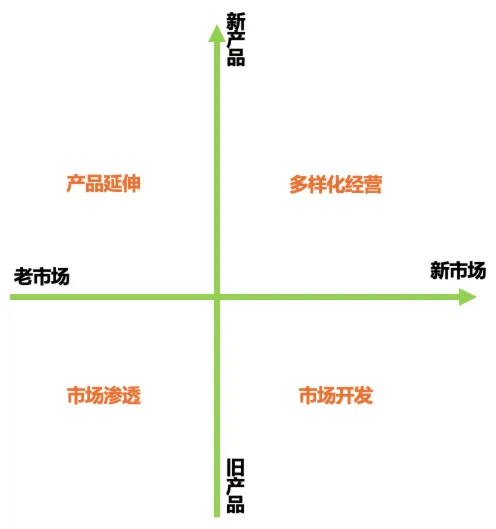
Core Insights - The boundaries of brand operations are becoming increasingly blurred, with various sectors overlapping in product offerings [1] - Companies are diversifying their product lines to maintain revenue stability and growth amid intensified competition and declining foot traffic [4] Industry Trends - Companies like Luckin Coffee are introducing new products such as milk tea, while traditional tea shops are venturing into coffee sales [2] - Convenience stores and supermarkets are expanding their food offerings, allowing customers to have meals in places previously not associated with dining [3] Growth Strategies - Market penetration involves increasing the density of existing products in existing markets, exemplified by Mixue Ice City expanding its store count [7] - Market development refers to introducing existing products into new markets, as seen with Haidilao opening locations in Singapore [8] - Product extension is when companies introduce new products to existing markets, such as Atour selling pillows [9] - Diversification involves launching new products in new markets, illustrated by Jiumaojiu's success with Guizhou red sour soup noodles at Sam's Club [10] Seasonal Demand Management - The restaurant industry focuses on eliminating off-peak seasons by introducing products that cater to different times of the day [11] - For instance, tea shops promote coffee to attract morning customers, while coffee shops may offer tea to boost afternoon sales [12][13] - Restaurants like Hanxiangfu adapt their menus to include lunch options to attract customers during typically slow hours [15]

鸡蛋周报:蛋价表现偏弱,淘鸡量有所增加-20250616
Yin He Qi Huo· 2025-06-16 03:00
Report Summary 1. Report Industry Investment Rating No information about the industry investment rating is provided in the report. 2. Core Viewpoints - The egg price showed a weak performance this week, with the average price in the main producing areas at 2.61 yuan/jin, down 0.22 yuan/jin from last Friday, and in the main selling areas at 2.85 yuan/jin, down 0.18 yuan/jin. The decline in egg prices has stimulated an increase in the willingness of some farmers to cull chickens, and the phenomenon of eggs entering cold storage has increased, slowing down the decline in egg prices [4]. - The supply of eggs is expected to remain high. In May, the national laying - hen inventory was 1.334 billion, an increase of 0.11 billion from the previous month and a year - on - year increase of 7.2%. Without considering delayed culling and concentrated culling, the laying - hen inventory from June to September 2025 is expected to be around 1.339 billion, 1.347 billion, 1.351 billion, and 1.350 billion respectively [8]. - The cost of egg production decreased slightly this week. Although the feed cost increased slightly, the decline in soybean meal prices led to a decrease in the overall cost of egg production. However, due to the decline in egg prices, the egg - farming profit continued to be in the red [11]. - The demand for eggs weakened. After the "6.18" promotion ended, the sales volume in the selling areas decreased, and the market inventory increased slightly. It is expected that the inventory will continue to increase seasonally next week [14]. - In terms of trading strategies, the near - month 07 futures contract is expected to remain weak, but the downward space is limited. If the culling volume of chickens continues to increase in the future, the 8 - and 9 - month futures contracts (peak - season contracts) may rise. It is recommended to consider building long positions in the 8 - and 9 - month contracts in the second half of June when the rainy season is about to end and the safety margin is high, and adopt a strategy of shorting near - month contracts and going long on far - month contracts [15]. 3. Summary by Directory First Part: Logical Analysis and Trading Strategies - **Spot Analysis** - The average price of eggs in the main producing areas was 2.61 yuan/jin, down 0.22 yuan/jin from last Friday, and in the main selling areas was 2.85 yuan/jin, down 0.18 yuan/jin. The low egg prices led to increased losses for farmers, accelerating the culling of old hens. The chicken -苗 market was in a mess, with the utilization rate of hatching eggs at about 70% - 80%, and the average price of young chickens was 16.89 yuan/head, remaining stable [4]. - **Supply Analysis** - The national laying - hen inventory in May was 1.334 billion, an increase of 0.11 billion from the previous month and a year - on - year increase of 7.2%. The monthly output of chicken -苗 in sample enterprises in May was 46.985 million, a month - on - month decrease of 4% and a year - on - year increase of 1%. The culling volume of laying hens in the main producing areas in the week of June 13 was 20.52 million, an increase of 2.8% from the previous week, and the average culling age was 512 days, a decrease of 3 days from the previous week [8]. - **Cost Analysis** - As of June 13, the corn price was around 2405 yuan/ton, the soybean meal price dropped to 2994 yuan/ton, and the comprehensive feed cost was about 2582 yuan/ton, equivalent to about 2.84 yuan/jin for eggs. The egg - farming profit continued to be in the red, with the average weekly profit per jin of fresh eggs at - 0.47 yuan/jin as of June 12, a decrease of 0.07 yuan/jin from the previous week, and the expected egg - farming profit on June 13 at 15.5 yuan/head, a decrease of 1.09 yuan/head from the previous week [11]. - **Demand Analysis** - Affected by the "6.18" promotion, the market sales volume was okay at first, but then the sales volume in the selling areas decreased by 7.4% week - on - week. The national egg market inventory increased slightly, and it is expected to continue to increase seasonally next week. The vegetable price index rebounded, and the pork price index declined slightly [14]. - **Trading Strategy** - The near - month 07 futures contract is expected to remain weak, but the downward space is limited. If the culling volume of chickens continues to increase in the future, the 8 - and 9 - month futures contracts may rise. It is recommended to consider building long positions in the 8 - and 9 - month contracts in the second half of June when the rainy season is about to end and the safety margin is high, and adopt a strategy of shorting near - month contracts and going long on far - month contracts. For options, it is recommended to wait and see [15]. Second Part: Weekly Data Tracking - **Inventory (Zhuochuang)** - The data shows the historical and predicted data of the laying - hen inventory and chicken -苗 replenishment volume [8]. - **Culling Situation** - The data shows the historical data of the weekly culling volume of laying hens [8]. - **Egg - Farming Situation** - It includes the culling age of laying hens and the average price of chicken -苗 in the main producing areas [22]. - **Spread and Basis** - The data shows the historical data of the basis and spreads of different contracts, such as the 1 - month basis, 1 - 5 spread, 5 - 9 spread, etc. [24][25]