乳茶

Search documents
剥离、坚守、卷上游:新势力的“三盘棋”
Xin Lang Cai Jing· 2025-12-25 17:24
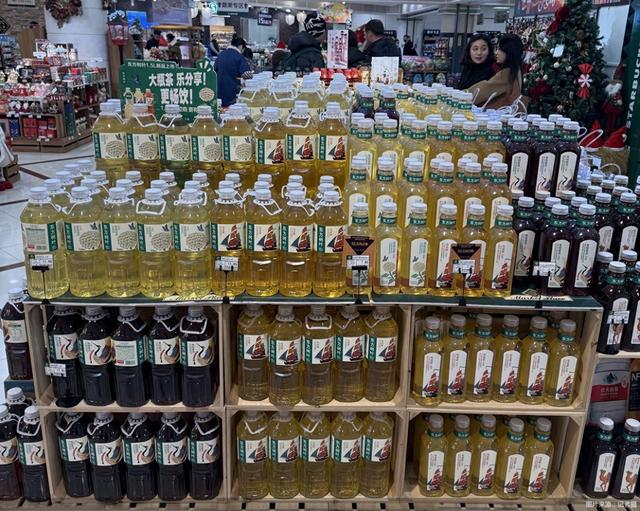
Core Insights - The Chinese food and beverage industry is undergoing significant transformation in 2025, with traditional companies facing challenges such as channel restructuring and product upgrades, while emerging brands leverage differentiated positioning and digital marketing to rise rapidly [1] Group 1: Yuanqi Forest - Yuanqi Forest has completed a strategic "slimming" by spinning off its dairy brand Beihai Pasture to focus on its core beverage categories, including sparkling water and herbal tea, thus avoiding competition in the low-temperature yogurt segment [3][4] - In 2025, Yuanqi Forest reported a 26% year-on-year increase in overall performance, maintaining double-digit growth for three consecutive years, significantly outperforming the industry average growth rate of 4.8% [4] - The company has invested heavily in production capabilities, establishing six major factories with a total investment of 7.25 billion yuan, achieving an annual production capacity of 6.5 billion bottles [5] Group 2: Guozi Shule - Guozi Shule has announced its commitment to the sugar-free tea segment, focusing resources on this area despite a slowdown in growth, with market share reaching third place in the domestic market [7][8] - The brand's strategy involves leveraging existing channels and brand strength to capture market share from underperforming competitors, as the sugar-free tea market enters a phase of consolidation [8][9] - Guozi Shule has diversified its product offerings, including electrolyte water, and has adopted a multi-brand strategy to adapt to market changes [8][9] Group 3: Rely on a Cow - Rely on a Cow is innovating in the dairy sector by launching differentiated products aimed at children and families, including A2 milk and flavored fermented milk, while maintaining a focus on quality through its proprietary breeding system [10][11] - The company has established a robust supply chain with over 100,000 dairy cows and a self-sufficiency rate of 95%, ensuring stable milk supply and quality [11] - The dairy industry is experiencing a slowdown in growth, with a 7.5% decline in liquid milk sales from January to May 2025, highlighting the need for continuous product innovation to meet evolving consumer demands [12]

乳饮2025 | 剥离、坚守、卷上游 新势力的“三盘棋”
Bei Jing Shang Bao· 2025-12-25 14:10
Core Insights - The Chinese food and beverage industry is undergoing significant transformation in 2025, with traditional companies facing challenges such as channel restructuring, product upgrades, and public opinion crises, while emerging brands are rapidly rising through differentiated positioning, digital marketing, and supply chain strategies [1] Group 1: Yuanqi Forest - Yuanqi Forest has completed a strategic "slimming" by spinning off its dairy brand Beihai Pasture to focus on its core beverage categories, including sparkling water, electrolyte water, health water, iced tea, and milk tea [2] - In 2025, Yuanqi Forest achieved a 26% year-on-year growth in overall performance, significantly outpacing the fast-moving consumer goods (FMCG) industry average growth rate of 4.8% [3] - The company has invested 7.25 billion yuan in building six major factories, achieving an annual production capacity of 6.5 billion bottles of beverages by the end of 2024 [3] Group 2: Guozi Shule - Guozi Shule has announced its commitment to focus on the no-sugar tea segment and electrolyte water, despite a slowdown in the growth of the no-sugar tea market [5] - The brand has achieved a market share of approximately 3rd place in the no-sugar tea segment in China as of the first half of the year [6] - Guozi Shule has launched a new electrolyte water product line, which has quickly gained market share, reaching about 1.25% in September [7] Group 3: Renyang Yitou Niu - Renyang Yitou Niu is leveraging product innovation and deep market penetration to create a multi-tiered product matrix targeting children, families, and young consumers [9] - The company has established ten modern dairy farms and has a self-sufficiency rate of over 95% for its milk supply, ensuring stable quality and availability [10] - The overall liquid milk sales in China have seen a decline of 7.5% year-on-year from January to May 2025, with a further drop to 9.6% in June, indicating a challenging market environment [10]
乳饮2025|剥离、坚守、卷上游,新势力的“三盘棋”
Bei Jing Shang Bao· 2025-12-25 13:37
Core Insights - The Chinese food and beverage industry is undergoing significant transformation in 2025, with traditional companies facing challenges such as channel restructuring, product upgrades, and public opinion crises, while emerging brands are rapidly rising through differentiated positioning and digital marketing [1] Group 1: Yuanqi Forest - Yuanqi Forest has completed a strategic "slimming" by spinning off its dairy brand Beihai Pasture to focus on its core beverage categories, including sparkling water, electrolyte water, health water, iced tea, and milk tea [3][4] - In 2025, Yuanqi Forest achieved a 26% year-on-year growth in overall performance, significantly exceeding the fast-moving consumer goods (FMCG) industry average growth rate of 4.8% [4] - The company has invested 7.25 billion yuan in building six large factories, achieving an annual production capacity of 6.5 billion bottles of beverages by the end of 2024 [6] Group 2: Guozi Shule - Guozi Shule has maintained "resilient growth" in the competitive no-sugar tea market and plans to focus on this segment while also promoting electrolyte water starting in 2026 [9][10] - The no-sugar tea market has shown a slowdown in growth, with sales growth rates declining compared to the previous year, indicating a shift towards a more mature market phase [9][10] - Guozi Shule has diversified its product offerings, including no-sugar tea, electrolyte drinks, and various other beverage categories, supported by its self-built factories [11] Group 3: Renyang Yitou Niu - Renyang Yitou Niu is leveraging product innovation and deep market penetration to build a multi-layered product matrix targeting children, families, and young consumers [13] - The company has launched differentiated products, including lychee-flavored fermented milk and A2-type children's milk, while maintaining a high self-sufficiency rate of 95% for its milk sources [14] - The dairy industry is experiencing a structural adjustment, with a decline in liquid milk sales, highlighting the need for continuous product innovation to meet evolving consumer demands [15]
甜心皮皮快闪车首亮相!高效店型适配多元场景,助力万店扩张计划
Zhong Guo Shi Pin Wang· 2025-10-21 06:36
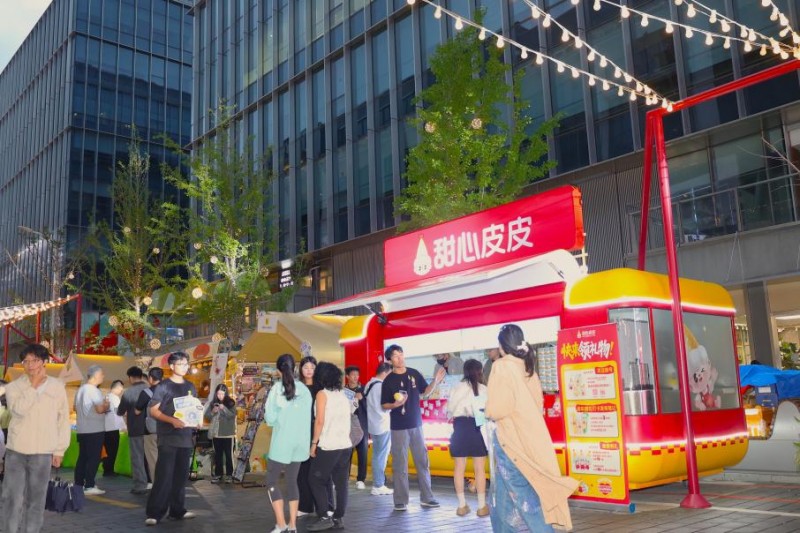
Core Insights - The 2025 Jazz Shanghai Music Festival successfully attracted numerous music enthusiasts and tourists, showcasing the charm of jazz music [1] - Sweetheart Pipi, a new tea beverage brand, made its debut as the official partner of the music festival with a pop-up vehicle, integrating its brand philosophy into the event [1] Group 1: Pop-up Vehicle Advantages - The pop-up vehicle represents the first appearance of Sweetheart Pipi's new store model, which has been developed through market research and model refinement [3] - The pop-up vehicle offers high flexibility and quick response, allowing the brand to reach target customers effectively in crowded venues like music festivals [3] - Compared to traditional stores, the pop-up vehicle significantly reduces initial investment costs related to location and decoration, enhancing operational efficiency [3] - The pop-up vehicle serves as a mobile brand ambassador, creating brand memory points through consistent visual decoration across various themes and engaging consumers through offline activities [3] - A mature supply chain and operational system support the pop-up vehicle, ensuring consistent and safe product and service experiences for consumers [3] Group 2: Festival Experience and Brand Engagement - The Jazz Shanghai Festival featured a "stage both indoors and outdoors," with a jazz avenue hosting numerous international bands and nearly a hundred brands for a one-stop jazz lifestyle market [5] - Sweetheart Pipi's pop-up vehicle provided a range of products including fruit tea, milk tea, and ice cream, enhancing the music experience for attendees [5] - The pop-up vehicle's eye-catching red design and cute IP character align with current social media trends, making it a popular photo opportunity for young attendees [5] Group 3: Strategic Expansion and Collaboration - Participating in the music festival with a pop-up vehicle represents Sweetheart Pipi's exploration of various scenarios such as scenic spots, markets, and music events [7] - The link between the pop-up vehicle and these scenarios is based on functional adaptation to scene demands, atmosphere integration, and complementary experiences [7] - This flexible and efficient model empowers partners to achieve low-risk trial and high-probability success, facilitating a win-win expansion for both the brand and entrepreneurs [7] - Sweetheart Pipi aims for a nationwide expansion plan of 10,000 stores within a year, indicating strong growth potential [7]
餐饮业的尽头,是“全天候营业”
Hu Xiu· 2025-10-16 06:39
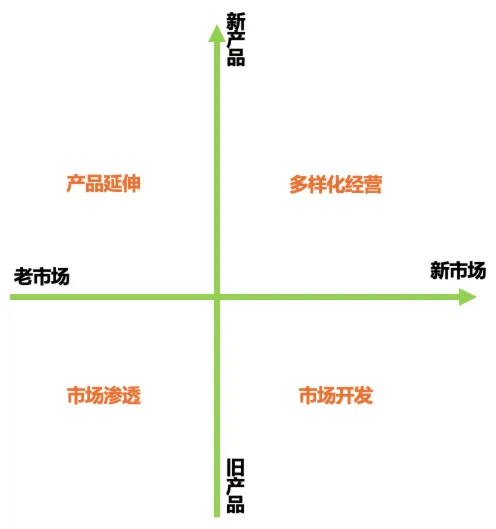
Core Insights - The boundaries of brand operations are becoming increasingly blurred, with various sectors overlapping in product offerings [1] - Companies are diversifying their product lines to maintain revenue stability and growth amid intensified competition and declining foot traffic [4] Industry Trends - Companies like Luckin Coffee are introducing new products such as milk tea, while traditional tea shops are venturing into coffee sales [2] - Convenience stores and supermarkets are expanding their food offerings, allowing customers to have meals in places previously not associated with dining [3] Growth Strategies - Market penetration involves increasing the density of existing products in existing markets, exemplified by Mixue Ice City expanding its store count [7] - Market development refers to introducing existing products into new markets, as seen with Haidilao opening locations in Singapore [8] - Product extension is when companies introduce new products to existing markets, such as Atour selling pillows [9] - Diversification involves launching new products in new markets, illustrated by Jiumaojiu's success with Guizhou red sour soup noodles at Sam's Club [10] Seasonal Demand Management - The restaurant industry focuses on eliminating off-peak seasons by introducing products that cater to different times of the day [11] - For instance, tea shops promote coffee to attract morning customers, while coffee shops may offer tea to boost afternoon sales [12][13] - Restaurants like Hanxiangfu adapt their menus to include lunch options to attract customers during typically slow hours [15]