
香奈儿包

Search documents
奢侈品,正在失去中产女性
36氪· 2026-02-19 04:07
Core Viewpoint - The luxury goods market in China is experiencing a significant downturn, with consumers shifting towards practicality and away from symbolic consumption [7][9][38]. Group 1: Market Trends - The luxury goods market in mainland China is shrinking, with a notable decline in consumer base from 400 million in 2022 to 340 million in 2025, a drop of 15% [7]. - Major luxury brands like Kering and Chanel have reported revenue declines, with Kering's revenue down 12% to €17.194 billion and Chanel's sales decreasing by 4.3% to $18.7 billion in 2024 [8]. - The trend of consumers investing in more stable assets like gold rather than depreciating luxury goods is becoming more pronounced due to geopolitical tensions and economic uncertainties [8]. Group 2: Changing Consumer Behavior - Urban women are becoming more cautious and restrained in their luxury goods purchases, with individuals like Wan Jing and Tan Xue significantly reducing their spending on luxury bags [6][19]. - The shift towards practicality is evident, as consumers are opting for functional items over high-priced luxury bags that serve more as status symbols [9][19]. - The perception of luxury items is changing, with consumers like Tan Xue realizing that the joy derived from purchasing luxury bags is fleeting and often leads to regret [16][18]. Group 3: Economic Implications - The luxury market is facing a dual challenge: a decline in middle-class consumers who traditionally drive growth and an increase in prices from luxury brands, which may alienate these consumers [37][38]. - Brands are raising prices significantly, with increases of 66% for Dior and 59% for Chanel from 2020 to 2023, which may further limit their appeal to middle-class buyers [37]. - The luxury sector is witnessing a shift where brands are inadvertently filtering out middle-class consumers through price hikes, while also facing competition from emerging brands that offer practicality and style [41].

无语!上海一男子偷走女友6只名牌包,把钱款转给前女友……
Xin Lang Cai Jing· 2025-12-21 23:49
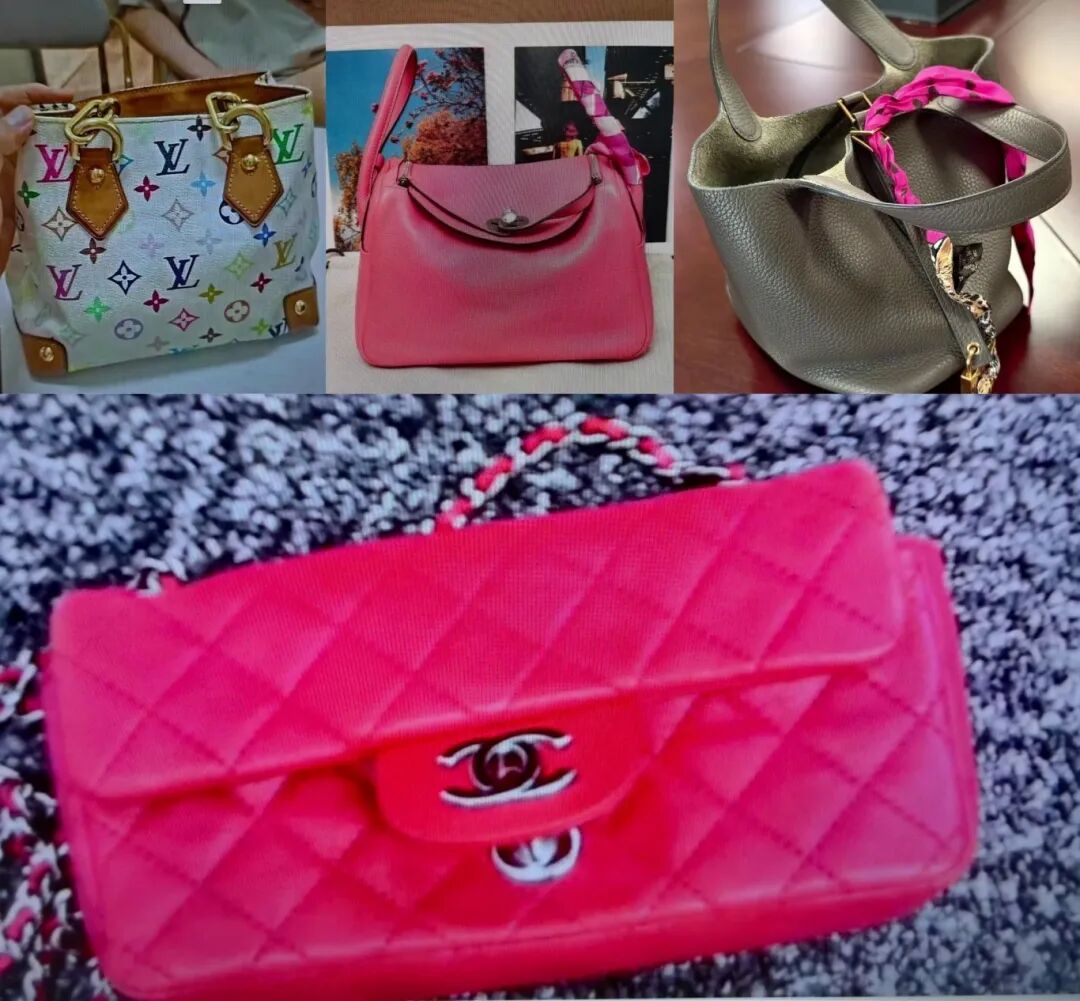
Core Viewpoint - A case of theft involving a boyfriend who stole luxury bags from his girlfriend has been reported, highlighting the risks of trusting partners without thorough background checks [1]. Group 1: Incident Overview - The police in Minhang have solved a theft case where a man named Hu stole six luxury bags from his girlfriend's home using a method referred to as "ant moving" [1]. - The victim, Ms. Yu, discovered the missing bags while organizing her closet and reported the theft to the police [1]. Group 2: Suspect Behavior - The only person frequently entering Ms. Yu's residence was her boyfriend, Hu, who exhibited suspicious behavior, often leaving at odd hours under various pretexts [4]. - Surveillance footage showed Hu leaving the victim's home multiple times in the early morning hours with a bulging bag [4]. Group 3: Investigation Findings - Police investigations revealed that Hu had received transfers from several second-hand luxury goods stores, indicating significant suspicion of his involvement in the theft [6]. - Hu confessed to stealing the bags to pay off personal debts and satisfy his consumption desires, with a total profit of over 52,000 yuan from the theft [8]. Group 4: Aftermath and Legal Action - Following the theft, Hu attempted to purchase counterfeit versions of the stolen bags to replace them, but was apprehended by the police before he could execute this plan [8]. - Hu has been criminally detained by the Minhang police for theft, and the case is still under further investigation [10].
年轻人开始反向消费,开始“六戒”,说明什么?如何影响经济?
Sou Hu Cai Jing· 2025-10-24 16:34
Core Insights - The article highlights a significant shift in consumer behavior among the younger generation, particularly those born after 1995, who prioritize practicality and cost-effectiveness over brand prestige and luxury items [1][3][19] Group 1: Changing Consumer Preferences - The younger generation is increasingly adopting a mindset of "reverse consumption," focusing on essential spending and avoiding unnecessary expenses, which is reflected in their "six abstentions" lifestyle [3][7] - There is a notable decline in the sales of luxury brands, with Gucci's sales dropping by 51% and LV's overall revenue decreasing by 2% [5] - Domestic brands like Hongxing Erke and Anta are gaining popularity due to their affordability and practicality, surpassing international brands in sales and viewership [5][17] Group 2: Economic Context - The economic conditions faced by the current generation differ significantly from those experienced by previous generations, with many young people earning around 5,000 yuan monthly, leading to a focus on reducing non-essential spending [9][12] - The article references the Kondratiev wave theory, indicating that the current economic climate is in a downturn phase, impacting young people's financial stability and spending habits [10][12] Group 3: Societal Implications - The trend of reduced spending is contributing to lower marriage and birth rates, with marriage registrations dropping by 20.5% year-on-year, indicating a shift in societal norms and priorities [15] - The emphasis on sustainability and practicality is leading to a rise in interest in shared, rental, and second-hand markets, as well as eco-friendly products [17][19] - While the immediate economic impact of this shift may appear negative, it is seen as a step towards a more sustainable and responsible consumption model, promoting environmental awareness [19]

一条项链、一双鞋、三只包,金建希收受名牌奢品遭查扣
Zhong Guo Xin Wen Wang· 2025-10-22 10:54
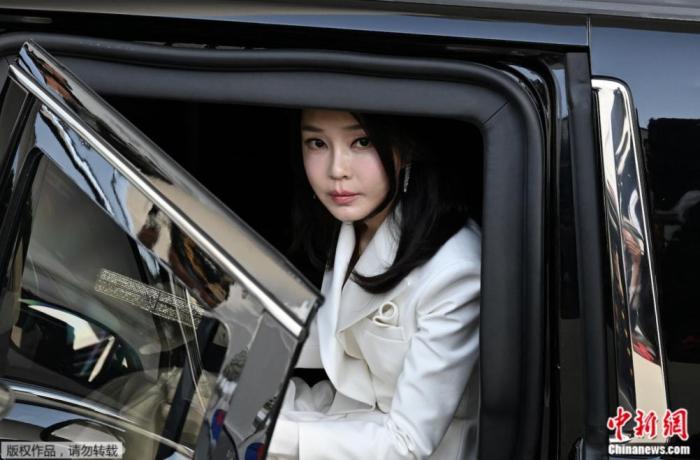
Core Points - The independent investigation team in South Korea has seized luxury items provided to Kim Keon-hee, the wife of former President Yoon Suk-yeol, as part of a corruption probe [1][3] - The seized items include a Graff necklace valued at 62.2 million KRW (approximately 310,000 RMB), a pair of Chanel shoes, and three Chanel bags [3] Group 1 - The independent investigation team confirmed the seizure of high-priced items from the Unification Church intended to gain improper benefits for Kim Keon-hee [1][3] - The investigation team has verified the serial numbers of the seized items, ensuring they match relevant leads, and plans to clarify the delivery, return, and custody of these items in future court proceedings [3] - Previously, the investigation team had difficulty obtaining conclusive evidence that Kim Keon-hee had actually received the items, despite tracking their whereabouts since the early stages of the investigation [3] Group 2 - The lawyer for the key figure in the case, Jeon Seung-bae, recently provided new evidence during court proceedings, contradicting earlier claims that the items were lost [3] - In a submitted opinion to the court, Jeon Seung-bae explicitly stated that the ultimate owner of the high-priced items from the Unification Church is Kim Keon-hee [3]
什么是“新消费”?年轻人想要的“情绪价值”到底是什么?
Guan Cha Zhe Wang· 2025-06-06 09:46
Core Viewpoint - The concept of "new consumption" is not merely defined by rapid growth but involves deeper underlying logic, including industry penetration rates and brand influence [1][3][4] Group 1: Indicators of New Consumption - New consumption has three objective indicators: industry penetration rate, Baidu search index, and a growth rate of at least 25% [3] - Subjective factors include tradability, which refers to the ability of stocks to be traded or second-hand products to be exchanged, and the ease of creating memes that facilitate brand spread [3][10] Group 2: Causes of New Consumption - The formation of new consumption habits and the breaking of new brands are the main causes of new consumption [4] - Examples of new consumption habits include collectible toys, pet food, and new tea drinks, while brands like Pop Mart and Xiaomi exemplify the breaking of new brands [4] Group 3: Characteristics of New Consumption - A key characteristic of new consumption is "word of mouth," where users become brand advocates rather than relying on traditional advertising [6][9] - The pet industry serves as a prime example of new consumption, showcasing strong user-driven brand recommendations [8] Group 4: Brand Development Stages - Brand development consists of four stages: initial recognition, preference, category association, and identity representation [15] - The emergence of a secondary market for products indicates a brand's ability to maintain or increase value over time, signifying strong market presence [17]
