骁龙8系列处理器

Search documents
高通暗示将减少对台积电依赖
半导体芯闻· 2026-03-23 10:24
如果您希望可以时常见面,欢迎标星收藏哦~ 高通公司已发出信号,表示将使其半导体供应链摆脱近期对台积电的严重依赖,并强调将与三星晶 圆代工公司保持持续而深入的合作关系。 高通公司高级副总裁兼移动手机业务总经理克里斯·帕特里克表示:"高通与全球代工厂合作,力求 在性能、成本和可用产能之间找到最佳平衡点。三星数十年来一直是我们的重要合作伙伴,两家公 司之间的深度合作与创新为我们最重要的产品做出了贡献。我们期待这种合作能够继续下去。" 20日,在首尔瑞草区JW万豪酒店举行的"骁龙精英日"新闻发布会上,高通公司高级副总裁兼首席营销官 唐·麦奎尔(Don McGuire)、高通公司高级副总裁兼移动终端总经理克里斯·帕特里克(Chris Patrick) 以及高通公司产品管理副总裁尼廷·库马尔(Nitin Kumar)出席了发布会。/ 高通 帕特里克于20日在首尔瑞草区JW万豪酒店举行的"骁龙精英日"新闻发布会上发表了上述言论。他 指出,"芯片组并非单个芯片,而是一个由大约40个不同组件构成的平台。"此番言论被视为三星 重振其芯片代工业务的战略举措,旨在打破近年来由台积电主导的供应链格局。 高通公司连续四年将其"骁龙8"系 ...



小米3纳米芯片量产面市,高通依然是旗舰机供应商
Nan Fang Du Shi Bao· 2025-05-21 14:18
Core Viewpoint - Xiaomi's self-developed 3nm smartphone SoC, "Xuanjie O1," is set to be officially released on May 22, marking a significant milestone in the company's decade-long chip development journey. This positions Xiaomi as the fourth company globally to design its own 3nm smartphone SoC, following Apple, Qualcomm, and MediaTek [2][4]. Chip Development and Market Position - The Xuanjie O1 is primarily aimed at high-end flagship products, with initial production estimates conservatively set at several hundred thousand units due to high initial costs from small-scale production [2][4]. - Xiaomi's strategy includes using a self-developed application processor (AP) while likely relying on MediaTek for the baseband processor (BP), as developing a proprietary BP involves high patent costs and complex compatibility challenges [6][8]. Competitive Landscape - Xiaomi aims to enhance its position in the high-end smartphone market, where competitors like Apple, Samsung, and Huawei already utilize self-developed SoCs. The self-developed SoC is seen as crucial for differentiation, cost control, and energy optimization [8][9]. - As of March 2024, Xiaomi holds a 24.3% market share in the 4000-5000 yuan price segment in mainland China, indicating progress in its high-end market strategy [8]. Relationship with Third-Party Suppliers - Despite the introduction of its own chip, Xiaomi will continue to collaborate with Qualcomm and MediaTek for various product lines, as the self-developed chip requires multiple generations for market validation and cost optimization [10][11]. - Qualcomm's CEO has stated that Xiaomi's self-developed chip is not expected to impact its business, and both companies have reaffirmed their partnership through a multi-year agreement [11]. Investment and Development History - Xiaomi has invested over 13.5 billion yuan in chip development from 2021 to April 2025, with an expected investment of over 6 billion yuan in 2023 alone. The R&D team has grown to over 2,500 members [12][13].
高通与小米签署多年期协议
半导体芯闻· 2025-05-21 10:29
Core Viewpoint - Qualcomm Technologies, Inc. and Xiaomi celebrate their 15-year partnership and sign a multi-year agreement to drive innovation in the tech industry, focusing on high-end smartphones and various connected devices [1][2]. Group 1: Partnership Highlights - The collaboration has been pivotal in Xiaomi's growth from a startup to a global tech leader, with Qualcomm being a trusted partner throughout this journey [1]. - Both companies aim to enhance the integration of artificial intelligence in edge devices, including smartphones, cars, AR/VR glasses, wearables, and tablets [2]. Group 2: Product Innovations - Qualcomm's Snapdragon platform has supported millions of Xiaomi products, contributing to Xiaomi becoming the third-largest smartphone brand globally [2]. - Xiaomi's recent launch of the Xiaomi 15 series, powered by the Snapdragon 8 Gen 1 chip, has achieved significant commercial success [2]. - In the automotive sector, Xiaomi's first car, the SU7, utilizes Qualcomm's next-generation Snapdragon digital cockpit platform for an advanced in-car experience [2]. Group 3: Expanding Product Categories - Qualcomm's Wi-Fi solutions, including the latest Wi-Fi 7 technology, enable Xiaomi to deliver faster and more reliable connectivity in its smart home products [3]. - The collaboration extends to wearables, with several commercial headphones and smartwatches featuring Snapdragon platforms, such as the Xiaomi Buds 5 Pro and Xiaomi Watch 2 Pro [3].

心智观察所:玄戒是“魔戒”?别低估小米识别“战略陷阱”的能力
Guan Cha Zhe Wang· 2025-05-21 05:59
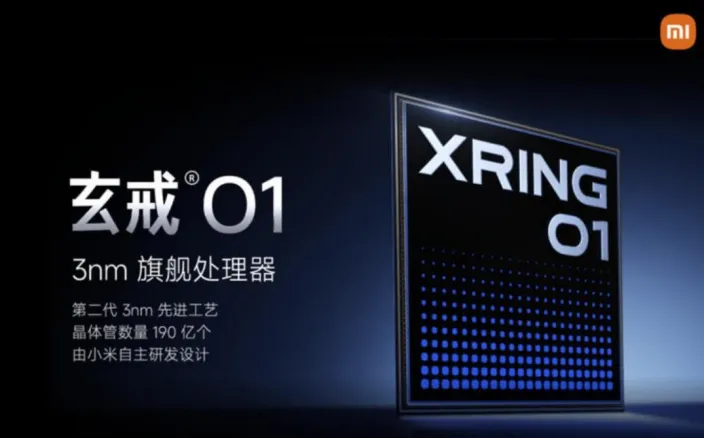
Core Viewpoint - Xiaomi has made significant progress in developing its self-researched mobile processor, the "Xuanjie O1," which is seen as a crucial step in the company's technological advancement amidst increasing competition in the high-tech sector, particularly from the U.S. [1][2] Group 1: Development and Investment - Xiaomi has invested over 13.5 billion RMB in the development of the Xuanjie O1 processor over the past four years, with a projected investment of over 6 billion RMB for this year [2] - The research team for the Xuanjie O1 has grown to over 2,500 members [2] Group 2: Technical Specifications - The Xuanjie O1 features a 10-core architecture, including 2 super-large cores at 3.9GHz, 4 large cores at 3.4GHz, 2 medium cores at 1.89GHz, and 2 small cores at 1.8GHz, along with an Immortalis-G925 GPU [4] - Xiaomi will continue to use Qualcomm's Snapdragon 8 series processors in its high-end smartphones, indicating a dual-sourcing strategy [4][6] Group 3: Market Position and Strategy - The Xuanjie O1 is positioned as a significant player among self-researched processors below 5nm, with Xiaomi planning to use it in its high-end devices like the Xiaomi 15s Pro and the Xiaomi Pad 7 Ultra [9] - Xiaomi's approach contrasts with competitors like Samsung, which has been cautious in deploying its own Exynos processors in flagship devices [9] Group 4: Industry Context and Perception - There is skepticism regarding Xiaomi's reliance on public IPs for the Xuanjie O1, with some critics suggesting it undermines the company's self-research efforts [4][6] - The narrative surrounding the "magic ring" theory, which implies dependency on external partners, is viewed as a misinterpretation of the competitive landscape and the advancements made by Chinese tech companies [6]
玄戒是“魔戒”?别低估小米识别“战略陷阱”的能力
Guan Cha Zhe Wang· 2025-05-21 05:57
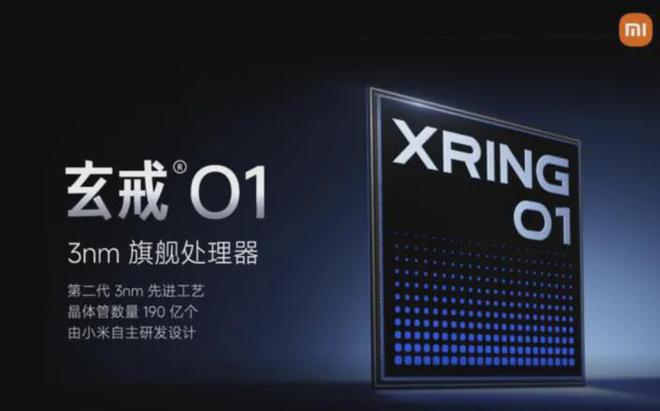
Core Viewpoint - Xiaomi has made significant progress in developing its self-researched mobile processor, the "Xuanjie O1," which is seen as a crucial step in the company's technological advancement and market positioning amid increasing competition in the high-tech sector [1][2]. Summary by Sections Development and Investment - Xiaomi has invested over 13.5 billion RMB in the development of the Xuanjie O1 processor over the past four years, with a projected investment of over 6 billion RMB for this year [2]. - The research team for the Xuanjie O1 has grown to over 2,500 members, indicating a strong commitment to in-house chip development [2]. Technical Specifications - The Xuanjie O1 features a 10-core architecture, including 2 super-large cores at 3.9GHz, 4 large cores at 3.4GHz, 2 medium cores at 1.89GHz, and 2 small cores at 1.8GHz, along with an Immortalis-G925 GPU [4]. - Despite the advancements, Xiaomi will continue to use Qualcomm's Snapdragon 8 series processors in its high-end smartphones, indicating a dual-sourcing strategy [4][6]. Market Position and Strategy - Xiaomi's market share has increased by 1.8 percentage points to 14.6%, with significant growth in regions like Latin America and Southeast Asia [10]. - The company aims to enhance its high-end market presence through the Xuanjie O1, which aligns with its strategy of building a smart factory and increasing bargaining power with Qualcomm [13]. Competitive Landscape - The Xuanjie O1 positions Xiaomi as one of the few companies developing processors below 5nm, showcasing its ambition to compete with established players like Samsung and MediaTek [9]. - Xiaomi's approach contrasts with competitors who have been cautious in deploying their own chips, indicating a bold strategy to integrate the Xuanjie O1 into flagship products [9]. Broader Implications - The collaboration with TSMC for 3nm chip production is significant for China's semiconductor industry, potentially transforming the country from a technology follower to a participant in global semiconductor rules [14][15]. - This partnership is expected to stimulate domestic innovation in critical areas such as EDA tools and photolithography, contributing to a more robust semiconductor ecosystem in China [14][15].
雷军回应质疑;姚安娜到车间工厂打工;男子给网店刷好评获利780万;雀巢中国回应巴黎水丑闻报告;父亲去世留下300万巨债儿子拒还
Sou Hu Cai Jing· 2025-05-21 04:08
Group 1: Company Name Change - The shopping mall "胖都来" has been renamed to "盈都来" due to a decision made in a recent meeting, with the name change linked to the parent company "盈中控股" [1] Group 2: Gree Live Stream - Gree confirmed that Chairman Dong Mingzhu will co-host a live stream with her former secretary Meng Yutong on May 23, potentially featuring Gree products [2][4] Group 3: Nestlé's Response to Controversy - Nestlé China stated that all its bottled water products sold in China comply with local laws and regulations, following a report alleging consumer fraud related to "巴黎水" [5] Group 4: Apple WWDC Announcement - Apple announced its annual Worldwide Developers Conference (WWDC) will take place from June 9 to June 13, focusing on new tools and technologies for developers [6] Group 5: Nvidia's New Office in Shanghai - Nvidia is renting a new office space in Shanghai for its existing employees, indicating its ongoing commitment to the Chinese market [8] Group 6: Highsun Retail Financial Results - Highsun Retail reported a revenue of 71.552 billion yuan and a net profit of 386 million yuan for the fiscal year ending March 31, marking a turnaround from losses in the previous year [12] Group 7: Alibaba's Investment in Meitu - Alibaba signed a $250 million convertible bond agreement with Meitu, which includes strategic cooperation in e-commerce, AI technology, and cloud computing [15] Group 8: Xiaomi and Qualcomm Partnership - Qualcomm and Xiaomi celebrated their 15-year partnership by signing a multi-year agreement, with Xiaomi set to be among the first to use the next-generation Snapdragon 8 series processors [25]