
高纯试剂

Search documents
重磅!“十五五”新材料产业发展规划与解读(附100+份解读资料)
材料汇· 2026-02-18 13:48
Core Viewpoint - The new materials industry is crucial for supporting modern industrial systems and achieving high-level technological self-reliance in China, with significant strategic importance for building a strong manufacturing and quality nation [2]. Industry Background and Development Situation - During the 14th Five-Year Plan, China's new materials industry saw continuous growth, with total output value exceeding 8.2 trillion yuan and an average annual growth rate of over 12% [4]. - Achievements include breakthroughs in ultra-high-strength steel, high-performance carbon fiber, semiconductor silicon wafers, and key materials for lithium-ion batteries [4]. - Challenges remain in high-end materials and the need for improved self-sufficiency in core processes and equipment [4]. Overall Requirements - The guiding ideology emphasizes innovation-driven development, demand-oriented approaches, and green low-carbon principles, focusing on enhancing the self-sufficiency of strategic materials and original innovation capabilities [8]. - Basic principles include innovation leadership, application orientation, enterprise-driven collaboration, and green development [9]. Development Goals (by 2030) - Comprehensive security capability for strategic materials to exceed 80%, with a focus on achieving global leadership in original achievements in frontier new materials [11]. - Continuous increase in R&D investment intensity, aiming to break through over 500 key core technologies [11]. - Establishment of over 20 distinctive, complete, and internationally leading new materials industrial clusters [11]. Key Development Directions - Advanced basic materials include ultra-high-strength automotive steel and high-performance aluminum alloys [13][14]. - Key strategic materials focus on high-temperature alloys and advanced semiconductor materials [18][19]. - New energy materials target high-energy-density battery materials and photovoltaic materials [21]. Key Tasks and Major Projects - Focus on urgent new materials needed in critical application areas such as aerospace, new energy vehicles, and electronic information [27]. - Specific projects include developing high-performance carbon fiber composites for aircraft and high-nickel ternary cathode materials for batteries [29][31][32]. Collaborative Innovation System - Establish a collaborative innovation system that integrates enterprises, academia, and research institutions to enhance innovation capabilities [51]. - Plans to build five national new materials laboratories and ten engineering research centers to support innovation [52]. Market Cultivation for Key New Materials - Implement insurance compensation mechanisms for the first application of key new materials to encourage market adoption [56]. - Establish a project library for demonstration projects to showcase the advantages of new materials in practical applications [57]. Breakthroughs in Key Processes and Equipment - Focus on overcoming bottlenecks in key processes and specialized equipment for new materials production [61]. - Plans to support the development of over 80 key processes and equipment technologies, aiming for significant improvements in production efficiency and cost reduction [64].


豪掷 20 亿!押注南通,猛攻光刻胶!
是说芯语· 2026-01-28 06:59
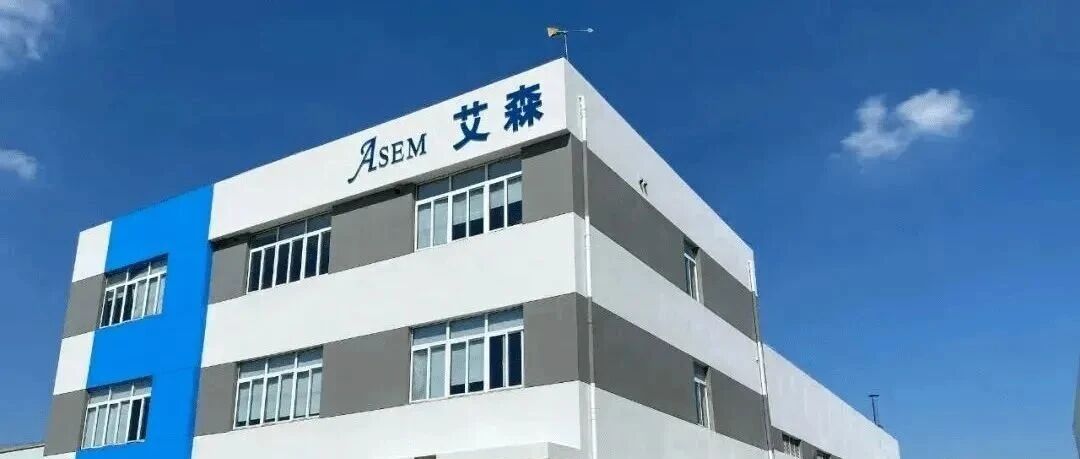
Core Viewpoint - The company, Aisen Co., has announced the establishment of a wholly-owned subsidiary in Nantong Economic and Technological Development Zone to invest in a semiconductor materials manufacturing base, with a total investment of 2 billion yuan [1]. Group 1: Project Overview - The project will cover an area of approximately 159 acres and aims to build a production line with an annual output of 23,000 tons of semiconductor materials [1]. - The project will be implemented in two phases, with the first phase expected to commence production in 2028 and the second phase in 2030, reaching full production by 2035 [1][3]. - The planned products include key materials such as photoresists, plating solutions, and high-purity reagents, which will significantly enhance the company's production capacity and market position [1][4]. Group 2: Market Position and Financial Performance - Aisen Co. anticipates achieving an operating income of approximately 594 million yuan in 2025, representing a year-on-year growth of 37.54%, and a net profit attributable to shareholders of about 50.46 million yuan, up 50.74% year-on-year [4]. - The company is benefiting from the recovery of the semiconductor industry driven by emerging technologies such as 5G, AI, and IoT, leading to increased demand for chips [4]. - The company has established itself as a leader in the production of advanced packaging photoresists and plating solutions, entering the supply chains of major clients like Longji Technology and BOE [6]. Group 3: Strategic Advantages - The establishment of the Nantong manufacturing base will create synergies with the subsidiary's existing projects, enhancing the supply chain stability and reducing procurement costs [6]. - The integration of upstream and downstream operations will facilitate rapid technological iterations and improve customer attraction through one-stop material solutions [6].
江苏艾森半导体材料股份有限公司第三届董事会第二十二次会议决议公告
Shang Hai Zheng Quan Bao· 2026-01-27 19:48
Core Viewpoint - Jiangsu Aisen Semiconductor Materials Co., Ltd. plans to establish a wholly-owned subsidiary in Nantong Economic and Technological Development Zone to invest in the Aisen Integrated Circuit Materials East China Manufacturing Base project, with a total estimated investment of 2 billion RMB [3][26][31]. Group 1: Board Meeting Summary - All directors attended the board meeting, and no directors opposed or abstained from voting [2][4]. - The board meeting was convened on January 27, 2026, and complied with relevant laws and regulations [2][3]. - The board approved the proposal to sign the project investment agreement and establish a wholly-owned subsidiary [3][5]. Group 2: Project Investment Details - The total estimated investment for the project is 2 billion RMB, with the final amount based on actual construction costs [3][27][31]. - The project will be constructed in two phases, with the first phase expected to be operational by 2028 and the second phase by 2030, reaching full production by 2035 [28][40]. - The project will cover approximately 159 acres and aims to produce 23,000 tons of integrated circuit materials annually [31][38]. Group 3: Shareholder Meeting Information - The company plans to hold its first extraordinary shareholder meeting on February 12, 2026, to review the investment proposal [6][10]. - The meeting will allow for both on-site and online voting, with specific timeframes for participation [11][12]. - Shareholders must register to attend the meeting, with detailed registration procedures provided [19][20].
艾森股份:拟投建集成电路材料华东制造基地项目
Bei Ke Cai Jing· 2026-01-27 11:16
Core Viewpoint - The company plans to establish a wholly-owned subsidiary in Nantong Economic and Technological Development Zone to invest in the construction of a semiconductor materials manufacturing base, with a total investment of 2 billion RMB [1] Group 1: Project Details - The project will be developed in two phases, with the first phase expected to commence production in 2028 and the second phase in 2030 [1] - The overall project is anticipated to reach full production capacity by 2035 [1] Group 2: Products and Funding - The manufacturing base will primarily produce semiconductor photoresists, supporting resins, electroplating solutions, and high-purity reagents [1] - Funding for the project will come from the company's own resources and self-raised funds, with potential future financing through debt or equity [1]
泰坦科技:破局科学服务产业
Shang Hai Zheng Quan Bao· 2025-12-12 00:44
Core Insights - Titan Technology is emerging as a key player in the domestic scientific services industry, breaking free from overseas technology monopolies and weak industrial foundations [1][6] - The company aims to enhance technological self-reliance and improve the overall efficiency of the innovation system during the 14th Five-Year Plan period [1][6] - Titan Technology has established a comprehensive manufacturing system covering three core categories: reagents, consumables, and instruments [2][5] Company Development - Titan Technology has evolved from a startup in 2007 to the first stock in the scientific services sector listed on the STAR Market in 2020 [1][6] - The company has built a full industrial chain manufacturing system and is expanding its production capacity with new bases in Shanghai, Hubei, and Anhui [2][5] - The Shanghai Songjiang base has achieved breakeven, while the Anhui base leads in ultra-pure solvent production in Asia [2][5] R&D and Innovation - In the first half of 2025, Titan Technology's R&D investment reached 80.36 million yuan, resulting in new products and 27 patents [2][5] - The company is focused on upgrading its manufacturing capabilities to meet high-end market demands, transitioning from "making bicycles" to "making airplanes" [2][5] Mergers and Acquisitions - Titan Technology has utilized mergers and acquisitions as a strategy to enhance its product capabilities, including the acquisition of Apollo Scientific Ltd. for approximately £5.75 million [5][6] - The company has successfully integrated acquired firms, leading to revenue growth in the first half of 2024 [5][6] Future Outlook - Titan Technology plans to enter a critical phase of results validation in the next 3 to 5 years, following significant investments in its production bases [3][7] - The company aims to compete globally by establishing a diversified brand matrix and leveraging its extensive customer base, which includes over 60,000 clients and more than 150 Fortune 500 companies [6][7]

外资龙头生科企业专家交流
2025-07-16 15:25
Summary of Key Points from Conference Call Industry Overview - The conference call discusses the **Chinese research service market**, particularly focusing on the **biotechnology sector** and the challenges faced in the **domestic and foreign markets** [1][5][7]. Core Insights and Arguments - **High Domestic Replacement Rates**: The domestic market has a high localization rate for general and high-purity reagents, such as HQC reagents. However, high-end mass spectrometry and ultra-pure reagents still face significant technical barriers for domestic replacement [1][2][4]. - **Impact of US-China Relations**: The US-China trade relations and tariffs have affected the ability of Chinese research service companies to expand internationally. There is a growing desire for self-sufficiency, but the short-term increase in domestic replacement rates is not significant [5][6]. - **Foreign Investment in China**: Foreign companies like Thermo Fisher and Merck are increasing their investments in local production lines in China to mitigate the impact of tariffs. This includes establishing factories in Wuxi and Nantong [1][6]. - **Market Growth Projections**: The overall growth rate for biotechnology companies is expected to be low in 2025 due to tariffs, increased domestic inventory, and the impact of domestic replacement [3][13]. - **Customer Behavior**: Customers are increasingly concerned about supply chain stability, leading to panic buying and stockpiling of products [5][15]. Additional Important Content - **Product Categories**: The research service sector is divided into biological design and chemical design, with significant growth in areas like LVD and CRO due to the pandemic [2]. - **Barriers to Entry**: High-end products in the mass spectrometry and ultra-pure reagent categories have high barriers to entry, with customers requiring strong quality and technical reputation [4][8]. - **Price Trends**: Prices for certain reagents are declining due to increased competition and inventory pressures, with some imported reagents seeing price reductions of 5% to 10% [15][16]. - **Future Strategies for Companies**: Companies are advised to either focus on a large market segment to achieve monopolistic status or pursue acquisitions to create a comprehensive product line [20]. - **Market Dynamics**: The market is experiencing a potential shakeout, with smaller manufacturers facing intense competition, which may lead to consolidation through mergers and acquisitions [21][23]. Conclusion - The Chinese research service market is navigating complex challenges due to international relations, domestic competition, and evolving customer needs. While there are opportunities for growth, particularly in domestic production, the overall outlook remains cautious with significant barriers to entry in high-end product categories.