高阶智能驾驶解决方案

Search documents
AI与生物医药“领跑”,慧心医谷A轮融资超亿元|21投融资
2 1 Shi Ji Jing Ji Bao Dao· 2026-01-14 07:49
Core Insights - The technology and manufacturing sectors have seen significant financing activity, particularly in artificial intelligence, semiconductors, and biomedicine, indicating strong investor interest in these areas [1] - The overall financing scale in the domestic primary market from January 5 to January 11 included 35 events, with a total amount of approximately 154.27 billion RMB [1] Financing Overview - The technology and manufacturing sectors led in financing activity, with notable performances in smart vehicles, semiconductors, and advanced technologies [1] - The biomedicine sector completed four financing rounds totaling around 5 billion RMB, while the artificial intelligence sector had three rounds amounting to approximately 0.9 billion RMB [3][4] Regional Distribution - The majority of financing events occurred in Beijing, Zhejiang, and Guangdong, with 9, 6, and 6 events respectively [5][6] Active Investment Institutions - Shunxi Fund and Zhongke Chuangxing were particularly active, each completing two financing rounds focused on technology and manufacturing [7] Notable Company Financing - Huixin Yigu completed over 100 million RMB in Series A financing, led by Jingneng Green Fund, to advance clinical research in cell therapy for neurological diseases [9][10] - Anlong Bio secured nearly 100 million RMB in Series B+ financing, supported by municipal and district-level industry funds, to develop its gene therapy pipeline [11] - Shanghai Ruizhou Bio raised 200 million RMB in Series B financing, led by Ruile Synthetic Biology Fund, to support clinical research for its pneumonia vaccine [12] - Thunderbird Innovation received over 1 billion RMB in financing from China Mobile and China Unicom for its AR smart glasses [14] - Zhizhan Technology completed nearly 300 million RMB in Series C financing, led by Zhejiang State-owned Assets Fund, to enhance its market share in the electric vehicle sector [15] - Mingxin Qirui raised over 100 million RMB in Pre-A financing to advance RRAM technology for AI and data center applications [16] - Zhixing Technology secured 400 million RMB in strategic financing from Huangshi State-owned Capital Investment Group for its autonomous driving technology [17] - Jiukexin completed over 100 million RMB in B2 financing to expand its AI-driven automation solutions for state-owned enterprises [18] - Zhidong Dalu raised nearly 200 million USD in financing to accelerate the development of its advanced intelligent driving solutions [19]


AI与生物医药“领跑”,慧心医谷A轮融资超亿元
2 1 Shi Ji Jing Ji Bao Dao· 2026-01-14 07:45
Core Insights - The technology and manufacturing sectors have seen significant financing activity, particularly in artificial intelligence, semiconductors, and biomedicine, indicating strong investor interest in these areas [1] - The overall financing scale in the domestic primary market from January 5 to January 11 included 35 events, with a total disclosed amount of approximately 154.27 billion RMB [1][2] Financing Activity by Sector - The biotechnology sector completed 4 financing rounds totaling around 5 billion RMB, while the artificial intelligence sector had 3 rounds with disclosed amounts of approximately 0.9 billion RMB [3][4] - Notable companies in the biotechnology sector include: - HuiXin Medical Valley, which raised over 1 billion RMB in Series A funding [7] - Anlong Biopharma, which secured nearly 1 billion RMB in Series B+ funding [9] - Shanghai Ruizhou Biotech, which completed 200 million RMB in Series B funding [10] Regional Financing Distribution - The majority of financing events occurred in Beijing, Zhejiang, and Guangdong, with 9, 6, and 6 cases respectively [5][6] Active Investment Institutions - Shunxi Fund and Zhongke Chuangxing were particularly active, each completing 2 financing rounds focused on technology and manufacturing [7] - Specific financing details include: - HuiXin Medical Valley's funding led by Jingneng Green Fund [7] - Anlong Biopharma's funding from Beijing's medical health industry investment fund [9] - Shanghai Ruizhou Biotech's funding led by Ruili Synthetic Biology Fund [10] Notable Company Financing - Thunderbird Innovation raised over 1 billion RMB, focusing on AR smart glasses [11] - Zhizhan Technology completed nearly 300 million RMB in Series C funding, targeting the electric vehicle market [12] - Mingxin Qirui secured over 100 million RMB in Pre-A funding for RRAM technology development [13] - ZhiXing Technology received 400 million RMB in strategic investment for autonomous driving technology [14] - JiuKe Information raised over 100 million RMB in B2 funding for AI automation solutions [15] - ZhiJia Dalu completed nearly 200 million USD in financing for advanced driving solutions [16]

上市首日破发!全球通用自动驾驶第一股文远知行登陆港交所
Ju Chao Zi Xun· 2025-11-06 05:48
Group 1 - WeRide Inc. officially listed on the Hong Kong Stock Exchange on November 6, with an initial stock price of HKD 27.1 per share, but the stock fell to HKD 23.4 on the first day, representing a decline of 13.65%, with a total market capitalization of HKD 240.23 billion [2] - WeRide was founded in 2017 and focuses on transforming human mobility through autonomous driving technology, offering products and services ranging from Level 2 to Level 4 autonomous driving [5] - The company has a product matrix that includes Robotaxi, Robobus, Robovan, Robosweeper, and advanced intelligent driving solutions, which are widely applied in smart mobility, freight, and sanitation sectors [5] Group 2 - On October 25, 2024, WeRide officially listed on NASDAQ, becoming the "first global general autonomous driving stock" with the stock code "WRD.US" [6] - In the Q2 financial report released on July 31, 2025, WeRide reported revenue of CNY 127 million, a year-on-year increase of 60.8%, with Robotaxi business revenue reaching CNY 45.9 million, a significant year-on-year growth of 836.7%, marking a record high for a single quarter since the company's inception [6] - The proportion of Robotaxi business revenue in Q2 increased to 36.1%, the highest quarterly historical level since 2021, while gross profit grew by 40.6% year-on-year, indicating a steady growth rate [6] - On October 14, 2025, the China Securities Regulatory Commission issued a notice approving WeRide's application for overseas issuance and listing, allowing the company to issue up to 102,428,200 shares for its listing on the Hong Kong Stock Exchange [6]

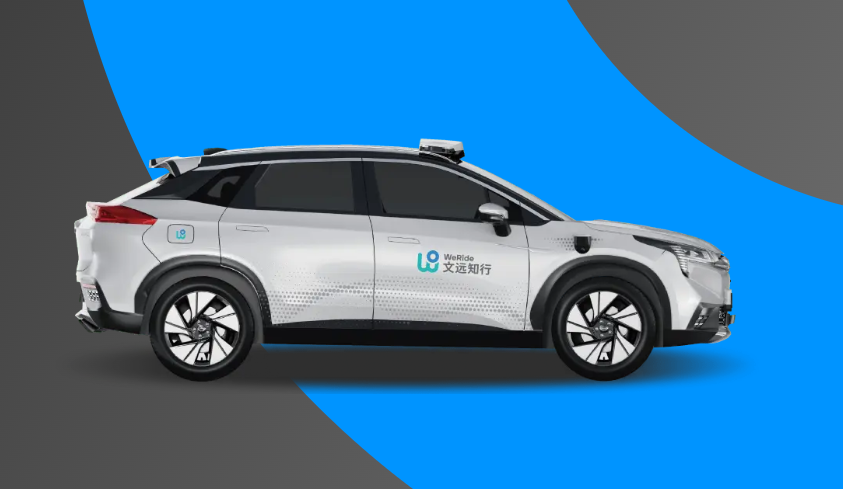
小马智行遭文远知行指控:数据不实
Ju Chao Zi Xun· 2025-11-03 07:32
Core Insights - The article discusses allegations made by WeRide's CFO against Pony.ai regarding misleading information presented to investors during a roadshow [2][4] - It highlights the competitive landscape between the two companies as they both prepare for their respective IPOs [4][5] Group 1: Allegations by WeRide - WeRide accuses Pony.ai of fabricating operational regions, claiming that WeRide provides fully autonomous Robotaxi services in multiple cities, contrary to Pony.ai's assertion that it only operates in Beijing [2] - WeRide refutes claims of operational data falsification, stating it has over 700 Robotaxi vehicles and more than 2,200 days of public operation records [2] - The technical capabilities of WeRide are defended, with evidence from Bosch and Chery supporting its end-to-end production application, while criticizing Pony.ai's claims of superior technology [2] Group 2: Company Backgrounds - Pony.ai, founded in 2016, is focused on providing comprehensive autonomous driving technology and has recently passed the Hong Kong Stock Exchange hearing, marking a significant step towards its IPO [4] - WeRide, established in 2017, aims to revolutionize transportation through autonomous driving technology and offers a range of products from L2 to L4 autonomous driving solutions [4] - WeRide has recently listed on NASDAQ as the first global autonomous driving stock and is preparing for a secondary listing in Hong Kong [5]
文远知行港股IPO备案获批,拟发行1.02亿股股份
Ju Chao Zi Xun· 2025-10-15 02:38
Core Insights - WeRide Inc. (文远知行) has received approval from the China Securities Regulatory Commission for its overseas listing in Hong Kong, indicating a significant step in its capital market strategy [2][3] - The company plans to issue up to 102,428,200 shares of ordinary stock for its listing on the Hong Kong Stock Exchange [2] Company Overview - Founded in 2017, WeRide Inc. focuses on transforming human mobility through autonomous driving technology, offering products and services ranging from Level 2 to Level 4 autonomous driving [5] - The company's product matrix includes Robotaxi, Robobus, Robovan, Robosweeper, and advanced intelligent driving solutions, which are widely applied in smart mobility, freight, and sanitation sectors [5] Financial Performance - In Q2 2025, WeRide reported revenue of 127 million yuan, marking a year-on-year increase of 60.8% [5] - The Robotaxi business generated revenue of 45.9 million yuan in Q2, a substantial year-on-year growth of 836.7%, setting a new record for the company [5] - The proportion of Robotaxi revenue in total revenue rose to 36.1% in Q2, the highest since 2021, while gross profit increased by 40.6% year-on-year [5] Market Position - WeRide became the first global publicly traded autonomous driving company upon its listing on NASDAQ on October 25, 2024, under the ticker symbol "WRD.US" [5] - The scale of the Robotaxi fleet in Abu Dhabi has tripled since 2024, demonstrating significant scaling effects [5] - The Robotaxi service has operated safely for over 2,200 days, establishing a new safety benchmark in the industry [5] IPO Context - The decision for WeRide to pursue a Hong Kong IPO is influenced by geopolitical factors, reflecting the company's strategic response to market conditions [6]
两家高管对峙,小马智行与文远知行相煎何急?
阿尔法工场研究院· 2025-06-24 10:14
Core Viewpoint - The competition in the autonomous driving sector, particularly between Xiaoma Zhixing and Wenyuan Zhixing, is characterized by a long-term battle over "technical depth" and "scene breadth" [1][53]. Market Potential - The global Robotaxi market is projected to reach $1.95 billion in 2024 and $43.76 billion by 2030, with estimates suggesting it could hit 834.9 billion yuan by 2030 [2]. Competitive Landscape - Xiaoma Zhixing's CTO stated that only three companies, including Xiaoma, Waymo, and Baidu, have reached a certain level of scale and automation, implying a significant gap between them and other competitors [3]. - Wenyuan Zhixing's CFO publicly countered Xiaoma's claims, highlighting operational issues within Xiaoma and emphasizing the need for tangible results [4][7]. Company Background - Xiaoma Zhixing was founded in December 2016, while Wenyuan Zhixing originated from a team that left Baidu in April 2017, leading to a natural comparison between the two [8][9]. - The two companies have distinct technical paths, with Xiaoma focusing on redundancy and safety, while Wenyuan emphasizes cost optimization [10]. Technical Strategies - Xiaoma Zhixing's approach includes a dual focus on Robotaxi and Robotruck, utilizing a multi-sensor fusion strategy for its seventh-generation Robotaxi [11][12]. - Wenyuan Zhixing employs a diversified strategy with a product matrix that includes Robotaxi, Robobus, Robovan, and Robosweeper, allowing for rapid adaptation to various scenarios [14][15]. Financial Performance - Both companies have raised approximately $1.3 billion in funding, indicating strong investor interest in the autonomous driving sector [16]. - Xiaoma Zhixing's R&D expenses from 2022 to 2024 totaled approximately $517 million, while Wenyuan Zhixing's R&D expenses amounted to about 290.8 million yuan, showing Xiaoma's higher investment in R&D [31]. - In terms of revenue, Xiaoma Zhixing reported $68.39 million, $71.90 million, and $75.03 million from 2022 to 2024, while Wenyuan Zhixing's revenue declined significantly during the same period [36][37]. Market Positioning - As of the end of 2024, Wenyuan Zhixing's total assets were approximately 7.694 billion yuan, with a net asset growth of 331.52%, while Xiaoma Zhixing's total assets were about $1.051 billion, reflecting a 40.70% increase [38][39]. - Both companies are facing unique challenges, with Wenyuan experiencing a decrease in operating cash flow and Xiaoma facing investment challenges [43]. Strategic Directions - Xiaoma Zhixing is focusing on the Chinese market, with plans to expand its Robotaxi fleet significantly, while Wenyuan Zhixing is pursuing a global expansion strategy [47][48]. - The two companies are competing not only in technology but also in their approaches to market expansion, with Xiaoma emphasizing a "technical elitism" and Wenyuan adopting a "practical scene" strategy [49][51].
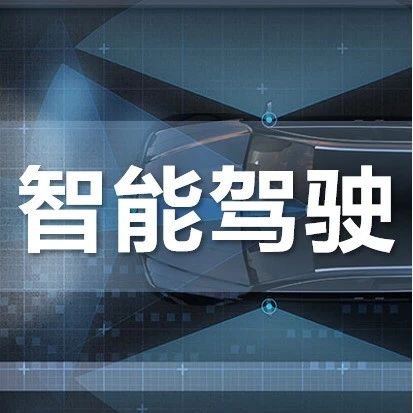
Robotaxi市场竞争激烈:小马智行率先向文远知行开炮
3 6 Ke· 2025-06-24 00:13
Market Overview - The global Robotaxi market is projected to reach $1.95 billion in 2024 and $43.76 billion by 2030, with a forecasted market size of 834.9 billion yuan by 2030 according to Tianfeng Securities [1] Competitive Landscape - Small Horse Intelligent (小马智行) and WeRide (文远知行) are the leading players in the autonomous driving sector, with significant differences in their operational strategies and technology focus [2][5] - Small Horse Intelligent emphasizes redundancy and safety in its technology, while WeRide focuses on cost optimization and a diversified product matrix [7][9] - Both companies have raised approximately $1.3 billion in funding, indicating strong investor interest in the autonomous driving sector [9] Financial Performance - Small Horse Intelligent's revenue from 2022 to 2024 was $68.39 million, $71.90 million, and $75.03 million, totaling approximately $215 million [16] - WeRide's revenue during the same period was 528 million yuan, 402 million yuan, and 250 million yuan, totaling approximately 1.18 billion yuan, indicating a significant decline in revenue [16] - As of the end of 2024, WeRide's total assets were 7.694 billion yuan, with a net asset growth of 331.52%, while Small Horse Intelligent's total assets were $1.051 billion, reflecting a 40.70% increase [18][19] Strategic Initiatives - Small Horse Intelligent is focusing on the Chinese market, with plans to expand its Robotaxi fleet to 1,000 vehicles by the end of 2025, while WeRide is pursuing a global expansion strategy [21] - Both companies are engaged in a competitive race for the title of "Robotaxi first stock," with WeRide successfully listing on NASDAQ first, achieving a market cap of $4.491 billion on its debut [12] Technology and Innovation - Small Horse Intelligent's technology emphasizes a dual approach of Robotaxi and Robotruck, utilizing a multi-sensor fusion strategy for its seventh-generation Robotaxi [7] - WeRide has developed a diverse product matrix that includes Robotaxi, Robobus, Robovan, and Robosweeper, showcasing its adaptability across various scenarios [9] Market Dynamics - The competition between Small Horse Intelligent and WeRide is characterized by a focus on "technical depth" versus "scene breadth," indicating a long-term strategic battle in the autonomous driving space [22]