高频宽存储器(HBM)

Search documents
存储价格涨势将贯穿全年!
Xin Lang Cai Jing· 2026-02-23 11:27
Core Insights - The global memory industry has shifted to a seller's market, with price increases expected to continue throughout 2026 [2] - SK Hynix reports that DRAM and NAND inventory levels are critically low, with only about four weeks of supply remaining [2] - The demand for memory chips is driven by the surge in AI applications and high-performance computing, which exceeds industry expectations [2] Industry Overview - SK Hynix forecasts that the price increase in memory products will be sustained due to a significant supply-demand gap [2] - The company highlights that the production capacity for high-bandwidth memory (HBM) has already been sold out for 2026, leading to increased bargaining power for suppliers [2] - The slow expansion of cleanroom space necessary for chip manufacturing is contributing to the constrained supply [2] Financial Performance - SK Hynix reported record financial results for the fiscal year ending December 31, 2025, with revenues of 97.1467 trillion KRW and an operating profit margin of 49% [3] - The fourth quarter of 2025 saw a revenue of 32.8 trillion KRW, with a significant quarter-on-quarter growth of 34% in revenue and 68% in operating profit [3] - The fiscal year 2025 revenue increased by approximately 30 trillion KRW compared to 2024, with operating profit doubling [3] Investment Opportunities - The HuaTai-PB CSI Korea Semiconductor ETF has seen a year-to-date increase of 25.65%, providing investors with exposure to leading memory companies like SK Hynix and Samsung Electronics [4] - The ETF's top holdings include major players in the semiconductor industry, indicating a strong focus on the sector [4] - Analysts express optimism about the semiconductor investment landscape, particularly in high-end equipment and critical components, which are expected to be key areas for investment in 2026 [6][7]
存储价格涨势将贯穿全年!相关ETF年内涨超25%,基金经理看好半导体机会
Sou Hu Cai Jing· 2026-02-23 03:20
Core Viewpoint - The global memory chip industry has shifted to a seller's market, with price increases expected to continue throughout 2026 [2] Group 1: Market Dynamics - SK Hynix reports that DRAM and NAND inventory levels are critically low, with only about 4 weeks of supply remaining, leading to increased bargaining power for suppliers [2] - The demand for memory chips is driven by the surge in AI models and high-performance computing, which exceeds industry expectations [2] - The production capacity for high bandwidth memory (HBM) has been sold out in advance, indicating a significant supply-demand gap [2] Group 2: Financial Performance - SK Hynix's financial report for the fiscal year ending December 31, 2025, shows record-high revenues of 97.1467 trillion KRW and operating profits of 47.2063 trillion KRW, with a profit margin of 49% [3] - The fourth quarter of 2025 saw a revenue of 32.8 trillion KRW and an operating profit of 19.2 trillion KRW, marking a quarter-on-quarter increase of 34% and 68% respectively [3] - The fiscal year 2025 revenue is projected to increase by approximately 30 trillion KRW compared to 2024, with operating profits expected to double [3] Group 3: Investment Opportunities - The Huatai-PB CSI Korea Semiconductor ETF has seen a year-to-date increase of 25.65%, providing investors with a channel to benefit from the rising memory prices [4] - Fund managers express optimism about the semiconductor investment landscape, particularly in high-end equipment and key components related to memory expansion [4][6] - The semiconductor industry is viewed as being in the middle of an innovation cycle, with AI-related capital expenditures expected to remain high through 2026 [5] Group 4: Sector Focus - Investment managers highlight three key areas: domestic computing power, wafer fab expansion, and military semiconductors, with domestic computing power being a core growth driver [6] - The expansion of wafer fabs is expected to benefit from AI demand and supply shortages, creating upward potential for related equipment and materials [6] - The military semiconductor sector is anticipated to see growth driven by increased demand from commercial aerospace and government planning initiatives [6]


市场期待美光财报点亮 AI
Jing Ji Ri Bao· 2025-12-16 23:49
Group 1 - The core viewpoint of the articles emphasizes the anticipation surrounding Micron's upcoming earnings report and its potential to shed light on the demand for AI-related memory products, particularly in the context of recent concerns about an AI bubble [1][2] - The first observation point is Micron's role as a "bellwether" in the AI supply chain, where its shipment and order data can directly reflect the true demand for memory driven by AI computing [1] - The second focus is on the profitability structure influenced by High Bandwidth Memory (HBM), which is the highest-margin product line in the memory industry, and whether Micron can sustain overall gross margin growth through advanced HBM products [1] - The third point addresses the capacity crowding effect of HBM on the overall memory supply and demand, with concerns that resource allocation towards HBM may further compress the supply of traditional DRAM and NAND chips, impacting pricing trends [1] - The fourth observation highlights the shipment momentum of enterprise solid-state drives (eSSD), which are becoming a second growth engine for Micron as AI servers demand higher capacity and performance storage solutions [1] Group 2 - The final key point discusses Micron's outlook on future memory demand and pricing trends, particularly in light of recent market sentiment following Broadcom and Oracle's earnings calls, which did not fully restore market confidence [2] - There is a market expectation that if Micron can provide clear demand visibility through its earnings data and forward guidance, it could help uplift the AI sector and stabilize technology stocks in the short term [2]

韩媒示警:韩国缺乏HBM混合键合核心专利
半导体芯闻· 2025-11-26 10:49
Core Insights - A study indicates that most core technologies required for advanced packaging of High Bandwidth Memory (HBM) are held by countries outside of South Korea [1] - South Korean companies excel in manufacturing and stacking HBM but are overly reliant on foreign companies for raw materials and equipment, which may expose them to patent litigation risks in the future [1][2] - TSMC and Adeia from the U.S. are leaders in hybrid bonding technology, with Adeia holding the most valuable patents based on a review of over 10,000 related patents from 2003 to 2022 [1] Patent Landscape - According to K-PEG ratings, TSMC ranks first in the number of high-quality patents above A3 level, followed by Samsung, Micron, and IBM [2] - China is rapidly growing in the memory sector, with companies like Yangtze Memory Technologies holding core technologies, including Xtacking, which are registered across South Korea, the U.S., Japan, Europe, and China [2] - Although South Korea holds the second-largest number of HBM-related patents, their quality and impact are below average due to reliance on imported core equipment and materials, posing risks to domestic companies [2] Future Implications - Companies may currently prefer to negotiate licensing agreements privately, but issues may escalate into litigation as hybrid bonding commercializes in 2026 [2]


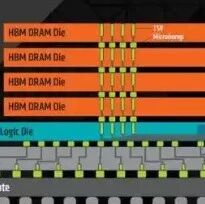
SK海力士加深与台积合作 携手研发新型HBM基础裸晶
Jing Ji Ri Bao· 2025-11-04 23:48
Core Insights - SK Hynix reveals its new generation memory technology blueprint aimed at overcoming the "memory wall" barrier in the AI era, with a goal to become a "full-line AI memory creator" [1][2] - The company emphasizes that memory is evolving from a standard component to a core value product in the AI industry, highlighting the need for improved memory performance to keep pace with processor advancements [1] Group 1: AI Memory Technology - SK Hynix's new strategy includes three main initiatives: Custom HBM, AI DRAM (AI-D), and AI NAND (AI-N) [1][2] - AI DRAM is further divided into three categories: AI-D O (Optimization) focuses on low power and high performance, AI-D B (Breakthrough) aims to overcome the "memory wall" with ultra-high capacity and flexible allocation, and AI-D E (Expansion) seeks to broaden DRAM applications beyond data centers to robotics, mobility, and industrial automation [2] - For AI NAND, SK Hynix is preparing three next-generation storage solutions: AI-N P (Performance), AI-N B (Bandwidth), and AI-N D (Density) [2] Group 2: Collaboration with TSMC - SK Hynix is closely collaborating with TSMC on the next generation of HBM base dies, indicating TSMC's growing importance in the AI era [2] - The company is a member of TSMC's "3D Fabric Alliance" established in 2022, and both parties are actively enhancing their cooperation, having signed a memorandum of understanding for HBM4 development last year [2]
半导体销售展望 美银大幅度上修
Jing Ji Ri Bao· 2025-10-21 23:05
Group 1 - The core viewpoint of the article is that Bank of America has raised its global semiconductor sales outlook, predicting it could approach $1 trillion by 2027, up from the previous estimate of $860 billion [1] - Bank of America reaffirms its five preferred semiconductor stocks: Nvidia, Broadcom, AMD, Lam Research, and KLA, highlighting their strong positions in data centers and memory outlooks [1] - Despite weak momentum in consumer and automotive markets slightly offsetting gains, the growth prospects for memory, including high bandwidth memory (HBM), standard DRAM, and NAND, have significantly improved [1] Group 2 - Bank of America has also raised its outlook for semiconductor manufacturing equipment spending, estimating it will reach $118 billion in 2025, $128 billion in 2026, and $138 billion in 2027 [2] - The capital intensity is expected to remain between 14% to 17%, which is higher than the long-term average of 13%, reflecting increased chip complexity and demand for AI infrastructure [2]
帮主郑重:长电科技存储业务暴增150%!三筛铁律挖出封测龙头的黄金买点
Sou Hu Cai Jing· 2025-09-21 02:15
Core Insights - Longji Technology's storage business revenue surged over 150% year-on-year in the first half of the year, significantly outperforming the industry average, raising questions about the sustainability of this growth [1] Group 1: Market Trends - The storage chip supercycle has begun, driven by three main factors: 1. Explosive demand for AI servers leading to a surge in high bandwidth memory (HBM) demand, with a projected market growth rate of 80% by 2025 [3] 2. Acceleration of domestic substitution as local chip leaders like Yangtze Memory and Changxin Memory ramp up production, with domestic orders for Longji Technology reaching 40% in the first half of 2025 [3] 3. Technological upgrades from DDR4 to DDR5, increasing packaging prices by over 30%, and advancements in 3D NAND stacking from 128 layers to over 200 layers [3] Group 2: Fundamental Analysis - Longji Technology has three strengths and three weaknesses: - Strengths: 1. Strong technical barriers, being one of only three global companies capable of HBM packaging [4] 2. Deep customer relationships with major clients like Apple, Qualcomm, and domestic leaders [4] 3. Leading capacity layout with a monthly production capacity of 82,000 chips and an industry-leading yield rate of 99.5% [4] - Weaknesses: 1. A 24% year-on-year decline in net profit for the first half of 2025 due to increased financial costs from the acquisition of a semiconductor company [5] 2. Operating cash flow decreased by 22.7% year-on-year, indicating pressure from significant expansion investments [5] 3. High valuation with a dynamic PE of 35.3 times for 2025, above the industry average of 28 times [5] Group 3: Valuation Assessment - Short-term valuation is under pressure with a projected PE of 35.3 times for 2025 and 29.0 times for 2026, while long-term valuation could be reasonable if storage business growth continues, potentially lowering PE to 24.3 times by 2027 [6] - If the storage business share increases from the current "mid-teens" to over 30%, the valuation could shift from "packaging factory" to "high-end manufacturing," targeting a PE of 40 times [6] Group 4: Investment Strategy - Ideal buying point is at or below 35 yuan, with current price at 38.73 yuan being slightly high [7] - Position management suggests limiting single stock positions to 8% and total positions in the packaging sector to 15% [7] - Key indicators for monitoring include monthly capacity utilization rates and HBM packaging yield rates [7]