黄豆酱

Search documents
专访海天味业副总裁桂军强:百年品牌的周期韧性
Zhong Guo Jin Rong Xin Xi Wang· 2025-12-31 07:53
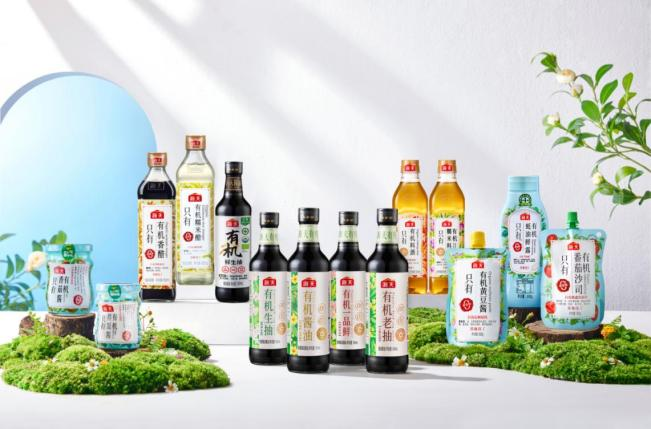
Core Viewpoint - Haitian Flavor Industry has launched a charitable initiative, committing to donate 1 yuan for every bottle sold from its "Little Powder Cap" series to support nutrition health projects, marking December 27 as "Charity Day" [1] Group 1: Business Strategy and Market Positioning - The condiment industry is transitioning from rapid growth to a focus on high-quality development and value competition, with Haitian's core drivers shifting from channel and scale advantages to a new system of "market demand, smart manufacturing, green development, and brand innovation" [1][2] - Haitian emphasizes a user-centered approach, utilizing digital tools to capture demand changes and drive product innovation, moving from "following the market" to "leading demand" [2][5] Group 2: Product Innovation and Quality Assurance - Haitian has developed a range of products that address health and convenience trends, including organic soy sauce and gluten-free soy sauce, with over 1,200 health-focused products in its portfolio [4][5] - The company’s smart manufacturing capabilities have been recognized, with its factory being the first in the global soy sauce industry to be designated as a "Lighthouse Factory," integrating AI, big data, and IoT with traditional brewing techniques [5] Group 3: Sustainability and Social Responsibility - Haitian is actively responding to national "dual carbon" strategies by implementing green innovations across its entire supply chain, achieving an upgraded ESG rating from Morgan Stanley to A [6][8] - The company has established the "Carbon Road Green Chain Alliance" and the "China Oyster Industry Fresh Alliance" to enhance industry efficiency and resilience, promoting sustainable development across the industry [8] Group 4: Global Expansion and Market Opportunities - Haitian Flavor Industry has recently listed on the Hong Kong Stock Exchange, becoming the first condiment company with dual listings, enhancing its global market presence [10] - The company recognizes both opportunities and challenges in overseas markets, with a focus on localizing products to meet cultural differences and consumer preferences [10]


陕西省铜川市市场监督管理局关于37批次食品安全监督抽检情况的通告
Zhong Guo Zhi Liang Xin Wen Wang· 2025-10-11 05:43
Core Points - The Copper City Market Supervision Administration conducted a food safety supervision sampling inspection in 2025, testing a total of 37 batches of food products, including 24 batches of condiments, 7 batches of dairy products, and 6 batches of pastries, all of which passed inspection without any non-compliant samples [2]. Group 1: Inspection Results - A total of 37 batches of food products were sampled and all were found to be compliant with national food safety standards [2]. - The inspection included various categories of food products, specifically condiments, dairy products, and pastries [2]. Group 2: Product Information - The inspection covered a range of products from different manufacturers, including vinegar, soy sauce, and various sauces, with specific details on the production dates and inspection institutions [3][4]. - Notable products included 500mL of brewed vinegar from Suzhou Haoweijia Food Co., Ltd. and 800mL of brewed soy sauce from Jiajia Food Group [3][4].
经常吃发酵食物,大脑、消化系统都变好了
Yang Shi Xin Wen· 2025-05-25 11:23
Core Insights - Fermented foods like yogurt and juice not only enhance flavor but also extend shelf life and synthesize new nutrients [1] Group 1: Benefits of Fermented Foods - Fermented foods can inhibit brain atrophy, with studies showing that bifidobacteria can improve cognitive function in patients with mild cognitive impairment [1] - Increased consumption of fermented foods helps reduce inflammation and improves gut microbiome diversity, with yogurt being particularly effective [2] - The fermentation process increases vitamin content and improves digestion [3] Group 2: Nutritional Upgrades from Fermentation - Dairy fermentation, such as in yogurt and cheese, makes lactose more digestible for lactose-intolerant individuals and enhances the absorption of minerals like calcium and magnesium [7] - Fermentation of legumes, like soy sauce, increases the bioavailability of nutrients and produces beneficial compounds like vitamin K and B12 [8] - Grain fermentation, seen in products like bread and vinegar, enhances digestibility and nutrient absorption [9] - Fruit fermentation, exemplified by wine and fruit vinegar, promotes antioxidant properties and aids digestion [10]

食品过期还能吃吗?在保质期内一定安全吗?一文说清→
Yang Shi Xin Wen· 2025-04-03 06:00
Core Viewpoint - The recent release of 50 national food safety standards and 9 amendments by the National Health Commission and the State Administration for Market Regulation introduces new standards for "expiration date" and "consumption storage period," impacting consumer behavior and food safety awareness [1][6]. Group 1: Understanding Expiration Dates - Expiration dates serve to inform both sellers and consumers about potential quality degradation and safety risks after the specified period [3]. - Most pre-packaged foods are required to display expiration dates, which are determined by manufacturers based on quality testing and industry practices [3]. Group 2: New Standards and Changes - The new standards include the adjustment of the term "expiration date" to "expiration date" for clearer consumer understanding [6]. - The format for marking expiration dates has been standardized to a clear year-month-day sequence, enhancing information visibility [7]. - The new standards encourage the indication of a "consumption storage period," allowing consumers to safely consume products beyond the expiration date if stored correctly [7]. Group 3: Common Misconceptions about Expiration Dates - Not all foods require an expiration date; some items like alcohol, salt, and sugar can be stored indefinitely due to their natural preservative properties [8][10]. - The length of an expiration date does not necessarily correlate with the amount of preservatives; it is influenced by the food's characteristics and storage conditions [10]. - Many manufacturers set expiration dates with a safety margin, meaning that products may still be safe to consume after the date if there are no signs of spoilage [13]. - Safety is not guaranteed simply by being within the expiration date; proper storage conditions must also be observed to prevent premature spoilage [14][15].