1.4nm芯片

Search documents
国元证券晨会纪要-20260105
Guoyuan Securities2· 2026-01-05 06:03
Core Insights - The report highlights the potential for large U.S. oil companies to enter Venezuela under Trump's administration, indicating a shift in geopolitical energy dynamics [3] - The Federal Reserve's Powell suggests that further interest rate cuts may take time, impacting market expectations and investment strategies [3] - OPEC+ is expected to maintain stable oil production levels in the upcoming meeting, which could influence global oil prices [3] Economic Data - The report provides key economic indicators, including the Baltic Dry Index at 1882.00, reflecting a 0.27% increase, and the Nasdaq Index at 23235.63, showing a slight decrease of 0.03% [5] - The report notes the performance of various indices, with the Dow Jones Industrial Average at 48382.39, up by 0.66%, and the S&P 500 at 6858.47, up by 0.19% [5] - The report also mentions the ICE Brent crude oil price at $60.80, down by 0.08%, and the London gold spot price at $4332.51, up by 0.33% [5]
这波建厂潮,太热了
半导体芯闻· 2025-11-28 10:46
Core Viewpoint - The global semiconductor industry is engaged in a strategic competition centered around the establishment of 2nm wafer fabs, which are seen as critical for AI-era computing sovereignty [1][20]. Group 1: TSMC's Expansion Plans - TSMC plans to increase its 2nm fab count from seven to ten, with an estimated cost of approximately NT$300 billion (US$80-100 billion) per fab, totaling around NT$900 billion for the additional three fabs [2][3]. - TSMC's strategy focuses on serving top-tier clients in AI GPU, high-end CPUs, and mobile SoCs, ensuring long-term capacity even amid macroeconomic fluctuations [2][3]. - The company emphasizes that the most advanced nodes must remain in Taiwan, with overseas fabs primarily serving political and customer relationship needs [3][4]. Group 2: Intel's 18A Technology - Intel's 18A process technology is positioned to compete with TSMC's 2nm, with recent reports indicating a steady improvement in yield rates [6][8]. - The U.S. government has become Intel's largest single shareholder, converting subsidies into equity, which strengthens Intel's capital structure [8][9]. - Intel's success in the 2nm race will depend not only on the 18A technology but also on its ability to establish itself as a true foundry company [9]. Group 3: Samsung's Progress - Samsung's 2nm process yield has improved to 55-60%, with plans to increase monthly production from 8,000 wafers in 2024 to 21,000 by the end of 2025 [10][12]. - The company secured a significant contract with Tesla for AI6 chip production, valued at US$16.5 billion over eight years, which is crucial for enhancing Samsung's position in the U.S. foundry market [11][12]. - Samsung aims to regain profitability in its foundry business within two years while targeting a 20% market share [12][13]. Group 4: Japan's Rapidus Initiative - Rapidus, a smaller player, is focused on establishing domestic 2nm production capacity with government support, aiming for mass production by the second half of the 2027 fiscal year [15][17]. - The company plans to build a second factory in Hokkaido, with significant investment expected from the Japanese government and private sector [17][18]. - Rapidus's approach involves a unique single-wafer processing method, which may lead to higher capital expenditures but aims for better yield control [18]. Group 5: Market Dynamics and Geopolitical Implications - The 2nm node is viewed as a critical infrastructure for AI, with significant implications for capital expenditure and industry dynamics [20][21]. - The construction of 2nm fabs is heavily influenced by government policies and partnerships with major clients, making it a tool for national industrial policy [21][22]. - The concentration of 2nm production capacity in Taiwan and a few allied nations raises concerns about supply chain resilience and geopolitical risks [22]. Group 6: Potential Beneficiaries - Semiconductor equipment manufacturers are expected to benefit significantly from the construction of 2nm fabs, as these facilities require advanced equipment for production [24]. - Major clients like NVIDIA, Apple, and AMD will gain more bargaining power with multiple 2nm suppliers, but risks remain if AI demand declines or yields do not meet expectations [25][26].


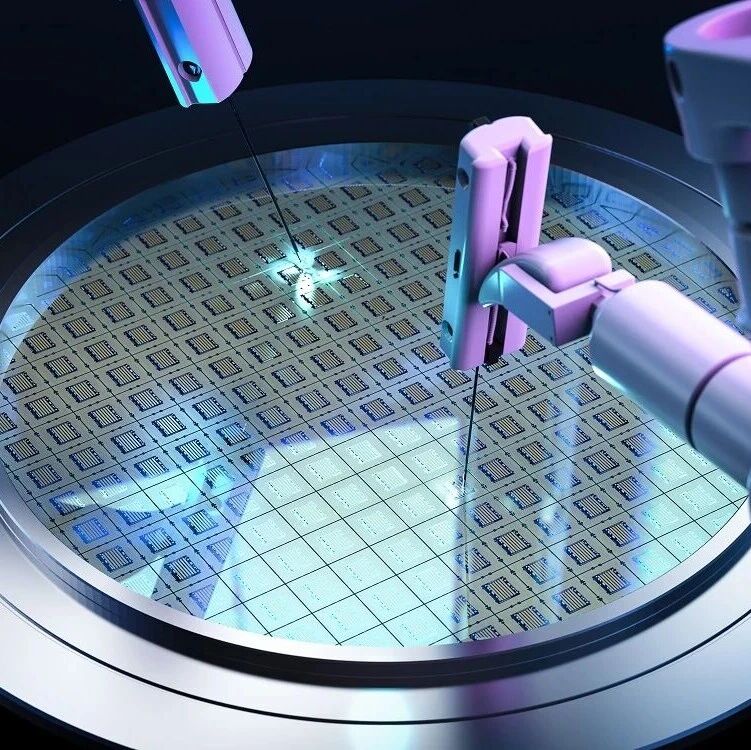
1.4nm争霸战,打响!
半导体行业观察· 2025-11-28 01:22
Core Viewpoint - The global semiconductor industry is engaged in a strategic competition centered around the construction of 2nm wafer fabs, seen as a critical threshold for AI-era computing sovereignty, with major players like TSMC, Intel, Samsung, and Japan's Rapidus making significant investments and advancements in this area [1][20]. TSMC's Expansion Plans - TSMC has upgraded its plan for 2nm fabs in Taiwan from seven to ten, with an estimated cost of approximately NT$300 billion (US$80-100 billion) per fab, totaling around NT$900 billion for the additional three [2]. - The company is also expanding its overseas presence, increasing its investment in Arizona to US$165 billion, citing insufficient local capacity to meet AI customer demands [2][3]. - TSMC's strategy focuses on serving top-tier clients in AI and high-performance computing, ensuring long-term capacity even amid macroeconomic fluctuations [2][3]. Intel's 18A Technology - Intel's 18A process technology is positioned to compete with TSMC's 2nm offerings, with recent reports indicating improved yield rates and a path to mass production by Q4 2025 [6][8]. - The U.S. government has become Intel's largest single shareholder through the CHIPS Act, providing significant capital support, while NVIDIA has also invested US$5 billion in Intel [8][9]. - Intel's success in the 2nm race will depend not only on the 18A technology but also on its ability to establish itself as a competitive foundry [9]. Samsung's Progress - Samsung's 2nm process yield has improved to 55-60%, with plans to increase monthly production from 8,000 wafers in 2024 to 21,000 by the end of 2025 [11]. - The company has secured a significant contract with Tesla for AI6 chip production, valued at US$16.5 billion over eight years, which is crucial for enhancing Samsung's position in the U.S. foundry market [11][12]. - Samsung aims to regain profitability in its foundry business within two years, leveraging high ASP orders to support its 2nm production ramp-up [12][13]. Japan's Rapidus Initiative - Rapidus, a smaller player, is focusing on establishing domestic 2nm production capabilities with government support, aiming for mass production by the second half of the 2027 fiscal year [15][17]. - The company plans to build a second factory in Hokkaido, with significant investment expected from the Japanese government and private sector [17]. - Rapidus's strategy involves a unique approach to wafer processing, utilizing single-wafer techniques to enhance yield and defect control [18]. Geopolitical and Economic Implications - The race to build 2nm fabs is driven by technological, economic, and geopolitical factors, with 2nm seen as essential for AI infrastructure [20][21]. - Major investments are being supported by government policies and partnerships with leading customers, making the establishment of 2nm fabs a national strategic priority [21]. - The concentration of 2nm production capacity in a few regions raises concerns about supply chain resilience and geopolitical risks [22]. Industry Outlook - The construction of 2nm fabs is expected to benefit semiconductor equipment suppliers significantly, as these facilities require advanced manufacturing technologies [24]. - The expansion of 2nm capacity will also drive demand for advanced packaging and testing solutions, essential for AI chip production [24]. - However, the industry faces uncertainties regarding sustained demand and the potential for overcapacity leading to financial pressures in the future [22][24].
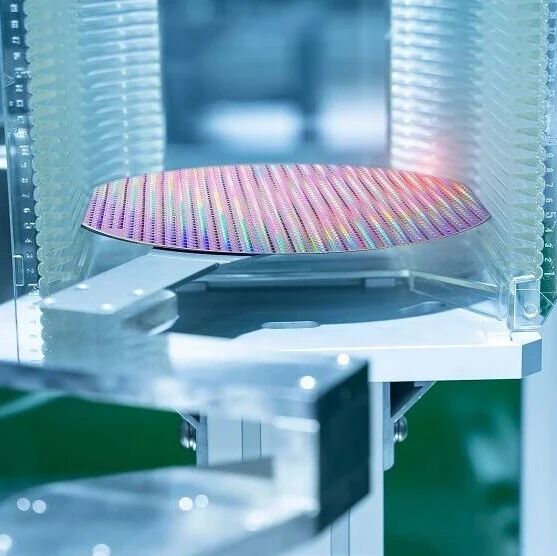
芯片代工“一家独大”?台积电Q2市占率突破70%
美股IPO· 2025-09-01 14:29
Core Viewpoint - TSMC has significantly increased its market share to 70.2% in Q2 2025, driven by strong revenue growth and advanced process technology, while Samsung's market share has declined to 7.3% [2][3][5]. Group 1: Market Share and Revenue Growth - TSMC's market share reached 70.2%, up from 67.6% in the previous quarter, marking a significant increase [2][3]. - The overall wafer foundry industry revenue grew by 14.6% quarter-on-quarter, with TSMC's revenue growth at 18.5%, reaching $30.239 billion [3][5]. - Samsung's market share decreased from 7.7% to 7.3%, with revenue of $3.159 billion and a growth rate of 9.2% [5]. Group 2: Future Projections and Investments - Analysts expect TSMC's market share to rise to 75% by 2026, supported by increasing demand for 2nm processes [3][7]. - TSMC plans to invest up to $49 billion in the construction of a 1.4nm chip factory in Taiwan, aiming to maintain its technological leadership [7]. - TSMC is set to begin mass production of 2nm technology in Q4 2025, with initial capacity already secured by Apple and future orders from Qualcomm, MediaTek, and Broadcom [7]. Group 3: Competitive Landscape - Despite TSMC's clear advantages, Samsung is actively pursuing advancements in 2nm GAA technology, aiming to launch the Exynos 2600 chip [8]. - However, Samsung's current production capacity and customer base are insufficient to compete with TSMC's established position in the market [8]. - TSMC's stable customer foundation and advanced process nodes ensure its continued dominance in the global wafer foundry market [8].