AI智能玩具

Search documents
潮起潮落,机器人租赁催生平台
Shen Zhen Shang Bao· 2026-01-23 04:40
Core Insights - The rise of humanoid robot rentals in Huaqiangbei was driven by a "curiosity effect," peaking in early 2025, but this trend has since declined as many rental shops have shifted to selling AI robots and live-streaming equipment [1][2] Group 1: Market Dynamics - During the peak rental period, daily rental prices for humanoid robots soared to between 18,000 and 25,000 yuan, with a significant demand that made them hard to find [2] - The current rental prices have decreased significantly, with humanoid robots now renting for 4,000 to 5,000 yuan per day, and robotic dogs around 300 yuan [5] - The rental market is evolving from merely renting equipment to providing comprehensive service capabilities, emphasizing delivery and stability [3] Group 2: Business Model Changes - The global robot selection center in Huaqiangbei integrates rental, sales, and service development, moving away from the previous scattered rental model [2][4] - Most robot companies do not directly offer rental services, with some only providing loans to familiar clients, indicating a shift in how rental services are approached [6] - The rental market is divided into short-term rentals for events and long-term rentals for practical applications, with the latter being more stable but not necessarily cost-effective [7] Group 3: Platform Development - The launch of the "Qingtian Rental" platform aims to consolidate scattered rental resources, addressing the challenges of finding suitable robots for various events [8] - The Chinese robot market surpassed 150 billion yuan in 2025, with rental model penetration increasing by over 300% compared to five years prior [8] - The emergence of platforms is seen as a positive development, potentially improving service quality and reducing market chaos, even if it does not necessarily increase profitability [9]

中金2026年展望 | 轻工零售美妆:分化延续,优选成长(要点版)
中金点睛· 2025-11-05 23:52
Core Viewpoint - The light industry retail beauty sector is experiencing a weak recovery since 2025, with significant differentiation among sub-sectors and companies due to varying attributes and policy sensitivities. Domestic demand remains weak, while certain segments like trendy toys and beauty products show growth. International trade policies are slowing export growth. Looking ahead to 2026, government policies are expected to support consumption stabilization, but the marginal effects may diminish, leading to differentiated growth across sub-sectors [3]. Beauty and Aesthetic Medicine - The beauty sector is projected to achieve mid-single-digit growth in 2026, driven by domestic demand recovery. Ingredient upgrades and product innovations, particularly with emerging components like collagen and PDRN, are expected to enhance consumer purchasing needs. Competition is intensifying, leading to a concentration of market share among leading brands. The industry is anticipated to exhibit three trends: 1) National brands are moving towards globalization and group development; 2) Channel efficiency and operational capabilities are becoming more critical; 3) Market share is increasingly concentrated among top-performing brands [6]. - The aesthetic medicine sector is expected to see double-digit growth in 2026, supported by increased penetration rates and continuous market education. The supply side is becoming richer, stimulating demand. Two key trends are anticipated: 1) Midstream institutions are focusing on premium products and marketing capabilities; 2) Leading institutions are expanding through enhanced user operations and solutions [7]. Personal Care - The personal care sector is expected to benefit from increased online penetration and the rise of self-care demands, leading to a restructuring of the market. Product structures are anticipated to upgrade towards efficacy and premiumization. The rise of content e-commerce platforms is reshaping consumer access and marketing, providing opportunities for domestic brands to gain market share, particularly in segments like baby care, women's hygiene, and oral care [8]. Commercial New Retail - The retail sector is expected to continue its steady recovery into 2026, characterized by three trends: 1) Consumers are increasingly valuing cost-performance ratios, prompting businesses to focus on differentiated product offerings; 2) The clearance of outdated retail formats is nearing completion, with improved operational efficiency leading to profitability; 3) New consumption trends driven by emotional value are creating demand, supported by innovative product categories and localized operations [10]. Light Industry Manufacturing - The light manufacturing sector is facing weak overall demand but presents structural opportunities. Companies that can leverage industry transformation to develop new business models are expected to thrive. Key opportunities include: 1) Industry transformation driven by technological advancements, particularly in AI applications; 2) Export opportunities as companies enhance resilience through diversified global production and capitalize on improving overseas demand [13][14].

2025中国玩协四展开幕,五大趋势引领行业创新发展
Sou Hu Cai Jing· 2025-10-21 16:41
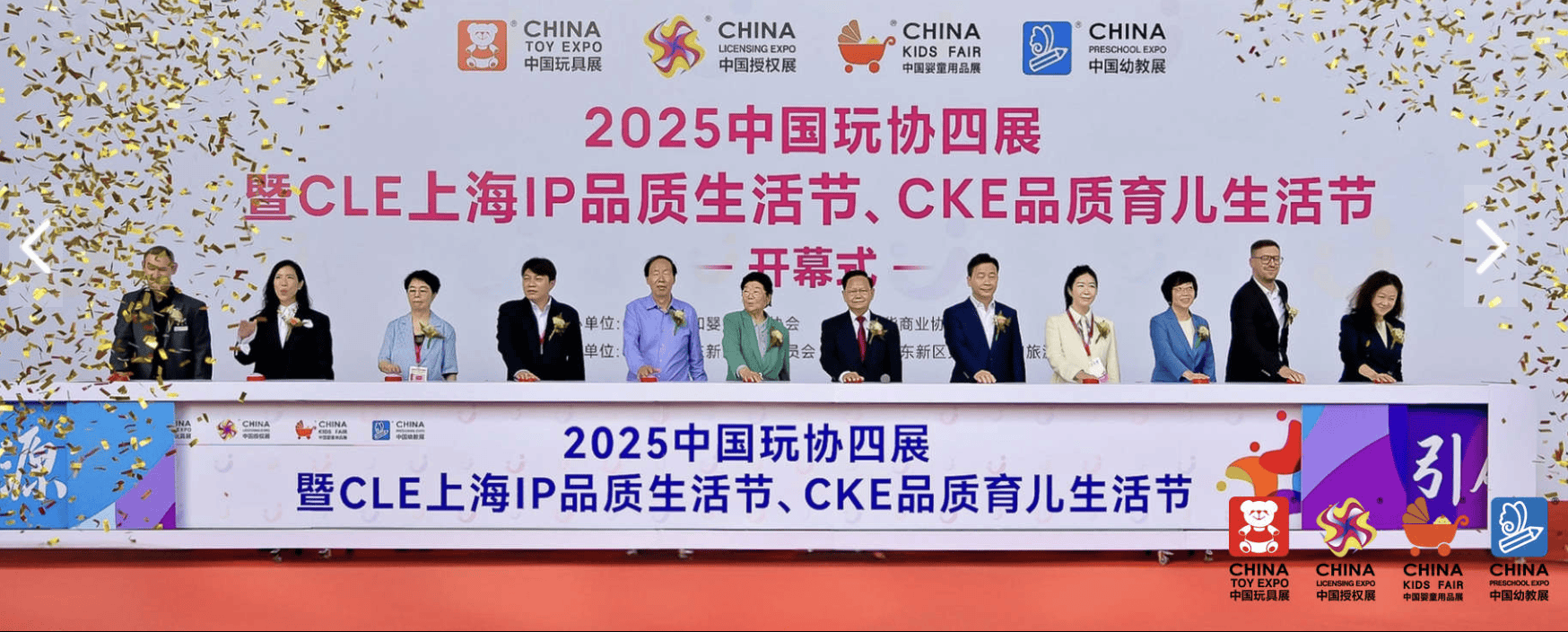
Core Insights - The 23rd CTE China Toy Expo &潮玩展, 18th CLE China Licensing Expo, CKE China Baby Products Expo, and CPE China Early Education Expo have opened in Shanghai, showcasing a total exhibition area of 230,000 square meters with 2,629 exhibitors from 41 countries and regions, highlighting the event's role as a strategic hub for expanding into the Chinese and global markets [1] Group 1: International Participation - The number of international exhibitors at the CLE China Licensing Expo has increased significantly, with a year-on-year growth of 65%, featuring top global IPs such as Disney, Marvel, and Pokémon [3] - The CKE China Baby Products Expo has also seen a 36% increase in international exhibitors, with high-end brands like Stokke and Nuna showcasing new products [4] - The CTE China Toy Expo has experienced a steady increase of 14% in international exhibitors, with major companies like Mattel and Hasbro participating consistently [4] Group 2: Global Brand Presence - The event has attracted leading brands from North America, Europe, and Asia, indicating the appeal of the Chinese market for new product launches [6] - Notable brands from North America include Disney and Hasbro, while European brands like LEGO and HABA are also prominently featured [6] - Japanese and Korean brands such as Pokémon and Bandai are participating, showcasing their strong IPs and market presence [6] Group 3: Emerging Markets and Local Brands - Emerging market brands from Southeast Asia, such as Plan Toys and Mighty Jaxx, are actively participating, showcasing the vibrancy of these markets [7] - Chinese brands, including cultural icons like the Palace Museum and popular toy brands, are demonstrating a shift from "commercial output" to "cultural confidence," gaining recognition in the global market [7] Group 4: Industry Trends - Five key trends are shaping industry innovation: 1. IP cross-industry collaboration is creating new consumer experiences [9] 2. Smart applications in toys are becoming a highlight, with AI-driven products gaining attention [9] 3. A shift from mass-market products to niche offerings is emerging, focusing on deep market penetration [9] 4. Environmental sustainability is becoming a value proposition for leading brands [9] 5. Digital marketing is facilitating global trade, enabling Chinese brands to expand internationally [9]
全球顶流IP齐聚,2025中国玩协四展开幕
Guo Ji Jin Rong Bao· 2025-10-16 09:06
Core Insights - The 23rd CTE China Toy Expo &潮玩展, 18th CLE China Licensing Expo, CKE China Baby Products Expo, and CPE China Early Education Expo opened in Shanghai, showcasing a significant international presence and innovation in the toy and baby products industry [1][4]. Group 1: Event Overview - The event spans three days and covers an exhibition area of 230,000 square meters, featuring 2,629 exhibitors from 41 countries and regions, with 5,426 brands represented [1]. - The theme of the expo is "Sharing Cross-Border Resources, Leading Innovation Trends" [1]. Group 2: International Participation - There has been a substantial increase in the number of international exhibitors, with a 65% year-on-year growth in the CLE China Licensing Expo [4]. - The number of overseas exhibition groups reached a record high, increasing by 22.2% [4]. Group 3: Product Innovations - AI smart toys, which incorporate emotional computing and large language models, emerged as a highlight of the China Toy Expo &潮玩展 [4]. - Innovations in baby products include smart child safety seats with intelligent stop and adjustment features, automatic folding strollers, and smart cribs that monitor sleep and provide soothing systems [4]. Group 4: Professional Activities - A total of 276 professional activities will be held during the expo, covering brand licensing, toys, baby products, and early education, with multiple international conferences gathering industry elites to discuss development strategies [4]. Group 5: Economic Impact - The expo is part of the "Shanghai Summer" international consumption season, enhancing the spillover effects of the exhibition economy in the Pudong area through various IP-themed events and activities [5].