
AI视觉质检系统

Search documents
开局“十五五” 奋斗正当时·一线报道丨以数字蝶变重构传统产业“智造”基因——滨州经济技术开发区纺织产业数字化智能化之变
Xin Lang Cai Jing· 2026-02-23 13:28
Core Insights - The textile industry cluster in Binzhou Economic and Technological Development Zone is leveraging the "smart transformation and digital upgrade" strategy to accelerate technological innovation and green transformation, aiming to create a high-quality development model for traditional industries in the Yellow River Basin [1] Group 1: Digital Transformation - The traditional labor-intensive label of the textile industry is being fundamentally rewritten through digital technology, involving a complete reconstruction of production systems rather than mere equipment updates [2] - The integration of thousands of sensor nodes in workshops allows for real-time data monitoring of the entire cotton processing workflow, significantly enhancing operational efficiency and product quality [2] - The use of digital simulation and material gene engineering by leading companies like Dongfang Carpet has revolutionized traditional adhesive processes, resulting in patented green manufacturing methods [2] Group 2: Knowledge and Talent Development - The core of digital transformation lies not only in machine interconnectivity but also in the quantification and optimization of traditional craftsmanship, enabling a shift from "experience-based" to "data-driven" production [3] - The transformation of tacit knowledge into explicit models helps overcome challenges in the inheritance of traditional skills, providing a continuous source of improvement for production systems [3] Group 3: Systemic Empowerment - The digital transformation of the textile industry is not a solitary effort but involves a platform-based approach that supports the entire industry chain [4] - The development of comprehensive digital solutions addresses common industry challenges such as high energy consumption and quality control, leading to significant improvements in operational efficiency [4] - The establishment of industry standards and protocols facilitates data flow across the supply chain, breaking down information silos and promoting collaborative efficiency [4] Group 4: Green and Sustainable Development - The digitalization process is aligned with carbon reduction goals, utilizing energy management platforms to optimize energy use and integrating renewable materials into production processes [6] - The aim is to create a sustainable industrial ecosystem that incorporates energy optimization, material recycling, and capacity sharing, ultimately achieving a "zero waste" philosophy [6] - The transformation from traditional manufacturing to intelligent manufacturing represents a revaluation of production factors, positioning the textile industry cluster on a path toward achieving a trillion-yuan target [6]
重庆:领跑智能网联新能源汽车赛道
Ke Ji Ri Bao· 2026-02-05 06:37
Core Insights - Chongqing is leading the smart connected electric vehicle sector, with a projected annual automobile production of 2.7877 million units by 2025, including 1.2961 million electric vehicles, which is 30 times the production in 2020 [2] - The city is undergoing a significant industrial transformation, shifting from traditional manufacturing to a smart connected ecosystem, thereby accelerating the creation of new high-quality development momentum [2] Innovation Ecosystem - The Chongqing Liangjiang Collaborative Innovation Zone has nurtured nearly 1,000 hard-tech companies and facilitated around 1,500 technology transfer achievements [3] - Companies like Chongqing Zhongke Yaolu Information Technology have developed domestic firsts in 3D glue quality online detection systems, achieving over 20 times growth in five years [3] - Long-term R&D investments by companies such as Changan Automobile exceed 5%, with significant advancements in software and hardware integration [3] Industry Development - Chongqing has established seven national-level enterprise technology centers and three industrial innovation complexes, forming an integrated development pattern of "software + intelligence + hardware" [4] - The region's innovation ecosystem has attracted companies like Beidou Zhili Technology, which has achieved over 3 billion yuan in annual sales and over 12% in R&D investment [4] Industrial Cluster - Chongqing is implementing a world-class smart connected electric vehicle industrial cluster development plan, transitioning from individual efforts to collective action [6] - Changan Automobile reached a milestone of producing its 30 millionth vehicle in just over four years, showcasing the rapid growth of the brand [6] - The city has gathered over 1,200 large-scale component manufacturers, achieving comprehensive coverage of electric vehicle components [6] Supply Chain Optimization - The establishment of a "factory within a factory" model has enhanced supply chain efficiency, with local production and supply capabilities significantly improving response times [8] - Companies like CATL have set up local production facilities within the Seres Super Factory, achieving production adjustments in just 20 minutes [8] - This model has led to a 50% improvement in supply chain collaborative innovation capabilities, streamlining the number of primary suppliers [8] Strategic Vision - Chongqing aims to achieve a local supply rate of 70% for smart connected electric vehicle components by 2027, fostering a deeply integrated industrial ecosystem [7] - The city is leveraging technological innovation and comprehensive chain layout to drive exponential growth in the smart connected electric vehicle industry, aspiring to become a globally influential hub [9]




南宁聚力打造“智能引擎” 建设面向东盟的人工智能合作高地
Zhong Guo Xin Wen Wang· 2026-02-01 13:24
Group 1 - Nanning is focusing on the national AI development strategy and is implementing the "AI+" initiative, establishing the China-ASEAN AI Application Cooperation Center to accelerate AI collaboration with ASEAN countries [1] - The Nanning AI Center has signed 67 domestic AI projects and attracted 14 overseas companies, with major domestic firms like iFlytek, Softcom Power, and 360 Group participating [1] - Nanning has become a preferred location for training AI models in ASEAN, leveraging computing facilities like Wuxiang Cloud Valley and the China-ASEAN AI Computing Center [1] Group 2 - AI applications are being integrated into various sectors including industry, agriculture, finance, healthcare, and education, enhancing operational efficiency [3] - In the industrial sector, AI visual inspection systems at Fenglin Group's factory achieve over 99% accuracy in identifying defects in particle boards [3] - In agriculture, AI systems are being used to manage large farms and predict pest damage, reducing losses by approximately 30% [3] Group 3 - Nanning is advancing the construction of a city-level AI platform to integrate public AI computing resources and enhance the development and utilization of public data [4] - The city aims to deepen reforms and innovations in the AI sector, expanding the breadth and depth of application scenarios [4] - Nanning is promoting its manufacturing and standards to ASEAN markets, indicating a strategic push towards regional integration [4]
深圳龙华:数字经济五年完成三级跳,一个工业强区的跃升密码
Xin Lang Cai Jing· 2025-12-01 23:45
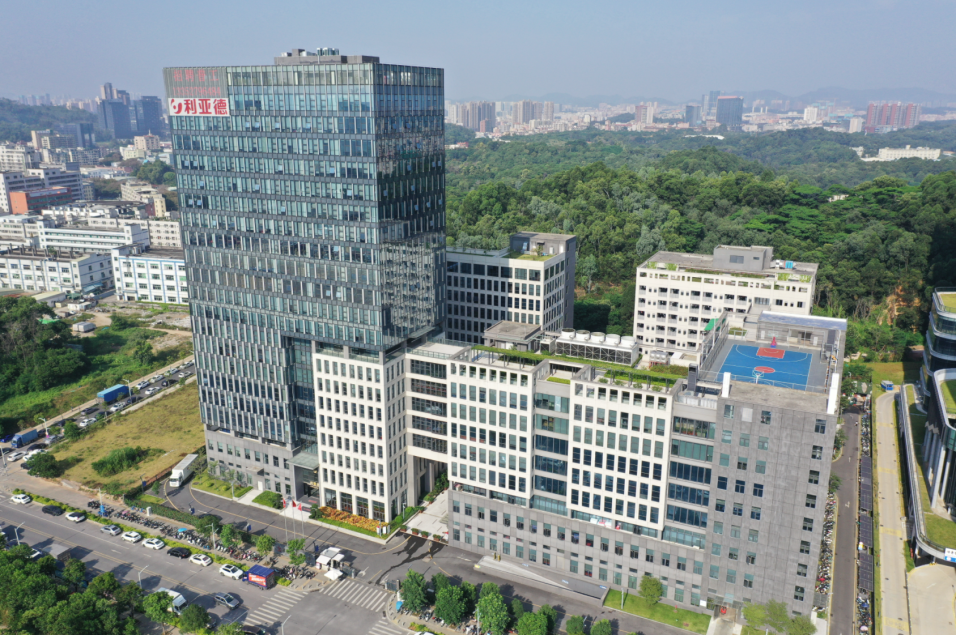
Group 1: Digital Economy Development in Longhua - Longhua District has transformed from a traditional manufacturing hub to a core area of digital economy within five years, becoming a key engine for regional development [1][2] - In 2024, the core industries of the digital economy in Longhua are projected to achieve a total output of 563.88 billion yuan, maintaining an output scale above 500 billion yuan for three consecutive years [2] - The smart terminal industry dominates the digital economy in Longhua, accounting for over 90% of the core industry scale, alongside significant contributions from the network and communication, software and information technology services, and artificial intelligence sectors [2] Group 2: Industrial Upgrading and Policy Support - Longhua's industrial development has evolved from traditional manufacturing to a focus on electronic information, with a significant push towards digital transformation driven by market demands [4][5] - In 2020, Longhua was designated as a "core urban area" of Shenzhen, aiming to establish a high ground for emerging industries and a new city of fashion [6] - The district has implemented a comprehensive digital economy policy framework, including a three-year work plan and over 30 billion yuan budget for various industry-specific policies [7] Group 3: Digital Transformation Case Studies - Liard, a leading LED display manufacturer, has integrated digital transformation into its operations, significantly enhancing management efficiency through IoT and data analytics [10][11] - Shenzhen Guodian Technology Communication Co., Ltd. has successfully doubled its production capacity and reduced delivery cycles by 53% post-digital transformation, evolving from a producer to a provider of intelligent manufacturing solutions [12] - Yipu Technology has developed a proprietary industrial software system for the semiconductor industry, breaking the monopoly of foreign technologies and addressing local manufacturing needs [14][16] Group 4: Future Prospects and AI Integration - Longhua is set to leverage AI to further enhance the digital transformation of its manufacturing sector, with initiatives like the "AI + Manufacturing" action plan [17] - Companies like Yipu Technology and Shenzhen Guodian are already experimenting with AI applications in quality inspection and operational efficiency [17] - The district aims to double its GDP in the next five years, indicating strong confidence in its transition from manufacturing to intelligent manufacturing [18]

定义下一代智能感知,中科摇橹船跻身《财富》中国科技50强
财富FORTUNE· 2025-09-30 13:27
Core Insights - The article highlights the recognition of Zhongke Yaolu Boat as a significant player in the intelligent perception sector, marking its entry into the 2025 "China's Top 50 Tech Companies" list by Fortune, showcasing its rapid growth and innovation in the industry [1][7]. Group 1: Company Overview - Zhongke Yaolu Boat is a hard-tech AI enterprise incubated by the Chongqing Liangjiang New Area and the Xi'an Institute of Optics and Precision Mechanics, part of the Chinese Academy of Sciences [8]. - The company has expanded its operations from the western region to the Yangtze River Delta, establishing a presence in Yancheng, Jiangsu, which is crucial for integrating into China's core manufacturing ecosystem [8]. Group 2: Technological Advancements - Zhongke Yaolu Boat has shifted its focus from merely hardware production to developing comprehensive "perception-decision" capabilities, integrating "light + AI" technologies to redefine industrial vision standards [7][10]. - The company has invested heavily in R&D, with over 25% of its revenue allocated to research for three consecutive years, resulting in 210 core intellectual property rights [18]. Group 3: Product Innovations - The company has developed a 5G intelligent welding inspection big data platform and an AI visual quality inspection system for the entire manufacturing process of new energy vehicles, covering over 360 inspection stations [11][12]. - In the semiconductor sector, Zhongke Yaolu Boat has broken through two major bottlenecks in Micro LED display technology, facilitating its mass production [13][15]. - The launch of a visualization laser radar camera enhances geological disaster early warning and intelligent vehicle perception, capable of detecting objects in extreme weather conditions [20][24]. Group 4: Industry Impact - The recognition of Zhongke Yaolu Boat signifies a shift in China's technology evaluation system towards hard-core innovation, emphasizing deep industry understanding and long-term technological investment [28]. - The company represents a new wave of innovators in China, poised to influence global markets as it continues to advance in the "light + AI" integration across various industries [31].
经济观察:“数字湖南” 勇闯 “人工智能 +” 新高地
Zhong Guo Xin Wen Wang· 2025-09-17 13:19
Core Insights - The 2025 Internet Yuelu Conference in Changsha highlighted Hunan's ambition to accelerate the implementation of the "Artificial Intelligence +" initiative, aiming to establish Hunan as a new hub for AI development [1][3]. Group 1: AI Development Path - Hunan is constructing a differentiated AI development path, focusing on its unique strengths in autonomous secure computing systems, with a notable supercomputing capacity of 223 PF, ranking third nationally [3][4]. - The province's AI talent pool includes 10 academicians and over 1,000 high-level technology talents, contributing to a robust workforce in AI-related fields [4][5]. - Hunan's approach emphasizes deep integration of AI into manufacturing processes rather than consumer applications, exemplified by specific use cases in companies like SANY Heavy Industry [5][7]. Group 2: Achievements and Innovations - The conference showcased various AI models across sectors such as smart manufacturing, healthcare, and public services, indicating Hunan's strong capabilities in AI technology and application [7][8]. - The establishment of the HarmonyOS (Changsha) Innovation Center aims to attract 100 HarmonyOS ecosystem companies, enhancing the local AI industry chain [8][10]. - Hunan's AI industry cluster in Xiangjiang New Area is projected to host 532 companies by the end of 2024, with plans for over 600 smart application scenarios [8][10]. Group 3: Strategic Focus and Future Goals - Hunan's strategy involves focusing on practical applications of AI in various sectors, including technology, industry development, and public welfare, to drive high-quality growth [10][11]. - The province has set ambitious targets in its three-year action plan for AI development, aiming for a computing power of 3600 PFLOPS and an industry scale exceeding 100 billion yuan by 2026 [10][11]. - The local government is supporting AI development through a dedicated annual fund of 500 million yuan, creating a comprehensive policy support system [10].
从“热潮”到“国策”:AI产业迎来新十年
3 6 Ke· 2025-09-05 11:55
Core Insights - The article discusses China's first top-level design to systematically deploy artificial intelligence (AI) as a national development engine, marking a shift from isolated breakthroughs to comprehensive integration [2][3] - The core goal of the policy is to deeply embed AI into various national systems over the next decade, transforming it into a foundational capability akin to electricity and the internet [4][6] Policy Overview - The recent policy document emphasizes that AI should become a basic capability for every industry, local government, and enterprise, moving beyond mere support for AI companies [4][5] - The document outlines six major action paths, including technological innovation, industrial transformation, consumer upgrades, public services, social governance, and global cooperation [5][6] AI Integration and Impact - AI is positioned as the underlying operating system for the national economy, deeply integrated into key sectors such as industry, agriculture, education, healthcare, governance, transportation, and energy [3][4] - The policy introduces the concept of "AI+" to signify a proactive role for AI in reshaping industries rather than being an add-on technology [3][4] Opportunities in Various Sectors - In the scientific research sector, AI is expected to enhance research efficiency and facilitate a shift from experience-driven to model-driven methodologies, creating opportunities for AI products and platforms [9][10] - The policy encourages the emergence of "intelligent native" enterprises, integrating AI into strategic planning, organizational structure, and business processes across various industries [9][10] - Consumer experiences are set to evolve with a focus on intelligent terminals and services, emphasizing new interaction methods between AI products and consumers [10][11] Social Governance and Global Strategy - AI's role in social governance is elevated, with a focus on creating smart urban environments and enhancing public service delivery through AI applications [12][13] - The policy aims to position China as a key player in the global AI landscape, promoting open-source sharing and international cooperation in AI standards and governance [13] Industry Transformation - The next decade will see a restructuring of organizational capabilities across traditional industries, with service providers needing to adapt their business logic and delivery models [20] - Cloud service providers and chip manufacturers will transition from a focus on computational power to creating comprehensive service ecosystems [20][19] Conclusion - The implementation of the "AI+" policy signifies a fundamental shift in how AI will be integrated into the economy, requiring all sectors to redefine their operational frameworks and capabilities [14][20]
向“智”而行,新型工业化“加速跑”
Xin Hua Ri Bao· 2025-08-17 20:40
Group 1 - The core event was the launch of key resources to support the digital transformation of small and medium-sized enterprises (SMEs) in Nanjing, including a recommended list of digital service providers and an online integrated public service platform [1] - Nanjing has been recognized as a national pilot city for SME digital transformation since October last year, and has made significant progress in implementing various tasks related to this initiative [1][3] - The integration of advanced digital technologies such as AI, industrial internet, and cloud computing is reshaping the global industrial landscape, making Nanjing's efforts crucial for enhancing its industrial supply chain modernization [1] Group 2 - A case study was presented where a manufacturing company improved its inspection efficiency by 300% and achieved an accuracy rate of over 99.9% after adopting an AI visual inspection system, highlighting the competitive advantages of digital transformation [2] - The event featured a supply-demand matching segment where 200 pilot enterprises interacted with 75 recommended digital service providers, showcasing their capabilities and solutions for SMEs [2] - Nanjing has established itself as a leader in digital transformation initiatives, being the only national AI innovation application pilot zone in Jiangsu province and a key city for 5G and industrial internet applications [3]

常州举行产业链对接活动,发力机器人产业下半场——产城互动,共探智能蓝海
Xin Hua Ri Bao· 2025-05-16 23:23
Core Insights - Jiangsu Province has released the "Smart Transformation and Networking Guide for Robot Reducers," providing a future roadmap for the robot industry, with 21 key projects and nearly 6 billion yuan in investment aimed at boosting the second half of the robot industry [1][8] Group 1: Industry Development - Changzhou is evolving from traditional manufacturing to intelligent equipment, establishing a comprehensive industrial ecosystem with 37 out of 41 national industrial categories covered [2] - The robot industry in Changzhou has surpassed 30 billion yuan, supported by high-end equipment and new energy vehicle industries [2][3] - By 2026, Changzhou aims to produce 100,000 robots annually and exceed 50 billion yuan in total industry scale, positioning itself as a national robot industry hub [3] Group 2: Technological Advancements - Changzhou's robot industry features a complete upstream supply chain, including global leaders in servo motors and reducers, enhancing precision and application across various sectors [4] - Innovative applications include AI visual inspection systems and intelligent rehabilitation devices, demonstrating the versatility of robots in industrial, medical, and logistics fields [4][9] Group 3: Policy and Support - The launch of the Embodied Intelligent Robot Innovation Center signifies increased support for major projects and platforms in the robot industry [5] - The release of the "Smart Transformation and Networking Guide" aims to address core component challenges and foster the development of the embodied intelligent robot industry in Jiangsu [8] Group 4: Future Outlook - Changzhou is committed to building a modern industrial system through a "full-chain ecosystem," inviting global partners to participate in the intelligent manufacturing revolution [9]
