AI6

Search documents
马斯克自建全球最大芯片厂,要把80%算力送上太空
21世纪经济报道· 2026-03-24 04:55
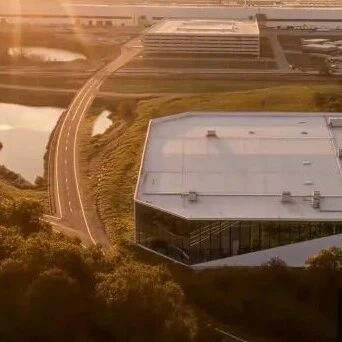
记者丨彭新 编辑丨包芳鸣 美国当地时间3月21日, 特斯拉宣布将与SpaceX、xAI合作建设芯片项目TeraFab,目标是实现年产能1太瓦(1万亿 瓦)AI算力,打造全球规模最大的芯片制造工厂。 据特斯拉披露,TeraFab将是一座垂直整合的芯片工厂,涵盖芯片 设计、推理和存储芯片制造、封装与测试全流程,并配备所有必要设备,用于测试、修改和制造芯片。 在发布会上,马斯克称,现在地球上所有芯片晶圆厂的产能总和约为20吉瓦(1吉瓦=0.001太瓦),仅相当于其所需算 力的2%左右。马斯克在发言中强调了对现有供应链的依赖,也表达了对第三方扩产速度的无奈。他透露,自己曾向三 星、台积电和美光等供应商承诺,会买下它们所能生产的所有芯片,"但他们扩张产能的速度远低于我们的期望。" "所以,要么我们自己建芯片工厂,要么就没有芯片可用。因为我们需要芯片,所以我们决定建造TeraFab。"马斯克 说。 TeraFab效果图,图片来源:特斯拉 他甚至还设想在月球建设发射基地,进一步将太空算力规模提升至1拍瓦,即1太瓦的1000倍。 为实现该计划,马斯克估算需要将约1000万吨物资送入轨道。SpaceX正推进Starship V ...


Elon Musk Unwraps $25 Billion Terafab Chip-Building Project
CNET· 2026-03-24 01:40
Elon Musk took the stage over the weekend to announce a new partnership between Tesla, SpaceX and xAI to build a $25 billion chip-making factory in Austin, Texas, called Terafab. Acknowledging Samsung, TSMC and other chipmakers, Musk said the Terafab project needs to get off the ground because existing semiconductor partners aren't making chips fast enough. If built, Terafab would be the largest semiconductor manufacturing plant in the world.Bringing more semiconductor facilities to the US isn't new. The CH ...

马斯克:芯片产能制约特斯拉中期增长,自建TerraFab晶圆厂很有必要
Sou Hu Cai Jing· 2026-01-30 02:54
Group 1 - The core viewpoint is that Elon Musk indicated during Tesla's Q4 2025 earnings call that chip production capacity is likely to become a bottleneck for Tesla's mid-term growth over the next 3 to 4 years, as external supply from companies like TSMC, Samsung, and Micron is insufficient to meet demand [1] - Tesla is considering the construction of its own TerraFab super-sized wafer factory to integrate various semiconductor manufacturing processes, which would help the company mitigate external risks [1] Group 2 - Musk mentioned that AI4 (HW 4.0) has been utilized in Tesla's data centers for AI training workloads, and the gap between AI5 and AI6 chip generations will be less than one year [3]
特斯拉的物理AI芯片路线图
Xin Lang Cai Jing· 2026-01-22 00:02
Core Insights - Tesla is shifting its focus towards AI chips, moving from hardware support to a core element that determines product capability limits [1][12] - Elon Musk revealed Tesla's latest AI chip roadmap, with AI5 design nearing completion and AI6 in early stages, aiming to compress chip design cycles to 9 months per generation [1][12] Group 1: AI Chip Development - The goals for Tesla's vehicle chips from HW3/AI3 and HW4/AI4 to the upcoming AI5 focus on providing higher computing power and larger memory for Full Self-Driving (FSD) and allowing redundancy for future complex end-to-end models [3][13] - The AI4 era features a 7nm process with approximately 216 TOPS supporting current FSD V12, which is insufficient for long-term goals of full autonomy and embodied intelligence [3][13] - AI5 is expected to utilize both Samsung's 2nm and TSMC's 3nm processes, with Musk claiming a "50 times performance improvement," combining a 10 times increase in raw computing power and a 9 times increase in memory capacity compared to AI4 [3][13] Group 2: Application and Integration - AI5 targets two core businesses: FSD and the Optimus humanoid robot, with a unified algorithm and hardware platform for both vehicles and robots, creating a unique advantage in embodied intelligence [4][14] - The architecture allows Tesla to view smart cars as "mobile robots" and robots as "walking cars," facilitating collaborative evolution at the foundational level [4][14] - Following AI5, AI6 will expand to support both edge inference and cloud training, with HW series chips deployed in vehicles and Dojo series chips for data center training, indicating a dual technical pathway [4][14] Group 3: Dojo Project and Space Computing - The initial goal of the Dojo project was to provide customized, efficient computing infrastructure for Tesla's autonomous driving training, with the first D1 chip based on a 7nm process [5][15] - AI6 and AI7 are envisioned as versatile AI computing chips that can support both edge inference and data center training, even adapting to space environments [5][15] - Space computing is a significant application for AI7, leveraging collaboration with SpaceX to deploy high-performance computing systems in orbit, taking advantage of potential benefits in latency, coverage, and infrastructure costs [6][16] Group 4: Engineering Solutions and Future Goals - Space computing presents challenges such as radiation, heat dissipation, and energy consumption, requiring higher reliability and power control for chips [7][17] - Musk mentioned AI8 and AI9, with an ambitious goal of shortening chip design cycles to 9 months per generation, aiming to align hardware upgrades with the rapid evolution of AI algorithms [7][17] - Tesla proposes an engineering solution to extend the usable life of older AI3 chips by processing 16-bit data with 8-bit low precision chips, balancing user scale and long-term product lifecycle [7][17] Summary - Tesla's AI chip roadmap indicates aggressive growth in computing power, with a 50 times performance increase from AI4 to AI5, significantly outpacing industry averages [11][21] - The application scope is expanding from vehicle inference to robots, data centers, and space computing, with a significantly compressed iteration cycle to match the rapid evolution of AI models [11][21]
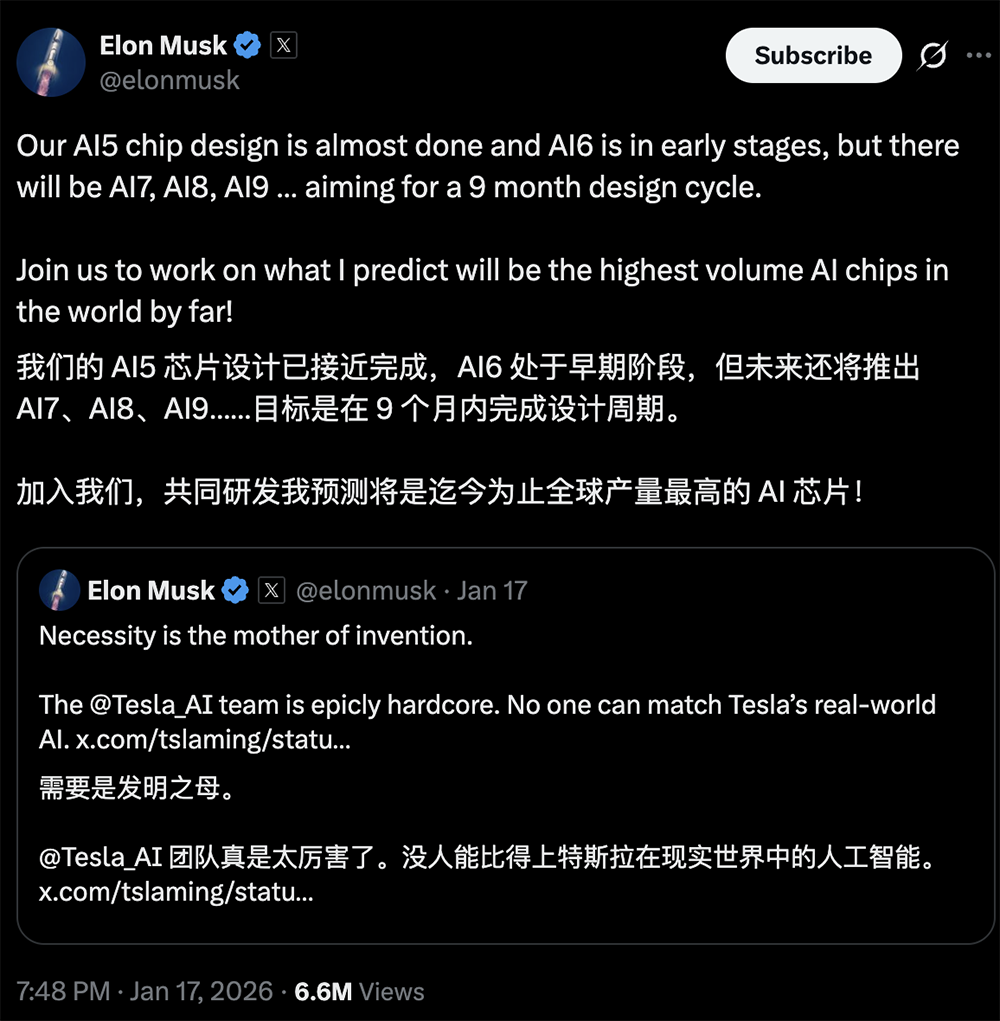
特斯拉芯片路线图发布
半导体行业观察· 2026-01-19 01:54
Core Viewpoint - Tesla aims to accelerate its AI chip development cycle to compete with AMD and NVIDIA, targeting a nine-month design cycle for its AI processors, starting with AI5 and progressing to AI9 [1][2]. Group 1: AI Chip Development - Tesla's AI chips are primarily designed for automotive applications, which require high redundancy and safety certifications, making rapid development challenging compared to data center processors [1]. - The development cycle can potentially be shortened if future chips (AI6, AI7, AI8, AI9) are based on incremental iterations rather than entirely new designs, reusing existing architectures and frameworks [2]. Group 2: Technological Innovations - Tesla has developed a "Mixed-Precision Bridge" technology that allows low-cost, low-power 8-bit hardware to perform high-precision 32-bit calculations without losing accuracy [4]. - This technology enables Tesla's AI systems to maintain high precision in spatial calculations, crucial for tasks like recognizing traffic signs and balancing in humanoid robots [5][6]. Group 3: Memory and Data Management - Tesla's approach includes optimizing key-value (KV) caches to reduce memory usage by over 50%, allowing for the storage of more historical data without exhausting RAM [11]. - The use of a "read-only" safety lock ensures that once data is generated, it cannot be overwritten, preventing potential errors in AI decision-making [12]. Group 4: Computational Efficiency - The architecture integrates native sparse acceleration technology, allowing the chip to focus only on non-zero values, significantly improving throughput and reducing energy consumption [15]. - Tesla's AI5 chip is expected to achieve performance levels 40 times greater than current hardware while effectively managing memory bandwidth [18]. Group 5: Strategic Implications - The advancements in Tesla's chip technology aim to reduce dependency on NVIDIA's CUDA ecosystem, enhancing strategic independence and potentially creating a distributed inference cloud comparable to AWS [20]. - The mixed-precision architecture lays the groundwork for deploying advanced AI capabilities in smaller, low-power devices, facilitating edge computing without relying on cloud servers [20].
Bernie Sanders, Elon Musk Exchange Sharp Words Over Call For AI Data Center Moratorium: 'They're Cowards'
Benzinga· 2025-12-18 04:42
Core Viewpoint - The debate between Tesla CEO Elon Musk and Senator Bernie Sanders centers around the implications of AI data centers, with Sanders advocating for a moratorium due to concerns over job loss and environmental impact, while Musk promotes the potential of space-based AI solutions. Group 1: Sanders' Position - Senator Bernie Sanders has called for a moratorium on new AI data centers, arguing that the industry is driven by billionaires seeking more wealth and power rather than the interests of working families [2] - Sanders warns that AI data centers could lead to higher electricity bills and emissions comparable to driving over 300 billion miles, emphasizing the need for a pause in construction [3] - He frames the discussion as one of economic justice, asserting that AI and robotics should benefit all people, not just the wealthy [5] Group 2: Musk's Response and Vision - Elon Musk criticized Sanders, suggesting that those who oppose innovation lack adventure and are cowardly, indicating a belief in the necessity of progress [4] - Musk highlighted SpaceX's plans to use satellites as orbiting data centers, which he claims could become the cheapest way to produce AI data streams within three years [6] - He argues that space-based systems could be the fastest way to scale AI, citing limitations in reliable and affordable electricity sources on Earth [7] Group 3: Industry Implications - Experts estimate that data centers currently consume about 5% of the electricity generated in the U.S., with this share expected to increase as AI usage expands [5] - Tesla is advancing its AI chip development, with plans to manufacture more AI chips than the rest of the industry combined, indicating a strong competitive position in the AI hardware market [8]
三星入局MRAM代工
半导体芯闻· 2025-12-03 10:28
Core Insights - Samsung Electronics' wafer foundry business is recovering due to strong growth in the automotive semiconductor market, having secured orders from Tesla and Hyundai [1][2] - The company is supplying eMRAM, a non-volatile memory technology, to Hyundai, which is produced using a 14nm FinFET process [1] - eMRAM offers significant advantages over NAND flash memory, including a speed approximately 1000 times faster and low power consumption, driving demand in the automotive sector [1] Group 1 - Samsung has completed the development of its 14nm eMRAM process and plans to expand its product lineup to 8nm by 2026 and 5nm by 2027, with expected density and speed improvements of 30% and 33% respectively [2] - The company is rapidly expanding its automotive foundry business, having been selected by Tesla for the production of its next-generation AI semiconductor, AI6, which will utilize a 2nm process [2][3] - Samsung is also preparing to mass-produce 8nm MCUs for Hyundai, with plans to complete development by 2028 and start production by 2030 [2] Group 2 - There is a high likelihood that Samsung will win the contract for Hyundai's high-end 5nm autonomous driving chips, as the selection process is set to take place next year [3] - The project, "K-on-Device AI Semiconductor," has been delayed but is expected to favor Samsung due to its established capabilities in advanced process technologies [3] - Samsung's foundry has gained reference standards for various automotive chip processes, including advanced nodes (2nm, 5nm, and 8nm) and mature processes (14nm) [3]
Analysts Remain Divided on Tesla Inc.’s (TSLA) Near-Term Outlook
Yahoo Finance· 2025-12-01 10:59
Group 1: Investment Insights - Tesla Inc. is among the top 10 stocks to buy from Cathie Wood's ARK Investment Management, with holdings increasing to $1.6 billion by the end of Q3 2025, representing 9.5% of ARK's total 13F portfolio [1] - Mizuho's Vijay Rakesh reiterated an Outperform rating on Tesla while lowering the price target to $475 from $485 due to a softer outlook for electric vehicle demand in China and the U.S. [2] - The consensus opinion on Tesla is mixed, with only 40% of analysts recommending a Buy, and the 1-year median potential upside is a modest 2% [4] Group 2: Market Challenges - A significant factor affecting Tesla's estimates is the expected 50% decline in Chinese government subsidies for electric vehicles in 2026, which may impact industry-wide demand [3] - Tesla is facing challenges in its core EV business and pressure on vehicle sales, contributing to a cautious outlook [4] Group 3: Technological Developments - Tesla is close to finalizing the design of its AI5 chip and starting work on AI6, with plans to bring a new AI chip design to volume production every 12 months [4] - CEO Elon Musk stated that Tesla expects to build chips at higher volumes than all other AI chips combined, indicating ambitious growth plans in this area [4]
Wall Street Rallies on Rate Cut Hopes and AI Enthusiasm, Kicking Off Holiday Week Strong
Stock Market News· 2025-11-24 21:07
Market Overview - U.S. equities experienced a significant surge on November 24, 2025, driven by optimism for a potential Federal Reserve interest rate cut in December and a strong performance in technology and AI stocks [1][2] - The S&P 500 index rose by 1.6%, while the Nasdaq Composite increased by 2.7%, reflecting broad market strength [2] Federal Reserve Insights - Comments from Federal Reserve officials indicated a possibility of a 25-basis-point rate cut in December, with an 80% likelihood priced in by traders [3] Major Stock Movements - Alphabet (GOOGL) shares surged over 5% to an all-time high due to excitement surrounding its new Gemini 3 AI model [4] - Tesla (TSLA) stock rose by 7% following CEO Elon Musk's announcements about ambitious AI chip plans [5] - Nvidia (NVDA) gained 2%, while Broadcom (AVGO) and Micron Technology (MU) saw increases of 10.01% and 7.89% respectively [5] Corporate News - Carvana (CVNA) shares jumped nearly 7% after an upgrade from analysts, while healthcare stocks like Centene (CNC), Elevance Health (ELV), and Molina Healthcare (MOH) also saw gains [6] - Novo Nordisk (NVO) shares declined after an ineffective Alzheimer's drug trial announcement [7] Upcoming Economic Data - Key economic indicators to be released include Producer Price Index, Retail Sales, and Consumer Confidence data, which are expected to influence future Federal Reserve policy decisions [9][10] - Several companies are scheduled to report earnings, including Agilent Technologies and Zoom Communications, which may impact trading in the coming days [11]

Elon Musk says Tesla's hiring for its big AI chip push — and he's 'deeply involved' in the design meetings
Business Insider· 2025-11-24 05:19
Group 1 - Elon Musk is actively recruiting for Tesla's AI chip engineering team, emphasizing the need for candidates to demonstrate their exceptional abilities [1] - The company aims to produce a new AI chip design every 12 months and expects to manufacture chips at higher volumes than all other AI chips combined [2] - The current AI chip in Tesla vehicles is AI4, with AI5 nearing completion and work on AI6 already underway [2] Group 2 - Musk believes these chips will significantly improve safety and healthcare, potentially saving millions of lives through advancements in driving and medical care via the Optimus robot project [3] - Tesla has signed a $16.5 billion deal with Samsung to manufacture the A16 chip at a new plant in Texas, indicating a strong commitment to chip development [3] Group 3 - Tesla is hiring for various engineering roles, including physical design engineers and signal and power integrity engineers, with salaries ranging from approximately $120,000 to $318,000 annually [4][5][6] - The physical design engineer role requires over 10 years of experience in integrated circuit design, while the signal and power integrity engineer role focuses on testing and validating chips [5][6] Group 4 - Musk is personally involved in the chip design process, holding meetings with the engineering team twice a week [7] - He has a history of being hands-on in his companies, including overseeing Samsung's new chipmaking plant in Texas, which is set to open in 2026 [8]