2纳米制程

Search documents
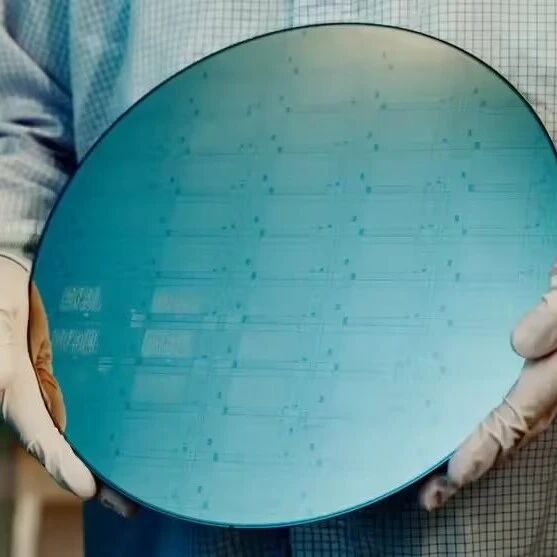
三星2nm良率突破 60%!
国芯网· 2026-03-24 12:43
Group 1 - Samsung has achieved a significant breakthrough in semiconductor manufacturing, with its advanced 2nm process yield recently surpassing 60%, doubling its yield in just two quarters from approximately 20% [2][3] - The improved yield allows Samsung to produce more high-performance chips at lower costs and attract new customers, bringing its yield levels in line with industry leader TSMC, which has a yield range of 60% to 70% for its 2nm process [2][3] - Samsung is producing 2nm chips for its Exynos 2600 smartphone processor, which will be featured in some Galaxy S26 and S26+ models, although the yield for the Exynos 2600 is still below 50% compared to previous generations [2][3] Group 2 - The increase in yield for the 2nm process is crucial as it not only reduces production costs but also helps Samsung secure more global customer orders, including a $16.5 billion contract with Tesla for the production of next-generation AI6 chips at its Taylor chip manufacturing plant [3] - The application of advanced chips smaller than 5nm is becoming increasingly widespread in information technology devices, and a stable and significant yield at 2nm could attract more customers seeking cutting-edge semiconductor solutions, potentially narrowing the market share gap with TSMC in the coming years [3]

2纳米,涨幅惊人
半导体行业观察· 2025-10-25 03:19
Core Viewpoint - Apple is developing the A20 processor for the iPhone 18 series, which will be manufactured using TSMC's 2nm process, resulting in a significant cost increase to approximately $280, representing an over 86% rise compared to the A19 processor used in the iPhone 17 series [2][3]. Cost Analysis - The A20 processor will be the most expensive component in the iPhone 18, surpassing the previous highest cost component, the display, which was around $110 for the iPhone 16 Pro series [2]. - The A18 Pro processor used in the iPhone 16 Pro series had a cost of $135, while the A19 Pro processor in the iPhone 17 Pro series cost $150, indicating a trend of increasing processor costs [2]. Technology Transition - The A20 processor marks a transition from the previous three generations of 3nm technology to the latest 2nm technology, promising significant improvements in performance and efficiency [3]. - TSMC has reportedly informed clients that the last 3nm chips have seen a 20% price increase over previous generations, with an additional 50% increase for the new 2nm process, although this has not been officially confirmed [3].


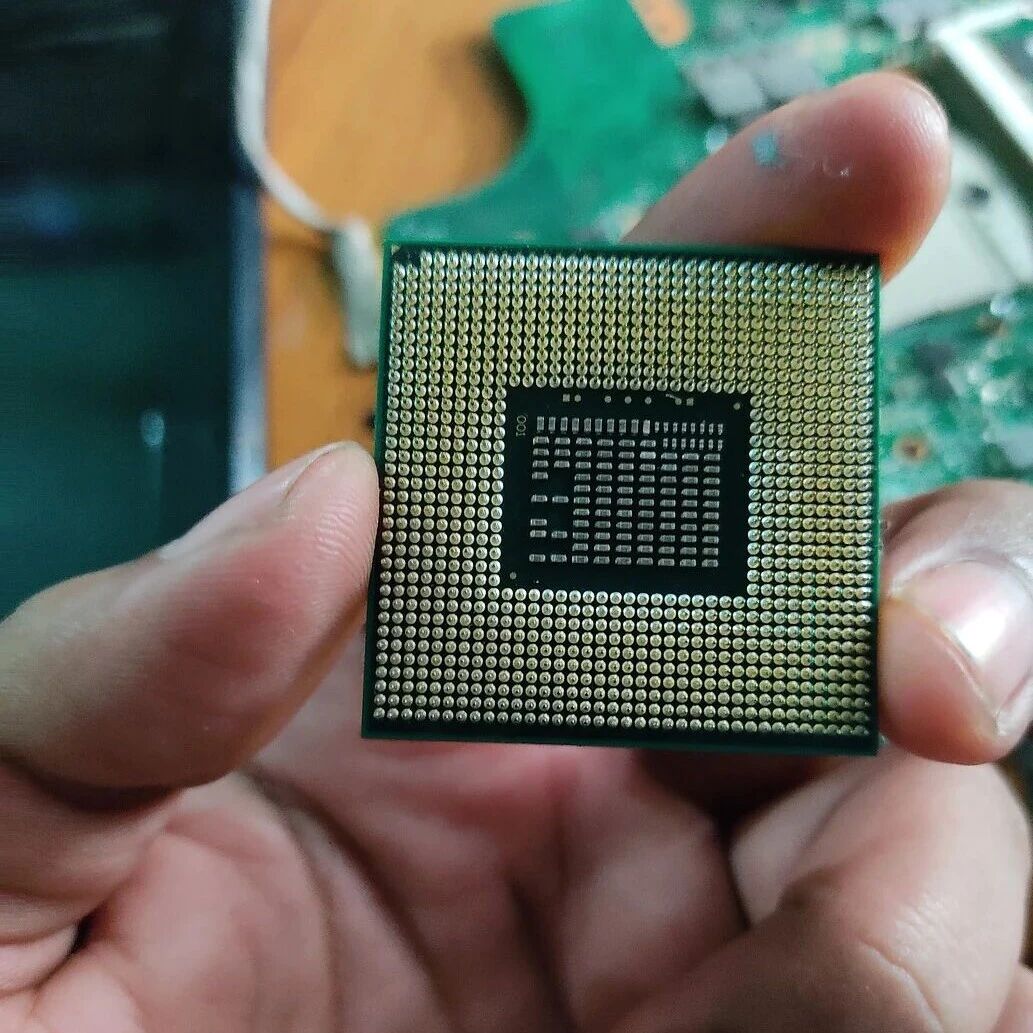
2nm芯片,贵的吓人
半导体芯闻· 2025-10-23 09:58
Group 1 - Apple is advancing the development of the A20 chip for the iPhone 18 series, which is expected to be the first processor using TSMC's 2nm process, with an estimated unit cost of approximately $280 [1] - The A20 chip will mark a significant upgrade from the previous A series chips, moving from TSMC's 3nm technology to 2nm, promising substantial improvements in performance and energy efficiency [1] - The cost increase associated with the 2nm process is notable, with TSMC indicating that the last 3nm chips have seen a 20% price increase, and the 2nm process will add an additional 50% to that cost [1] Group 2 - Due to high costs, Apple may not equip all iPhone 18 models with the 2nm chip, potentially limiting the A20 chip to higher-end Pro and Pro Max models, while standard versions may use older or specially designed chips [2] - The production and pricing strategy for the A20 chip will be critical for the competitiveness of the iPhone 18 series in the market [2]
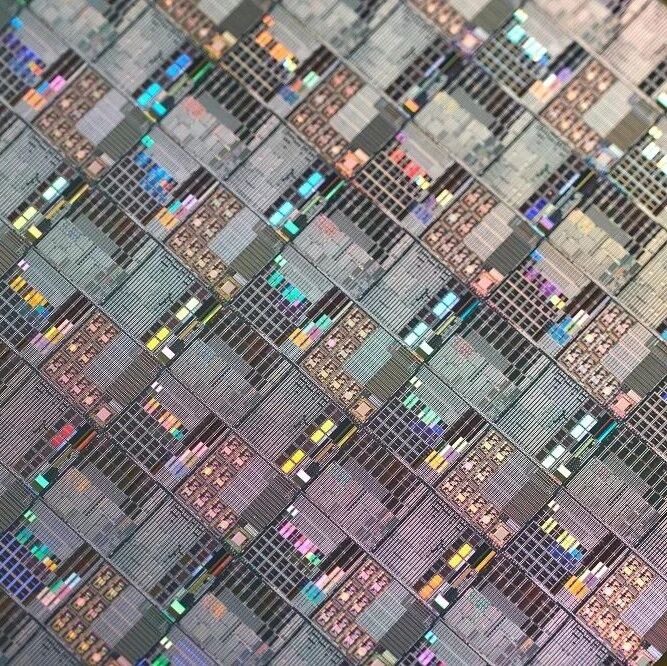
台积电买了30台EUV光刻机
半导体行业观察· 2025-10-23 01:01
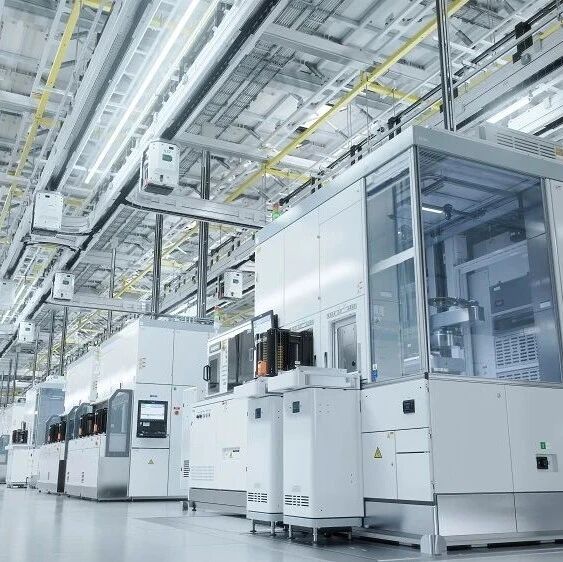
Core Viewpoint - TSMC is advancing towards 2nm and below nodes, facing manufacturing challenges, and has decided to shift from purchasing ASML's high-NA EUV lithography machines to using photomask films for production [2][3]. Group 1: Manufacturing Strategy - TSMC plans to begin mass production of 2nm wafers by the end of 2025, transitioning to the 1.4nm node thereafter, with a foundational investment of up to NT$1.5 trillion (approximately US$49 billion) [2]. - The company is rapidly advancing its 1.4nm process development at its Hsinchu facility and has acquired 30 standard EUV lithography machines to meet increasing demand from clients like Apple [2][3]. Group 2: Equipment Decisions - TSMC has opted not to purchase ASML's high-NA EUV lithography machines, which cost US$400 million each, due to perceived value discrepancies and the limited annual production capacity of these machines (only 5 to 6 units) [3]. - Instead, TSMC is focusing on using photomask protective films to mitigate contamination risks during the manufacturing process, despite the high costs and complexities associated with this alternative [3].
三星2nm,立下军令状
半导体芯闻· 2025-10-21 10:43
Core Viewpoint - Samsung Electronics is optimistic about revitalizing its foundry business, aiming to capture market leadership in the global foundry sector currently dominated by TSMC, leveraging next-generation 2nm technology [1][2]. Group 1: Samsung's Foundry Business - Samsung's foundry division has faced significant losses over the past few years, but recent orders from major clients like Tesla and Apple indicate a potential turnaround [1]. - The 2nm process technology is expected to be a critical turning point for Samsung, enhancing chip performance, power efficiency, and thermal management, which are essential for the AI semiconductor market [2]. - Samsung plans to apply the 2nm process to its next-generation mobile application processor "Exynos 2600" and aims to achieve a production yield of around 70% by the end of this year or early next year [2][3]. Group 2: Industry Context and Competition - The semiconductor industry is entering a boom phase driven by AI investments, with the 2nm technology seen as a key competitive advantage [2]. - Samsung's collaboration with various clients, including AMD and AI semiconductor companies, highlights its efforts to expand its foundry business [3]. - The meeting with government officials and industry leaders emphasized the need for support in technology and talent, with calls for tax incentives and government funding to help Samsung and SK Hynix compete with Taiwanese firms [3].
【太平洋科技-每日观点&资讯】(2025-09-18)
远峰电子· 2025-09-17 10:22
Market Performance - The main board led the gains with notable increases from companies such as Beiwai Technology (+10.02%), Fuzheng Technology (+10.00%), Yongxin Optics (+10.00%), and others [1] - The ChiNext board saw significant growth, particularly from Boshang Optoelectronics (+20.01%) and Huijin Co., Ltd. (+19.82%) [1] - The Sci-Tech Innovation board was also strong, with Liyang Chip (+20.01%) and Fengcai Technology (+20.00%) leading the way [1] - Active sub-industries included SW Semiconductor Equipment (+4.27%) and SW Passive Components (+3.56%) [1] Domestic News - Aibang announced the launch of a new AR glasses model aimed at outdoor athletes, featuring a single green Micro LED display engine with over 10 hours of battery life and brightness exceeding 4000 nits [1] - MediaTek announced the successful design tape-out of its first flagship SoC using TSMC's 2nm process, becoming one of the first companies to adopt this technology, with mass production expected by the end of next year [1] - Qiusui Semiconductor introduced the "Leyi AR" glasses, set for small-scale production in early October, utilizing Micro LED technology with a pixel size of 3.75μm [1] - Tongfu Microelectronics reported breakthroughs in Co-Packaged Optics (CPO) technology, with related products passing initial reliability tests [1] Company Announcements - Visual China announced a cash dividend of 0.11 RMB per 10 shares based on a total of 699,578,636 shares [3] - Dali Cap announced a cash dividend of 0.3 RMB per 10 shares, totaling 12 million RMB [3] - Daotong Technology declared a cash dividend of 5.8 RMB per 10 shares [3] - Juguang Technology reported share reductions by major shareholders, with specific holdings detailed [3] International News - The U.S. President indicated that semiconductors and pharmaceuticals, which have higher profits than automobiles, may face tariffs exceeding 25%, similar to those imposed on automobiles [1] - AMD launched the EPYC Embedded 4005 series processors, which include six SKUs with various core configurations [1] - Adani Group is in discussions with Sharp and Panasonic to establish India's first LCD panel factory [1] - Texas Instruments introduced a highly sensitive in-plane Hall effect switch for various applications [1]

2nm芯片,价格飙升
半导体芯闻· 2025-08-05 10:10
Core Viewpoint - TSMC is advancing its 2nm production with plans for four factories to operate at full capacity, despite high costs for customers due to increased pricing per wafer [2] Group 1: 2nm Production Progress - TSMC is set to have four 2nm factories operational next year, with a total monthly output of 60,000 wafers [2] - The current yield rate for 2nm in the trial production phase has reached 60%, indicating readiness for stable mass production [2] - Major clients like Apple, Qualcomm, and MediaTek are expected to be the first to adopt the new technology [2] Group 2: Cost Implications - The price per wafer for the 2nm process is projected to be around $30,000, which is 50% higher than the 3nm process [2] - To help clients manage costs, TSMC has initiated a shared trial production service called "CyberShuttle," allowing multiple clients to share a single test wafer for design validation [2] Group 3: Competitive Landscape - There is potential pricing pressure on TSMC if competitors like Samsung successfully launch their first 2nm GAA architecture chip, Exynos 2600, with improved yield rates [2]
股价大涨!三星收获特斯拉芯片大单
Zheng Quan Shi Bao· 2025-07-28 11:49
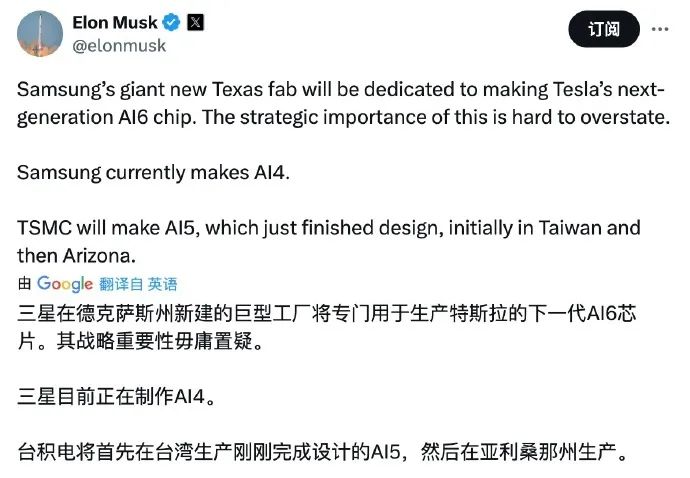
Core Viewpoint - Samsung Electronics has secured a significant chip manufacturing agreement worth 22.8 trillion KRW (approximately 16.5 billion USD) with Tesla, marking a pivotal moment for the company as it aims to enhance its semiconductor business and regain market confidence [1][2]. Group 1: Agreement Details - The contract with Tesla represents 7.6% of Samsung's projected revenue for 2024 and will be effective from July 24, 2023, until December 31, 2033 [1]. - The agreement involves the production of Tesla's AI6 chips, with Samsung currently manufacturing the AI4 chips, while the AI5 chips are produced by TSMC [1][2]. Group 2: Market Reaction - Following the announcement, Samsung's stock price surged by 6.8%, reaching its highest level since September of the previous year, while suppliers like Soulbrain saw stock increases of up to 16% [2]. - Tesla's stock also experienced a pre-market rise of 1% in response to the news [2]. Group 3: Strategic Importance - Elon Musk emphasized the strategic significance of the deal, suggesting that the actual output could exceed the stated contract value, and he will personally oversee the chip production process to optimize it [2]. - This contract is seen as a crucial opportunity for Samsung to improve its chip manufacturing capabilities, which have been underutilized and facing losses [2]. Group 4: Competitive Landscape - Samsung's market share in the global chip foundry sector has declined, with its share dropping from 8.1% to 7.7%, contrasting sharply with TSMC's dominant 67.6% share [3]. - The new agreement is viewed as a signal of market confidence in Samsung's upcoming manufacturing technologies, particularly in the development of next-generation 2nm process semiconductors [3].
股价大涨!三星收获特斯拉芯片大单
证券时报· 2025-07-28 11:29
Core Viewpoint - Samsung Electronics has secured a significant chip manufacturing agreement worth 22.8 trillion Korean Won (approximately $16.5 billion) with Tesla, which is expected to boost Samsung's revenue and stock price significantly [2][5]. Group 1: Agreement Details - The contract with Tesla represents 7.6% of Samsung's projected revenue for 2024 and will be effective from July 24, 2023, until December 31, 2033 [2]. - Elon Musk confirmed that the order pertains to Tesla's FSD (Full Self-Driving) chips, specifically the AI6 chip, while the AI5 chip is produced by TSMC [3][4]. Group 2: Market Impact - Following the announcement, Samsung's stock rose by 6.8%, reaching its highest level since September of the previous year, while suppliers like Soulbrain saw stock increases of up to 16% [5]. - Tesla's stock also experienced a pre-market increase of 1% after the news [5]. Group 3: Strategic Importance - Musk emphasized the strategic significance of the deal, suggesting that the actual output could exceed the stated contract value [4]. - The agreement is seen as a potential catalyst for Samsung's chip manufacturing business, which has been struggling with underutilization and losses [6][12]. Group 4: Competitive Landscape - Samsung's market share in the global chip foundry sector has declined, with its share dropping from 8.1% to 7.7%, contrasting with TSMC's dominant position of 67.6% [10]. - Both Samsung and TSMC are advancing next-generation semiconductor technologies, including the development of 2nm processes, with this agreement signaling market confidence in Samsung's upcoming manufacturing capabilities [11].