
AIEQ

Search documents
国信证券晨会纪要-20251128
Guoxin Securities· 2025-11-28 01:30
Group 1: AI Empowerment in Asset Allocation - The report discusses the performance of three representative AI asset management products: AIEQ, ProPicks, and QRFT, evaluating whether AI can provide excess returns to investors [8] - AIEQ, an actively managed ETF, has underperformed SPY due to high market sentiment volatility and cost erosion from high turnover rates [8] - ProPicks has shown strong returns during favorable tech periods but is highly sensitive to execution discipline and slippage, making actual replication challenging [8] - QRFT has closely tracked the S&P 500 over the long term, showing significant phase differentiation, indicating a focus on narrow enhancements rather than stable high alpha [8] Group 2: Pharmaceutical and Biotechnology Sector - The pharmaceutical sector underperformed the overall market, with a 4.32% decline in the A-share market, and the biopharmaceutical sector fell by 6.88% [10] - The report highlights the treatment options for Hidradenitis Suppurativa (HS), noting that the prevalence in Western populations is approximately 1%, with around 320,000 diagnosed patients in the U.S. [11] - First-line therapies for HS primarily involve antibiotics, while second-line biological treatments include Adalimumab and IL-17A inhibitors, which have gained market share due to their efficacy and safety [11] Group 3: Atour (ATAT.O) Financial Performance - Atour reported a 38% year-on-year revenue growth in Q3 2025, raising its full-year revenue growth guidance from 30% to 35% [13] - The company’s retail business saw a remarkable 76% revenue growth, significantly contributing to the overall performance [13] - The number of hotels in operation increased by 27% year-on-year, with a total of 1,948 hotels by the end of Q3 2025 [14] Group 4: Hars (002615.SZ) Industry Leadership - Hars is a leading company in the cup and kettle industry, with a projected revenue compound annual growth rate (CAGR) of 25% from 2021 to 2024, reaching 3.3 billion [17] - The company operates both OEM/ODM and proprietary brand businesses, maintaining stable partnerships with international brands like YETI and PMI [17] - The domestic market for insulated cups is expected to replicate overseas trends, with significant growth potential driven by IP collaborations and social media marketing [18]
AI 赋能资产配置(二十六):AI 添翼:大模型增强投资组合回报
Guoxin Securities· 2025-11-27 11:09
Core Insights - The report analyzes three representative AI asset management products: AIEQ, ProPicks, and QRFT, assessing whether AI can deliver excess returns for investors [2] - Overall, while overseas AI asset management products have improved quality and efficiency, they should not be overly "mythologized" [2] - AI's more reliable value lies in enhancing information processing efficiency and standardizing investment research processes rather than consistently outperforming indices [2] Group 1: AI-Driven Asset Management: Progress and Cases - The evolution of global financial markets reflects a historical contest between computational power and data processing capabilities [3] - Traditional quantitative investment relies on linear regression and statistical arbitrage, while AI-driven asset management represents a fundamental paradigm shift [3][4] - New AI stock selection strategies utilize deep learning, reinforcement learning, and natural language processing, enabling the identification of non-linear market patterns [4] Group 2: Case Study 1: AIEQ ETF Introduction - AIEQ is the world's first actively managed ETF entirely driven by AI, launched on October 17, 2017 [5] - The fund's investment strategy involves high-frequency scanning and sentiment analysis of the entire market information environment [5] - AIEQ's model processes millions of unstructured texts daily, aiming to capture undervalued stocks before market sentiment changes [5] Group 3: AIEQ Performance Analysis - As of November 2025, AIEQ's performance shows it has underperformed the S&P 500 index, with a YTD return of approximately 9.38% compared to the S&P 500's 12.45% [10] - Over one year, AIEQ returned about +6.15%, while the S&P 500 returned +11.00% [13] - AIEQ's annual turnover rate reached an astonishing 1159%, which significantly erodes fund value due to transaction costs [18] Group 4: Case Study 2: Investing ProPicks - ProPicks represents a different AI investment approach through a signal subscription model, allowing users to retain execution rights [21] - The platform utilizes a vast historical database and AI algorithms to provide monthly stock selection lists [21] - The "Tech Titans" strategy under ProPicks has achieved a cumulative return of 98.7% since its launch, significantly outperforming the S&P 500 [25] Group 5: Case Study 3: QRFT - QRFT is an AI-enhanced ETF that optimizes traditional factor investment frameworks using AI models [39] - The fund's performance has been slightly better than the S&P 500, with a year-to-date return of approximately +21% as of November 2025 [45] - QRFT's annual turnover rate is around 267%, indicating a high-frequency rebalancing strategy [48]


AI 赋能资产配置(二十六):AI ”添翼“:大模型增强投资组合回报
Guoxin Securities· 2025-11-27 09:56
Core Insights - The report analyzes three representative AI asset management products: AIEQ, ProPicks, and QRFT, assessing whether AI can deliver excess returns for investors [2] - Overall, while overseas AI asset management products have improved quality and efficiency, they should not be overly "mythologized" [2] - AI's more reliable value lies in enhancing information processing efficiency and standardizing investment research processes rather than consistently outperforming indices [2] Group 1: AI-Driven Asset Management: Progress and Cases - The evolution of global financial markets reflects a historical contest between computational power and data processing capabilities [3] - Traditional quantitative investment relies on linear regression and statistical arbitrage, while AI-driven asset management represents a fundamental paradigm shift [3][4] - New AI stock selection strategies utilize deep learning, reinforcement learning, and natural language processing, enabling the identification of non-linear market patterns [4] Group 2: Case Study 1: AIEQ ETF Introduction - AIEQ is the world's first actively managed ETF entirely driven by AI, launched on October 17, 2017 [5] - The fund's investment strategy involves high-frequency scanning and sentiment analysis of the entire market information environment [5] - AIEQ's model processes millions of unstructured texts daily, aiming to capture undervalued stocks before market sentiment changes [5] Group 3: AIEQ Performance Analysis - As of November 2025, AIEQ's performance shows it has underperformed the S&P 500 index, with a YTD return of approximately 9.38% compared to the S&P 500's 12.45% [10] - Over one year, AIEQ returned about +6.15%, while the S&P 500 returned +11.00% [13] - AIEQ's high turnover rate of 1159% significantly impacts its performance, leading to cost erosion [18] Group 4: Case Study 2: Investing ProPicks - ProPicks represents a different AI investment approach through a subscription model, providing users with monthly stock selection lists [21] - The strategy leverages a vast historical database and AI algorithms to evaluate stocks based on over 50 financial indicators [21] - The "Tech Titans" strategy under ProPicks has achieved a cumulative return of 98.7%, significantly outperforming the S&P 500 by 55% [25] Group 5: Case Study 3: QRFT - QRFT employs AI to optimize a traditional factor investment framework, focusing on quality, size, value, momentum, and low volatility [39] - The fund's performance has been slightly better than the S&P 500, with a year-to-date return of approximately +21% as of November 2025 [44] - QRFT's high turnover rate of 267% indicates a high-frequency rebalancing strategy, which poses challenges in terms of cost and performance [48]
量化如何应对宏观不确定性冲击?——海外量化季度观察2025Q2
申万宏源金工· 2025-06-27 06:24
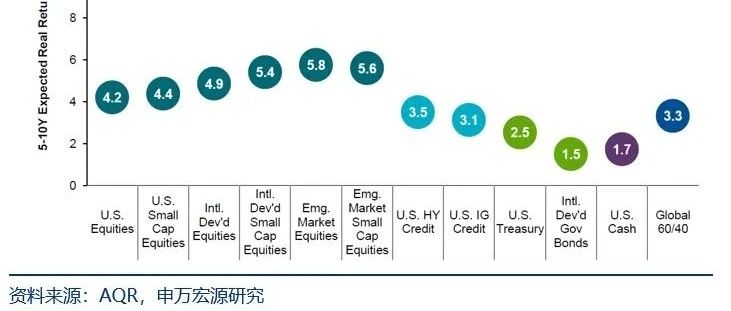
Group 1: Overseas Quantitative Dynamics - The impact of tariff events has led to significant drawdowns for quantitative hedge funds, with Renaissance Institutional Equities Fund experiencing an approximately 8% decline in early April despite a 22.7% increase in 2024 [1][2] - Man Group's trend-following strategy also faced over a 10% drawdown, prompting a return to in-office work for some researchers to enhance strategy intervention [1] - Systematica Investments, founded by Leda Braga, saw a 20% drawdown in early April, highlighting the vulnerability of trend-following strategies during such events [1] Group 2: Adoption of AI in Quantitative Strategies - AQR has begun to embrace AI in investment decisions, acknowledging its potential for higher returns despite challenges in explanation during drawdowns [3] - In contrast, domestic private quantitative firms in China are utilizing AI more extensively, with teams like Baiont Quant employing fully self-developed AI algorithms for minute-to-hour level return predictions [3] Group 3: Market Uncertainty and Quantitative Strategies - BlackRock emphasizes the importance of adjusting models to cope with increasing global uncertainty, identifying three main uncertainties in tariff policies: target, scale, and timeline [6] - The evolution of BlackRock's quantitative investment system has led to a more granular approach to risk exposure, now incorporating over a thousand risk factors [7] - BlackRock's strategy focuses on maintaining neutrality in risk exposure while seeking short-term reversal opportunities in a high uncertainty environment [8] Group 4: Macro Hedge Fund Perspectives - Bridgewater highlights the impact of "modern mercantilism" on investment portfolios, noting the challenges posed by chaotic implementation processes and the unique risks facing U.S. assets [10] - Despite recent market volatility, Bridgewater believes that asset prices have not undergone substantial adjustments, indicating potential future opportunities [10] - The interaction between AI development and modern mercantilism is seen as a new dynamic, with AI potentially offsetting some negative impacts on productivity [11] Group 5: AQR's Investment Focus - AQR suggests that high volatility factors, while challenging to maintain, can yield significant long-term Sharpe ratios, advocating for the acceptance of these factors [12][16] - The firm recommends focusing on small-cap stocks, particularly in emerging markets, due to their lower valuations and potential for higher returns compared to U.S. large-cap stocks [19] Group 6: Performance Tracking of Quantitative Products - Factor rotation products from BlackRock and Invesco have outperformed their respective indices over the past five years, with BlackRock's adaptive factor selection demonstrating resilience [21][24] - The performance of machine learning-based ETFs has varied, with QRFT showing strong results in certain months while AIEQ continues to experience significant drawdowns [39] - Bridgewater's All Weather ETF faced notable drawdowns due to tariff events but has since recovered, indicating resilience in its strategy [40]

海外量化季度观察:量化如何应对宏观不确定性冲击?
Shenwan Hongyuan Securities· 2025-06-17 02:42
- AQR has started to embrace AI in its investment decisions, using more AI algorithms to potentially provide higher returns despite occasional difficulties in explaining drawdowns[11] - BlackRock's quantitative system aims to identify more granular risk factors and maintain neutrality to most risks, while seeking short-term reversal opportunities in dense market trading to outperform the market[1][15][16] - Bridgewater is focusing on the impact of "modern mercantilism" on asset prices, noting that U.S. assets still face significant uncertainty and highlighting the strong allocation value of gold[21][22] Quantitative Models and Construction Methods 1. **Model Name: BlackRock's Safety Engineering System** - **Construction Idea**: To handle high uncertainty by identifying more granular risk factors and maintaining neutrality to most risks - **Construction Process**: - The system has evolved to control risk exposure not only to conventional factors like market cap, momentum, and growth value but also to thousands of more granular risk factors such as Japan export factor and domestic demand stock factor - The system adjusts these factors based on macroeconomic changes and increases the frequency of monitoring event-related factors to hourly or minute levels - **Evaluation**: The system's performance during the pandemic demonstrated that broader data dimensions and more precise risk control are more important than complex models[15][16][17] 2. **Model Name: AQR's High Volatility Factor Model** - **Construction Idea**: To embrace high volatility factors for their long-term Sharpe ratio despite short-term drawdowns - **Construction Process**: - AQR uses the variance ratio to measure the volatility level of factors: $ \text{Variance Ratio} = \frac{\text{Annual Factor Return Variance}}{\text{Monthly Factor Return Variance} \times 12} $ - Factors with higher variance ratios are considered high volatility factors - AQR analyzed 13 major categories and 153 sub-factors for their variance ratios and Sharpe ratios - **Evaluation**: Long-term high volatility factors show a significant positive correlation with Sharpe ratios, suggesting that quantitative managers should embrace these factors and use diversification to reduce short-term volatility[23][24][25] Model Backtesting Results 1. **BlackRock's Safety Engineering System** - **Information Ratio (IR)**: - Economic regime: 1.02 - Valuation: 0.77 - Sentiment: 0.43 - Growth timing: 1.06 - Aggregate signal: 1.83 - **Max Drawdown**: - Economic regime: -2.5% - Valuation: -3.4% - Sentiment: -4.2% - Growth timing: -2.7% - Aggregate signal: -1.9%[40] 2. **AQR's High Volatility Factor Model** - **Variance Ratio**: - Debt Issuance: 1.8 - Accruals: 1.6 - Profitability: 1.5 - Low Leverage: 1.4 - Investment: 1.4 - Profit Growth: 1.4 - Value: 1.4 - Core Stream Size: 1.2 - Quality: 1.2 - Seasonality: 1.1 - Low Risk: 1.0 - Momentum: 1.0 - Short-Term Reversal: 0.9 - **Sharpe Ratio**: - Debt Issuance: 0.7 - Accruals: 0.6 - Profitability: 0.3 - Low Leverage: 0.0 - Investment: 0.4 - Profit Growth: 0.4 - Value: 0.4 - Core Stream Size: 0.0 - Quality: 0.4 - Seasonality: 0.2 - Low Risk: 0.1 - Momentum: 0.3 - Short-Term Reversal: 0.1[24][25][27]
