
AlpaSim仿真工具

Search documents
Robotaxi迎来重磅催化! 奔驰携手英伟达、优步 共同部署全球Robotaxi车队
Zhi Tong Cai Jing· 2026-01-30 02:24
Group 1 - Mercedes-Benz, NVIDIA, and Uber announced a significant collaboration to create a global Robotaxi platform utilizing Mercedes-Benz's new S-Class vehicles, NVIDIA's AI computing systems, and Uber's extensive ride-hailing network [1][2] - The Robotaxi service will operate on the MB.OS operating system developed by Mercedes-Benz, allowing NVIDIA and other partners to build advanced autonomous driving applications while Mercedes retains control over core vehicle software and integration systems [1] - NVIDIA will provide high-performance autonomous driving chips, the Alpamayo AI model, and exclusive simulation and safety tools to achieve Level 4 autonomous driving capabilities [1][3] Group 2 - Uber's role in the collaboration involves integrating the Robotaxi system into its existing ride-hailing platform, enabling human-driven vehicles and autonomous S-Class Robotaxis to operate concurrently [2] - Although no specific launch timeline has been provided, this partnership is seen as a crucial step towards large-scale commercial deployment of Robotaxis in multiple global cities [2] - NVIDIA's CEO Jensen Huang emphasized the ambition of "physical AI," which aims to enable robots and autonomous systems to perceive, reason, and act in the real world, marking a significant evolution in technology [3][4] Group 3 - The Alpamayo AI model, introduced by NVIDIA, is described as a "physical AI's ChatGPT moment," featuring 10 billion parameters and focusing on video input processing and trajectory generation, along with the logic behind decision-making [3][4] - NVIDIA also launched the AlpaSim simulation tool and Physical AI Open Datasets, creating a complete development loop to enhance the safety and verifiability of fully autonomous driving technology [4] - The open-source strategy by NVIDIA aims to lower development barriers and drive demand for its computing platforms across various sectors, including data centers and automotive [4]


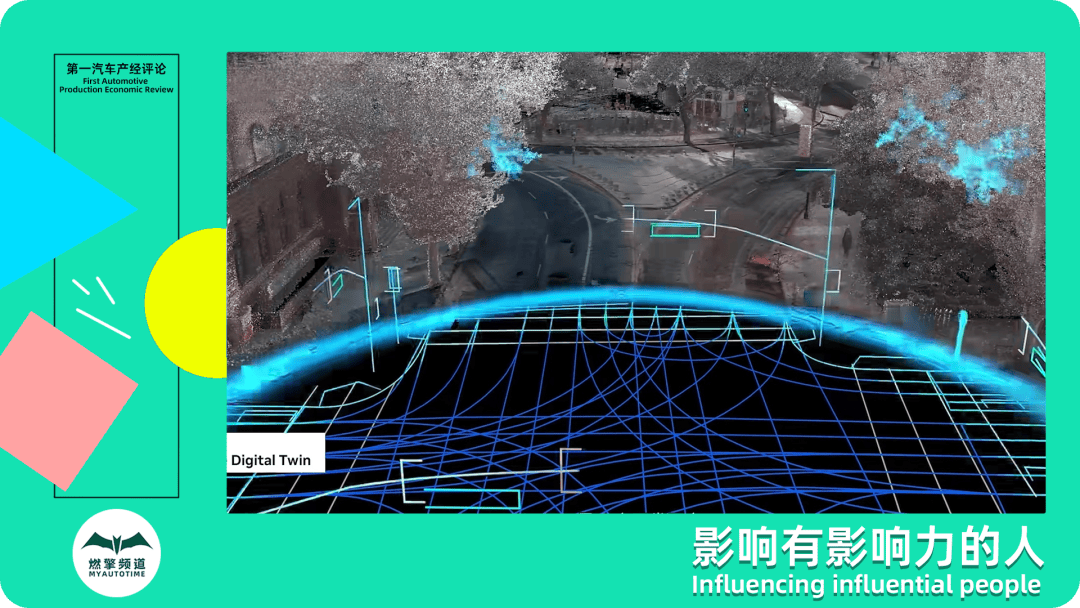
从特斯拉到英伟达,从马斯克到黄仁勋:两次开源,改变两次时代
Sou Hu Cai Jing· 2026-01-09 04:00
Core Insights - Nvidia's recent open-source release of the Alpamayo series visual-language-action reasoning models, AlpaSim simulation tools, and an open dataset with over 1,700 hours of driving data marks a strategic shift from providing foundational computing power to building a comprehensive development ecosystem that includes algorithms, toolchains, and data infrastructure [2][21][25] Full-Stack Development Ecosystem - The full-stack development ecosystem includes model training, simulation, and deployment, with the training set in the dataset used for model training and the evaluation set used for simulation [4] - AlpaSim, in conjunction with Cosmos, generates long-tail scenarios for model training and utilizes Omiverse to provide a virtual traffic world for simulation [5] Long-Tail Challenge - The long-tail problem is identified as the most significant challenge facing autonomous driving systems, with the need for efficient generation of controllable long-tail scenarios and high-fidelity simulation environments being crucial for addressing this issue [10] - Elon Musk's comments highlight that while achieving high accuracy is possible, the real challenge lies in handling rare and complex long-tail scenarios that have not been encountered during training [7][10] Importance of AlpaSim - AlpaSim addresses the challenges of high costs, inefficiencies, and dangers associated with real-world data collection, providing a highly realistic digital parallel world for testing autonomous driving systems [12] - The tool allows developers to generate and control various rare and dangerous scenarios at low cost and high efficiency, serving as a risk-free data generator for model training and optimization [12] Alpamayo Model's Value - The Alpamayo model incorporates a visual-language-action (VLA) reasoning mechanism that enables it to process visual inputs and generate driving actions while internally reasoning about the scene, thus enhancing its ability to handle unknown long-tail scenarios [18] - This intrinsic reasoning capability allows the system to make generalized decisions based on physical knowledge and safety principles when faced with extreme scenarios not present in the training data [18] Strategic Implications - Nvidia's open-source initiative is seen as a strategic move to solidify its position in the autonomous driving industry, particularly in the burgeoning Robotaxi market, which is projected to be worth trillions [21][23] - By binding developers to its ecosystem through comprehensive solutions from chips to models and simulation tools, Nvidia aims to maintain its dominance in the foundational computing power and toolchain for autonomous driving [25]

汽车行业点评报告:英伟达发布推理智驾模型Alpamayo,智驾功能有望加速“平权”
KAIYUAN SECURITIES· 2026-01-07 07:42
Investment Rating - The industry investment rating is "Overweight" (maintained) [1] Core Insights - The report highlights the significant advantages of robotics in enhancing the growth potential of automotive companies, particularly in the context of the ongoing transition to electric vehicles and autonomous driving technologies [3][6] - The introduction of Nvidia's Alpamayo model and its open-source tools is expected to accelerate the maturity and deployment of autonomous driving technologies, making it easier for developers to create and implement advanced driving algorithms [5][6] - The demand for intelligent driving features is becoming a critical factor for consumers when choosing vehicles, with expectations for these features to penetrate mid- to high-end models [7] Summary by Sections Industry Overview - The intelligent driving sector is poised for continued growth in 2026, driven by both supply and demand factors [7] - Nvidia's advancements in AI and autonomous driving are expected to lower development barriers and enhance the ecosystem for autonomous vehicle deployment [6] Key Opportunities - The report suggests focusing on companies within the intelligent driving supply chain, including Desay SV, Huayang Group, and XPeng Motors, among others, which are likely to benefit from the growth in this sector [8] - Specific beneficiaries identified include companies like Cobot, Bertel, and Horizon Robotics, which are positioned to capitalize on the advancements in intelligent driving technologies [8]
EV退潮,自动驾驶接棒? CES 2026开幕,车企们把“下一轮浪潮”押在AI接管方向盘
Zhi Tong Cai Jing· 2026-01-06 11:58
Core Insights - The CES 2026 event in Las Vegas highlighted the dominance of AI-driven autonomous driving technology, with investors betting on AI revitalizing the traditional manufacturing sector, which has been hindered by slow technological progress and high costs [1][2] - Traditional automakers are pausing their electric vehicle (EV) transformation plans due to intense competition and reduced government subsidies, while suppliers and tech startups are showcasing their latest autonomous driving solutions [1][3] - Nvidia's CEO Jensen Huang announced the Alpamayo family of open-source AI models for autonomous driving, which aims to challenge Tesla's Full Self-Driving (FSD) system [4][5][6] Industry Trends - The automotive industry is increasingly focusing on physical AI and autonomous driving, with expectations that AI will be integrated into a wide range of everyday products beyond just vehicles [2] - The CES has evolved into a key platform for chip giants like Nvidia and AMD to unveil high-performance AI infrastructure for enterprise applications, alongside traditional consumer electronics [3] - Many traditional automakers are shifting their focus from launching new EVs to developing fully autonomous vehicles, reflecting a significant strategic change in the industry [3][4] Technological Developments - Nvidia's Alpamayo model, described as the "ChatGPT moment for physical AI," features 10 billion parameters and utilizes a novel "chain AI reasoning" approach to enhance decision-making in autonomous driving [5][6] - The introduction of the Alpamayo family aims to create a complete development ecosystem that includes models, simulation tools, and datasets to improve the safety and verifiability of autonomous driving technology [6][7] - Companies are also enhancing driver assistance systems, with some aiming for "hands-free" driving capabilities on highways and urban roads, similar to Tesla's FSD [7] Cost and Competitive Pressures - Traditional automakers, particularly Ford and General Motors, are becoming more strategic in their capital investments due to significant write-downs from changes in EV strategies and increased competition from Asian manufacturers [8] - The impact of higher tariffs imposed by the Trump administration on automotive imports is leading many U.S. manufacturers to absorb costs rather than pass them on to consumers, increasing pressure on profit margins [8] - Cost competitiveness is expected to be a central theme of discussion at CES, as automakers and investors focus on managing expenses amid rising competition [8]

5分钟,封死涨停!刚刚,重磅利好来袭!
Zheng Quan Shi Bao Wang· 2026-01-06 03:38
Core Viewpoint - The automatic driving sector is experiencing significant momentum following NVIDIA's announcement of the Alpamayo series of open-source AI models and simulation tools, aimed at enhancing the development of autonomous vehicles [1][2][3] Group 1: NVIDIA's Announcement - NVIDIA introduced the Alpamayo series, which includes open-source AI models, simulation tools, and datasets to accelerate the development of reasoning-based autonomous vehicles [2] - Alpamayo 1 features a 100 billion parameter model that enables autonomous vehicles to perceive, reason, and act in rare or complex scenarios [2] - The Rubin platform, part of this release, offers a tenfold reduction in reasoning costs compared to the previous Blackwell platform, with training performance improved by 3.5 times and AI software performance enhanced by five times, expected to ship in the second half of the year [2] Group 2: Industry Impact - Following NVIDIA's announcement, multiple stocks in the A-share automatic driving sector quickly reached their daily limit up, indicating strong market enthusiasm [4] - The automatic driving industry is entering an accelerated phase, with ride-hailing platforms and Robotaxi manufacturers speeding up their deployment processes, particularly in major cities like Beijing, Shanghai, Guangzhou, and Shenzhen [5] - The Ministry of Industry and Information Technology in China has granted the first L3-level conditional autonomous driving vehicle licenses, marking a significant step towards commercial application [5] - By the end of 2025, Pony.ai announced that its Robotaxi fleet has surpassed 1,159 vehicles, exceeding its strategic goal of 1,000 vehicles [5] - Analysts suggest that the development of the Robotaxi industry is entering a rapid growth phase, with companies possessing advanced intelligent technology and system capabilities likely to benefit first [5]