Blackwell架构AI GPU

Search documents
黄仁勋抛出5000亿美元AI算力蓝图 英伟达(NVDA.US)站在AI盛世与泡沫争议的十字路口
智通财经网· 2025-11-18 02:04
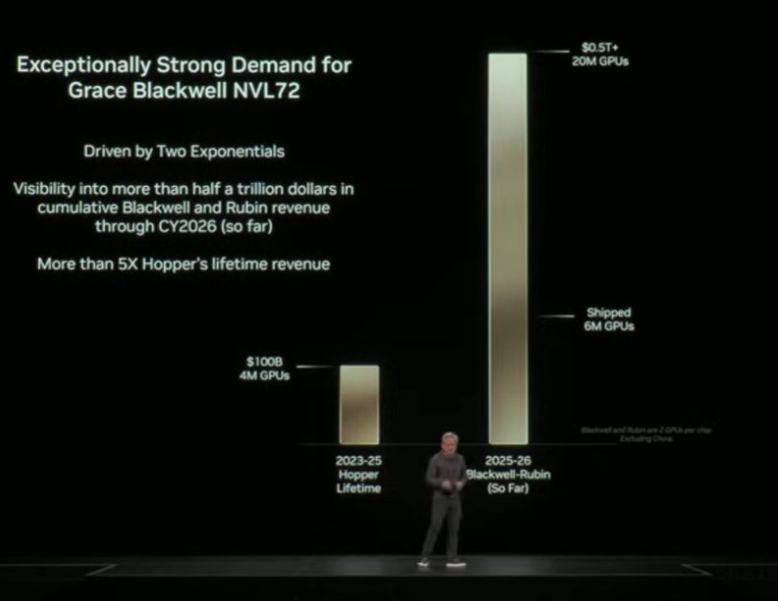
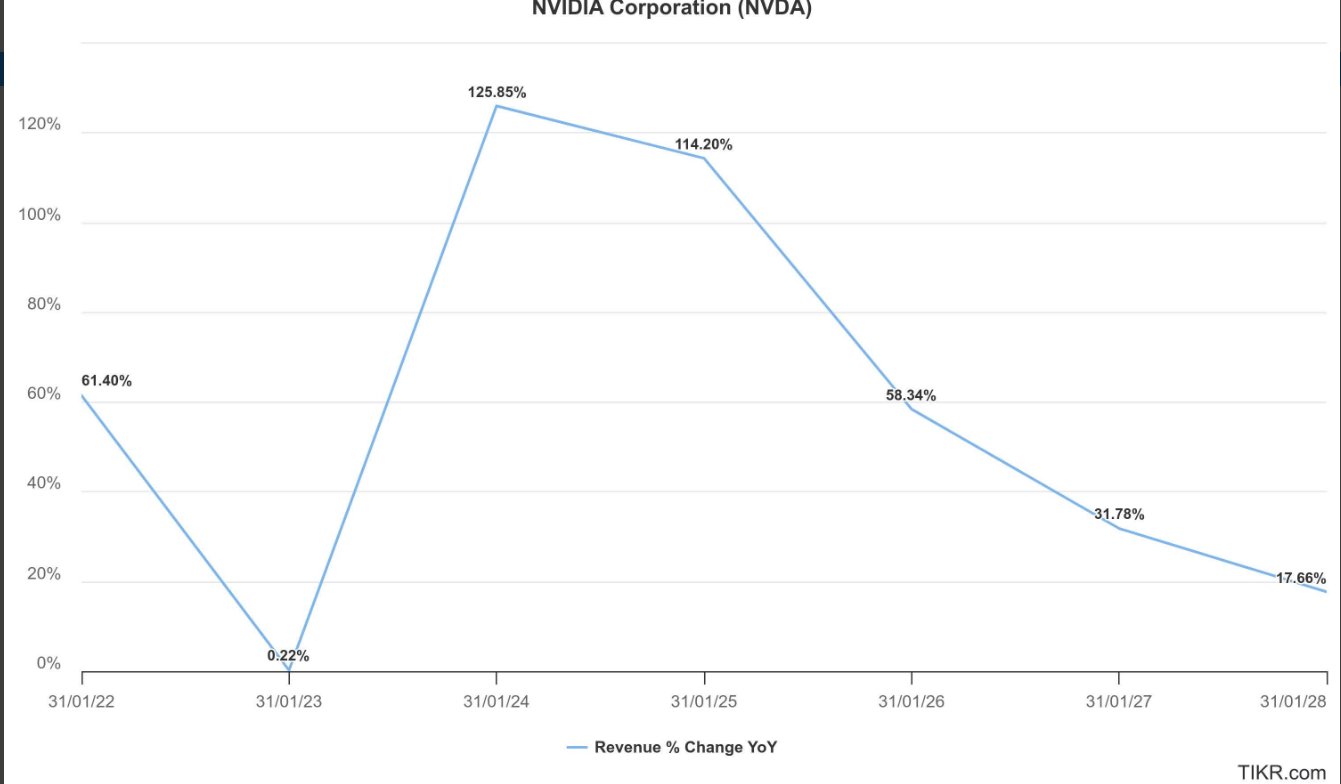
Core Insights - Nvidia's CEO Jensen Huang announced at the GTC conference that the company has up to $500 billion in AI GPU infrastructure orders for the years 2025 to 2026, driven by the Blackwell architecture and the upcoming Rubin architecture [1][3][4] - Huang's statement has sparked significant interest among investors, as it suggests a strong growth outlook for Nvidia amidst ongoing debates about an "AI bubble" in the market [1][2][6] Financial Performance - Nvidia's revenue has grown nearly 600% over the past four years, indicating strong market demand for AI chips [2] - Analysts expect Nvidia's Q3 earnings per share to be $1.25, with revenue around $54.9 billion, reflecting a year-over-year growth of 56% [7] - The anticipated revenue for Nvidia in 2026 is projected to be approximately $286.7 billion, significantly higher than previous Wall Street estimates [7][6] Market Dynamics - The demand for AI computing power is surging globally, supported by substantial investments from the U.S. government and major tech companies [2][4] - Nvidia's market share in the AI GPU sector exceeds 90%, but competition is increasing from companies developing custom AI chips [11][12] - Major clients like Amazon and Google are increasingly promoting their own AI ASIC chips, which could impact Nvidia's market position [11] Strategic Partnerships - Nvidia has made significant investments, including a potential $100 billion investment in OpenAI, which will purchase millions of Nvidia GPUs [10] - The company has also invested $5 billion in Intel to enhance collaboration between their CPU and GPU technologies [10] - Nvidia's recent $1 billion investment in Nokia aims to integrate its AI GPU infrastructure into Nokia's cellular network hardware [10] Future Outlook - Huang expressed confidence in achieving the $500 billion revenue target, indicating a "clear visibility" of this growth [8] - Analysts believe that the ongoing AI capital expenditure trend reflects a persistent demand for AI computing resources, despite concerns about potential overinvestment [10][12] - The potential for the Chinese market remains uncertain, with Nvidia's previous AI chip sales being restricted, but analysts see it as a future opportunity [12]


“AI信仰”再掀巨浪! Blackwell与Rubin将托起5万亿美元AI帝国 黄仁勋坚信AI纪元已至
智通财经网· 2025-10-29 10:15
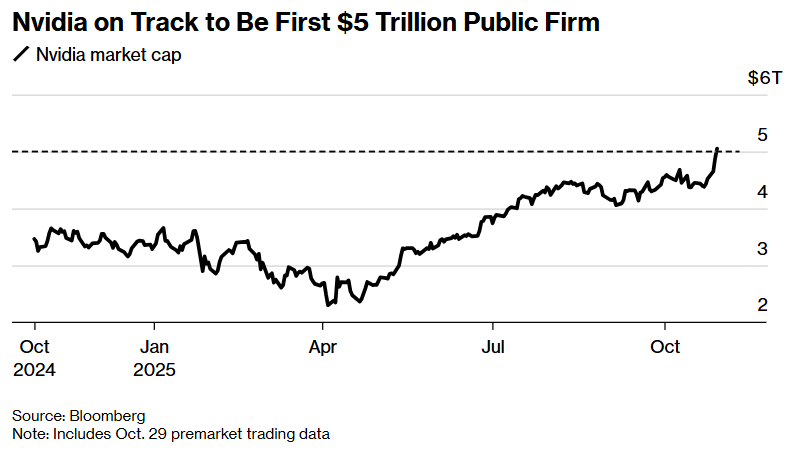
Core Insights - Nvidia's CEO Jensen Huang unveiled significant advancements in AI technology at the GTC conference, including a native AI 6G network platform, a Robotaxi fleet based on Nvidia's autonomous driving platform, and the next-generation AI GPU architecture, Rubin, which shows substantial performance improvements over Blackwell [1][3][4] - Following these announcements, Nvidia's stock surged over 6%, closing at $201, with a market capitalization reaching $4.9 trillion, just shy of the $5 trillion milestone [1] - Huang projected that Nvidia's data center business revenue would exceed $500 billion over the next five quarters, driven by the Blackwell and Rubin architectures, significantly surpassing Wall Street's expectations [3][6] Nvidia's AI Strategy - Nvidia is transitioning from a chip design company to a comprehensive AI technology platform, which includes a full-stack infrastructure and an operational ecosystem for AI [3][4] - The company aims to be the strongest foundation for AI, with a focus on high-performance, low-energy AI GPU architectures, and plans to release the Rubin Ultra architecture by late 2027 [5][9] Market Reactions and Predictions - Goldman Sachs reported that Nvidia's projected $500 billion revenue is significantly higher than market consensus, indicating a renewed investor enthusiasm for AI-related investments [3][12] - Major financial institutions, including HSBC, have raised their target price for Nvidia's stock to $320, suggesting a bullish outlook that could see Nvidia's market cap surpass $7 trillion [4][11] AI Infrastructure and Collaborations - Nvidia is investing heavily in AI infrastructure, including a $1 billion stake in Nokia to develop AI-native 6G networks and partnerships with companies like Uber and Eli Lilly to enhance AI applications in various sectors [10][11] - The company is also focusing on the development of advanced AI computing systems, with the Rubin architecture expected to deliver significant performance improvements over previous models [9][10] Long-term AI Market Outlook - The demand for AI computing power is expected to continue growing, driven by substantial investments from both the government and tech giants in AI infrastructure [12][14] - Analysts predict that the current AI investment wave could reach $2 trillion to $3 trillion, indicating a robust long-term growth trajectory for companies like Nvidia and its peers in the AI computing space [14][15]
ChatGPT引发青少年安全风暴 美国参议院点名调查OpenAI
智通财经网· 2025-09-19 02:21
Group 1 - A key Republican senator in the U.S. has requested OpenAI CEO Sam Altman to submit core documents regarding the risks of ChatGPT to children and teenagers, significantly expanding the congressional investigation into AI applications [1] - Senator Josh Hawley expressed concerns about the potential harm AI chatbots pose to children, citing increasing evidence of serious damage caused by such technologies [1] - OpenAI is required to respond to a list of questions by October 17, which relate to the research and design of its products and significant incidents of harm to young users [1] Group 2 - OpenAI is undergoing a restructuring plan to transition from a non-profit organization to a Public Benefit Corporation (PBC), aiming to enhance fundraising capabilities while maintaining its mission [2][3] - The non-profit parent organization will retain control, with plans to secure over $100 billion in equity, and a non-binding memorandum of understanding with Microsoft to extend collaboration [2] Group 3 - OpenAI's ChatGPT has surpassed 700 million active users weekly as of early August, a significant increase from 500 million in March [4] - The company is expected to double its revenue this year to $13 billion, with projected revenue of approximately $3.7 billion in 2024 [4] - OpenAI plans to collaborate with Broadcom to launch its first customized AI chip, with expected orders exceeding $10 billion [4] Group 4 - OpenAI's valuation is projected to reach $500 billion, making it one of the most valuable unicorns globally, surpassing SpaceX's valuation [4][5] - The company has been investing heavily in NVIDIA GPUs and is now partnering with Broadcom to build an AI ASIC chip cluster, indicating a shift towards customized AI infrastructure [5] Group 5 - CEO Sam Altman stated that OpenAI plans to invest trillions of dollars in core AI infrastructure, including AI chips and high-performance data center equipment, emphasizing the long-term importance of AI [6]
英伟达的“最佳时期”似已远去 现在是属于亚洲科技股的“AI狂欢时刻”
智通财经网· 2025-09-02 04:00
Core Insights - Nvidia's data center business, which has been a key growth driver, is experiencing a significant slowdown in revenue growth, impacted by geopolitical tensions and regulatory risks in the Chinese market [1][3][4] - Despite the challenges faced by Nvidia, Chinese tech stocks, particularly in AI and semiconductor sectors, are witnessing a bullish market trend, driven by strong performances from companies like Alibaba and Cambricon [1][10][13] Nvidia's Business Performance - Nvidia's core data center business, which relies heavily on H100/H200 and Blackwell architecture AI GPUs, is seeing a deceleration in growth, raising concerns about its future expansion prospects [1][3] - Analysts express skepticism regarding Nvidia's ability to maintain its previous growth trajectory, as the stock market reflects a normalization in Nvidia's performance [2][5][7] Geopolitical and Regulatory Challenges - The easing of US-China geopolitical tensions is viewed cautiously, particularly regarding Nvidia's re-entry into the Chinese market with its H20 AI chip, which faces significant barriers due to national security concerns [4][6] - Analysts do not expect Nvidia to fully recover its revenue from the Chinese AI chip market, potentially allowing local competitors to gain ground [4][6] Market Dynamics and Competitor Landscape - The AI infrastructure and high-performance networking hardware markets are highly competitive, with no clear market leader, contrasting with Nvidia's dominant position in AI chips [2][7] - Asian semiconductor giants, including TSMC and SK Hynix, are benefiting from the AI infrastructure boom and are positioned to capitalize on the upcoming chip industry cycle [17][18] Chinese Market Developments - Alibaba's cloud computing business reported a 26% year-over-year revenue increase, with AI-related revenues maintaining triple-digit growth for eight consecutive quarters, indicating strong demand for AI capabilities [13][14] - Cambricon, as a leading player in the domestic AI chip market, is experiencing significant revenue growth, with a reported 4347.82% increase in revenue year-over-year for the first half of 2025 [13][14] Investment Sentiment - Wall Street analysts are adjusting their target prices for Nvidia, reflecting a more cautious outlook on its growth potential, while simultaneously showing optimism towards Chinese tech stocks [5][14] - The semiconductor equipment sector is poised for growth as domestic demand for AI chips increases, driven by government support and the ongoing "domestic chip replacement" trend [15][16]
英伟达高歌猛进重登全球市值榜首,微美全息(WIMI.US)AI催生算力需求爆发
Sou Hu Wang· 2025-06-17 06:37
Group 1 - Nvidia has surpassed Microsoft to become the world's most valuable publicly traded company, with a market capitalization of $3.46 trillion [1] - The optimistic sales forecast for the Blackwell series AI chips alleviated investor concerns about Nvidia's declining market share in China, predicting record sales for the Blackwell series [1][3] - The Blackwell series AI chips, including the advanced Blackwell Ultra architecture, have become the primary driver of Nvidia's growth in the first half of the year [3] Group 2 - Nvidia is increasing the production of its next-generation AI chips, aiming for rapid expansion of the Blackwell Ultra architecture's capacity in the second quarter [3] - The company is providing its AI chip products as part of a complete AI computing system, which is deemed necessary for accelerating the deployment of more complex and powerful AI technologies [5] - Nvidia's dominance in the AI computing infrastructure sector is supported by its extensive range of hardware and software products, allowing for larger-scale sales to customers [6] Group 3 - The AI boom is benefiting more technology companies, with private equity firms expressing interest in the AI computing sector, anticipating significant breakthroughs in the industry [6] - The demand for inference computing is rising as the cost of using AI large models continues to decrease, leading to an explosion in AI applications [8] - The emergence of a new paradigm for low-cost AI training and inference is expected to drive the adoption of generative AI applications across various industries [10][11]
论股市最强“阿尔法” AI算力当之无愧! 黄仁勋预言Blackwell需求创纪录
智通财经网· 2025-05-29 02:25
Core Viewpoint - Nvidia's CEO Jensen Huang has alleviated investor concerns regarding a significant decline in the company's market share in China by providing a more robust sales forecast for the Blackwell series AI chips, predicting record sales and exponential growth in AI computing infrastructure [1][6][11]. Group 1: Nvidia's Performance and Market Outlook - Nvidia's revenue for the second fiscal quarter is expected to be around $45 billion, despite an estimated loss of $8 billion in revenue from the Chinese market due to U.S. export restrictions [4][6]. - The Blackwell architecture AI GPUs are anticipated to significantly contribute to Nvidia's growth, replacing the previously popular Hopper architecture and driving sales in the data center business, which generated $39.1 billion [6][11]. - Nvidia's overall revenue for the first fiscal quarter increased by 69% year-over-year to $44.1 billion, surpassing analyst expectations [5][11]. Group 2: AI Chip Market Dynamics - Nvidia holds approximately 80%-90% of the AI chip market, with expectations for annual revenue to approach $200 billion, a significant increase from $27 billion two years ago [11]. - The demand for AI chips remains strong despite U.S. trade restrictions, with analysts from Morgan Stanley and BlackRock urging investors to maintain exposure to AI-driven stocks [2][13]. - The AI computing infrastructure is viewed as a critical component of the next industrial revolution, with Nvidia's products being essential for developing and running large AI models [5][10]. Group 3: Competitive Landscape and Future Prospects - Major players like TSMC and ASML have reported strong performance and optimistic growth forecasts, indicating that AI computing demand is resilient against trade policy uncertainties [13][14]. - Nvidia's CEO has emphasized the importance of AI in transforming the global economy and has called for the U.S. government to allow the company to re-enter the Chinese market [8][15]. - Analysts predict that Nvidia's Blackwell series will lead to a significant acceleration in revenue growth in the latter half of the year, despite short-term challenges from export restrictions [11][12].
AI投资逻辑步入修复期 逢低买入“AI芯片霸主”英伟达(NVDA.US)时机已至?
智通财经网· 2025-04-08 14:06
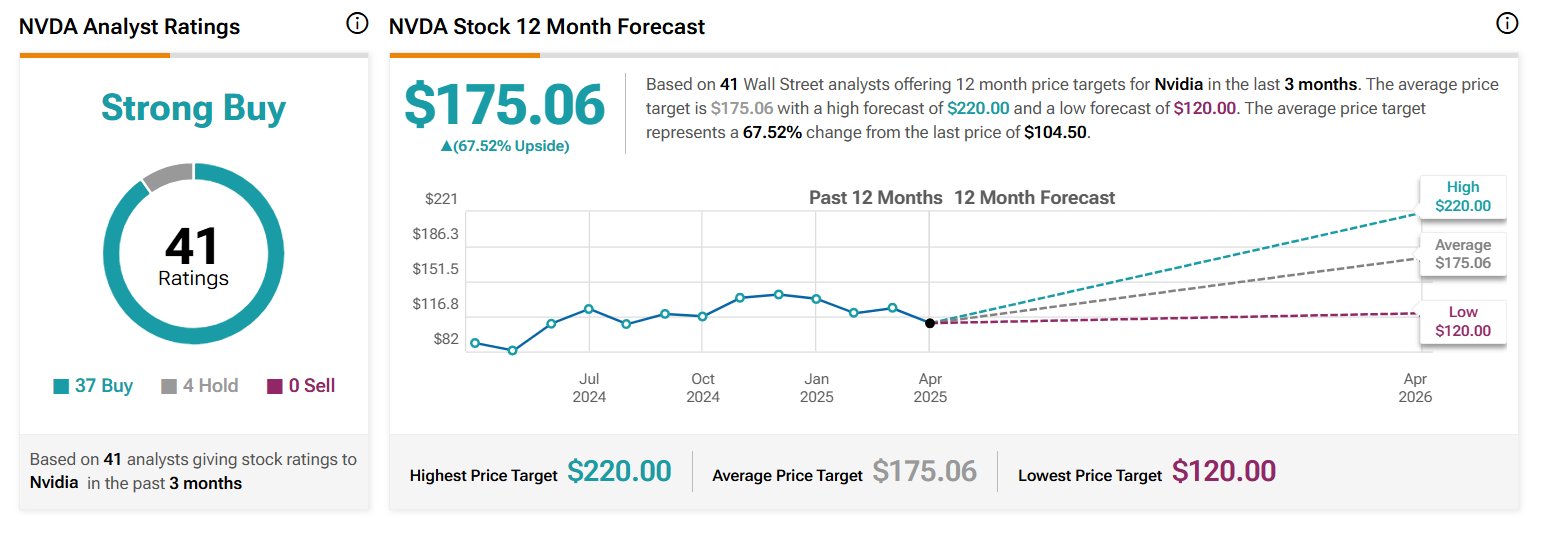
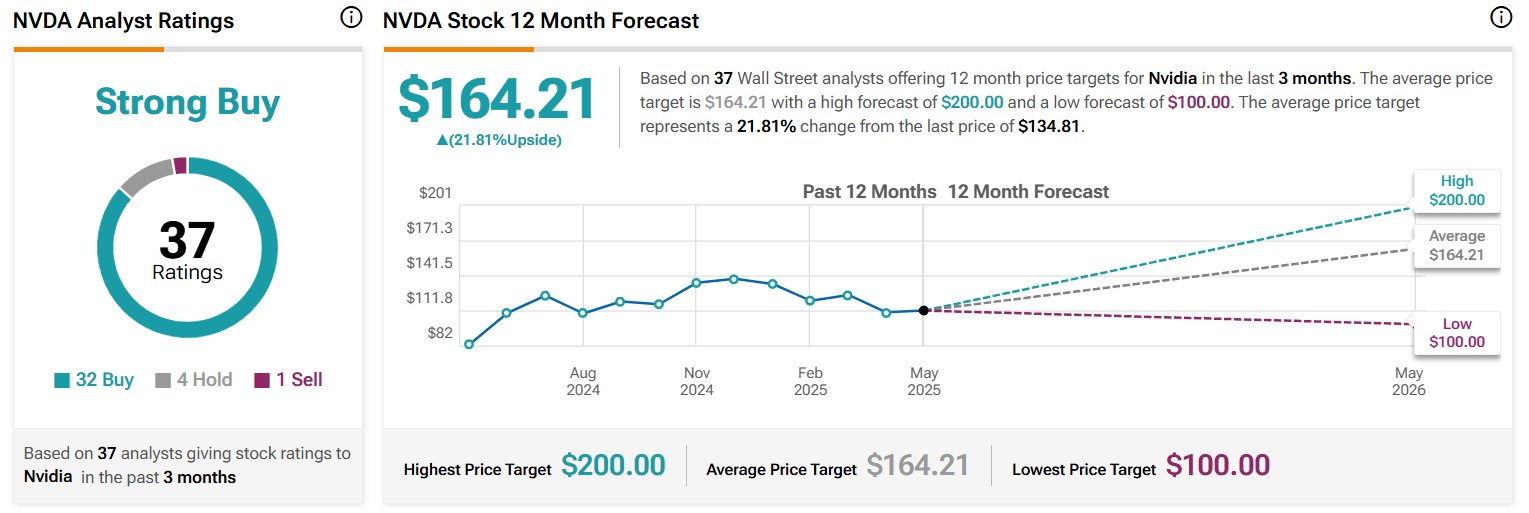
Group 1: Market Sentiment and AI Investment - Global stock market panic has eased as investors digest Trump's aggressive tariff policies, leading to renewed interest in AI infrastructure, particularly AI chips [1] - Nvidia's CEO Jensen Huang expressed strong demand outlook for AI GPUs based on the Blackwell architecture, indicating no signs of slowdown in AI spending from global enterprises and key government sectors [1][2] - KeyBanc Capital Markets reported a "bifurcated" semiconductor industry, with strong demand for AI chips while other chip types remain sluggish, highlighting Nvidia's dominance in the AI chip market [2][4] Group 2: AI Chip Demand and Supply Dynamics - The demand for AI chips is expected to grow exponentially, driven by the efficiency revolution initiated by DeepSeek, contrary to previous market expectations of a decline [2] - Nvidia's Blackwell architecture AI GPU is on track for mass production, with an expected shipment of 5-5.5 million units by 2025 [2][4] - KeyBanc analysts noted that Nvidia's supply chain for advanced packaging remains stable, supporting the anticipated GPU shipment volumes [5] Group 3: Competitive Landscape and Company Ratings - AMD faced a downgrade from KeyBanc due to concerns over the sustainability of its AI business in China and potential price wars with Intel affecting profit margins [3][6] - UBS and Deutsche Bank remain optimistic about Nvidia's stock, with target prices set at $135 and $190, reflecting confidence in AI spending resilience despite market volatility [7][9] - Wall Street analysts generally rate Nvidia as a "strong buy," with a consensus target price significantly above its current trading level [9]