DeepL

Search documents
AI正在“杀死”互联网?当机器人占领网络,我们还能信任什么
Sou Hu Cai Jing· 2026-01-07 05:45
Core Viewpoint - The rise of AI-generated content is overwhelming traditional content creation, leading to a decline in quality and authenticity across the internet, raising concerns about the future of human-generated content and the integrity of information sources [1][3][21]. Group 1: Impact of AI on Content Creation - In 2025, Amazon's Kindle Unlimited halted new submissions due to an influx of AI-generated novels surpassing human review capacity [1]. - By 2023, ChatGPT was generating more text daily than all human authors combined, while Midjourney produced images at a rate ten times that of global photographers [6]. - The phenomenon of "AI slop" refers to the mass production of low-quality, machine-generated content, which is often optimized for search engines to gain visibility [8][9]. Group 2: Economic Incentives and Content Quality - The cost of AI-generated content is significantly lower than that of human-created content, leading to a situation where quality and profitability are disconnected [9]. - A study revealed that 85% of the top search results for "best Bluetooth headphones" were AI-generated fake review sites, highlighting the prevalence of misleading content [8]. Group 3: The "Death of the Internet" Theory - The "death of the internet" theory suggests that AI has taken over much of online activity, with real human users constituting less than half of the engagement [11]. - Research indicates that 15% of Twitter accounts are automated bots, and 60% of videos in certain YouTube channels are AI-generated, raising concerns about the authenticity of online interactions [11]. Group 4: Challenges in Information Consumption - The shift from active information seeking to passive consumption through AI tools risks diminishing critical thinking skills and information diversity [14][15]. - AI tends to provide consensus answers, filtering out controversial or minority viewpoints, which are essential for a comprehensive understanding of complex issues [14]. Group 5: The Future of Content Creation and Value - The economic value of human creativity is threatened as AI lowers the barriers to content creation, leading to structural unemployment in creative fields [21]. - Solutions proposed include mandatory labeling of AI-generated content, development of content traceability technologies, and a shift in societal values towards quality over quantity in content [21][22].


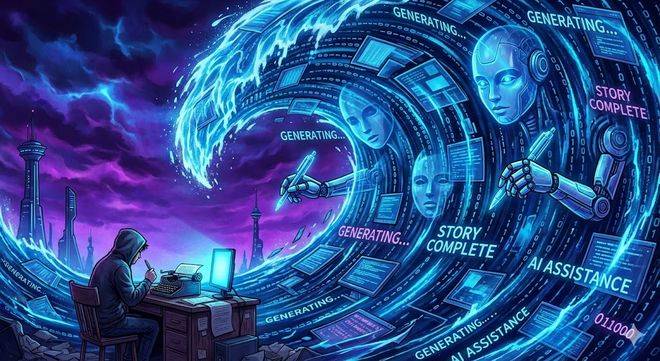
MIT researcher gives advice on how to tame, harness AI ‘workslop’
Fortune· 2025-11-12 12:47
Core Insights - The concept of "workslop" refers to AI-generated content that appears credible but lacks substance, affecting productivity and costing companies significantly [1][2][3] - Organizations are expected to develop metrics to detect workslop, which will become a governance challenge as AI tools are increasingly integrated into workflows [2][3] Group 1: Workslop and Its Implications - Approximately 40% of U.S. desk workers encounter workslop monthly, costing an estimated $186 per employee and $9 million annually for a company with 10,000 employees [1] - Senior management will likely demand metrics to measure workslop, similar to quality metrics, leading to the use of AI to identify slop patterns [2][3] Group 2: Transparency and Accountability - There is a growing expectation for individuals to disclose their prompts when using AI tools, as a measure of transparency and accountability in their work [5][6] - The notion of "showing your work" will evolve to include sharing prompts, which may become a standard practice in organizations [5][6] Group 3: Compliance and Competitive Analysis - Companies concerned about data privacy can conduct competitive analysis using publicly available data instead of internal projections, which may yield valuable insights [7] - The history of prompts used by employees may soon be as important as performance reviews, indicating their ability to think critically [7] Group 4: AI Adoption and Productivity - The EY 2025 Work Reimagined Survey indicates a disconnect between AI adoption and employee readiness, with 88% of employees using AI primarily for basic tasks [11][12] - Effective integration of talent and technology is crucial for unlocking productivity gains, yet only 28% of organizations are on track to achieve this [12]


AI翻译PDF工具大PK:内容OK,格式崩?| Jinqiu Scan
锦秋集· 2025-10-28 04:00
Core Viewpoint - The article discusses the evaluation of AI translation tools in handling complex document formats, particularly focusing on their performance in translating financial reports, research papers, and academic articles. It highlights the challenges faced by AI in maintaining structural integrity, terminology accuracy, and readability when translating scanned documents and PDFs. Group 1: Evaluation of AI Translation Tools - A systematic evaluation was conducted on 14 mainstream AI translation tools, assessing their performance across three dimensions: translation accuracy, formatting aesthetics, and language coherence [7][9]. - The selected document types for evaluation include research reports, financial reports, and academic papers, which represent high-value scenarios in business, finance, and research [8][16]. - The results revealed that some tools excelled in format preservation but struggled with terminology accuracy, while others demonstrated a better understanding of semantics but compromised on formatting [9][24]. Group 2: Performance Metrics - The evaluation metrics included translation accuracy, formatting aesthetics, and language coherence, with specific scores assigned to each tool based on their performance [23][44]. - Tools like SimplifyAI, Doubao, and Transmart showed balanced performance in terminology handling, data matching, and text logic, indicating a certain level of professional usability [24][49]. - DeepL and Kimi performed adequately, though they occasionally exhibited issues with clarity and sentence structure [44][50]. Group 3: Recommendations for Use - For financial reports, tools that excel in table reproduction and numerical accuracy, such as Tiangong, Immersive Translation, and DeepSeek, are recommended [50]. - For academic translations requiring semantic and stylistic precision, ChatGPT and Minimax are suggested as preferred options [50]. - The article emphasizes the importance of maintaining formatting integrity and effective paragraph handling in PDF translations to enhance overall translation accuracy [50].

“翻译界哈佛”倒闭,AI杀死首个世界名校?
首席商业评论· 2025-09-14 04:08
Core Viewpoint - The closure of the Monterey Institute of International Studies (MIIS) is a significant event, attributed to financial difficulties exacerbated by the rise of AI in translation and interpretation, marking a shift in the educational landscape for language professionals [2][5][12]. Group 1: Financial Challenges - MIIS announced it would stop enrolling graduate students by June 2027 due to a drastic decline in admissions and a financial deficit of $14.1 million, with $8.7 million directly linked to MIIS [5][12]. - The institution's full-time enrollment has dropped to 440 students, less than half of its initial target of 850, leading to annual losses of $25 million [13]. Group 2: Impact of AI on Translation Jobs - A Microsoft report identified interpreters and translators as the most at-risk profession due to AI advancements, with AI tools like Google Translate and ChatGPT significantly improving translation accuracy and speed [5][21]. - The rise of AI has led to a reduction in demand for human translators, with many professionals reporting a sharp decline in projects and income, often resorting to lower-paying roles such as post-editing [26][30]. Group 3: Institutional Changes - MIIS will terminate all in-person graduate degree programs, including its renowned translation program, while retaining some online courses in cybersecurity and public administration [9][10]. - The decision to close MIIS was influenced by faculty protests and a vote to shut down the institute within three years, reflecting a broader trend of educational institutions adapting to the changing job market [12][13]. Group 4: Future of Translation - Despite the advancements in AI translation, there remains a belief that human expertise is irreplaceable, particularly in specialized fields requiring nuanced understanding and terminology management [30][34]. - The evolution of AI tools continues to challenge traditional translation roles, but the need for human oversight in complex translation tasks persists [30][35].

“翻译界哈佛”倒闭,AI杀死首个世界名校?
虎嗅APP· 2025-09-05 11:27
Core Viewpoint - The closure of the Monterey Institute of International Studies (MIIS), known as the "Harvard of Translation," highlights the significant impact of AI on traditional education and professional fields, particularly in translation and interpretation [3][5][10]. Group 1: Closure Announcement - MIIS officially announced it will stop enrolling graduate students by June 2027 due to financial difficulties [3][8]. - The decision to close was described as purely financial, with a significant drop in enrollment and a $14.1 million deficit reported earlier this year [23][9]. - The closure will affect all on-campus graduate programs and some online degree courses, marking the end of an era for many alumni [15][16]. Group 2: Impact of AI on the Translation Industry - The rise of AI translation tools has drastically changed the landscape, with human translators facing significant job threats; a Microsoft report listed interpreters and translators as the most at-risk profession [11][30]. - The enrollment at MIIS has been declining since 2009, with current numbers at 440 students, less than half of the initial target of 850 [30]. - AI advancements, such as real-time translation capabilities, have diminished the competitive edge of human translators, leading to a perception that the profession is no longer viable [30][56]. Group 3: Financial Struggles and Responses - MIIS faced a financial crisis, with efforts to cut staff benefits and expand enrollment proving ineffective, leading to protests from faculty and students [24][25]. - The institution's financial woes were exacerbated by the inability to adapt to the changing demands of the translation industry due to AI [10][30]. - Faculty members voted overwhelmingly to close MIIS within three years, indicating a consensus on the need to return to a more sustainable model [26][27]. Group 4: Future of Translation Profession - Despite the advancements in AI, there remains a belief that professional translators will still be needed for tasks requiring nuanced understanding and context [61][69]. - AI tools, while efficient, still require human oversight for tasks such as terminology management and quality control [62][66]. - The translation profession is evolving, with AI serving as a tool rather than a complete replacement, emphasizing the importance of human expertise [69].