谷歌翻译

Search documents
OpenAI入局翻译市场 正面挑战谷歌?
Di Yi Cai Jing· 2026-01-16 05:14
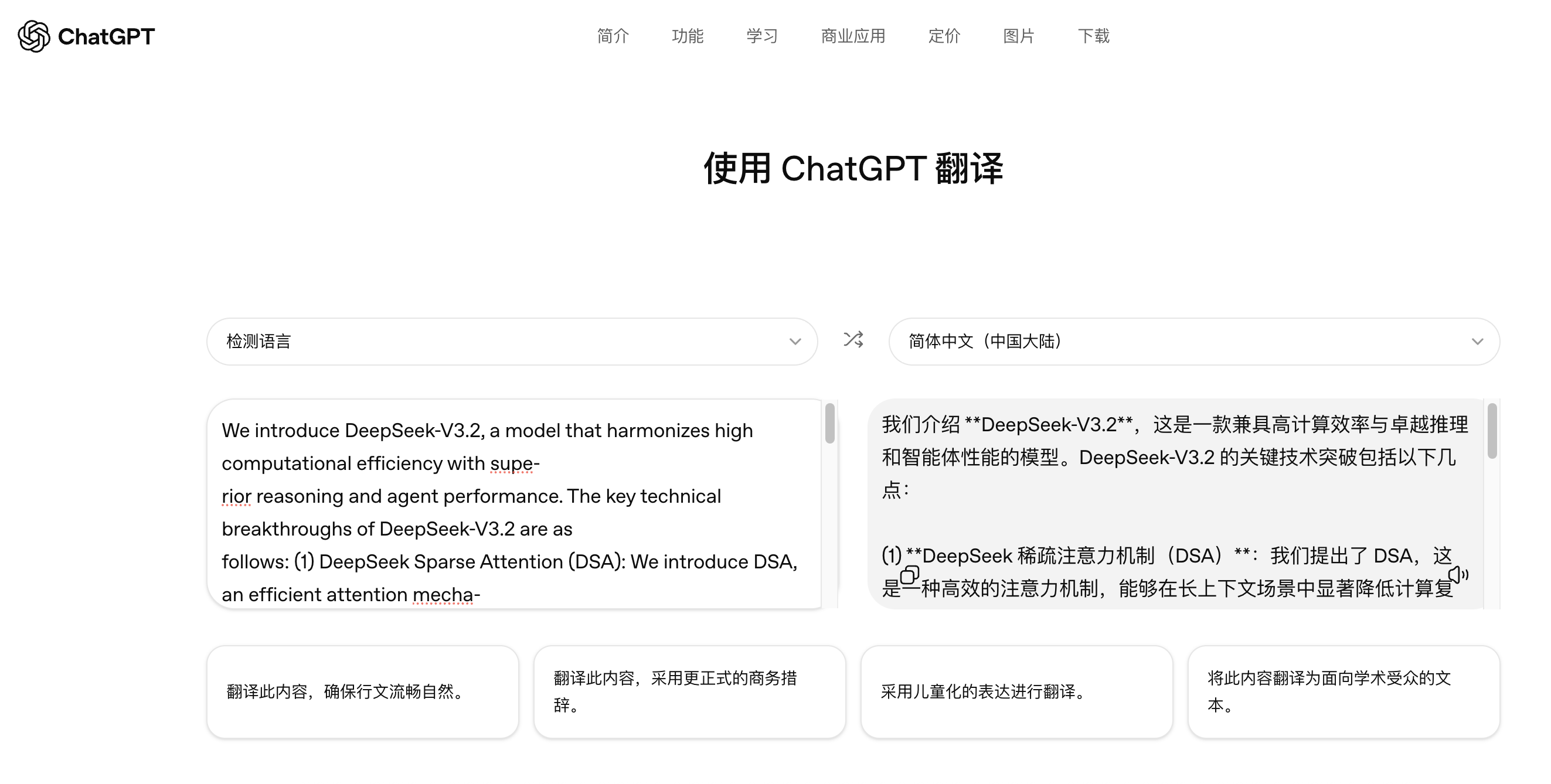
Core Viewpoint - OpenAI has accelerated the deployment of applications, recently launching a standalone web-based translation tool, "ChatGPT Translation," which is currently free for all users, aiming to compete directly with Google Translate [1][6]. Group 1: Product Features - ChatGPT Translation supports over 50 languages for instant translation, while Google Translate supports 243 languages and offers text, image, document, and webpage translation [1]. - The tool claims to understand context and tone, allowing for translations in various styles, such as formal, casual, or localized expressions [1]. - Users have reported that the interface lacks features for voice and image input, which were mentioned in the official description [1]. Group 2: Comparative Analysis - A comparison test showed that while both ChatGPT Translation and Google Translate have their strengths and weaknesses, Google still holds an advantage in translation quality [2]. - ChatGPT Translation exhibits a heavier "machine translation" feel, with less precise translations of professional terms, although it corrects errors in original text formatting [4]. - Google Translate provides more natural expressions and accurate translations of professional terms, but it does not optimize original text punctuation [6]. Group 3: Market Position and Future Outlook - The current experience with ChatGPT Translation is considered underwhelming and still in its early stages, lacking the capability to disrupt Google's market dominance [6]. - Industry experts believe OpenAI's move may be a strategic positioning to accumulate users and data for future iterations [6]. - Google continues to evolve its translation capabilities, integrating the Gemini model and introducing features like "real-time translation Beta" for simultaneous interpretation [6].


OpenAI入局翻译市场,正面挑战谷歌?
第一财经· 2026-01-16 04:53
Core Viewpoint - OpenAI has accelerated the application of its technology by launching a standalone web-based translation tool, "ChatGPT Translation," aiming to compete directly with Google Translate, despite its current limitations in features and language support [3][4]. Group 1: Product Features and Comparison - ChatGPT Translation currently supports over 50 languages for instant translation, while Google Translate supports 243 languages and offers text, image, document, and webpage translation [3][4]. - The interface of ChatGPT Translation resembles that of Google Translate, featuring a source language box on the left and a translation output on the right [3]. - ChatGPT Translation claims to understand context and tone, allowing for translations in various styles, such as formal or casual expressions [3][4]. Group 2: Performance Evaluation - A comparison test using a segment from a DeepSeek paper revealed that while ChatGPT Translation has some advantages, Google Translate still outperforms it in translation quality [4][6]. - ChatGPT Translation exhibits a heavier "machine translation" feel, with less precise translations of specialized terms, although it corrects errors in original text formatting [4][6]. - Google Translate provides more accurate translations for professional vocabulary but lacks optimization in original text punctuation [6]. Group 3: Market Position and Future Outlook - The industry perceives OpenAI's launch as a strategic move to position itself in the translation market, aiming to gather user data for future improvements [6]. - Google has integrated its Gemini model into its translation system, enhancing its ability to handle idioms and complex language, and has introduced a "real-time translation Beta" feature for simultaneous interpretation [6]. - For OpenAI to gain a significant share of the translation market, it will need to invest more in technology refinement and user experience [6].
OpenAI入局翻译市场,正面挑战谷歌?
Di Yi Cai Jing· 2026-01-16 03:54
Core Insights - OpenAI has accelerated the deployment of applications, recently launching a standalone web-based translation tool called "ChatGPT Translation" to compete directly with Google Translate [1] - The new tool currently supports over 50 languages for instant translation, while Google Translate supports 243 languages and offers more mature features [1][6] - ChatGPT Translation aims to provide contextual understanding and varied expression styles, but its current functionality is limited compared to Google Translate [1][6] Group 1 - OpenAI's ChatGPT Translation tool is now available for free to all users, lacking a mobile app version and some features like image translation [1] - The interface of ChatGPT Translation resembles that of Google Translate, with a source language box on the left and a translation box on the right [1] - Initial testing shows that while ChatGPT Translation has some advantages, such as correcting errors in original text, Google Translate still outperforms it in overall translation quality [2][4] Group 2 - ChatGPT Translation exhibits a noticeable "machine translation" feel, with some inaccuracies in professional terminology, while also providing smoother language flow [4][6] - Google Translate's translations are generally more precise, although it lacks optimization for original text punctuation [6] - The industry views OpenAI's move as a strategic positioning to gather users and data for future improvements, but acknowledges that Google continues to enhance its translation capabilities [6]
ChatGPT发了个“谷歌翻译”,但我只觉得多余......
3 6 Ke· 2026-01-16 00:35
Core Viewpoint - OpenAI has launched a new translation feature called ChatGPT Translate, which aims to compete with traditional translation tools like Google Translate, offering interactive and personalized adjustments post-translation [1]. Group 1: Product Features - ChatGPT Translate supports over 50 languages and allows translation through text, voice, and images, although currently, the PC web version does not support multimodal input [1][3]. - Users can request modifications or inquire about specific details of the translated content, which directs them to the main ChatGPT site [1]. - The translation speed of ChatGPT Translate is notably faster than that of ChatGPT, suggesting it may utilize a specialized model [3][4]. Group 2: Translation Quality - The translation quality of ChatGPT Translate is comparable to Google Translate, with both showing signs of machine translation, though ChatGPT Translate has a slightly reduced "machine translation" feel [1][8]. - While ChatGPT Translate accurately conveys the original meaning and adjusts English syntax for better Chinese readability, it struggles with contextual understanding, leading to some inaccuracies [6][4]. - Google Translate's performance is similar, retaining more of the original English syntax, which may not align with Chinese expression norms [8][15]. Group 3: User Experience - ChatGPT Translate offers four post-editing templates for users to refine translations, but these templates may not significantly enhance the user experience, as they often redirect users to the main ChatGPT interface [20][22]. - The utility of the templates is questioned, as they may not be necessary for fluent users, and the more formal translation template is deemed more practical [21][22]. - Overall, the experience with ChatGPT Translate does not leave a strong impression, as it does not significantly outperform Google Translate in terms of translation quality or features [23].
谷歌推出耳机实时翻译测试版,引入Gemini高级功能并扩展语言学习工具
Huan Qiu Wang· 2025-12-14 03:24
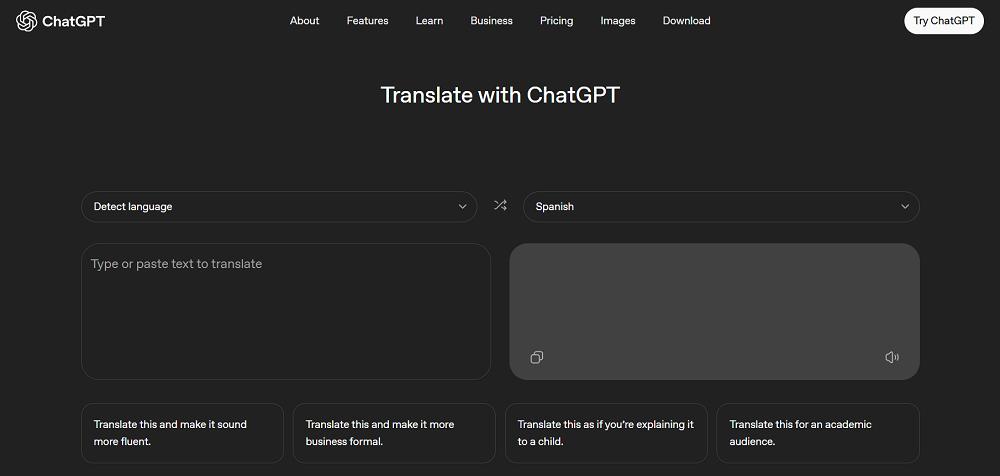
Core Insights - Google has launched a beta feature that allows users to receive real-time translation results through headphones, enhancing communication in different languages [1][4] - The new feature retains the speaker's tone, accent, and intonation, making it easier for users to follow conversations and identify speakers [4] - Google plans to integrate advanced features from Gemini into Google Translate, improving the translation of nuanced phrases and idioms [4] Group 1: Real-time Translation Feature - The real-time translation experience is designed to convert any pair of headphones into a one-way translation device [4] - The feature is currently available in the Android translation app in the US, Mexico, and India, supporting over 70 languages [4] - Google aims to expand this feature to iOS and more countries by 2026 [4] Group 2: Language Learning Tools - Google is expanding its language learning tools to nearly 20 new countries and regions, including Germany, India, Sweden, and Taiwan [5] - English speakers can now practice German, while speakers of Bengali, Simplified Chinese, Dutch, German, Hindi, Italian, Romanian, and Swedish can practice English [5] - A new progress tracking feature has been added to help users monitor their learning streaks, enhancing the learning experience [5]
文献、报告、合同翻译的老大难被国产工具治了?三大翻译神器横评后,这家稳得离谱
量子位· 2025-11-19 06:20
Core Viewpoint - The article discusses the advantages of Baidu's "Document Translation" tool, particularly in academic settings, highlighting its superior translation accuracy, formatting preservation, and integrated AI assistance compared to competitors like Google Translate and DeepL [1][3][59]. Translation Capability Comparison - Baidu's "Document Translation" offers specialized translation models for over 10 professional fields, including academic papers, legal documents, and news, making it more user-friendly for specific needs compared to Google and DeepL, which lack such differentiation [8][17]. - The tool boasts a professional translation accuracy rate of 90%, effectively capturing the nuances of academic language, which is crucial for users dealing with complex terminologies [17][22]. AI Assistance Features - The integrated AI assistant in Baidu's tool can summarize content, answer specific questions about the text, and provide explanations for technical terms, enhancing the user experience significantly [26][30][36]. - Users can interact with the AI to clarify difficult sections of the text, making the translation process more intuitive and less daunting [28][32]. Formatting and Editing Capabilities - Baidu's "Document Translation" excels in maintaining the original document's formatting, achieving a near 1:1 restoration of the layout, which is critical for academic papers that often include complex structures like tables and figures [43][46]. - The tool allows for extensive post-translation editing, enabling users to modify text directly within the translated document, which is not supported by DeepL and is limited in Google Translate [52][55]. Overall User Experience - The comprehensive features of Baidu's translation tool cater to the needs of students and professionals, making it a preferred choice for those who require efficient and accurate translations without the hassle of manual corrections [57][58]. - The article concludes that Baidu's "Document Translation" is the closest to an ideal translation tool, effectively integrating into the workflow of users in academic and professional environments [59][60].


人类不能放弃写作
3 6 Ke· 2025-10-15 11:46
Group 1 - The article discusses the potential future of artificial intelligence (AI) in writing, envisioning a world where AI can produce high-quality, engaging, and accurate text without human intervention [1][7][8] - It raises concerns about the implications of AI on human creativity and writing styles, suggesting that while AI can assist, it may also dilute individual writing voices [9][11][12] - The article highlights the ongoing debate about AI's role in creative processes, questioning whether AI-generated works can be considered truly creative [7][8][9] Group 2 - The text emphasizes the importance of maintaining a balance between human and AI contributions in writing, advocating for a thoughtful approach to using AI tools [5][6][30] - It discusses the educational challenges posed by AI, particularly in terms of academic integrity and the potential for cheating among students [15][16][26] - The article mentions the need for guidelines and regulations regarding the use of AI in writing, suggesting that transparency and acknowledgment of AI contributions could be beneficial [36][37][38] Group 3 - The article explores the copyright implications of AI-generated content, questioning who owns the rights to works created by AI [22][23][24] - It discusses the potential impact of AI on various professions, particularly in writing, journalism, law, and translation, suggesting that while some jobs may be threatened, others may evolve [26][27][28] - The text concludes with a call for writers to remain vigilant and engaged in their craft, ensuring that their unique voices are not overshadowed by AI tools [39][40]
突发!第一所被AI干崩的顶尖大学,刚刚倒闭了
Xin Lang Cai Jing· 2025-09-20 08:55
Group 1 - The Monterey Institute of International Studies (MIIS), a prestigious translation school, announced it will stop enrolling graduate students by June 2027, marking a significant decline in the translation education sector [1][4][5] - The decline in enrollment is attributed to financial difficulties and a drastic reduction in demand for human translators due to advancements in AI translation technology, which has improved efficiency by nearly nine times and reduced costs by over 90% [5][6] - The impact of AI is not limited to translation; it is reshaping various industries, with around 20% of Chinese universities adjusting their programs in response to AI's influence, indicating a potential decline in the relevance of English as a major [8][9] Group 2 - The Chinese government has launched a comprehensive AI strategy, with a focus on integrating AI into key sectors by 2027, aiming for over 70% penetration of new intelligent devices [12][13] - The AI strategy outlines a three-step timeline, with AI expected to become a major economic driver by 2030 and fully integrated into society by 2035, highlighting the urgency for industries to adapt [12][13] - The concept of "intelligent native" ecosystems is introduced, where products and business models are fundamentally driven by AI, indicating a shift from platform-centric to user-intent-centric approaches [15] Group 3 - The AI era is anticipated to transform urban landscapes, with cities that possess strong research capabilities or application innovation likely to gain competitive advantages [16][17] - Major cities like Beijing and Shanghai are positioned to lead in AI development due to their academic resources, while cities like Shenzhen and Hangzhou can leverage their industrial bases for rapid AI application [17][18] - Emerging cities may also carve out niches in specific AI applications, showcasing the diverse potential for growth in the AI landscape [18][20]

“翻译界哈佛”倒闭,AI杀死首个世界名校?
首席商业评论· 2025-09-14 04:08
Core Viewpoint - The closure of the Monterey Institute of International Studies (MIIS) is a significant event, attributed to financial difficulties exacerbated by the rise of AI in translation and interpretation, marking a shift in the educational landscape for language professionals [2][5][12]. Group 1: Financial Challenges - MIIS announced it would stop enrolling graduate students by June 2027 due to a drastic decline in admissions and a financial deficit of $14.1 million, with $8.7 million directly linked to MIIS [5][12]. - The institution's full-time enrollment has dropped to 440 students, less than half of its initial target of 850, leading to annual losses of $25 million [13]. Group 2: Impact of AI on Translation Jobs - A Microsoft report identified interpreters and translators as the most at-risk profession due to AI advancements, with AI tools like Google Translate and ChatGPT significantly improving translation accuracy and speed [5][21]. - The rise of AI has led to a reduction in demand for human translators, with many professionals reporting a sharp decline in projects and income, often resorting to lower-paying roles such as post-editing [26][30]. Group 3: Institutional Changes - MIIS will terminate all in-person graduate degree programs, including its renowned translation program, while retaining some online courses in cybersecurity and public administration [9][10]. - The decision to close MIIS was influenced by faculty protests and a vote to shut down the institute within three years, reflecting a broader trend of educational institutions adapting to the changing job market [12][13]. Group 4: Future of Translation - Despite the advancements in AI translation, there remains a belief that human expertise is irreplaceable, particularly in specialized fields requiring nuanced understanding and terminology management [30][34]. - The evolution of AI tools continues to challenge traditional translation roles, but the need for human oversight in complex translation tasks persists [30][35].

“翻译界哈佛”倒闭,AI杀死首个世界名校?
虎嗅APP· 2025-09-05 11:27
Core Viewpoint - The closure of the Monterey Institute of International Studies (MIIS), known as the "Harvard of Translation," highlights the significant impact of AI on traditional education and professional fields, particularly in translation and interpretation [3][5][10]. Group 1: Closure Announcement - MIIS officially announced it will stop enrolling graduate students by June 2027 due to financial difficulties [3][8]. - The decision to close was described as purely financial, with a significant drop in enrollment and a $14.1 million deficit reported earlier this year [23][9]. - The closure will affect all on-campus graduate programs and some online degree courses, marking the end of an era for many alumni [15][16]. Group 2: Impact of AI on the Translation Industry - The rise of AI translation tools has drastically changed the landscape, with human translators facing significant job threats; a Microsoft report listed interpreters and translators as the most at-risk profession [11][30]. - The enrollment at MIIS has been declining since 2009, with current numbers at 440 students, less than half of the initial target of 850 [30]. - AI advancements, such as real-time translation capabilities, have diminished the competitive edge of human translators, leading to a perception that the profession is no longer viable [30][56]. Group 3: Financial Struggles and Responses - MIIS faced a financial crisis, with efforts to cut staff benefits and expand enrollment proving ineffective, leading to protests from faculty and students [24][25]. - The institution's financial woes were exacerbated by the inability to adapt to the changing demands of the translation industry due to AI [10][30]. - Faculty members voted overwhelmingly to close MIIS within three years, indicating a consensus on the need to return to a more sustainable model [26][27]. Group 4: Future of Translation Profession - Despite the advancements in AI, there remains a belief that professional translators will still be needed for tasks requiring nuanced understanding and context [61][69]. - AI tools, while efficient, still require human oversight for tasks such as terminology management and quality control [62][66]. - The translation profession is evolving, with AI serving as a tool rather than a complete replacement, emphasizing the importance of human expertise [69].