DingTalk A1

Search documents
春节买菜没挨骂,全靠DingTalk A1听懂家乡话
Ge Long Hui· 2026-02-27 21:41
Core Insights - The DingTalk A1 device has proven to be a highly convenient tool for work and personal use, significantly enhancing productivity and ease of communication [2][4][6] - The device's lightweight and compact design allows for easy portability, making it suitable for users who prefer minimalism in their daily carry [2][4] - The integration of AI technology in the DingTalk A1 facilitates seamless voice recording and transcription, allowing users to focus on their thoughts rather than the mechanics of note-taking [6][8] Summary by Sections Design and Portability - DingTalk A1 weighs only 40.7g and is 3.8mm thick, resembling a card, which allows it to fit easily in a wallet without adding bulk [2] - The device can be used effortlessly by attaching it to a phone during calls, enhancing user convenience [2] Functionality and User Experience - The device eliminates the complications associated with traditional recording tools, such as Bluetooth connectivity and app usage, which can be cumbersome [3] - Users have reported high accuracy in transcription even in noisy environments, with the device capable of recognizing speech from a distance of 5-8 meters [4][5] - The battery life is impressive, with official claims of 45 hours of recording time and 60 days of standby, making it suitable for both low and high-frequency usage [4] AI Integration and Future Potential - The device allows users to capture fleeting thoughts and ideas quickly, which can then be organized and stored in DingTalk, promoting a more focused approach to creativity and productivity [6] - The evolution of recording tools reflects a trend towards AI integration, with expectations that 2026 will see significant advancements in AI tools, suggesting that DingTalk A1 is just the beginning of its product evolution [8]
豆包手机之后 字节AI硬件再上新
Zhong Guo Jing Ying Bao· 2026-01-23 19:56
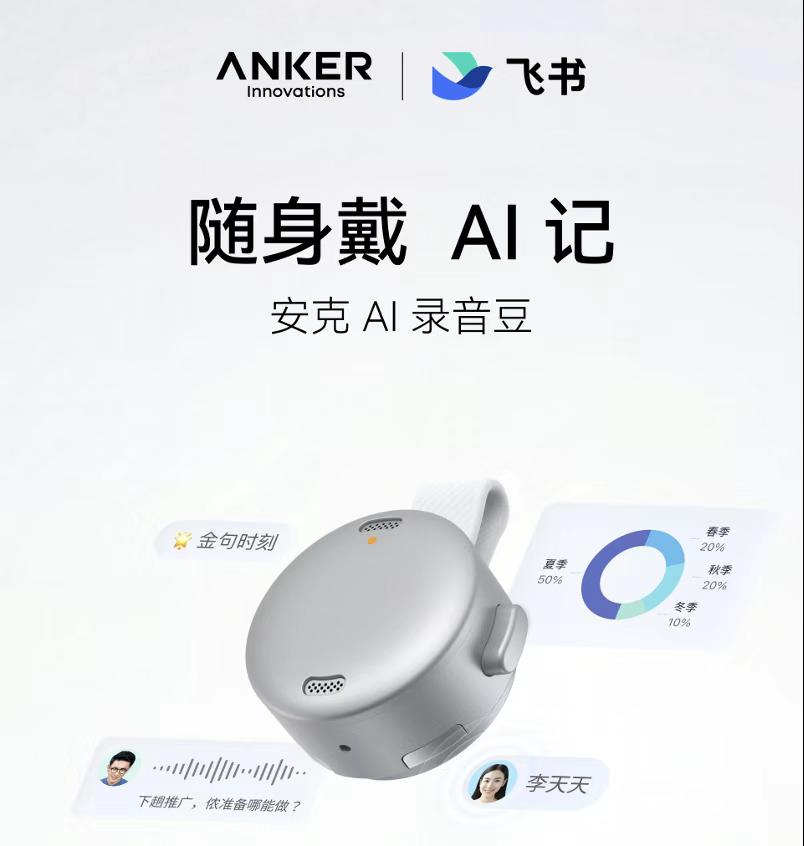
Core Insights - ByteDance's Feishu has launched a new AI hardware product, the "AI Recording Bean," in collaboration with Anker Innovation, aiming to enhance offline corporate office scenarios with a compact device weighing only 10 grams [1] - This product represents Feishu's first deep integration of AI capabilities into hardware, marking a significant step in the transition from software ecosystems to "full-scenario intelligence" in collaborative office platforms [1][3] - The competition among the three major office software platforms—DingTalk, WeChat Work, and Feishu—has expanded from cloud services to physical devices, with DingTalk having previously introduced a similar AI recording hardware [1][6] Product Features - The "Anker AI Recording Bean" features dual omnidirectional microphones, a 5-meter effective pickup radius, and an 8-hour battery life, extendable to 32 hours with a charging dock [2] - Its differentiation lies not in hardware specifications but in its deep integration with Feishu's AI capabilities, supporting real-time voiceprint recognition, multilingual transcription, and AI-generated visual summaries [3][4] - This integration addresses key pain points in the AI recording industry, enhancing meeting focus and accuracy in transcription while streamlining the workflow from recording to documentation [3][5] Market Dynamics - The current market for AI recording products is characterized by high homogeneity in basic functionalities, shifting the competitive focus to the integration of specialized hardware with proprietary AI [4] - Feishu emphasizes its advantage in knowledge accumulation and collaborative creation, aiming to transform meetings into reusable knowledge units, contrasting with DingTalk's focus on organizational management [4][6] - The introduction of AI recording hardware is seen as a strategic move to fill gaps in offline meeting scenarios and to create a complete work loop by integrating online collaboration with offline communication [6][7] Future Outlook - The competition in the AI recording hardware space is expected to intensify, with WeChat Work likely to follow suit but with a focus on customer communication and external scenarios [8] - The future competition will revolve around AI processing capabilities, product forms, and portability rather than just hardware specifications [9] - The "Anker AI Recording Bean" is priced at 899 yuan, targeting the enterprise and professional user market, with its success dependent on its integration into daily business operations [9]

从录音卡到录音豆,AI办公硬件值不值得做?
3 6 Ke· 2026-01-23 03:40
Core Insights - The rise of AI office hardware is driven by the need to capture and process voice information that is often overlooked in traditional documentation systems [1][2][3] - Companies like Anker Innovation and DingTalk are launching AI recording devices aimed at reducing the friction of starting recordings, thus integrating voice data into collaborative systems [8][12][13] Group 1: AI Office Hardware Development - Anker Innovation and ByteDance's Feishu have launched the AI Recording Bean, which integrates with Feishu's ecosystem for automatic transcription and documentation [1][3] - DingTalk's DingTalk A1 has quickly gained popularity, emphasizing its multifunctionality as a meeting device, recording pen, translation machine, and AI assistant [5][14] - Both products aim to address the challenge of capturing valuable voice data that typically remains outside of structured documentation systems [7][11] Group 2: Reducing Recording Costs - The focus of both devices is on minimizing the "cost" of starting a recording, which includes physical, operational, and psychological barriers [9][12] - The design of the AI Recording Bean emphasizes portability and ease of use, making recording a default behavior rather than a deliberate action [10][18] - DingTalk A1's design allows it to be easily integrated into various environments, further lowering the threshold for recording [10][12] Group 3: Market Positioning and Strategy - The market for AI recording hardware is not just about selling devices but about creating a platform-level asset by capturing voice data effectively [15][16] - Companies are not merely providing recording tools but are competing for control over how voice data is integrated into documentation and task management systems [15][17] - The success of these products will depend on their ability to become a seamless part of users' workflows, transforming them into essential tools rather than peripheral devices [18]


豆包手机后 字节AI硬件上新
Zhong Guo Jing Ying Bao· 2026-01-22 03:08
Core Insights - ByteDance has launched a new AI hardware product, the "AI Recording Bean," in collaboration with Anker Innovation, marking a significant step in integrating AI capabilities into hardware for enterprise office scenarios [1][2] - The AI Recording Bean is designed to enhance collaboration by transforming meetings into reusable knowledge units, addressing key pain points in the AI recording industry [2][4] Group 1: Product Features and Differentiation - The AI Recording Bean weighs only 10 grams and features dual omnidirectional microphones, a 5-meter effective pickup radius, and 8 hours of battery life, extendable to 32 hours with a charging dock [1] - Its true differentiation lies in its deep integration with Feishu's AI capabilities, enabling real-time voiceprint recognition, multilingual transcription, and automatic generation of multimodal summary documents [2][3] - The device aims to streamline the workflow by eliminating manual steps in recording and summarizing meetings, thus enhancing efficiency [2][3] Group 2: Market Context and Competitive Landscape - The AI recording hardware market is becoming increasingly competitive, with major players like DingTalk and WeChat Enterprise also developing similar products [1][5] - The focus of competition is shifting from hardware performance to the integration of specialized AI with dedicated hardware, allowing for unique collaborative methodologies [3][5] - The launch of the AI Recording Bean is part of a broader strategy to fill ecological gaps in offline meeting scenarios and to create a complete work loop by connecting online collaboration with offline communication [5][6] Group 3: Strategic Implications and Future Outlook - The AI Recording Bean is priced at 899 yuan, targeting enterprise and professional users rather than the consumer market, indicating a strategic focus on high-value data acquisition [6] - The ongoing competition in AI recording hardware is seen as a data acquisition battle, where companies aim to leverage high-quality meeting data for model training and improved AI outcomes [5][6] - Future developments may see WeChat Enterprise focusing on customer communication and external scenarios, differentiating its approach from Feishu and DingTalk [6]
AI录音设备大混战
Hua Er Jie Jian Wen· 2026-01-20 12:22
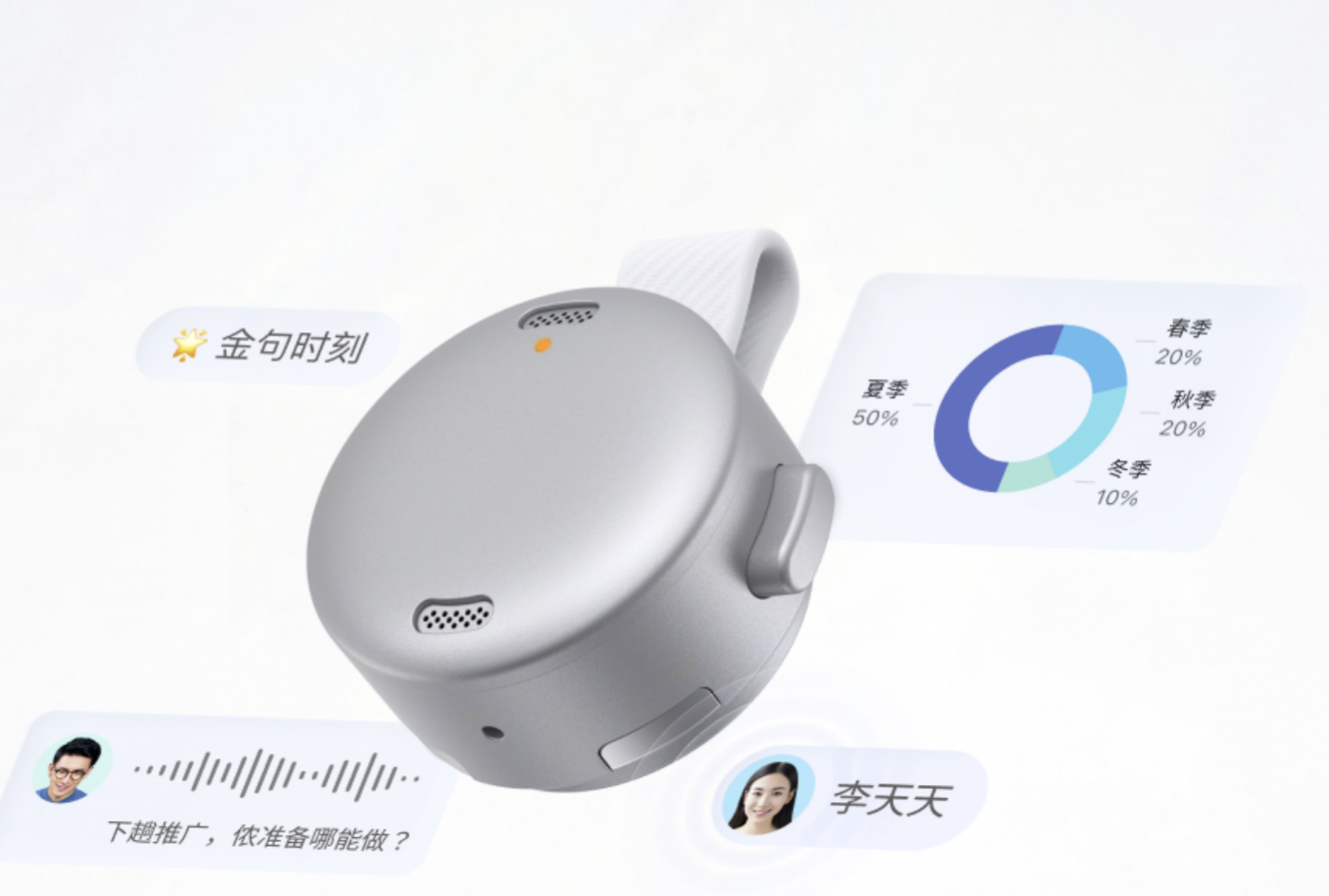
Core Viewpoint - The emergence of AI recording devices represents a significant shift in the hardware market, driven by the integration of AI capabilities into everyday tools, transforming them into knowledge assets rather than mere audio files [2][3]. Group 1: AI Recording Device Market Overview - The AI recording device market is evolving with new entrants like Anker and ByteDance's Feishu, which recently launched the Anker AI Recording Bean, a compact device priced at 899 yuan [2][3]. - The product features AI capabilities such as voiceprint recognition, real-time transcription and translation, and intelligent summary generation, enhancing the utility of recorded audio [2][3]. - The market has seen a shift from traditional recording devices, which focused on sound quality and storage, to AI-enhanced devices that cater to high-information-density scenarios like meetings and interviews [3][4]. Group 2: Competitive Landscape - The AI recording device sector is becoming a battleground for various players, including established companies like Sogou and iFlytek, as well as newer entrants like Plaud and DingTalk [4][5]. - Plaud's Note, launched in 2023, is recognized as a pioneer in the card-style AI recording device category, addressing the need for recording iPhone calls and achieving over 1 million units sold globally [5][6]. - The competitive landscape includes four main types of participants: traditional recording pen manufacturers, AI technology firms, office ecosystem giants like Feishu and DingTalk, and fast-following white-label manufacturers [9][10]. Group 3: Future Trends and Challenges - The market is currently experiencing explosive growth and technological upgrades, with competition intensifying around AI processing capabilities, sound capture, and product portability [10]. - The card-style devices are gaining attention for their lightweight and user-friendly design, which is becoming a key differentiator in the market [10]. - As the market becomes saturated, the challenge will be to create unique value propositions beyond basic hardware specifications, focusing on building a complete usage ecosystem [10].
AI录音笔大爆发,麦克风成了生产力入口
3 6 Ke· 2026-01-19 10:38
Core Insights - The collaboration between Feishu and Anker Innovation has led to the launch of an AI recording device, emphasizing the shift from audio preservation to actionable results [1][4] - The AI note-taking market is projected to grow significantly, indicating a transformation in how organizations allocate budgets for recording and information processing [3][8] Group 1: Product Developments - Feishu and Anker's AI recording device features a lightweight design, long battery life, and capabilities for real-time transcription and task generation [1][4] - Other companies, such as DingTalk and Plaud, are also entering the market with similar AI recording products, indicating a collective industry focus on "voice entry" [2][4] - The AI recording devices are evolving from simple audio capture to providing structured outputs like meeting minutes and actionable tasks, streamlining post-meeting processes [4][14] Group 2: Market Trends - Technavio forecasts an addition of approximately $821 million to the AI note-taking market from 2024 to 2029, with a compound annual growth rate of about 21.3% [3][8] - The demand for automated recording and information processing is increasing, driven by the need for efficiency in remote and hybrid work environments [7][8] Group 3: Competitive Landscape - The market features two main approaches: hardware-first companies focusing on creating user-friendly devices, and platform-first companies integrating hardware into existing collaboration systems [9][11] - Hardware companies are often reliant on consumer channels and word-of-mouth for user adoption, while platform companies benefit from existing organizational structures to facilitate faster integration [11][12] Group 4: Future Implications - The entry of AI recording devices into organizational workflows is expected to enhance efficiency by reducing the time spent on post-meeting documentation [14][15] - As real-time transcription becomes standard, the nature of meeting minutes will evolve, allowing for better tracking and accountability within organizations [15][17] - Governance and compliance will become critical as the technology matures, with platform companies likely having an advantage due to their existing frameworks for data management and user permissions [18][19]
钉钉变“硬”了
Xin Lang Cai Jing· 2025-12-25 11:37
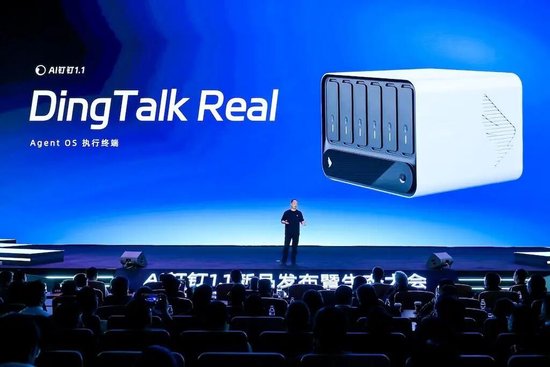
Core Insights - DingTalk has launched a new AI hardware product named DingTalk Real, which integrates its office collaboration capabilities with Alibaba's AI model, aiming to create a new AI terminal entry point [1][19][20] - The return of Chen Hang to DingTalk has shifted the company's AI strategy towards a greater emphasis on AI hardware, moving away from solely software-based solutions [2][23][24] Group 1: Product Development - DingTalk Real is designed to operate independently of the DingTalk app, marking a significant evolution in its product strategy [10][30] - The previous AI hardware, DingTalk A1, was well-received in the market, becoming a top seller during the Double 11 shopping festival, indicating strong consumer interest in AI-enabled office tools [10][30] - DingTalk A1 functions as a lightweight AI recording device that enhances productivity by efficiently recording, transcribing, and summarizing voice communications [8][10][29] Group 2: Market Position and Competition - DingTalk currently holds a market share of approximately 32.7% in the enterprise collaboration sector, but faces increasing competition from rivals like Feishu and WeChat Work, which have been gaining traction [12][33] - The enterprise organization count on DingTalk has only increased by 300,000 over three years, indicating a slowdown in user growth compared to its competitors [13][35] - Feishu has reportedly captured significant clients from DingTalk, impacting its market position and revenue growth [35][36] Group 3: Strategic Shift - Under Chen Hang's leadership, DingTalk is transitioning from a broad functionality approach to a more focused strategy that emphasizes innovative collaboration tools and AI hardware [36][37] - The introduction of AI hardware is seen as a way to differentiate DingTalk from competitors and to enhance its service offerings in the enterprise market [37][38] - The company aims to redefine its role in the AI landscape by integrating its Agent OS capabilities into various hardware solutions, moving beyond traditional app-based services [31][38]
阿里入口的B端战事
远川研究所· 2025-12-25 11:32
Core Insights - OpenAI aims to transform ChatGPT from a simple chatbot into a complex task-completing platform, enhancing user engagement and establishing itself as a key entry point in the AI era [3] - The competition for digital entry points is intensifying, with major players like Microsoft and Google integrating AI into their ecosystems, while Alibaba's DingTalk is also making significant strides in this space [4][7] Group 1: DingTalk's Evolution - DingTalk has transitioned from a mobile internet application to an AI-driven intelligent operating system, enabling AI to manage tasks autonomously [4][9] - The release of DingTalk 1.1 marks a significant upgrade, introducing AgentOS, which allows AI to operate other applications, fundamentally changing its role from a user-operated tool to an AI command center [9][10] - DingTalk ONE provides a new interaction interface where AI organizes and prioritizes work information, shifting the paradigm from "people finding tasks" to "tasks finding people" [9][10] Group 2: Competitive Landscape - The battle for B-end market entry is characterized by different strategies compared to C-end, with B-end focusing on ROI and efficiency, while C-end aims for user engagement and emotional connection [7][10] - DingTalk's upgrades are designed to deepen its integration within organizations, creating a strong lock-in effect that makes it difficult for companies to switch to competing platforms [10][12] Group 3: AI Integration and Future Vision - DingTalk's self-reconstruction involves three major changes: enhancing user interaction, restructuring its architecture to support AI operations, and expanding its ecosystem to include AI talent and resources [13][14] - The company is positioned as a key player in the transition to "super artificial intelligence" (ASI), with a focus on connecting AI to the physical world to enhance productivity and decision-making [17][22] - The ultimate goal is to create a closed-loop system where AI can learn from real-world data and influence physical actions, thereby redefining productivity in the AI era [22][23]

一片录音卡,重写大厂硬件故事
36氪· 2025-12-25 06:44
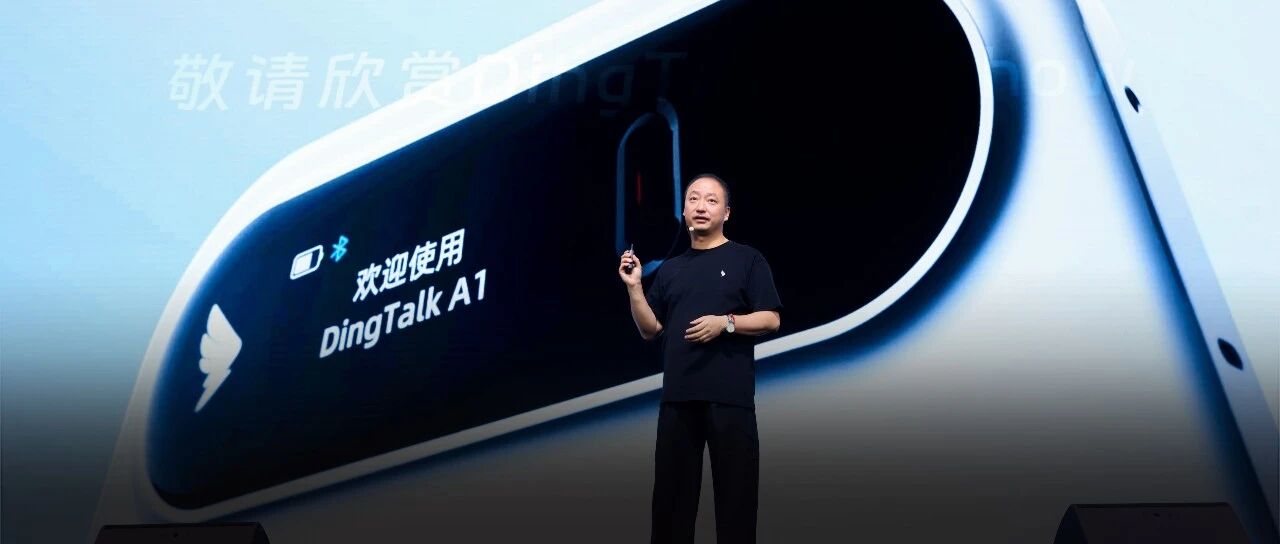
Core Viewpoint - DingTalk is breaking the curse that internet companies cannot do hardware well, marking a significant shift in the AI hardware landscape [3][7][28] Group 1: AI Hardware Industry Trends - The AI hardware sector has seen a surge in investment and innovation, with over 114 financing events and a total investment exceeding 14.5 billion yuan in the first half of 2025 [2] - Major companies like Alibaba, ByteDance, and Meituan have launched their own hardware products, indicating a competitive landscape in China's AI hardware industry [2][3] - The trend of FOMO (Fear of Missing Out) is influencing investments, with many startups securing funding without proven products [2] Group 2: DingTalk's Product Launch and Strategy - DingTalk held its second product launch in six months, introducing Agent OS and the AI hardware DingTalk Real, establishing a complete AI system architecture [3][5] - The DingTalk A1 has quickly gained popularity, becoming a top-selling product in its category, showcasing the potential for large-scale application [8][10] - The product's design choices, such as using a universal type-C charging port, reflect a balance between user habits and product functionality [10] Group 3: Market Positioning and Competition - DingTalk A1 is positioned not just as a standalone recording device but as a vital component of DingTalk's broader AI ecosystem, serving as a data collection tool [16][27] - The competitive landscape is intense, with existing players like Plaud and iFlytek already established in the market, necessitating DingTalk to clearly define its unique value proposition [8][9][16] - The product's initial reception included criticism, but rapid iterations and user feedback have led to significant improvements and a turnaround in public perception [12][13] Group 4: Future Vision and Ecosystem Development - DingTalk aims to create a seamless interaction between users and AI agents, with the physical button on the A1 serving as a strategic entry point for AI functionalities [20][23] - The integration of AI into business workflows is expected to transform how companies utilize data, turning it into actionable insights and enhancing productivity [17][25] - The vision for DingTalk includes building a robust ecosystem where hardware, data, and AI agents work together, potentially reshaping the future of office collaboration [26][27]
一片录音卡,重写大厂硬件故事
3 6 Ke· 2025-12-25 06:37
Group 1: AI Hardware Industry Trends - The AI hardware industry continues to thrive, with significant investments and developments occurring throughout 2025, including OpenAI's acquisition of io Products for $6.5 billion and the emergence of companies like YingShi Innovation, which reached a market cap of over 100 billion [1] - In the first half of 2025, there were 114 financing events in China's embodied intelligence and AI hardware sector, totaling over 14.5 billion yuan, with May alone seeing over 50% of all funding directed towards AI hardware [1] - Major companies like Alibaba, ByteDance, and Meituan have launched their own hardware products, marking the beginning of a competitive landscape in China's AI hardware industry [1] Group 2: DingTalk's AI Hardware Launch - DingTalk held its second product launch in six months, introducing Agent OS and the DingTalk Real hardware, which enables AI agents to perform tasks securely in enterprise environments [2] - The DingTalk A1 has quickly gained popularity, becoming a leading product in the domestic AI hardware market, challenging the notion that internet companies cannot successfully produce hardware [2][4] - The A1's development was rapid, with the team identifying the recording card product within a week, aiming for a successful transition to AI hardware [5] Group 3: Market Competition and Product Development - The recording card market is competitive, with players like Plaud dominating overseas and other companies like iFlytek and 360 entering the domestic market [6] - DingTalk must address key questions regarding the unique characteristics of AI hardware, the value of data generated, and the reasons for consumers to choose their products [6] - The A1 product faced initial criticism as a "half-finished product," prompting the team to engage in rapid iterations and user feedback to improve its reputation [7] Group 4: AI Integration and Data Utilization - The A1 is positioned as a data collection device within DingTalk's AI ecosystem, transforming recorded data into valuable assets for enterprises [10][11] - The integration of AI into business workflows allows for real-time data analysis and actionable insights, enhancing operational efficiency [11] - The A1's design includes a physical button for easy access to AI capabilities, indicating a strategic move towards seamless user interaction with AI agents [12][13] Group 5: Future Outlook and Industry Impact - DingTalk's AI hardware initiative represents a significant step towards making AI accessible for all, particularly for small and medium enterprises [17] - The competitive landscape is shifting, with major companies focusing on hardware that aligns with their core business strengths, as seen with DingTalk's approach [18] - The success of DingTalk A1 and similar products may redefine user interactions with AI in office environments, leading to a potential reshaping of the industry [16][19]