FSD全自动驾驶

Search documents
马斯克宣布TeraFab万亿级芯片厂启动,三天后见分晓
是说芯语· 2026-03-18 01:00
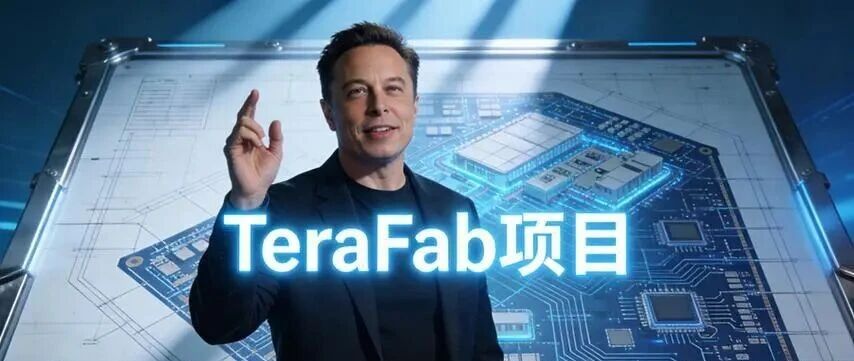
Core Viewpoint - Elon Musk announced the launch of the TeraFab chip factory project, aiming to produce between 100 billion to 200 billion chips annually, with an initial capacity of 100,000 wafers per month, expandable to 1 million wafers per month, positioning Tesla as a major player in the semiconductor industry [2][4]. Group 1: Purpose and Goals - The primary reason for establishing the TeraFab factory is to address the severe chip supply bottleneck faced by Tesla, driven by the increasing demand for AI chips due to advancements in autonomous driving technology [5]. - The factory aims to produce chips for Tesla's Dojo supercomputer, Full Self-Driving (FSD) technology, Optimus robots, and Robotaxi fleets, reducing reliance on external suppliers like TSMC and Samsung [6]. Group 2: Production and Technology - TeraFab will integrate logic AI chips, memory, and advanced packaging within a single facility, significantly surpassing the production capabilities of current leading manufacturers [4]. - The factory is expected to have 2nm chip manufacturing capabilities, with Tesla designing its fifth-generation AI chip (AI5) projected to be 50 times more powerful than the current AI4 chip, with a memory capacity nine times greater and ten times the raw computing power [9]. Group 3: Industry Reaction and Challenges - Musk's decision to forgo clean rooms in chip manufacturing has raised skepticism within the industry, as clean rooms are critical for ensuring chip yield and quality [7][8]. - Industry experts have expressed concerns that Musk's ambitious plans may be overly idealistic, highlighting the significant technical barriers, funding requirements, and complexity of the semiconductor supply chain [10]. Group 4: Future Developments - The details of the TeraFab project are expected to be revealed in seven days, with the industry closely monitoring whether the factory can achieve its ambitious production goals without a clean room setup [11].


特斯拉营收首次下滑 马斯克押注AI机器人“换道超车”
Sou Hu Cai Jing· 2026-01-30 04:15
Core Viewpoint - Tesla is transitioning from an automotive manufacturer to a physical AI company, focusing on Optimus, FSD, and Robotaxi as the core value drivers for the future [2] Financial Performance - In Q4 2025, Tesla reported total revenue of $24.901 billion, a slight decrease of 3% year-over-year, slightly above market expectations of $24.79 billion [2] - GAAP net profit fell significantly by 61% to $840 million, impacted by intensified price competition in the global auto market and rising operational costs [2] - The overall gross margin increased to 20.1%, the highest in two years, due to falling raw material prices, improved supply chain efficiency, and fixed cost optimization [2] - Automotive revenue in Q4 was $17.693 billion, down 11% year-over-year, with a delivery volume of 418,200 units, reflecting a 15.61% decline [2] - For the full year, total revenue was $94.827 billion, a 3% decline, marking the first annual revenue drop, while GAAP net profit decreased by 46% to $3.794 billion [5] Business Segments - The energy storage business showed robust growth, with Q4 revenue reaching $3.837 billion, a 25% increase year-over-year, becoming a new growth engine for the company [3] - The automotive business continues to face challenges, with a total delivery volume of 1.6361 million units for the year, down 8.6% year-over-year [5] Strategic Initiatives - Elon Musk announced plans to cease production of the Model S and Model X by Q2 2026, repurposing the Fremont factory for Optimus production, aiming for an annual output of one million units [5] - Tesla plans to increase capital expenditures to over $20 billion in 2026, more than doubling from 2025, to support the transition towards AI and robotics [6] - The company has invested approximately $2 billion in xAI to enhance collaboration, emphasizing the critical role of AI chips in the transformation [8] Market Response - Despite short-term pressures from traditional automotive business and profit declines, the market responded positively to Tesla's strategic shift, as evidenced by a rise in stock price following the earnings report [8]

特斯拉(TSLA.US)FSD大转向:从“买断”全面改为订阅 拟于2月14日后生效
Zhi Tong Cai Jing· 2026-01-14 09:21
不过,值得注意的是,虽然市场对于特斯拉估值与基本面前景的展望已经全面转向基于特斯拉独家AI 超算体系打造的FSD全自动驾驶、Robotaxi(完全无人自动驾驶出租车),以及名为"擎天柱"的特斯拉AI 人形机器人,特斯拉电动车销量与汽车业务基本面并未被削弱到无足轻重,它仍是当前现金流与资产负 债表的支柱,也是FSD数据闭环与车队规模的基础(Robotaxi最终也要落到可规模化的车辆产能与运 营)。 此举将取消FSD高达约8000美元的一次性买断费用,大幅降低用户体验该技术的初始门槛。尽管命名 为"全自动驾驶",该技术目前仍需驾驶员持续监控并随时准备接管。 在面临销售增长乏力的背景下,特斯拉正将其战略重心转向以科技为核心的增长点,如FSD、无人驾驶 出租车和机器人业务。去年,特斯拉已将全球最大电动汽车制造商的头衔让位于中国的比亚迪 (002594)。 特斯拉公司(TSLA.US)宣布将彻底改变其高级驾驶辅助系统"全自动驾驶"(FSD)的销售模式,全面转向 月度订阅服务。首席执行官埃隆·马斯克在社交媒体平台X上公布了这一转变,计划于2月14日后生效。 马斯克未具体说明决策原因,该服务目前月度费用为99美元。 ...
特斯拉未来十年技术路线全曝光
汽车商业评论· 2025-11-07 23:08
Core Insights - The article discusses Tesla's ambitious plans for the future, particularly focusing on the development of humanoid robots (Optimus), full self-driving (FSD) technology, and sustainable energy solutions. The core mission is to achieve "sustainable abundance" through technological advancements and innovative products [4][5]. Group 1: Optimus and Robotics - Tesla aims to produce humanoid robots at a massive scale, with projections of potentially hundreds of billions of units in the market [13][15]. - The company plans to establish production lines capable of manufacturing millions of units annually, with a long-term goal of reaching a production capacity of one billion units [14][26]. - Optimus is envisioned to revolutionize various sectors, including healthcare, by providing superior medical services and potentially eliminating poverty [15][16]. Group 2: Full Self-Driving Technology - Tesla's vehicles are designed for full self-driving capabilities, with ongoing improvements in the FSD software, now at version 14.2, aiming for a user experience that allows for minimal driver intervention [36][40]. - The company emphasizes the importance of educating customers about FSD features, as many users have not fully utilized the technology despite purchasing it [34][37]. - Tesla is working towards regulatory approvals in Europe and China to expand the deployment of FSD technology [37][38]. Group 3: AI Chip Development - Tesla is developing its own AI chips, which are expected to be more energy-efficient and cost-effective compared to competitors like NVIDIA [42][44]. - The AI5 chip is designed specifically for Tesla's AI software, aiming to enhance performance while reducing power consumption [42][43]. - The company is considering building a large-scale chip factory to meet the growing demand for its AI chips [45]. Group 4: Product Line Updates - Tesla is set to launch several new products, including the Cybercab, a fully autonomous taxi designed without traditional driving controls, and the Tesla Semi truck [48][55]. - The manufacturing process for the Cybercab is expected to be highly efficient, potentially achieving production cycles of under ten seconds per unit [51]. - The company is also focusing on the production of the next-generation Optimus robots, with plans for multiple iterations over the coming years [27][28]. Group 5: Sustainable Energy Vision - Tesla is committed to advancing sustainable energy solutions, with a focus on solar energy and battery technology [56][58]. - The company is expanding its battery production capabilities, including the development of the MegaPack for utility-scale energy storage [66][70]. - Tesla's efforts in building a comprehensive charging network are aimed at making electric vehicle charging accessible globally [70][72]. Group 6: Supply Chain and Raw Materials - Tesla is investing in raw material production, including a lithium refining facility in Texas, to secure the supply chain for battery manufacturing [73][74]. - The company is also producing its own 4680 batteries, which are expected to be used in upcoming vehicle models [77][78]. - Ensuring a stable supply of materials is crucial for Tesla's growth and production capabilities in the face of geopolitical challenges [76].