GoMate Mini

Search documents
高端装备制造:德国总理参访宇树科技,智元机器人落子德国
SINOLINK SECURITIES· 2026-03-02 03:00
Industry Developments - Unitree Technology launched the new quadruped robot Unitree As2, boasting power performance twice that of its main product Go2, with a weight of 18kg and a maximum load capacity of 105kg[18] - AGIBOT officially entered the German market, showcasing a full range of humanoid robot products and signing a strategic cooperation agreement with Minth Group to enhance local production capabilities[34] - BMW announced the deployment of humanoid robots at its Leipzig plant, marking the first introduction of AI-based robots in its European production system[10] Capital Trends - Qianxun Intelligent completed two rounds of financing totaling nearly 2 billion RMB, achieving a valuation exceeding 10 billion RMB[4] - NIO's chip subsidiary, Anhui Shenji Technology, secured over 2.2 billion RMB in its first round of equity financing, with a post-investment valuation nearing 10 billion RMB[4] - Zhongke Fifth Epoch completed Pre-A and Pre-A+ rounds of financing, accumulating several hundred million RMB, with a valuation increase of approximately 20 times since its early stages[46] Market Outlook - 2026 is projected to be a pivotal year for humanoid robots, with mass production expected to scale from thousands to tens of thousands of units, primarily in applications such as navigation and inspection[5] - The global robotics industry is entering a "arms race," with key players focusing on supply chain convergence and technological advancements in electric drive technologies and new materials[5] - Companies like Tesla and Apple are expected to significantly contribute to the development of humanoid robots, with a focus on enhancing production capabilities and market penetration[5]
人形机器人春晚“火出圈” 车企加速布局
Zhong Guo Jing Ying Bao· 2026-02-27 19:38
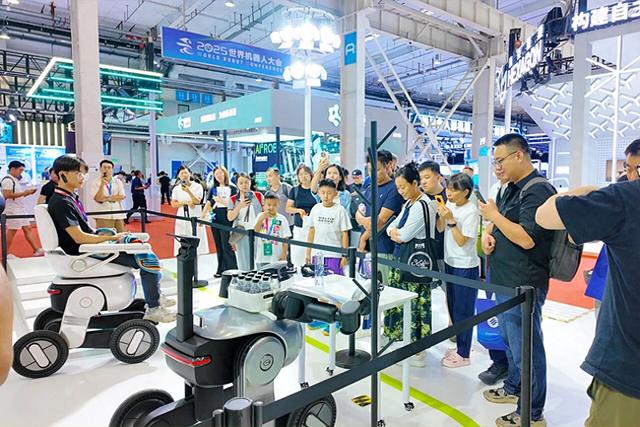
中经记者 陈靖斌 广州报道 "小鹏内部对机器人的投入是持续性的,并不是最近才加码。"小鹏汽车相关负责人在接受《中国经营 报》记者采访时表示,过去几年,团队围绕形态设计、运动控制与大模型能力持续迭代,"外界可能更 2026年除夕夜,中央广播电视总台春节联欢晚会舞台上,一群人形机器人惊艳亮相,与真人演员同台献 艺,完成高难度舞蹈与武术表演。机械关节精准卡点、动作流畅丝滑,与传统年俗节目在同一空间实现 节奏高度协同,这一画面迅速席卷社交平台,成为全民热议的"顶流"现象。 对普通公众而言,这是具象而震撼的技术落地瞬间;对产业界而言,则标志着具身智能正式突破实验室 与专业圈层的边界,第一次大规模进入社会主流认知与情感共鸣层面。 春晚热度尚未消退,人形机器人赛道便迎来密集的资本与产业信号释放。短短数周内,2月中下旬多家 头部企业接连公布完成数亿至十亿级大额融资。 与此同时,整车巨头也加速布局:自2025年起,它们不仅高调发布新一代人形机器人产品、公布清晰的 量产时间表,更首次将其纳入企业最高战略规划。与前几年车企聚焦"车内智能"(自动驾驶、智能座 舱)的竞争逻辑不同,本轮动作已显著外溢至"车外具身终端",人形机器人成为车 ...





机器人赛道挤满了车圈大佬
阿尔法工场研究院· 2026-01-16 05:37
Core Viewpoint - The article discusses the migration of talent from the intelligent driving sector to the robotics industry, highlighting the emergence of new startups and the potential for innovation in the field of embodied intelligence [2][9]. Group 1: Talent Migration - A significant number of industry leaders from intelligent driving are transitioning to the robotics sector, with over 30 notable figures making this shift [8]. - Startups like Zhihui Square, founded by Guo Yandong, have quickly gained traction, raising substantial funding and achieving unicorn status within a short period [3]. - Other notable startups include Zhijian Power, founded by former Li Auto executives, and Tashizhi Hang, co-founded by Huawei alumni, both of which have secured significant investments [4][6]. Group 2: Investment Landscape - The investment community is optimistic about teams with intelligent driving backgrounds, as they possess experience in scaling products and managing resources effectively [9]. - The robotics industry is witnessing a "talent war," with headhunters offering salary increases of around 50% for candidates with intelligent driving experience [10]. Group 3: Technological Synergies - Companies like Tesla and Xiaopeng are leveraging their existing automotive technologies to develop robots, indicating a convergence of intelligent vehicles and humanoid robots [12][13]. - The technology used in electric vehicles, such as high-density motors and battery management systems, is being adapted for robotic applications, enhancing their capabilities [17]. Group 4: Challenges and Future Outlook - Despite the technological overlap, the robotics sector faces unique challenges, particularly in achieving the dexterity and interaction capabilities required for humanoid robots [18]. - The commercial viability of robots remains uncertain, with many companies still exploring sustainable business models [20][21]. - The influx of companies into the robotics space may lead to market saturation and potential issues with quality and trust in robotic technologies [29][30].


广东机器人“论剑”广州塔
21世纪经济报道· 2026-01-01 03:11
Core Viewpoint - The article highlights the significance of the recent "Robot Climbing Challenge" held at the Guangzhou Tower, showcasing advancements in robotics and the practical applications of humanoid robots in various industries [1][2]. Group 1: Robot Performance and Challenges - The LimX Oli humanoid robot participated in the climbing challenge, demonstrating its ability to navigate stairs and maintain stability in high winds, ultimately winning the championship and the Best Precision Control Award [1]. - The competition tested various aspects of robot performance, including climbing speed, stability, autonomy, and environmental adaptability, with a scoring system that evaluated these factors [4][6]. - The event served as a critical examination of robots' capabilities in real-world scenarios, emphasizing the importance of stability and maneuverability for applications in special operations and urban management [1][6]. Group 2: Innovation and Development in Robotics - The climbing challenge reflects Guangdong's approach to technology innovation driven by real-world scenarios, focusing on market needs and practical applications [2][10]. - The competition is part of a broader trend in China, where robots are increasingly tested in various events to enhance their capabilities and prepare them for industrial applications [6][10]. - The event is seen as a stepping stone for robots to transition from competitive environments to practical applications in manufacturing and logistics, highlighting the need for robots to adapt to complex environments [10][11]. Group 3: Industry Growth and Future Prospects - Guangdong's artificial intelligence and robotics industry has seen significant growth, with the core industry scale surpassing 250 billion yuan, and industrial robot production increasing by 32.8% year-on-year [11]. - The region's strategy emphasizes creating practical application scenarios that drive technological innovation, aiming for robots to perform tasks traditionally done by humans, thereby reducing production costs [10][11]. - The establishment of a "super test field" in Longgang district exemplifies Guangdong's commitment to fostering innovation and solving real-world problems through robotics [11].

广东机器人“论剑”广州塔:一场登高赛背后的新产业进阶
2 1 Shi Ji Jing Ji Bao Dao· 2025-12-31 23:19
Core Insights - The article discusses the first-ever robot climbing challenge held at the Guangzhou Tower, where various robots, including the LimX Oli, competed in a test of stability and adaptability in a high-altitude environment [2][3]. Group 1: Event Overview - The robot climbing challenge featured 11 robots of different types, including bipedal humanoid, multi-legged, wheeled, and exoskeleton robots, competing in a unique outdoor setting [3]. - LimX Oli won the championship in the bipedal humanoid category and received the Best Precision Control Award, showcasing its advanced mechanical design and motion control algorithms [2][3]. Group 2: Technical Challenges - The competition tested robots on various parameters, including completion time, walking stability, autonomy, and environmental adaptability, emphasizing the need for robots to perform in real-world conditions [3][4]. - The challenge highlighted the importance of robots' decision-making capabilities, motion control, and core components, which are crucial for their performance in complex environments [4][5]. Group 3: Industry Implications - The event reflects Guangdong's commitment to driving technological innovation through practical applications, with a focus on real-world needs and market-driven development [2][6]. - The ongoing series of robot competitions in Guangdong aims to bridge the gap between technology development and industrial application, facilitating the transition of robots from competitive arenas to practical use in industries [6][7]. Group 4: Market Growth - Guangdong's artificial intelligence and robotics industry is experiencing significant growth, with the core industry scale surpassing 250 billion yuan and industrial robot production increasing by 32.8% year-on-year [7]. - The region has established itself as a hub for AI and robotics, with over 600 companies in the field, fostering a cycle of innovation and problem-solving through real-world testing [7].
车企竞逐人形机器人赛道
Zheng Quan Ri Bao· 2025-11-25 16:41
Core Insights - The 23rd Guangzhou International Auto Show highlights the automotive industry's increasing focus on humanoid robots as a strategic direction for growth [1][3] - Companies like Changan Automobile and XPeng Motors are showcasing their humanoid robot products, indicating a trend towards integrating robotics into their business models [1][2] Company Developments - Changan Automobile presented its humanoid robot "Xiao An," which features 40 degrees of freedom and a battery life exceeding 2 hours, emphasizing its capabilities in communication and assistance [1] - The company views its robotics business as a new growth engine and is actively developing various functionalities for its humanoid robots [1] - XPeng Motors introduced its next-generation humanoid robot IRON at the auto show, while Guangzhou Automobile Group showcased its fourth-generation intelligent robot GoMate Mini [1] Industry Trends - The automotive sector is leveraging its existing technological advantages in smart driving and manufacturing to enter the humanoid robotics market [3] - Companies are collaborating with tech firms, as seen with Seres Group's partnership with ByteDance's Volcano Engine to develop embodied intelligence solutions [2] - IDC forecasts that the global robotics market will exceed $400 billion by 2029, with humanoid robots expected to capture over 30% of the market share, driving advancements towards generalization and autonomy [3] Challenges - The automotive industry's entry into the robotics field faces significant challenges, including high R&D costs and limited profit margins, which may strain cash flow [4] - Many robotic products are still in the technology validation phase, and there is currently no strong demand in consumer and healthcare applications, complicating commercialization efforts [4]

广汽集团:已推出第二代载人轮足机器人,并于2025年上半年在康养、安防场景展开应用
Cai Jing Wang· 2025-11-24 05:22
Core Viewpoint - GAC Group emphasizes its commitment to global automotive market trends by enhancing its differentiated brand and product matrix to improve overall competitiveness and risk resistance [1] Group 1: Product and Brand Development - The company has established a comprehensive product matrix covering various power forms, including fuel, pure electric, range-extended, and plug-in hybrid vehicles, under its own brands such as Trumpchi, Aion, and Haobo, as well as the Huawei collaboration brand, Qijing [1] - The focus is on electrification, intelligence, and premiumization to meet diverse consumer needs [1] Group 2: Robotics Initiatives - GAC Group has launched several advanced robotics, including the second-generation wheeled robot GoMove, service robot GoSide, and third and fourth-generation humanoid robots GoMate and GoMate Mini [1] - A global demonstration area for humanoid robots is planned to be established in Guangzhou by the end of 2025, with commercial model validation expected by 2026 and large-scale production targeted for 2027 [1] - The company aims to achieve a robotics industry chain output value exceeding 1 billion yuan by 2030 [1] Group 3: Financial Performance - For the period from January to September 2025, GAC Group reported revenues of 66.272 billion yuan, a year-on-year decrease of 10.49% [1] - The company experienced a net loss of 4.312 billion yuan, with losses expanding by 3691.33% year-on-year [1]
人形机器人产业周报:星动纪元完成近10亿元A+轮融资,Figure02已参与3万辆汽车生产-20251124
Guoyuan Securities· 2025-11-24 03:45
Investment Rating - The report maintains a "Recommended" investment rating for the humanoid robotics industry [7]. Core Insights - The humanoid robotics concept index experienced a decline of 5.68% from November 16 to November 21, 2025, underperforming the CSI 300 index by 1.91 percentage points. However, year-to-date, the humanoid robotics index has increased by 57.83%, outperforming the CSI 300 index by 41.26 percentage points [2][12]. - Notable stock performances include Weichuang Electric with a weekly increase of 18.56%, while Fangyuan Co. saw the largest decline at 21.32% [17]. Summary by Sections Weekly Market Review - The humanoid robotics index fell by 5.68% during the specified week, while year-to-date performance shows a significant increase of 57.83% [12][2]. - Weichuang Electric and Fangyuan Co. had the highest weekly gains and losses, respectively [17]. Weekly Highlights Policy Developments - Hubei's provincial leadership emphasized the need to enhance scene applications, particularly in integrating "Beidou + humanoid robots" and "Beidou + artificial intelligence" [20]. - Chongqing's Economic and Information Technology Commission released a plan to accelerate the application of embodied intelligent robots in enterprise digital transformation projects [21]. Product and Technology Iteration - Figure AI announced that its second-generation humanoid robot, Figure 02, has participated in the production of 30,000 vehicles at BMW's Spartanburg plant, loading over 90,000 components [22]. - UBTECH's annual production capacity for industrial humanoid robots is projected to reach 5,000 units by 2026 [22]. - Diguo Robotics partnered with Fourier to enhance humanoid robots' capabilities in emotional perception and semantic understanding [23]. Investment and Financing - The embodied intelligence company Star Epoch completed nearly 1 billion yuan in Series A+ financing, led by Geely Capital [25]. Key Company Announcements - GAC Group plans to initiate large-scale production of humanoid robots by 2027, aiming for a production value exceeding 1 billion yuan by 2030 [26]. - Gree Electric has developed core components for humanoid robots, including joint modules [27]. - Shengshi Technology is advancing the localization of the NAO robot supply chain and is set to launch the NAO7 model soon [27].
广东“AI+机器人”竞技十五运:场上争干活 场外抢订单
2 1 Shi Ji Jing Ji Bao Dao· 2025-11-06 04:57
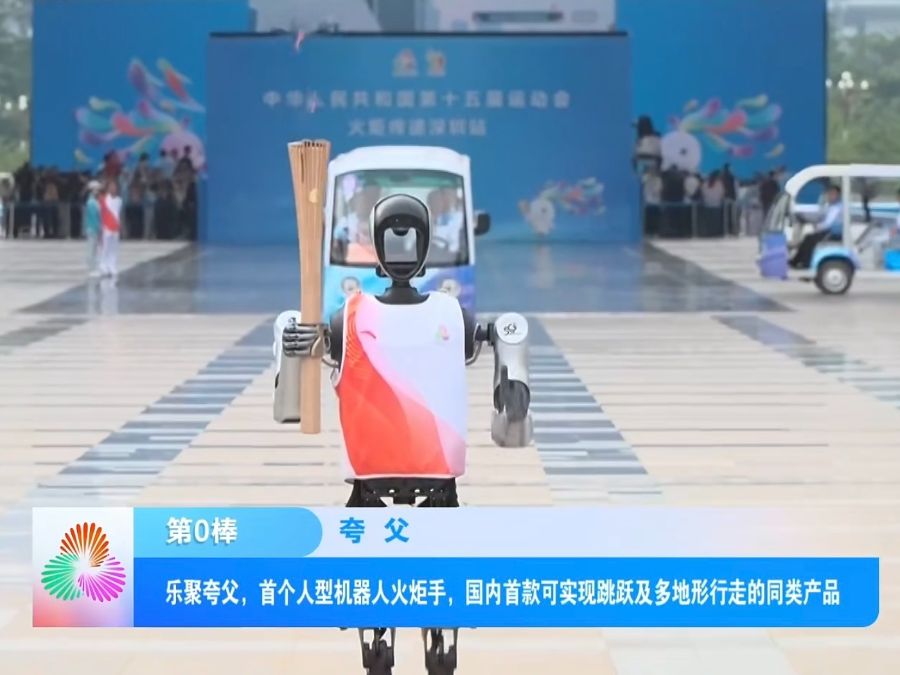
Core Insights - The event showcased the world's first 5G-A humanoid robot "Kua Fu" participating in the torch relay, symbolizing the integration of technology and the real economy [2] - The Guangdong AI and robotics industry is entering a commercial phase focused on practical effectiveness, driven by a complete industrial chain and scenario-based applications [2][9] Group 1: Technological Advancements - "Kua Fu" demonstrated advanced dynamic motion control, load balancing, and adaptability to complex environments, meeting the rigorous demands of the torch relay [3] - The robot's performance was enhanced through collaboration with Harbin Institute of Technology and Beijing Tongyan Institute, optimizing motion control algorithms for better resilience and terrain adaptability [3] - The use of China Mobile's 5G-A network enabled real-time high-definition video transmission with an upload speed of 20 Mbps and a latency of only 20 ms, allowing for precise remote control without on-site technical personnel [3] Group 2: Industry Development - Guangdong's industrial robot production is projected to exceed 240,000 units in 2024, accounting for 44% of the national output, maintaining its position as the leading province in China for five consecutive years [8] - The province hosts over 155,000 robot-related enterprises, with cities like Shenzhen, Guangzhou, and Foshan forming collaborative clusters for R&D, manufacturing, and application [8] - The integration of 5G-A and vertical large models enhances robots' cross-scenario capabilities, allowing them to adapt quickly to diverse industrial needs [8] Group 3: Market Trends - Recent contracts, such as the 80.5 million yuan procurement by Yujian Technology and the 126 million yuan project by UBTECH, indicate a shift from technology demonstration to essential procurement in stable profit markets [10] - The industry is transitioning from the cultivation phase to the growth phase, marked by significant order amounts exceeding 10 million yuan [10] - Guangdong's robust market demand and complete industrial chain ecosystem create a competitive advantage in the robotics sector, supported by government policies and initiatives [10][12] Group 4: Future Outlook - The Guangdong government plans to enhance industrial layout, strengthen technological breakthroughs, and cultivate leading enterprises to position the province as a global hub for intelligent robotics [12] - The ongoing development of AI and robotics is expected to lead to a sustainable business model, marking a significant transition in the industry [12]
168万元!广汽飞行汽车即将量产,明年将建首个示范运营点
Nan Fang Du Shi Bao· 2025-10-31 08:39
Core Viewpoint - The event showcased the advancements in flying cars, particularly the GOVY AirJet and GOVY AirCab, highlighting their potential for urban transportation and emergency services [2][4][5][7]. Group 1: GOVY AirJet - The GOVY AirJet features a "1+1+X" seating layout, accommodating 3 to 4 passengers, and is constructed with over 90% carbon fiber to reduce weight [4]. - It can reach speeds of up to 250 km/h and has a range exceeding 200 km, with a quick recharge time of 30 minutes [4]. - The flying car can significantly reduce travel time, for example, from Guangzhou to Hong Kong, which typically takes over 2 hours by ground transport, to just 40 minutes [4][5]. - The GOVY AirJet has completed over 200 flights and received a special flight permit from the Civil Aviation Administration of China [5]. Group 2: GOVY AirCab - The GOVY AirCab is a smaller multi-rotor flying car designed for 1-2 passengers, suitable for short-distance travel within 20 km, and is currently undergoing airworthiness certification [7]. - The pre-sale price for the AirCab is set at no more than 1.68 million yuan, which is half the price of similar helicopters [7]. - There are over 1,000 global intent orders for the AirCab, primarily from B-end customers, with interest from clients in Hong Kong and the Middle East [7]. Group 3: Additional Innovations - During the 15th National Games and the Special Olympics, the company will provide services using innovative technologies, including humanoid robots and flying cars [9]. - The GoMate Mini humanoid robot will assist in reception, security checks, and emergency responses during the events [9].