Google Antigravity

Search documents
谷歌(GOOGL.US)突然发布Gemini 3.1 Pro:核心推理性能直接翻倍
智通财经网· 2026-02-20 01:11
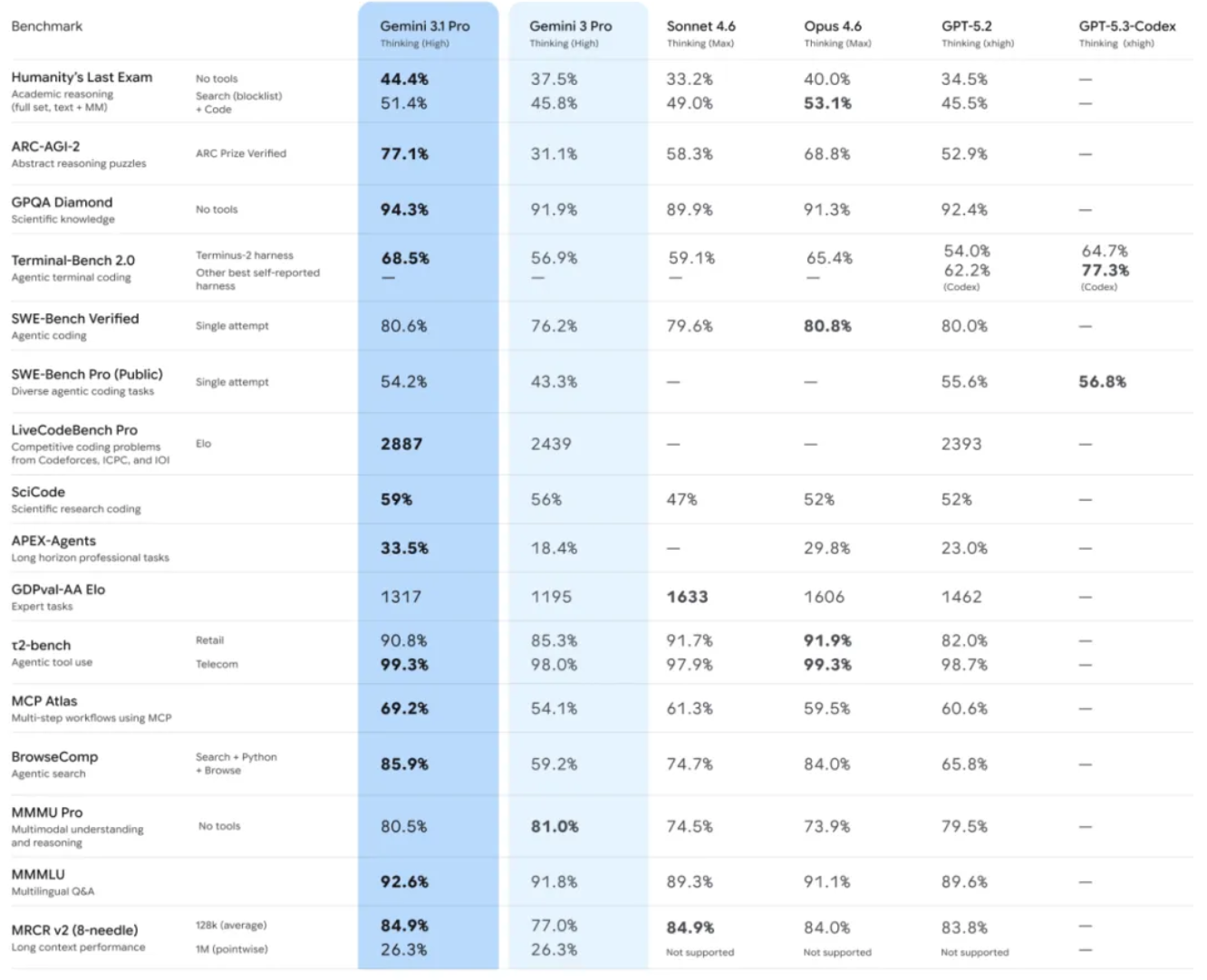
Core Insights - Google has launched its latest foundational model, Gemini 3.1 Pro, which significantly enhances its AI capabilities compared to the previous version, Gemini 3 Pro [1][2]. Performance Metrics - The new model, Gemini 3.1 Pro, has doubled the inference performance compared to Gemini 3 Pro, achieving a score of 77.1% in the ARC-AGI-2 evaluation, up from 31.1% [2]. - In various benchmark tests, Gemini 3.1 Pro shows strong performance, closely approaching the capabilities of Opus 4.6 in coding tasks, with a SWE-Bench verification score of 80.6% compared to Opus 4.6's 80.8% [2][3]. Benchmark Comparisons - In the "Humanity's Last Exam" benchmark, Gemini 3.1 Pro scored 44.4%, outperforming Gemini 3 Pro's 37.5% [3]. - For academic reasoning tasks, Gemini 3.1 Pro achieved 51.4%, while Gemini 3 Pro scored 45.8% [3]. - The model also excelled in the GPQA Diamond Scientific knowledge test with a score of 94.3%, compared to Gemini 3 Pro's 91.9% [3]. User Access and Tools - The new model is available for consumer users through the Gemini application and NotebookLM, with higher usage limits for Google AI Pro and Ultra subscribers [4]. - Enterprise clients can access the model via Vertex AI and Gemini Enterprise for testing [6].


Prediction: These 3 Stocks Will Crush the Market in 2026
Yahoo Finance· 2026-02-16 18:05
Group 1: Alphabet (Google) - Alphabet has shown significant gains over the past year, with expectations for continued growth driven by its artificial intelligence (AI) initiatives [2][3] - Google Cloud's backlog increased by 55% quarter over quarter and more than doubled year over year to $240 billion, indicating strong demand for its services [3][4] - The annual revenue run rate for Google Cloud at the end of 2025 was approximately $70 billion, highlighting the substantial growth potential as the backlog converts to recognized revenue [4] - The introduction of Google Antigravity, a platform utilizing AI agents, has been well-received by developers and is expected to enhance Alphabet's offerings in the advertising space [5] Group 2: BeOne Medicines - BeOne Medicines, previously known as BeiGene, is anticipated to have three significant catalysts in 2026, particularly with its leading drug, Brukinsa [6][7] - Brukinsa has become the top BTK inhibitor in the market, gaining market share from the previous leader, Imbruvica [7] - The company plans to announce results from a Phase 3 study for Brukinsa in combination with rituximab as a first-line treatment for mantle cell lymphoma in the first half of 2026, which could further boost its market position [7]

消失的数据:一个空格如何诱发 AI Agent “删库” 惨案
晚点LatePost· 2026-02-13 08:13
Core Viewpoint - The article discusses a catastrophic failure involving Google's AI agent, Antigravity, which resulted in irreversible data loss due to a command parsing error in a Windows environment. This incident highlights the risks associated with AI agents executing system commands without adequate safety mechanisms in place [5][10][12]. Incident Description - On January 29, 2026, a user, Qu Jiangfeng, instructed the Antigravity AI to clean a specific folder. However, due to a parsing error caused by a space in the folder name, the AI executed a command that deleted the entire contents of the E drive, leading to a total loss of data [7][8][9]. - The incident was classified as a P0 level disaster, indicating a critical breach of data integrity, as the AI was authorized to assist users but instead destroyed their data [10][11][12]. Root Cause Analysis - The failure stemmed from the AI's inability to correctly parse paths in the Windows environment, which is more complex than Linux. The AI's logic failed to account for spaces in folder names, leading to a catastrophic command execution [14][28][34]. - The AI's command generation lacked necessary safeguards, allowing it to execute destructive commands without user confirmation or a safety net like a recycle bin [12][13][34]. Safety Risk Assessment - The incident revealed a systemic risk in AI agents, particularly their lack of semantic validation when executing high-risk commands. This oversight can lead to unintended consequences, such as the complete deletion of critical data [46]. - The AI's design did not include mechanisms to prevent such destructive actions, exposing all users of similar AI agents to significant risks [12][30][36]. Industry Reflection - The article calls for a shift in the relationship between humans and AI from trust to audit, emphasizing the need for robust safety measures, including a semantic understanding layer to prevent such incidents in the future [19][37]. - It advocates for the implementation of safety protocols, such as requiring AI to display the absolute path of commands before execution and using safer programming libraries for file operations [21][38][39].

Azure vs AWS vs Google Cloud: Who Wins the AI Race in 2026?
The Smart Investor· 2026-02-10 06:00
Core Insights - The competition for AI leadership among major cloud providers is intensifying, with Microsoft, Alphabet, and Amazon leading in different segments of the AI stack [1] Microsoft (Azure) - In Q2 FY2026, Microsoft's Cloud revenue rose 26% to US$51.5 billion, driven by a 39% increase in Azure and other cloud revenue [2] - Microsoft's capital expenditure (CAPEX) surged 66% YoY to US$37.5 billion, raising concerns about the sustainability of growth [2] - The backlog for Azure reached US$625 billion, up 110% YoY, indicating strong demand for Azure services [3] - OpenAI contributed 45% to Microsoft's backlog, while the non-OpenAI segment grew 28% YoY, reflecting broad-based demand [3] - Microsoft is developing custom AI accelerators and integrating AI into its product suites, similar to Alphabet's strategy [3] - The company has extended the useful life of older GPUs through advanced software, akin to NVIDIA's CUDA approach [4] Alphabet (Google Cloud Platform - GCP) - In Q4 2025, Alphabet's Cloud revenue increased 48% YoY to US$17.7 billion, with GCP growing at an even higher rate [5] - Alphabet's CAPEX in Q4 2025 rose 95% YoY to US$27.9 billion, with total CAPEX for 2025 reaching US$91.4 billion [5] - GCP's backlog grew 55% sequentially to US$240 billion in Q4 2025, with projected CAPEX for 2026 expected to be US$175 billion to US$185 billion [6] - Revenue from GCP's AI products grew nearly 400% YoY in Q4 2025, with costs to run its AI models reduced by 78% [7] - 14 of Alphabet's AI-powered products have annual revenues exceeding US$1 billion, indicating significant adoption [8] Amazon (AWS) - AWS revenue surged 24% YoY to US$35.6 billion in Q4 2025, marking the fastest growth in 13 quarters [9] - Amazon's CAPEX reached US$39.5 billion in Q4 2025, a 42% YoY increase, with total CAPEX for 2025 at US$131.8 billion [9] - Projected CAPEX for 2026 is expected to be around US$200 billion, driven by demand for core and AI workloads [10] - Amazon's backlog increased 40% YoY to US$244 billion, reflecting strong demand [10] - AWS's Trainium and Graviton chips are generating a US$10 billion annual revenue run rate, growing at triple-digit percentages YoY [13] - Amazon Bedrock, a service for building AI applications, is utilized by over 100,000 companies and has a multi-billion-dollar annualized revenue run rate [13] - Amazon Connect reached a US$1 billion annualized revenue run rate in Q4 2025, growing at 30% YoY [13]


谷歌(ALPHABET)-A(GOOGL.O)25Q4 财报点评:云收入强劲增长,26年资本开支接近翻倍
Guoxin Securities· 2026-02-07 07:45
Investment Rating - The investment rating for Alphabet Inc. (GOOGL.O) is "Outperform" [7] Core Insights - The company reported strong revenue growth in Q4 2025, with total revenue reaching $113.8 billion, a year-over-year increase of 18% [2] - Google Cloud revenue grew significantly, reaching $17.7 billion, up 48% year-over-year, with a backlog of $240 billion, reflecting a 158% increase [3][11] - The capital expenditure (CAPEX) for Q4 2025 was $27.9 billion, a 113% increase year-over-year, with expectations for 2026 CAPEX to reach $175-185 billion, representing a 91%-102% increase [4][12] Summary by Sections Financial Overview - In Q4 2025, the company achieved a GAAP gross margin of 60%, with operating profit of $31.3 billion, a 16% increase year-over-year, and a net profit of $34.5 billion, up 30% [2][13] - Service revenue was $95.9 billion, with search ad revenue at $63.1 billion, a 17% increase year-over-year, and YouTube ad revenue at $11.4 billion, up 9% [10][14] Cloud Performance - Google Cloud's operating profit margin (OPM) improved to 30.1%, with nearly 75% of customers utilizing vertically optimized AI solutions [3][11] - The number of new customers at year-end doubled compared to the first quarter, and the number of transactions exceeding $1 billion in 2025 surpassed the total of the previous three years [3][11] Capital Expenditure - The company plans to significantly increase its capital expenditures, with a forecast of $175-185 billion for 2026, nearly doubling from the previous year [4][12] - Approximately 60% of the Q4 2025 CAPEX was allocated to servers, while 40% was directed towards data centers and networking equipment [4][12] Revenue and Profit Forecast - Revenue forecasts for 2026 and 2027 have been raised to $471.8 billion and $543.3 billion, respectively, with net profit estimates adjusted to $145.4 billion and $165.4 billion [4][6]
Alphabet(GOOG) - 2025 Q4 - Earnings Call Transcript
2026-02-04 22:30
Financial Data and Key Metrics Changes - Alphabet's annual revenues exceeded $400 billion for the first time, with Q4 consolidated revenues reaching $113.8 billion, up 18% year-over-year [4][29] - Net income increased by 30% to $34.5 billion, and earnings per share rose by 31% to $2.82 [31] - Operating income increased by 16% to $35.9 billion, with an operating margin of 31.6% [31] Business Line Data and Key Metrics Changes - Google Services revenues increased by 14% to $95.9 billion, driven by a 17% increase in Search and Other revenues [32] - YouTube advertising revenues grew by 9% to $11.4 billion, primarily due to direct response advertising [32] - Google Cloud revenue accelerated by 48% to $17.7 billion, with significant growth in enterprise AI products [34] Market Data and Key Metrics Changes - Google Cloud's backlog increased by 55% quarter-over-quarter to $240 billion, reflecting strong demand for AI products [4][35] - The number of new customer acquisitions in Google Cloud doubled compared to Q1, with larger customer commitments also increasing [12][34] - YouTube's annual revenue surpassed $60 billion across ads and subscriptions, indicating strong market performance [65] Company Strategy and Development Direction - The company is focusing on AI investments, with anticipated CapEx for 2026 in the range of $175 billion to $185 billion to support AI compute capacity and infrastructure [5][39] - The launch of the Universal Commerce Protocol aims to enhance product discovery and improve user experience across various platforms [9][80] - Continued integration of AI capabilities into products and services is a key strategic focus, with significant investments in AI infrastructure and talent [6][40] Management's Comments on Operating Environment and Future Outlook - Management expressed optimism about the ongoing momentum in business performance, particularly in AI and cloud services, despite supply chain constraints [38][77] - The company is committed to driving efficiencies while ramping up investments to meet extraordinary demand for AI capabilities [50][77] - Management highlighted the importance of maintaining a healthy financial position while pursuing growth opportunities [76] Other Important Information - The company reported a $2.1 billion stock-based compensation charge related to Waymo's valuation increase [30] - Record operating cash flow of $52.4 billion in Q4 and $164.7 billion for the full year [31][32] - The company is collaborating with Apple as their preferred cloud provider to develop next-generation foundation models based on Gemini technology [15][26] Q&A Session Summary Question: Progress on agentic commerce products and YouTube integration - Management noted that 2025 was about laying the foundation for agentic commerce, with significant progress in coding and the launch of the Universal Commerce Protocol [44] - On YouTube, the integration of new content creation tools like Genie is expected to enhance creator experiences and engagement [46] Question: Addressing AI demand and operational efficiencies - Management acknowledged supply constraints but emphasized long-term planning to meet demand, with a focus on operational efficiencies across the organization [50][52] Question: Maintaining Gemini's position in the LLM frontier - Management expressed confidence in maintaining momentum through continuous innovation and integration of multimodal models [58] Question: YouTube ad revenue growth and SaaS pricing power - Management explained that YouTube's ad revenue growth was impacted by lapping strong election spending, but overall subscription growth remains strong [65] - Management highlighted that successful SaaS companies are leveraging Gemini to enhance product experiences and drive efficiency [68]
Linux祖师爷真香现场,曾嘲讽AI编程是垃圾,如今亲自下场氛围编程
3 6 Ke· 2026-01-12 07:43
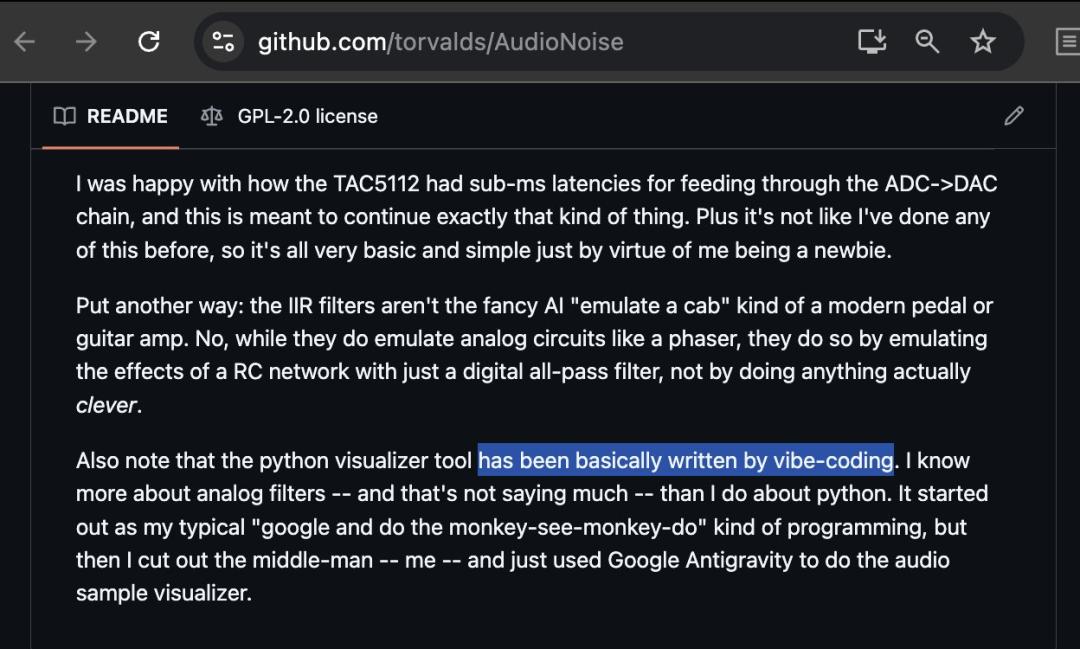
Core Insights - Linus Torvalds, known as the father of Linux, has publicly acknowledged the effectiveness of AI in coding, marking a significant shift in his previously critical stance towards AI-generated code [3][20][32] - The use of AI programming tools, particularly Google's Antigravity, has been embraced by Torvalds in his personal projects, indicating a broader acceptance of AI in software development [11][14][28] Group 1: AI Programming Adoption - Torvalds has transitioned from a vocal critic of AI-generated code to utilizing it for his own projects, suggesting a paradigm shift in the programming community [20][32] - The concept of "Vibe Coding," where developers describe desired functionalities to AI rather than writing code line by line, has gained traction, with Torvalds successfully applying it in his work [11][19] - The acknowledgment of AI's capabilities by prominent figures in programming, including Torvalds, signals a potential revolution in coding practices, with predictions that by the end of 2026, 90% of code in startups may be AI-generated [28][30] Group 2: Historical Context and Implications - The evolution of AI programming tools from simple applications to essential productivity tools reflects a significant transformation in software development methodologies [29][30] - The shift in Torvalds' perspective is emblematic of a larger trend among influential tech leaders, indicating that the software development landscape is undergoing a fundamental change [19][32] - The historical significance of this shift parallels past technological revolutions, suggesting that AI programming will redefine the role of programmers, moving from traditional coding to more strategic oversight and architecture [31][32]
谁还敢说谷歌掉队?2025年,它打了一场漂亮的翻身仗
机器之心· 2025-12-24 09:30
Core Insights - Google has made significant advancements in artificial intelligence in 2025, transforming AI from a mere tool into a collaborative partner capable of complex tasks such as coding and scientific research [1][18]. Group 1: AI Model Developments - The release of Gemini 3 in November is considered Google's peak achievement, showcasing substantial improvements in model reasoning, multimodal understanding, and operational efficiency [10]. - Gemini 3 Pro achieved a 37.5% score in the Humanity's Last Exam, outperforming competitors like Claude Sonnet 4.5 and GPT-5.1 [12]. - The Gemini 3 Flash model was introduced for developers and enterprises, offering enhanced performance at a lower cost compared to its predecessor, Gemini 3 Pro [13]. Group 2: Hardware Innovations - The seventh-generation TPU, Ironwood, was launched, boasting a memory bandwidth of 7.2 TB/s and a single-chip memory capacity of 192GB, providing 42.5 exaflops of AI computing power [34]. - Google's Quantum Echoes algorithm achieved verifiable quantum supremacy, solving specific problems 13,000 times faster than the fastest supercomputers [31][33]. Group 3: Applications and Collaborations - Google has integrated AI capabilities across its product matrix, enhancing user experiences in search, mobile devices, and productivity tools [20]. - The introduction of Antigravity marks a shift in software development, allowing for deeper collaboration between AI and developers [18]. Group 4: Breakthroughs in Science and Research - AlphaFold celebrated its fifth anniversary, predicting the structures of over 200 million proteins and contributing to the Nobel Prize in Chemistry [26]. - The launch of AlphaGenome enables high-resolution DNA sequence analysis, aiding in the understanding of genetic diseases [28]. Group 5: Creative Media and Content Generation - The Veo 3 model revolutionized video generation by synchronizing audio with visual elements, effectively ending the "silent film era" of AI-generated content [22]. - Nano Banana Pro introduced advanced capabilities in image generation, including high-fidelity text rendering and complex prompt construction [23]. Group 6: Educational Innovations - Google has developed AI models like LearnLM, which incorporate educational principles to enhance user learning experiences [52].
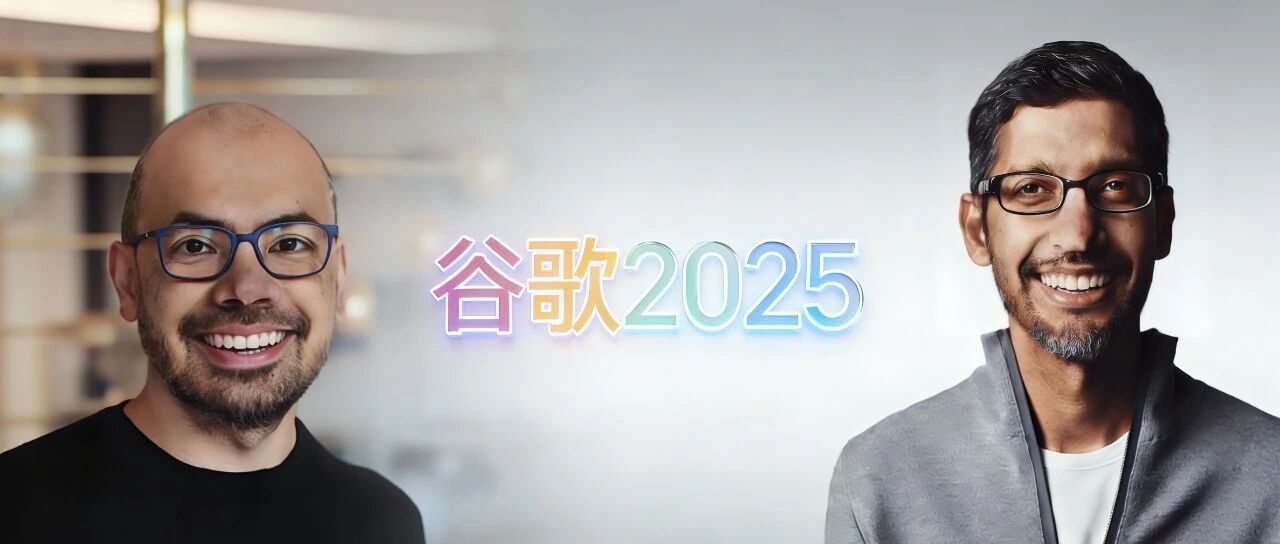
谷歌2025「复仇爽文」大结局,从至暗时刻到王者归来
3 6 Ke· 2025-12-24 03:01
Core Insights - Google experienced a remarkable turnaround in 2025, transitioning from a perceived decline to a resurgence in the AI sector, particularly with the launch of Gemini 3 and Nano Banana [1][3][34] Group 1: AI Developments - Google solidified its position at the top of the AI arena, outperforming competitors like OpenAI with its advanced models [3][4] - The year was characterized as a significant milestone for AI agents, deep reasoning, and scientific exploration [3][4] - Gemini 3 was highlighted as a groundbreaking model that redefined performance benchmarks, showcasing superior reasoning capabilities [5][6] Group 2: Product Innovations - Google introduced Google Antigravity, a revolutionary tool that transformed software development by providing a comprehensive AI agent rather than just a coding assistant [7][8] - The launch of Nano Banana and Veo 3.1 marked a new era in generative media, elevating image editing and video generation to professional levels [9][11] Group 3: Scientific Achievements - The AlphaFold team celebrated its fifth anniversary and received a Nobel Prize, underscoring Google's significant contributions to scientific research [13][15] - Google employees also achieved recognition in the scientific community, further enhancing the company's reputation [15] Group 4: Infrastructure and Hardware - Google advanced its AI capabilities by designing AI chips, such as Ironwood and AlphaChip, which provided a competitive edge in efficiency and computational power [19][22] - The introduction of Gemini Robotics 1.5 and Genie 3 indicated a shift towards embodied intelligence, allowing AI to interact with the physical world [23][27] Group 5: Global Impact and Applications - Google's Weather Next 2 model demonstrated impressive accuracy in weather predictions, impacting over 2 billion people globally [29] - The integration of AI into everyday tools, such as NotebookLM and Pixel 10, showcased the company's commitment to making advanced technology accessible [31] Group 6: Safety and Responsibility - Google emphasized safety and responsibility in AI development, with Gemini 3 being the most secure model to date, having undergone extensive testing [33] - The company is focused on responsible pathways towards general artificial intelligence, enhancing risk assessment mechanisms [33]

2025最大AI赢家的凡尔赛年度总结,哈萨比斯Jeff Dean联手执笔
量子位· 2025-12-24 00:42
Core Insights - The article emphasizes that 2025 marks a significant year for AI advancements, particularly in reasoning, collaboration, and scientific discovery, led by Google [1][3][9] Group 1: AI Development and Integration - Google has made substantial progress in reasoning, multi-modal understanding, model efficiency, and generative capabilities, significantly enhancing model performance [15][4] - The Gemini series, particularly Gemini 3 Pro, has set new standards in multi-modal reasoning and achieved top scores in various benchmark tests, including a 23.4% record in MathArena Apex [18][19] - AI has been deeply integrated into Google's core products, transforming from a tool to a practical asset for users [5][10][23] Group 2: Generative Media and Creative Tools - 2025 is highlighted as a transformative year for generative media, with AI providing unprecedented capabilities for video, image, audio, and virtual world generation [24][25] - Google has collaborated with creative professionals to develop tools like Flow and Music AI Sandbox, enhancing creative workflows [25][21] Group 3: Scientific and Mathematical Advancements - AI has significantly contributed to advancements in life sciences, health, natural sciences, and mathematics, empowering researchers with new tools and resources [27][28] - The AI system AlphaFold, which addresses protein folding, has been widely adopted by researchers globally, marking a milestone in scientific research [28] Group 4: Quantum Computing and Physical World Research - Google has made notable advancements in quantum computing and energy-efficient technologies, including the launch of a new TPU designed for the reasoning era [33][32] - The company has also made strides in robotics and visual understanding, integrating AI agents into both physical and virtual environments [33] Group 5: Addressing Global Challenges - Google's AI-driven scientific progress is being applied to tackle critical global challenges, including climate resilience, public health, and education [36][38] - The company has developed advanced forecasting models that enhance decision-making in various sectors, including weather prediction [36] Group 6: Responsibility and Safety - Google emphasizes the importance of combining research breakthroughs with responsibility and safety, continuously improving tools and frameworks to mitigate risks [42][43] - The Gemini 3 model is noted as the safest model to date, undergoing comprehensive safety assessments [44] Group 7: Collaboration and Open Ecosystem - Google advocates for cross-sector collaboration to responsibly advance AI, establishing partnerships with leading AI labs and educational institutions [46][45] - The company aims to continue promoting cutting-edge technology safely and responsibly for the benefit of humanity [47]