GroqCloud

Search documents
Will Relatively Higher Software Revenues Aid IBM's Earnings in Q4?
ZACKS· 2026-01-22 16:46
Core Insights - IBM is expected to report higher revenues in the Software segment for Q4 2025, driven by product innovation and the increasing influence of watsonx.ai across various sectors [1] Group 1: Software Segment Performance - The Software segment encompasses Hybrid Cloud (previously Red Hat), Automation, and Data and Transaction Processing [2] - The Zacks Consensus Estimate for Software revenues is projected at $8.9 billion, up from $7.9 billion in the same quarter last year [6] - New AI partnerships with S&P Global and Groq are anticipated to enhance the utility of watsonx.ai in major industries, contributing to revenue growth [8] Group 2: Strategic Partnerships and Acquisitions - IBM partnered with S&P Global to integrate AI-powered tools for supply chain management, aiming to improve decision-making processes [3] - Collaboration with Groq focuses on accelerating AI deployment by integrating Groq's inference technology into IBM's offerings, addressing challenges in speed, cost, and reliability [4] - The acquisition of Confluent, Inc. is expected to modernize IBM's streaming data capabilities and expand its client base, further boosting Software segment revenues [5] Group 3: Overall Financial Expectations - Total revenue for IBM is estimated at $19.22 billion, an increase from $17.55 billion in the prior-year quarter [6] - The consensus estimate for earnings per share is $4.33, reflecting growth from $3.92 in the same quarter last year [6]



独家对话王康曼:唯一同时出现在Cerebras和Groq股东名册上的华人VC
Tai Mei Ti A P P· 2026-01-15 18:47
Core Insights - A Chinese VC firm, 3C AGI Partners, has made significant investments in AI infrastructure, focusing on redefining AI factories and has successfully backed two prominent Silicon Valley startups, Cerebras and Groq, achieving substantial returns within two years [2][5][29] Investment Strategy - 3C AGI Partners aims to optimize AI factory computing power, focusing on inference chips, optical modules, and network interconnections, with Cerebras and Groq as key projects [23] - The firm is also exploring innovative solutions for AI factory infrastructure, including relocating data centers to space, exemplified by their investment in Starcloud, the first space-based data center company [23][24] - Additionally, 3C is seeking new energy sources for AI factories, investing in Type One Energy, a commercial nuclear fusion power plant [24] Notable Investments - Cerebras has partnered with OpenAI to provide 750 MW of computing power, with a contract value of $10 billion, and is planning to raise $1 billion at a valuation of $22 billion ahead of its anticipated IPO in 2026 [2][9] - Groq is expected to be acquired by NVIDIA for $20 billion, highlighting its value in the inference chip market [2][11] Founder's Background - Esther Wong, the founder of 3C AGI Partners, has a diverse background with 20 years of experience in investment banking and a significant role in the financing of SenseTime, leading to a deep understanding of the AI industry [4][18] - Wong emphasizes the importance of practical experience in investment, advocating for a focus on technology and market dynamics rather than just financial metrics [21][28] Market Trends - The AI chip market is evolving, with a shift towards specialized chips for training and inference, as demonstrated by the contrasting approaches of Cerebras and Groq compared to traditional GPU manufacturers like NVIDIA [8][15] - The acquisition of Groq by NVIDIA signifies a strategic move to enhance its capabilities in inference, indicating a growing recognition of the importance of specialized architectures in AI applications [14][17] Future Outlook - The potential for AI infrastructure investment remains significant, with ongoing developments in technology and market needs suggesting a long investment window [25] - The transition from AI 1.0 to AI 3.0 is anticipated to reshape application investments, with future applications likely to be driven by AI itself rather than human design [26][27]


投资者寻求在英伟达-Groq交易中获得保护
Xin Lang Cai Jing· 2025-12-31 09:31
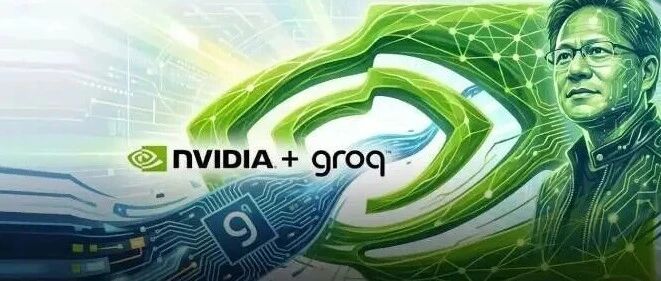
Core Insights - Nvidia has reached an acquisition agreement with AI chip startup Groq, valuing the company at $20 billion, providing substantial returns for Groq's investors and employees during the holiday season [1][4] - The acquisition model of "technology licensing + talent acquisition" often leaves some stakeholders at a disadvantage, as it typically involves the acquirer buying the core technology and absorbing most employees while retaining only a shell of the original company [1][4] - Investors are increasingly consulting lawyers to seek protective measures against unfair treatment in such transactions, with proposals to amend company bylaws to safeguard their economic interests [2][5] Group 1: Acquisition Details - Nvidia plans to acquire Groq's technology and absorb 90% of its employees, with the valuation reaching three times Groq's recent funding round valuation of $6.9 billion [1][4] - The acquisition has sparked concerns among venture capitalists regarding the fairness of such deals, prompting discussions about potential legal recourse [2][5] Group 2: Market Reactions and Future Implications - The risk of core talent poaching by large tech companies is rising, leading investors to advocate for non-solicitation clauses in agreements with employees and founders [2][5] - The remaining assets of Groq, including its inference computing platform GroqCloud, may attract potential buyers, indicating a possible turnaround for investors holding these assets [2][6] - Other companies involved in similar transactions are either continuing operations or seeking transformation, as seen with Microsoft and Google acquiring talent and technology from AI startups [6]
Nvidia’s $20 billion Groq play is a blueprint for 2026
Yahoo Finance· 2025-12-30 16:33
Core Insights - Nvidia is making a significant move by entering a $20 billion agreement with Groq, which is seen as a strategic capture rather than a traditional partnership [1][2] - The deal aims to enhance Nvidia's capabilities in inference technology, providing access to valuable intellectual property and skilled engineers [1][2] Group 1: Agreement Details - The agreement compensates Groq's stockholders and employees as if they were leaving the company, despite no equity changing hands [2][3] - Payments to Groq stockholders are structured as 85% upfront, 10% in mid-2026, and the remaining at the end of 2026 [3] Group 2: Employee Compensation - Approximately 90% of Groq's workforce is expected to transition to Nvidia, receiving cash for vested shares and Nvidia stock for unvested equity [5] - Employees who remain at Groq will still receive compensation for vested shares and a package tied to the company's future performance [5] Group 3: Strategic Implications - The deal reflects a broader trend in the tech industry where companies seek licensing and talent agreements to accelerate growth and navigate regulatory challenges [7]
海外宏观周报:假期成交清淡,市场趋于平静-20251229
China Post Securities· 2025-12-29 10:21
Macro Economic Overview - The US dollar has weakened significantly over the past year, with the dollar index dropping from a high of approximately 110 to around 98[1] - Factors driving this decline include rising uncertainty in US fiscal and trade policies, which has diminished the long-term attractiveness of dollar assets[1] - The Federal Reserve's interest rate cuts have been more aggressive than those of other major economies, leading to a narrowing interest rate differential[1] Short-term and Long-term Outlook - In the short term, the dollar has structural support; if the Fed pauses rate cuts in Q1 2026 as currently priced in by the market, it may alleviate downward pressure on the dollar[2] - AI-related capital expenditures are accelerating, with significant investments in data centers and infrastructure attracting cross-border capital inflows into US asset markets[2] - In the medium to long term, the dollar faces continued downward pressure due to potential declines in inflation and a loosening labor market, which may reinforce expectations for lower long-term interest rates[2] Risk Factors - Political instability (e.g., rising fiscal concerns in the UK and Japan), trade tensions, or a global economic slowdown could support demand for the dollar as a safe haven[3] - Unexpected strength in the US labor market or persistent inflation could delay the Fed's rate cuts[20]
良心老黄不搞硅谷资本家那套!Groq人均套现500万美元
量子位· 2025-12-29 04:32
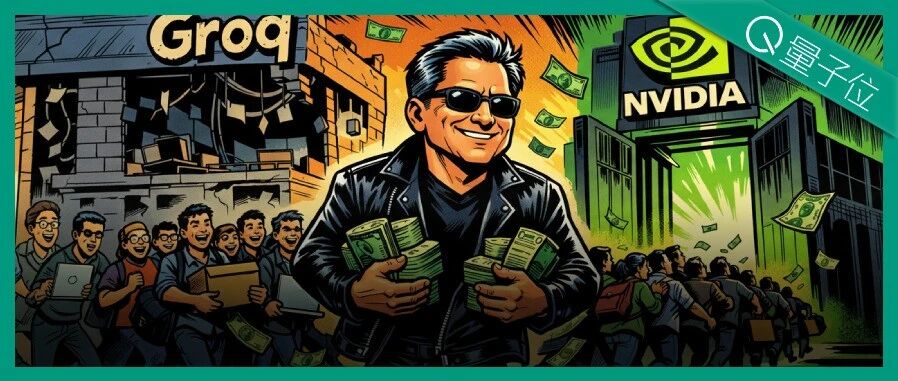
Core Viewpoint - Nvidia's acquisition of Groq for $20 billion is not just about technology but also involves significant compensation for Groq's employees and shareholders, effectively a "talent acquisition" strategy [2][10][19]. Group 1: Acquisition Details - Nvidia's acquisition includes not only technology rights but also a commitment to Groq's employees and shareholders, with a valuation that has tripled from previous estimates [3][19]. - 90% of Groq's team will be integrated into Nvidia, with each employee receiving an average of $5 million [4][20]. - Groq will continue to operate as an independent entity, with its cloud service platform GroqCloud remaining active [8]. Group 2: Employee and Shareholder Compensation - Employees will receive cash for vested shares and Nvidia stock for unvested shares, with a significant portion of the compensation being accelerated [11][12]. - Employees who have been with Groq for less than a year will still receive some compensation, as Nvidia waived the typical vesting cliff [15][16]. - Shareholders, including major investors like Disruptive and Blackstone, will receive dividends based on the $20 billion valuation [17][19]. Group 3: Market Context and Implications - The acquisition reflects a broader trend where companies prefer "acquisition-style hiring" to avoid antitrust scrutiny while gaining access to key technologies and talent [21][22]. - Nvidia's financial strength, with $60.6 billion in cash and short-term investments, enables such large-scale acquisitions [32]. - The deal signifies Nvidia's recognition of the need to adapt to changing AI technology landscapes, particularly in inference capabilities [44][45].
黄仁勋打开一个世界
投资界· 2025-12-26 09:41
Core Viewpoint - Nvidia announced a record-breaking $20 billion deal with AI chip startup Groq, which initially created a stir in Silicon Valley, but later clarified that it was a non-exclusive technology licensing agreement rather than an acquisition [2][3][4][5]. Group 1: Transaction Details - The $20 billion deal is Nvidia's largest ever, surpassing the $7 billion acquisition of Mellanox in 2019 [3]. - Groq will continue to operate independently, with its CFO Simon Edwards taking over as CEO, while key executives will join Nvidia to advance the licensed technology [10][13]. - The deal is characterized as an "acquihire," allowing Nvidia to acquire talent and core assets without triggering antitrust issues [7][14]. Group 2: Strategic Intent - Nvidia aims to integrate Groq's low-latency processors into its AI infrastructure to serve a broader range of AI inference and real-time workloads [25]. - Groq specializes in high-performance AI accelerator chip design, with its technology reportedly running large models 10 times faster than traditional solutions while consuming only one-tenth of the energy [25]. - The founder of Groq, Jonathan Ross, has a background as a core developer of Google's Tensor Processing Unit (TPU), which is a major competitor to Nvidia's GPUs [25][26]. Group 3: Financial Context - As of October 2025, Nvidia has $606 billion in cash and short-term investments, a nearly fivefold increase from $133 billion at the beginning of 2023, providing ample resources for further acquisitions [27]. - Nvidia has also made recent investments in AI and energy infrastructure companies, including Crusoé and Cohere, and plans to invest up to $100 billion in OpenAI and $5 billion in Intel [28][29]. Group 4: Industry Trends - Groq is not the only AI chip startup gaining attention; Intel is in talks to acquire AI chip startup SambaNova, and Cerebras has withdrawn its IPO application to pursue over $1 billion in funding [31][33]. - The trend of major tech companies absorbing potential disruptors through capital means may be narrowing the window for other players in the industry [35].
未直接并购避监管?英伟达200亿美元引进Groq推论技术等
Ju Chao Zi Xun· 2025-12-25 13:13
Core Insights - Nvidia has agreed to acquire certain assets of startup Groq for $20 billion, marking the largest asset and technology transaction in Nvidia's history [1] - The deal includes a non-exclusive technology licensing agreement for Groq's inference chip technology and the recruitment of key executives, including Groq's founder Jonathan Ross [1][2] - Groq recently completed a funding round with a valuation of approximately $6.9 billion, raising $750 million from investors including Blackstone and Samsung Electronics [1] Group 1 - The transaction was disclosed by Alex Davis, CEO of the venture capital firm that led Groq's recent funding round, indicating that negotiations were relatively brief [1] - Nvidia's CEO Jensen Huang stated that the integration of Groq's low-latency processors will support a broader range of real-time and inference workloads within Nvidia's AI factory architecture [2] - Groq will continue to operate as an independent company post-transaction, with its CFO Simon Edwards taking over as CEO, and its cloud service GroqCloud is not included in the deal [2]
200亿美元,英伟达拿下芯片初创公司Groq推理技术授权
Feng Huang Wang· 2025-12-25 06:12
Core Insights - Nvidia has entered a non-exclusive licensing agreement with Groq, acquiring access to Groq's chip technology and bringing key personnel, including CEO Jonathan Ross, into Nvidia [1][2] - Nvidia reportedly invested approximately $20 billion in Groq, which will continue to operate independently with Simon Edwards as CEO [1] - Groq specializes in AI hardware and inference solutions, with its products including the LPU chip and GroqCloud platform, and was valued at $6.9 billion in its latest funding round [1] Technology and Market Impact - Groq's chips feature embedded memory, allowing for faster production and deployment compared to GPUs, which are typically more power-hungry [2] - Nvidia plans to integrate Groq's low-latency processors into its AI factory architecture to enhance capabilities for AI inference and real-time workloads [2] - The move is part of Nvidia's strategy to solidify its position in the chip market and accelerate AI software applications, following significant investments in key partners and potential competitors [2] Competitive Landscape - The announcement comes amid discussions about Google's TPU potentially posing a threat to Nvidia's chips, with Meta considering deploying TPUs in its data centers by 2027 [3] - Major tech companies are investing heavily in acquiring top AI talent through various licensing agreements to mitigate antitrust scrutiny [3] - Bernstein analysts noted that while Nvidia faces potential antitrust risks, structuring the deal as a non-exclusive license may help maintain the appearance of competition [3] Stock Performance - On the day of the announcement, Nvidia's stock price fell by 0.32% to $188.61 per share, with a total market capitalization of $4.58 trillion [4]
突发!黄仁勋 200 亿美元带走“TPU 核心班底”
程序员的那些事· 2025-12-25 04:26
Core Viewpoint - Nvidia announced a record $20 billion cash deal with AI chip startup Groq, which initially created a stir in Silicon Valley, marking Nvidia's largest transaction to date, surpassing the $7 billion acquisition of Mellanox in 2019 [2][3]. Group 1: Transaction Details - Shortly after the announcement, both Nvidia and Groq clarified that the deal was not an acquisition but a non-exclusive technology licensing agreement [6][7]. - The transaction involves technology licensing and the integration of Groq's core team into Nvidia, while Groq will continue to operate independently [10][13]. - Groq's founders and key executives will join Nvidia to advance the application of the licensed technology [13]. Group 2: Strategic Intent - Nvidia's CEO Jensen Huang indicated that the strategic intent behind the deal is to integrate Groq's low-latency processors into Nvidia's AI infrastructure to support broader AI inference and real-time workloads [27]. - Groq specializes in high-performance AI accelerator chip design, particularly in the inference domain, with its language processing unit (LPU) claimed to be ten times faster than traditional solutions while consuming only one-tenth of the energy [28][30]. Group 3: Market Context - The deal reflects a trend in the tech industry known as "acqui-hire," where companies acquire talent and technology while avoiding traditional merger regulatory hurdles [16]. - Other tech giants have engaged in similar transactions, indicating a competitive landscape where major players are absorbing potential disruptors [17][45]. - Nvidia's cash reserves have significantly increased, providing ample resources for further acquisitions and investments in AI and energy infrastructure [34][35]. Group 4: Industry Developments - Other AI chip startups, such as SambaNova and Cerebras, are also in the spotlight, with potential acquisition interests from major companies like Intel [38][41]. - The competitive environment is tightening as large firms leverage capital to absorb emerging players, potentially narrowing the window for other competitors [45].