
收购式招聘

Search documents
黄仁勋,化身猎头
投资界· 2026-01-21 08:58
Core Insights - Nvidia has become the world's most valuable company and is focusing on talent acquisition and strategic acquisitions to sustain its growth trajectory [1][2] - The company aims to reshape its "second growth curve" by systematically hiring key personnel and acquiring startups to integrate core technologies and expertise [2][19] Talent Acquisition Strategy - Nvidia has significantly expanded its management team by hiring executives from major tech companies like Google and Microsoft, enhancing capabilities in market strategy, human resources, quantum computing, and cybersecurity [3][11][15] - The appointment of Alison Wagonfeld as the first Chief Marketing Officer (CMO) marks a strategic move to unify marketing efforts and strengthen market narratives [5][6] - Kristi Major, with over 13 years of experience at HPE, has been brought on board to lead human resources, indicating a focus on talent management [9][10] - Key figures in quantum computing, such as Krysta Svore from Microsoft, have been recruited to accelerate Nvidia's quantum research initiatives [11][14] Acquisition Strategy - Nvidia employs a "hire through acquisition" strategy, acquiring startups to directly absorb their core teams and technologies, which allows for rapid integration of talent and innovation [19][20] - The acquisition of Nexusflow in June 2024 exemplifies this strategy, bringing in key personnel to enhance capabilities in AI and efficient reasoning [20][22] - Another notable acquisition is CentML, aimed at improving CUDA toolchain efficiency, which was completed for over $400 million [23][24] - The acquisition of LeptonAI for several hundred million dollars further strengthens Nvidia's position in cloud computing and AI platforms [27][29] - The purchase of Enfabric, valued at over $900 million, enhances Nvidia's ability to connect GPUs into unified computing systems, crucial for its transition from chip sales to system sales [32][33] Strategic Vision - Nvidia's frequent personnel changes and acquisitions illustrate a clear strategic vision to evolve from a GPU hardware supplier to a comprehensive "soft and hard integrated" system-level platform [40] - The company's focus on AI inference optimization, agent deployment, and computational resource scheduling positions it to dominate existing markets while preparing for future AI advancements in quantum computing, data services, and cybersecurity [40]


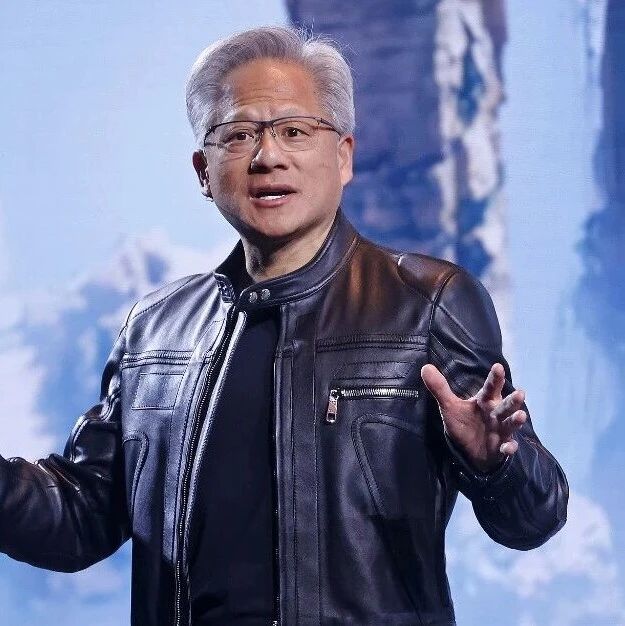
巨额「收编」Groq,英伟达意欲何为?
雷峰网· 2026-01-12 03:34
Core Viewpoint - The acquisition of Groq by NVIDIA for $20 billion is primarily an investment in Jonathan Ross, the founder and key innovator behind Groq's LPU chip technology, which is expected to significantly enhance NVIDIA's capabilities in the AI inference market [2][3][6]. Group 1: Acquisition Details - NVIDIA's acquisition of Groq is characterized as a strategic move to integrate both talent and technology, with $13 billion paid upfront and the remainder tied to employee equity incentives [5][6]. - Jonathan Ross, a key figure in the development of Google's TPU, has created the LPU architecture, which offers a 5-10 times speed advantage over GPUs and costs 1/10 of NVIDIA's GPU solutions [3][6][12]. - The acquisition is seen as a way for NVIDIA to secure a leading position in the inference market, which is expected to grow significantly, as the demand for inference capabilities surpasses that for training [3][4]. Group 2: Market Context and Implications - The AI industry is transitioning from a "scale competition phase" to an "efficiency value exchange phase," with inference demand becoming a focal point [3]. - Groq's LPU technology is positioned to address the core needs of the inference market, emphasizing low latency, high energy efficiency, and cost-effectiveness, which are critical for future AI applications [6][17]. - The acquisition is part of NVIDIA's broader strategy to maintain its dominance in the AI sector, especially as competitors like Google and Meta seek to diversify their computing power sources [17][18]. Group 3: Future Outlook - NVIDIA plans to integrate LPU technology into its CUDA ecosystem, ensuring compatibility while enhancing performance for inference tasks [19][20]. - The next-generation Feynman GPU may incorporate Groq's LPU units, indicating a shift towards a more diverse architecture tailored for specific inference scenarios [20][21]. - The successful integration of LPU technology could significantly lower production barriers for AI chips, potentially disrupting the current market dynamics dominated by NVIDIA's GPU architecture [18][22].

公司卖给英伟达,人均喜提3000万
投中网· 2026-01-05 07:32
Core Viewpoint - Nvidia has agreed to acquire Groq, a high-performance AI accelerator chip design company, for $20 billion in cash, marking Nvidia's largest transaction to date, nearly tripling Groq's previous valuation of $6.9 billion within three months [3][7]. Group 1: Acquisition Details - The acquisition involves key Groq executives, including founder and CEO Jonathan Ross, joining Nvidia while Groq will continue to operate as an independent entity [4]. - Groq, founded in 2016 by former Google engineers, focuses on high-performance AI accelerator chip design, particularly for inference tasks [4][11]. - Nvidia's acquisition strategy is seen as a form of "acqui-hire," allowing the company to gain talent and technology while avoiding potential regulatory hurdles associated with traditional acquisitions [4][8]. Group 2: Financial Implications - Nvidia's offer includes generous compensation for Groq's shareholders, with approximately 85% of the payment made in cash upfront, and the remaining distributed over the next few years [9]. - Groq employees, approximately 600, will receive substantial financial incentives, with potential equity values estimated at $5 million per employee [4][9]. Group 3: Strategic Significance - The acquisition is viewed as a strategic move to strengthen Nvidia's competitive edge in the GPU market, especially as AI model focus shifts from training to inference, where traditional GPUs face limitations [4][12]. - Nvidia's purchase of Groq is compared to Microsoft's acquisition of GitHub, emphasizing its strategic importance in the AI landscape [11]. - The deal is expected to lock in customers, as AI labs now face the choice of either purchasing Nvidia GPUs or adopting Groq's LPU technology, thereby consolidating Nvidia's market position [12]. Group 4: Industry Trends - The AI chip market is evolving, with a clear divide between GPU-centric and non-GPU architectures, as companies like Google and Groq push for alternatives to traditional GPUs [14]. - The global AI chip market is projected to reach $413.8 billion by 2030, with non-GPU architectures expected to capture over 21% of the market share [15]. - In China, the trend towards non-GPU solutions is accelerating, with the market for non-GPU accelerated servers expected to approach 50% by 2029 [16].

黄仁勋「收购式」抢人继续:20多亿美金“买走”Mobileye创始人AI新团队
3 6 Ke· 2025-12-31 07:15
Core Insights - NVIDIA is reportedly planning to acquire Israeli AI startup AI21 Labs for approximately $2 to $3 billion to secure over 200 top AI talents, emphasizing a trend of "talent acquisition" through mergers [1][24][25] - AI21 Labs, founded in 2017, is one of the few companies in Israel developing large language models, with a current valuation of around $1.4 billion [2][17] - The founders of AI21 Labs have significant entrepreneurial and academic backgrounds, including Amnon Shashua, who co-founded Mobileye, and Yoav Shoham, a former chief scientist at Google [3][11][15] Company Overview - AI21 Labs focuses on developing foundational models and providing customized model services for enterprises, with its Jurassic series and the recently launched Jamba model [17][19] - The company has previously launched products like Wordtune and Wordtune Read, but has shifted focus to AI reasoning with the introduction of Maestro, an intelligent agent orchestration system [19][22] Strategic Implications - The acquisition aligns with NVIDIA's strategy to enhance its capabilities in the AI sector by integrating AI21 Labs' expertise in model development and application solutions [24][26] - NVIDIA's recent acquisitions reflect a broader strategy of "acquisition-based hiring," allowing the company to bypass traditional regulatory hurdles associated with business mergers [25][26] - This acquisition is part of NVIDIA's larger strategy to establish a comprehensive presence in the AI industry, integrating hardware, software, and application solutions [26][27]

黄仁勋「收购式」抢人继续:20多亿美金“买走”Mobileye创始人AI新团队
量子位· 2025-12-31 05:28
Group 1 - Nvidia is reportedly planning to acquire Israeli AI startup AI21 Labs for $2-3 billion to recruit over 200 top AI talents [1][2][40] - AI21 Labs, founded in 2017, specializes in developing large language models and has a strong founding team with notable backgrounds in AI and technology [3][7][27] - The company's valuation in 2023 is approximately $1.4 billion, with a recent funding round led by Nvidia and Google raising $300 million [4][6] Group 2 - The acquisition reflects Nvidia's strategy of "talent acquisition" rather than traditional business mergers, allowing it to bypass strict regulations on business monopolies [41][42] - AI21 Labs has developed its own models, including the Jurassic series and the recently launched Jamba, which is an open-source large model [28][29] - The partnership between Nvidia and AI21 Labs aims to combine Nvidia's computational infrastructure with AI21's application solutions, enhancing enterprise-level generative AI deployment [36][50] Group 3 - Nvidia's recent acquisitions, including Groq, demonstrate a pattern of acquiring companies primarily for their talent rather than their technology [43][45] - The acquisition of AI21 Labs is expected to further solidify Nvidia's strategic position in Israel, integrating hardware, software, and AI applications [50][51] - Nvidia's ambition extends beyond being a chip company, as it seeks to control the entire AI industry chain through strategic acquisitions [52][54]
时报观察丨科技巨头密集并购 抢占技术人才生态高地
证券时报· 2025-12-31 00:34
Core Viewpoint - The article discusses Meta's recent acquisition of AI startup Manus for several billion dollars, following its $15 billion acquisition of Scale AI, highlighting a trend among tech giants like Nvidia, Google, and Microsoft to acquire companies in the AI sector to secure technology, talent, and ecosystem advantages [1][2]. Group 1: Acquisition Strategy - The core logic of acquisitions is to use capital to gain time and overcome innovation bottlenecks, as seen with Meta's acquisition of Scale AI, which provides essential infrastructure for training large models [1]. - Manus's technology, capable of processing 147 trillion tokens, addresses Meta's gaps in consumer and enterprise-level intelligent tools [1]. Group 2: Talent Acquisition - The ongoing AI talent shortage makes acquisitions an efficient method for "talent grabbing," allowing companies to directly integrate top teams without the inefficiencies of traditional recruitment [2]. - Meta's acquisition of Scale AI not only secured its technology but also brought in its 28-year-old founder, Alexander Wang, to lead a superintelligence project [2]. Group 3: Strategic Intent - The deeper strategic intent behind these acquisitions is to build ecological barriers, as the competition in AI has shifted from single-point technology battles to ecosystem confrontations [2]. - Meta's acquisitions create strategic synergies that can effectively counter competitors like Microsoft and Google, while controlling key technology nodes to avoid being in a vulnerable position [2]. Group 4: Integration Challenges - The success of large acquisitions is contingent on post-merger integration capabilities, as the essence of this gamble is to lock in future technological directions and core talent [2].


科技巨头密集并购 抢占技术人才生态高地
Xin Lang Cai Jing· 2025-12-30 19:09
Core Viewpoint - The article discusses Meta's recent acquisition of AI startup Manus for several billion dollars, following its earlier $15 billion acquisition of Scale AI, highlighting a trend among tech giants to acquire companies in the AI sector to secure technology, talent, and ecosystem advantages [1][2]. Group 1: Acquisition Strategy - Meta's acquisition of Scale AI is aimed at addressing its shortfall in high-quality data supply, as Scale AI provides essential infrastructure for training large models through its integrated approach of human labeling, AI quality inspection, and synthetic data [1]. - The acquisition of Manus brings in its general AI Agent technology, which has the capability to process 147 trillion tokens, filling gaps in Meta's consumer and enterprise-level smart tools [1]. Group 2: Talent Acquisition - The ongoing AI talent shortage makes acquisitions an efficient method for securing top talent, as seen with Meta's acquisition of Scale AI, which included bringing in its 28-year-old founder, Alexander Wang, to lead a superintelligence project [2]. - The acquisition of Manus also retained its founder, Xiao Hong, and core R&D team, appointing him as Vice President, exemplifying a "recruitment through acquisition" strategy that bypasses traditional recruitment inefficiencies [2]. Group 3: Strategic Intent - The acquisitions are part of a broader strategy to build ecological barriers, as the competition in AI has shifted from individual technology to ecosystem-level confrontations, allowing Meta to effectively counter competitors like Microsoft and Google [2]. - By controlling key technological nodes through these acquisitions, Meta aims to avoid being in a vulnerable position where it could be "choked" by competitors [2]. Group 4: Integration Challenges - The article notes that large-scale acquisitions are not guaranteed successes, emphasizing that the ability to integrate acquired companies is crucial for determining the success of these investments [2]. - The essence of this strategy is to use capital to secure future technological directions and core talent, aiming to occupy an irreplaceable ecological position in the rapidly evolving AI landscape [2].

良心老黄不搞硅谷资本家那套!Groq人均套现500万美元
量子位· 2025-12-29 04:32
Core Viewpoint - Nvidia's acquisition of Groq for $20 billion is not just about technology but also involves significant compensation for Groq's employees and shareholders, effectively a "talent acquisition" strategy [2][10][19]. Group 1: Acquisition Details - Nvidia's acquisition includes not only technology rights but also a commitment to Groq's employees and shareholders, with a valuation that has tripled from previous estimates [3][19]. - 90% of Groq's team will be integrated into Nvidia, with each employee receiving an average of $5 million [4][20]. - Groq will continue to operate as an independent entity, with its cloud service platform GroqCloud remaining active [8]. Group 2: Employee and Shareholder Compensation - Employees will receive cash for vested shares and Nvidia stock for unvested shares, with a significant portion of the compensation being accelerated [11][12]. - Employees who have been with Groq for less than a year will still receive some compensation, as Nvidia waived the typical vesting cliff [15][16]. - Shareholders, including major investors like Disruptive and Blackstone, will receive dividends based on the $20 billion valuation [17][19]. Group 3: Market Context and Implications - The acquisition reflects a broader trend where companies prefer "acquisition-style hiring" to avoid antitrust scrutiny while gaining access to key technologies and talent [21][22]. - Nvidia's financial strength, with $60.6 billion in cash and short-term investments, enables such large-scale acquisitions [32]. - The deal signifies Nvidia's recognition of the need to adapt to changing AI technology landscapes, particularly in inference capabilities [44][45].
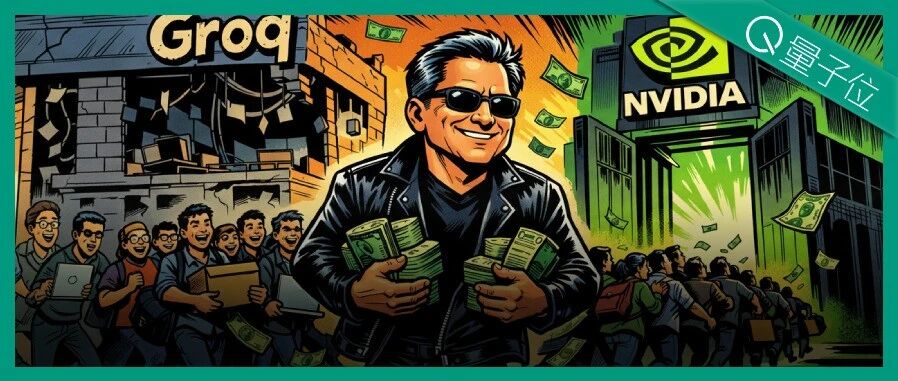
英伟达“收编”芯片独角兽Groq,欲补齐推理算力拼图?
2 1 Shi Ji Jing Ji Bao Dao· 2025-12-25 12:08
Core Viewpoint - Nvidia has clarified that it has not acquired Groq but has obtained a non-exclusive license for Groq's intellectual property and hired key engineering talent from Groq to enhance its AI technology offerings [1][2]. Group 1: Nvidia's Engagement with Groq - Nvidia has entered into a non-exclusive licensing agreement with Groq regarding its inference technology, with Groq's founder and key team members joining Nvidia to advance the licensed technology [1][2]. - Groq will continue to operate independently, with Simon Edwards taking over as CEO, and its cloud services will remain unaffected by this collaboration [1][2]. - Nvidia's response counters previous reports claiming a $20 billion acquisition of Groq, emphasizing the focus on talent acquisition and technology licensing rather than outright purchase [1][2]. Group 2: Groq's Technology and Market Position - Groq, founded by former Google employee Jonathan Ross, specializes in AI chips for cloud computing, having developed the GroqChip capable of achieving 750 TOPS with 16 interconnected chips [2][3]. - The company has introduced the "Language Processing Unit" (LPU) concept, claiming its chips are ten times faster than Nvidia's H100 at a fraction of the cost, addressing the demand for real-time AI inference services [2][3]. - Groq's technology utilizes SRAM, which is significantly faster than the memory used in GPUs, allowing for quicker production and deployment of its chips [2][3]. Group 3: Market Dynamics and Competitive Landscape - Groq has rapidly gained attention in the AI chip market, achieving a valuation of $6.9 billion after multiple funding rounds, positioning itself as a strong competitor to Nvidia in the inference market [3][6]. - Nvidia maintains a leading position in the training segment of AI but faces increasing competition in inference from various companies, including Groq and Cerebras, which are exploring different architectures to capture market share [3][6]. - The market is witnessing a shift in focus from training to inference, providing opportunities for companies like Groq to capitalize on their technological advancements [3][6]. Group 4: Strategic Implications for Nvidia - By integrating Groq's technology and talent, Nvidia aims to strengthen its capabilities in the AI inference domain, potentially reducing reliance on external suppliers like TSMC for advanced packaging and memory [6][7]. - The acquisition of Groq's engineering team is seen as a strategic move to enhance Nvidia's existing ecosystem and address gaps in real-time inference capabilities [7]. - This transaction reflects a growing trend in Silicon Valley towards "acqui-hire deals," where companies acquire startups primarily for their talent rather than their products [8].