阿里千问APP

Search documents
7.9元/月,AI进入“百亿补贴”时代
Guan Cha Zhe Wang· 2026-02-27 10:46
Core Insights - Alibaba's Qianwen APP launched a "Spring Festival 3 billion free order" campaign, leveraging a 25 yuan no-threshold coupon, resulting in a 940% increase in daily active users (DAU) to 73.52 million [1] - The competition in the AI programming environment (IDE) escalated as Alibaba Cloud launched a Coding Plan starting at 7.9 yuan/month, significantly undercutting industry prices and bundling several flagship domestic programming models [1] - Major internet companies are applying their "hundred billion subsidy" strategies from e-commerce and delivery sectors to the AI model market, indicating a fierce competition that has transitioned from consumer to business environments [1] Industry Developments - The Coding Plan for domestic AI models faced a price increase, with Zhizhu's GLM Coding Plan experiencing a 30% price hike and the overseas version increasing by 60%-100% shortly after its launch [2] - Following the GLM-5 release, Zhizhu acknowledged operational errors, including insufficient transparency and slow rollout, leading to user dissatisfaction and refund requests [3] - Alibaba Cloud became the first to offer GLM-5 cloud services, incorporating it into a low-cost package, directly challenging Zhizhu's pricing strategy [3][4] Competitive Landscape - The rapid decline in pricing for AI coding services is evident, with Alibaba's Coding Plan at 7.9 yuan/month compared to competitors' higher rates, showcasing aggressive market positioning [4] - Other major players like Baidu and ByteDance have also entered the AI coding space with competitive pricing, indicating a collective strategy to capture the developer market [4][5] - The focus on coding tools is driven by the high token consumption of programmers, making them a lucrative target for AI service providers [5] Structural Challenges - The reliance on open-source models like GLM-5 raises concerns about pricing power shifting to those with computational resources, highlighting a structural contradiction in the industry [7]



互联网巨头AI超级入口的第一战场
Sou Hu Cai Jing· 2026-02-16 20:06
Core Viewpoint - The article discusses the intense competition among major internet companies during the Spring Festival, particularly focusing on the rise of AI applications and the strategic battles for user engagement and market share in the AI sector [3][4][37]. Group 1: AI Competition Landscape - The Spring Festival has become a battleground for internet giants to compete for traffic, with significant events like the 2015 payment war and the 2020 short video competition [3][4]. - In 2025, a new player, DeepSeek, emerged, surpassing existing applications in daily active users, indicating a shift in the AI market landscape [4]. - By 2026, the competition intensified, with major companies preparing extensively for the Spring Festival, marking it as a critical moment for AI applications [4][5]. Group 2: Model Updates and Innovations - Major companies like Baidu, Alibaba, and ByteDance have updated their AI models recently, with Baidu's Wenxin 5.0 featuring 2.4 trillion parameters and advanced multi-modal capabilities [6][8]. - Alibaba's Qwen3-Max-Thinking model, with over a trillion parameters and 36 trillion tokens of pre-training data, enhances its tool-calling capabilities [8][10]. - ByteDance launched several models, including Seedance 2.0 and Seedream 5.0 Lite, which significantly improved video and image generation capabilities [10][14][15]. Group 3: AI Super Entry Points - Companies are focusing on creating AI super entry points that integrate their core business models, such as Baidu's AI+search and Alibaba's AI+e-commerce [21][25]. - Alibaba's launch of the Qwen APP aims to enhance the e-commerce experience by integrating various services into a single platform [25][28]. - Tencent's Yuanbao group chat feature incorporates AI to enhance user interaction and engagement, including a cash red envelope feature during the Spring Festival [30][32]. Group 4: Cash Incentives and User Engagement - Major companies are investing heavily in cash incentives to attract users, with Tencent announcing a 1 billion yuan cash giveaway and Baidu offering 500 million yuan in red envelopes [35][37]. - The competition for user attention and brand recognition is driving these cash distribution strategies, as companies aim to establish their AI super entry points [37].



计算机行业双周报(2026/1/30-2026/2/12):千问免单活动致服务器宕机,关注AI算力产业链投资机遇-20260213
Dongguan Securities· 2026-02-13 08:42
Investment Rating - The report maintains an "Overweight" rating for the computer industry, expecting the industry index to outperform the market index by over 10% in the next six months [30]. Core Insights - The report highlights the recent surge in AI-related activities, particularly the "Spring Festival Treat Plan" by Alibaba's Qianwen APP, which led to a significant increase in AI-driven orders, indicating a growing demand for AI computing power [3][27]. - The report emphasizes the potential investment opportunities in the AI computing power supply chain, driven by the increasing adoption of AI applications by major tech companies [3][27]. Summary by Sections 1. Industry Performance Review - The SW computer sector experienced a cumulative decline of 0.49% over the past two weeks, outperforming the CSI 300 index by 0.23 percentage points, ranking 20th among 31 sectors [11]. - In February, the sector rose by 1.50%, surpassing the CSI 300 index by 1.22 percentage points, and has increased by 8.55% year-to-date, outperforming the CSI 300 index by 6.61 percentage points [11][16]. 2. Valuation Situation - As of February 12, 2026, the SW computer sector's PE TTM (excluding negative values) stands at 59.40 times, placing it in the 96.39th percentile over the past five years and the 91.04th percentile over the past ten years [21][22]. 3. Industry News - Key developments include the launch of the Seedance 2.0 video generation model by Doubao, which enhances video content creation capabilities [22]. - Alibaba's Qianwen APP achieved over 1.2 billion AI-driven orders within six days of launching its promotional campaign, highlighting the rapid growth in AI application usage [22]. - Major tech companies, including Amazon, Google, Microsoft, and Meta, are projected to increase their capital expenditures to $660 billion in 2026, a 60% increase from 2025 [22]. - MiniMax introduced its M2.5 model, significantly reducing operational costs while maintaining competitive performance [22]. - Google is integrating AI shopping features into its search engine, allowing direct purchases through AI-driven interactions [22]. 4. Company Announcements - Notable company announcements include: - Guiding Compass reported a 40.39% increase in revenue for 2025, reaching 2.146 billion yuan [25]. - Zhongke Shuguang plans to raise up to 8 billion yuan through convertible bonds for AI-related projects [25]. - Unisplendour announced a plan to raise up to 5.57 billion yuan for acquisitions and R&D [26]. 5. Weekly Perspective - The report suggests continued monitoring of Alibaba and other AI giants' strategies in the AI application space, as their growth is expected to drive demand for computing power [27]. 6. Recommended Stocks - The report lists several companies to watch, including: - GuoDianYunTong (002152.SZ) for its stable growth in fintech and AI sectors [28]. - Digital China (000034.SZ) as a key player in the domestic computing demand [28]. - Inspur Information (000977.SZ) for its leadership in AI server markets [28].
未知机构:中信证券传媒分众传媒草根调研2026M2W2数据总结根据-20260213
未知机构· 2026-02-13 01:55
Summary of Conference Call Records Company and Industry Involved - The analysis focuses on **分众传媒 (Focus Media)** and the **advertising industry**, particularly in the context of digital and AI-driven advertising strategies. Core Insights and Arguments - In the week of 26M2W2, the number of unique advertisers on Focus Media's Shanghai network decreased to **17**, a decline from the previous week (26M2W1) [1] - Despite the decrease in the number of advertisers, there was an increase in the concentration of advertising spend, with **阿里千问 (Alibaba Qianwen APP)** significantly increasing its advertising efforts [1] - The structure of advertisers showed that major internet platforms like **京东 (JD.com)** and **淘宝 (Taobao)** maintained their advertising presence, focusing on promotions and traffic acquisition leading up to the Spring Festival, with overall advertising duration accounting for nearly **15%** [1] - The **daily consumer goods sector** remained active, with a focus on personal care and functional consumer products. Brands like **杜蕾斯 (Durex)**, **洒脱机器人 (Sato Robot)**, and **娇韵诗 (Clarins)** led in advertising share, while **金纺 (Jin Fang)** maintained stable exposure [1] - In the **food and beverage sector**, there was a concentration on single products, with **妙可蓝多 (Miaokelando)** accounting for over **10%** of advertising duration, and **柚香谷宋柚汁 (Youxiang Valley Song Grapefruit Juice)** close to **10%** as well [1] Additional Important Content - The standout highlight of the week was the **AI application advertising** by 阿里千问, which accounted for over **30%** of advertising duration, marking it as the core advertiser of the week. This indicates a critical window for traffic competition as major companies ramp up investments in AI application operations to enhance user scale and engagement [2] - 阿里千问 has officially launched offline channel advertising, indicating that leading internet companies are entering a phase of aggressive customer acquisition and brand awareness competition in the AI application sector [2] - As competition among major AI product companies intensifies, it is anticipated that marketing budgets for offline channels related to AI applications will likely increase [2] - A risk warning was issued stating that the data represents sampling results from grassroots research and may contain statistical biases [3]

Seedance爆火背后:真假难辨和个人隐私受关注,AI创作如何守住边界?
YOUNG财经 漾财经· 2026-02-11 12:32
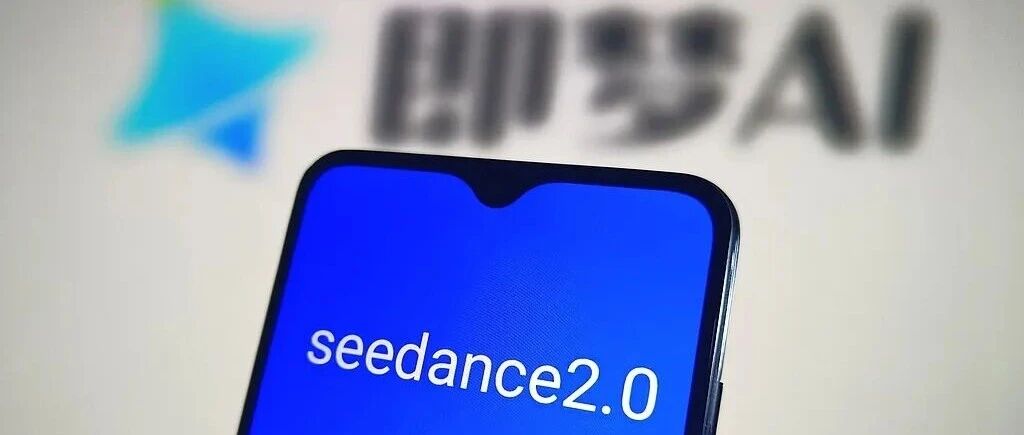
Core Viewpoint - The article discusses the rapid rise of Seedance 2.0, an AI video generation model by ByteDance, highlighting its capabilities and the concerns surrounding authenticity and personal privacy in AI-generated content [2][3]. Group 1: Seedance 2.0 Features and Impact - Seedance 2.0 has gained significant attention for its ability to generate high-quality videos from multi-modal inputs, including text and images, marking a leap in AI's understanding of multi-modal information [2][3]. - The product is described as a "game-killer" by industry experts, indicating its potential to redefine video production and editing standards [3]. - The model's ability to produce videos with professional-level editing quality without precise instructions on cuts suggests a blurring line between AI-generated and human-created content [5]. Group 2: Concerns and Recommendations - There are rising concerns about the potential for fake videos to create trust issues, especially as AI-generated content becomes indistinguishable from real footage [4][5]. - Experts recommend that individuals educate their families about the risks of AI-generated content, emphasizing the need for cross-verification of video authenticity [4]. - The platform has implemented restrictions on using real human images or videos as references to mitigate misuse, reflecting a responsible approach to AI development [7][8]. Group 3: Industry Context and Challenges - The article notes that the AI industry is grappling with balancing technological innovation and compliance with data protection and copyright laws [7][8]. - The training of large models like Seedance 2.0 relies on vast amounts of publicly available data, raising questions about content ownership and privacy [8]. - The ongoing development of AI technologies often outpaces the establishment of industry regulations, necessitating a collaborative effort to address privacy and security concerns [8].
千问掀起AI购物风暴,率先“撕开”AI生活方式的口子
Nan Fang Du Shi Bao· 2026-02-09 13:17
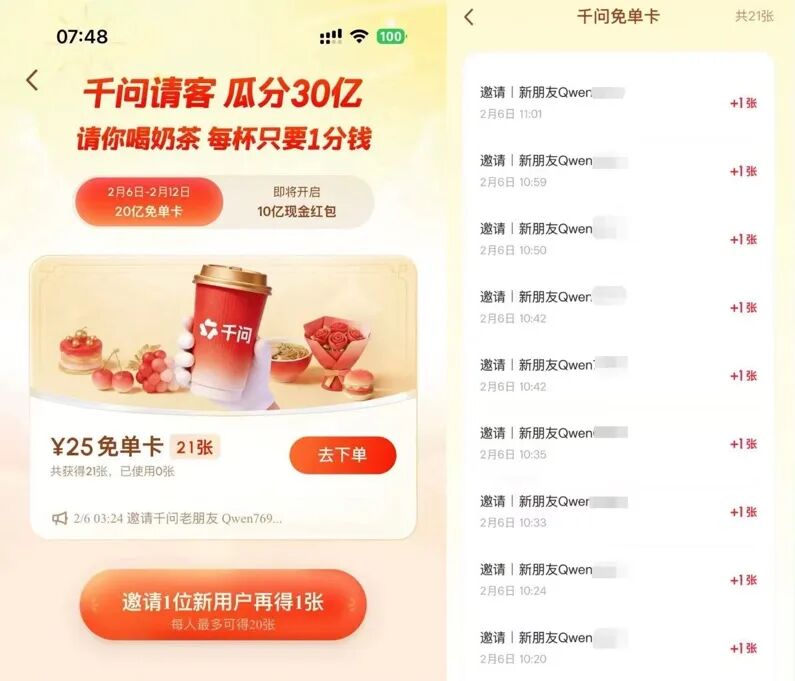
Core Insights - The article highlights the significant impact of the Qianwen app's promotional campaign, which offered free milk tea, demonstrating the integration of AI into everyday life and consumer behavior [1][2][4] Group 1: Promotional Campaign - Qianwen app launched a "Spring Festival 30 billion free order" campaign, achieving over 10 million orders within 9 hours, marking the largest investment in a Spring Festival promotion by Alibaba [2][3] - The campaign aimed to invite the public to experience a new lifestyle with AI, showcasing its practical applications in daily consumption [2][4] Group 2: AI Integration - The Qianwen app has evolved from a conversational AI to a functional assistant capable of executing tasks, such as ordering food and planning travel, indicating a shift towards practical AI applications in daily life [4][8] - The app's integration with Alibaba's ecosystem allows it to coordinate multiple services, enhancing user experience and demonstrating AI's capabilities beyond mere conversation [4][9] Group 3: Market Comparison - The article contrasts the promotional strategies of Chinese companies like Qianwen with those in the West, emphasizing the direct and accessible approach of offering free products to engage users with AI technology [8][9] - It notes that Qianwen's method of introducing AI to everyday consumers is effective in familiarizing them with AI's potential, thus paving the way for broader acceptance and usage [8][9] Group 4: Future Trends - The ongoing AI promotional campaigns are seen as a nationwide experiment to validate AI's role in daily life, with the potential to change consumer behavior and lifestyle in the coming decade [9] - Alibaba's proactive investment in AI technology and its applications positions it as a leader in shaping future consumer experiences with AI [9]
宇宙人(1923期)我国成功发射可重复使用试验航天器;马斯克官宣"月球优先"战略:10年建自给自足城市;卫讯Q3扭亏净利2500万美元
Sou Hu Cai Jing· 2026-02-09 13:15
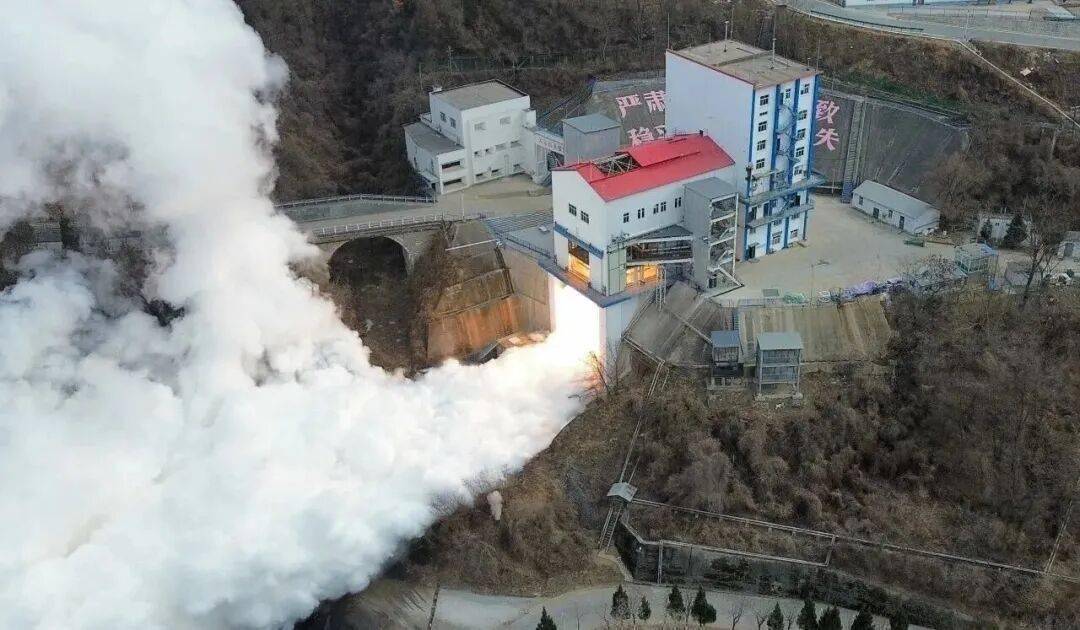
Group 1: Space Launch and Technology Development - China successfully launched a reusable experimental spacecraft on February 7, 2026, using the Long March 2F rocket, aiming to lay the foundation for low-cost space transportation [2] - The average launch cost of expendable rockets is currently between $110 million and $180 million, while fully reusable technology could reduce costs to between $2 million and $5 million, significantly promoting the commercialization of space [2] - The successful testing of the LOX-RP1 engine at the Fengzhou test site marks a significant advancement in testing capabilities, providing strong support for major space projects in China [3][5] Group 2: SpaceX Strategic Shift - Elon Musk announced a strategic shift for SpaceX, focusing on building a self-sustaining city on the Moon within 10 years, while delaying Mars city plans to over 20 years due to the logistical challenges of interplanetary travel [13][15] - The Moon city concept emphasizes self-sufficiency through robotics and automation, aligning with SpaceX's mission to extend human consciousness and life beyond Earth [15] - SpaceX has completed concept validations for using lunar regolith for construction materials and extracting oxygen and water, which are crucial for the Moon city project [15] Group 3: Satellite Communication Developments - The FCC approved Logos' deployment of 4,178 low Earth orbit satellites, expanding from an initial request of 3,960, indicating increasing competition in the satellite internet sector [18][20] - Logos' satellite constellation is designed for enterprise and government users, focusing on anti-jamming and secure communication capabilities, differentiating it from consumer-focused networks like Starlink [20][21] - Viasat reported a net profit of $25 million for Q3 2026, reversing a loss from the previous year, driven by growth in its defense and advanced technology sectors, while its communication services segment showed mixed results [22][24] Group 4: Robotics and AI Innovations - Boston Dynamics' Atlas humanoid robot has made significant advancements, now capable of performing continuous backflips, showcasing enhanced dynamic balance and agility [28]
微信恢复千问、元宝红包口令复制;王慧文欲进军AI代理创业
2 1 Shi Ji Jing Ji Bao Dao· 2026-02-09 06:08
Group 1: Technology Industry Developments - Tencent's WeChat has allowed the copying of the red envelope codes for Alibaba's Qianwen app and Tencent's Yuanbao, after previously banning them [2] - OpenClaw has gained significant attention, with investor and entrepreneur Wang Huiwen inviting teams interested in this area to seek funding [3] - Alphabet's Gemini application has surpassed 750 million monthly active users, with a capital expenditure target for 2026 raised to $185 billion, focusing on AI data centers and infrastructure [4] Group 2: Corporate Announcements and Financials - Meitu announced a projected net profit growth of 60% to 66% for the fiscal year 2025 compared to 2024 [8] - ZhuiMi's CEO revealed that the total year-end bonus pool will reach approximately $1 billion, with the highest individual bonuses potentially reaching 20 months' salary [7] Group 3: Product Launches and Innovations - OpenAI's first hardware, named Dime, is expected to be released this year, focusing on a simpler AI audio headset rather than a complex device [9] - Qingtian Rental launched a 999 yuan experience plan for various robots, making advanced robotics accessible to consumers [10] Group 4: Space Exploration and Recruitment - Elon Musk emphasized the need for a large-scale return to the Moon, with SpaceX actively recruiting engineers for AI satellite and space data center development [5] - Musk also revealed that Apple had aggressively recruited Tesla engineers for its now-canceled electric vehicle project, with over 300 employees poached by 2019 [6]

AI与机器人盘前速递丨马斯克称Optimus为无限印钞机,微信解封千问元宝红包口令!
Mei Ri Jing Ji Xin Wen· 2026-02-09 01:11
Group 1 - The A-share market for artificial intelligence and robotics showed a divergence, with the robotics ETF performing strongly while the AI ETF experienced a slight adjustment, indicating a clear signal of low-level positioning by major funds [1] - The Huaxia AI ETF (589010) opened lower but rebounded, closing at 1.486 yuan, down 1.720% from the opening price, with 23 out of 30 constituent stocks declining, while the liquidity was stable with a trading volume of 62.01 million yuan and a turnover rate of 2.50% [1] - The robotics ETF (562500) opened lower but rose throughout the day, closing above the moving average at 1.052 yuan, up 0.670% from the opening price, with a strong bullish atmosphere as 47 out of 66 constituent stocks rose, and a trading volume of 1.045 billion yuan with a turnover rate of 4.26% [1] Group 2 - Elon Musk referred to the humanoid robot Optimus as an "infinite money printer," highlighting the exponential growth in digital intelligence, AI chip capabilities, and electromechanical dexterity, which collectively enhance robot capabilities [2] - OpenAI's first hardware, named Dime, is expected to be an AI audio headset similar to Apple AirPods, with plans to release it in 2026, shifting from a more ambitious device due to supply chain issues and high component costs [2] - Guojin Securities reported that major domestic companies are focusing on the competition for Chatbot traffic, maintaining a positive outlook on the AI industry trend and suggesting attention to technology leaders like Tencent and Alibaba with good operating cash flow [3]

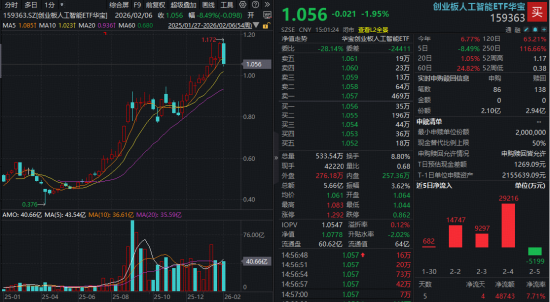
算力瓶颈催化确定性机会!创业板人工智能ETF周线回调或现“黄金买点”
Xin Lang Ji Jin· 2026-02-08 12:08
Group 1 - The A-share market experienced a contraction on February 6, with the ChiNext AI sector declining in the afternoon, particularly in computing power and AI applications [1] - Leading AI application stock Kunlun Wanwei fell over 7%, while other key players like Xinyi Sheng and Zhongji Xuchuang dropped by 5% and 4% respectively [1] - The ChiNext AI ETF (159363) saw a decrease of 1.95%, marking its first decline after ten consecutive weeks of gains, with a daily trading volume of 566 million yuan [1] Group 2 - The IDC computing power leasing sector showed activity, with companies like Tongniu Information and Aofei Data rising over 5% during trading [3] - The Qianwen APP from Alibaba faced service interruptions during a promotional event, highlighting a computing power bottleneck and revealing opportunities for domestic computing power [3] - Analysts from Guosen Securities noted that major internet companies are competing for large model traffic, making computing resources a critical market constraint for AI applications [3] Group 3 - The AI computing power industry is expected to see strong demand, with significant capital expenditures from North American cloud service providers, as indicated by recent financial reports from Microsoft and Meta [3] - Long-term growth in the AI application sector is anticipated, with commercial models evolving towards large-scale implementation by 2026 [3] - The ChiNext AI ETF (159363) is positioned to benefit from the commercialization of AI technology, with approximately 60% of its portfolio focused on computing power and 40% on AI applications [3]