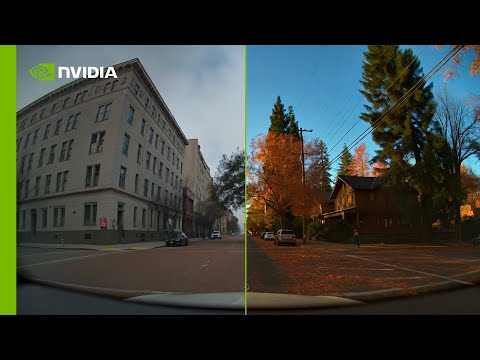
NVIDIA Cosmos

Search documents
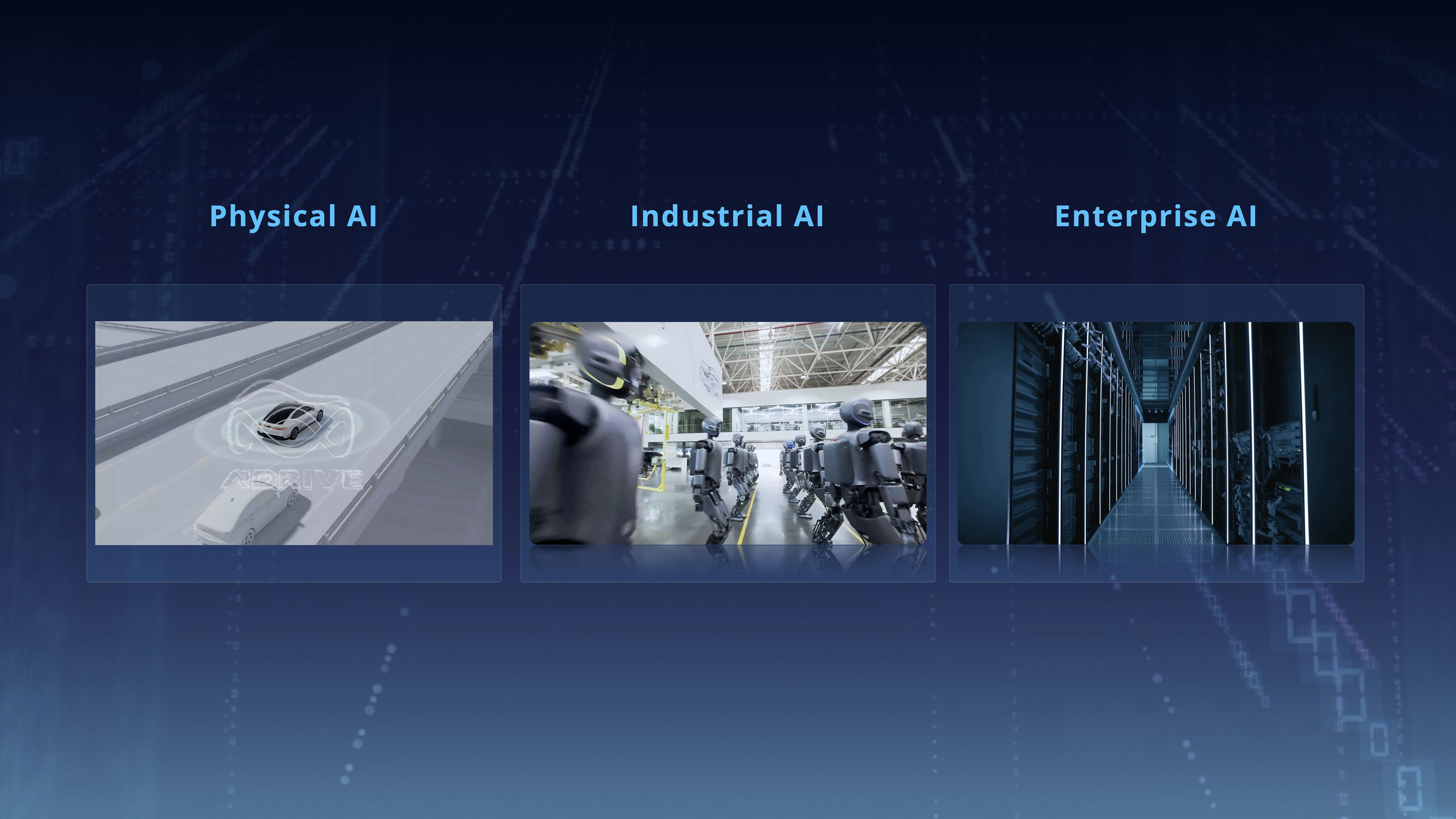
奥比中光:近年来公司与英伟达持续开展多维度合作
Zheng Quan Ri Bao· 2026-03-20 15:28
Group 1 - The core concept of physical AI is to enable intelligent agents to understand the operational laws of the real world, autonomously perceive, comprehend, and execute complex operations for effective interaction [2] - NVIDIA has launched several tool products based on the understanding of physical AI and world foundational models, aimed at smart driving, robot training, and industrial digital twin development, including NVIDIA Cosmos, NVIDIA Omniverse, and NVIDIA IsaacSim [2] - The company's 3D visual perception technology accurately captures three-dimensional spatial information and, combined with self-developed algorithms, provides core capabilities such as environmental perception, intelligent interaction, and dynamic navigation for various AI smart terminals [3] Group 2 - The company has integrated its Gemini 335 and Gemini 336 series dual-camera systems into the NVIDIA IsaacSim robot simulation development platform, facilitating global robot developers in developing, testing, and simulating robot 3D vision systems [3] - The company's products have been fully adapted and validated with NVIDIA Jetson Thor, allowing users to leverage the high processing capabilities of the platform while offering flexible solutions from NVIDIA ecosystem partners for end-to-end optimization [3] - The company has been collaborating with NVIDIA in various dimensions to help downstream customers address the complexities in 3D perception and robot vision algorithm development [4]


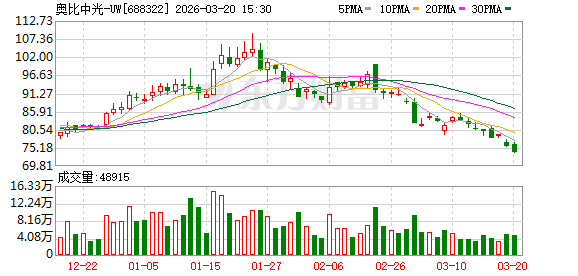
Geely Expands Strategic Partnership with NVIDIA Across Physical, Enterprise, and Industrial AI
Globenewswire· 2026-03-18 13:19
Core Insights - Geely Auto Group is expanding its strategic partnership with NVIDIA to enhance smart vehicle capabilities, cloud computing, and manufacturing digital transformation [1][5] Group 1: Partnership Expansion - The collaboration focuses on three core dimensions: Physical AI, Enterprise AI, and Industrial AI [1][5] - Geely's G-ASD system will integrate NVIDIA technologies such as Alpamayo, Cosmos, and NuRec to improve development and validation efficiency [2][5] Group 2: Autonomous Driving and Robotaxis - Geely and its ecosystem partners will develop Robotaxis using the NVIDIA DRIVE AGX Hyperion platform to improve safety and generalization in complex driving scenarios [4][5] Group 3: AI Infrastructure and Cloud Computing - Geely will utilize NVIDIA's AI supercomputing platform, Nemotron models, NeMo software, and the NVIDIA AI Enterprise suite to enhance its AI capabilities and transition into an "AI organization" [5][8] Group 4: In-Vehicle Experiences - Geely will be the first to deploy the Dimensity Auto Cockpit C-X1, optimized for LLM and VLM inference performance, featuring NVIDIA's Blackwell GPU [7][5] - The partnership will also leverage NVIDIA's edge computing and AI models for advanced in-vehicle experiences [5][7] Group 5: Industrial AI and Automation - The collaboration includes applications of Vision AI agents and factory automation using NVIDIA Omniverse libraries to shorten R&D cycles and enhance manufacturing flexibility [8][5] Group 6: New Model Launches - Geely is accelerating the application of AI capabilities in real-world scenarios with the launch of new car models like the Zeekr 8X [9]

吉利宣布与英伟达在AI领域深化合作
Mei Ri Jing Ji Xin Wen· 2026-03-18 12:12
Core Insights - Geely Auto Group's CTO announced a deepening collaboration with NVIDIA in three key areas: physical AI, enterprise AI, and industrial AI [1] - The partnership will focus on intelligent driving, smart cockpit, intelligent manufacturing and R&D, as well as cloud and AI infrastructure [1] Group 1: Intelligent Driving - Geely's G-ASD will integrate NVIDIA's Alpamayo, Cosmos, and NuRec to enhance the development, simulation, and validation efficiency of intelligent driving [1] - The collaboration aims to define the next generation of smart mobility technology [1] Group 2: Robotaxi Development - Geely will work with ecosystem partners to utilize NVIDIA's DRIVE AGX Hyperion architecture for the development and commercialization of robotaxis [1] - This initiative is expected to improve generalization capabilities and safety redundancy in complex driving scenarios [1]
Nebius Teams With NVIDIA to Build Cloud for Robotics and Physical AI
Businesswire· 2026-03-17 07:04
Core Insights - Nebius is collaborating with NVIDIA to develop a comprehensive cloud platform aimed at enhancing physical AI and robotics, addressing key challenges in infrastructure and data quality [1][2][3] Group 1: Collaboration and Technology - The partnership combines Nebius's AI cloud infrastructure with NVIDIA's Physical AI Data Factory Blueprint to create an agent-driven environment for robotics developers [2][5] - The collaboration aims to eliminate barriers to scaling physical AI, such as fragmented tooling and insufficient training data for unpredictable scenarios [2][4] - Nebius's cloud solution integrates NVIDIA OSMO for unified orchestration across the entire AI pipeline, facilitating the generation of physics-consistent synthetic data [5][8] Group 2: Market Impact and Applications - Early adopters like RoboForce have reported significant reductions in pipeline setup time by over 70% and faster iteration cycles from weeks to days using the integrated platform [6][9] - Voxel51, a partner, enhances data visualization and curation capabilities, allowing teams to build high-quality datasets for model training and simulations [10][11] - Milestone Systems is utilizing Nebius's infrastructure to fine-tune next-generation Vision-Language Models, benefiting from stable and cost-efficient training runs [12][13] Group 3: Infrastructure and Services - The Nebius AI Cloud features a purpose-built infrastructure that includes NVIDIA RTX PRO 6000 GPUs and managed inference services, allowing teams to deploy trained models efficiently [7][8] - The platform supports a complete managed physical AI runtime, from synthetic data generation to real-world inference, available as a service [8][10] - Nebius is committed to data sovereignty, ensuring that European customers' data remains within Europe, which is a key factor in attracting clients [13]


NVIDIA Expands Open Model Families to Power the Next Wave of Agentic, Physical and Healthcare AI
Globenewswire· 2026-03-16 20:15
NVIDIA Open Model Families for Agentic, Physical and Healthcare AI NVIDIA announced new open source models, including Nemotron 3 Ultra, Omni and VoiceChat, Cosmos 3, Isaac GR00T N1.7, Alpamayo 1.5 and Proteina Complexa, to advance agentic, physical and healthcare AI. News Summary: NVIDIA Nemotron 3 omni-understanding models power AI agents delivering natural conversations, complex reasoning and advanced visual capabilities.NVIDIA Isaac GR00T N1.7, NVIDIA Alpamayo 1.5 and NVIDIA Cosmos 3 models push the ...

老黄苏妈投了同一家世界模型公司
3 6 Ke· 2026-02-12 09:52
Core Insights - Runway, an AI video company, has shifted its focus to world models and has secured significant investment from Nvidia and AMD, indicating strong industry confidence in its new direction [1][2][12]. Company Overview - Runway was founded in 2018 by three art students and has undergone two major transformations, leading to a current valuation of $5.3 billion with only 140 employees [1][4]. - The company initially focused on video editing tools, gaining traction with its "green screen" feature, which led to early funding rounds totaling $200 million [6][8]. Recent Developments - Runway completed its Series E funding round, raising $315 million (approximately 2.17 billion RMB) to develop the next generation of world models [2][4]. - The latest funding round was led by General Atlantic, with participation from Nvidia and AMD, reflecting a strong belief in Runway's potential [2][12]. Valuation Growth - Following the recent funding, Runway's post-money valuation nearly doubled to $5.3 billion (approximately 36.58 billion RMB) [4][12]. - The company has seen a steady increase in valuation through its strategic pivots, particularly its entry into generative AI following the launch of ChatGPT [6][8]. Product Evolution - Runway's product evolution includes the introduction of the Gen-1 and Gen-2 models, with Gen-2 being the first commercially viable text-to-video model [8][10]. - The company has recently launched the GWM-1 (General World Models-1), which allows for interactive control and real-time image generation, marking a significant advancement in its technology [10][12]. Industry Context - The world model technology is gaining traction across various sectors, including autonomous driving, with companies like Tesla and Waymo developing their own models [13][17][22]. - Nvidia's investments in Runway and other companies utilizing world models highlight the growing importance of this technology in the AI landscape [12][22].

Mercedes, NVIDIA and Uber Team Up to Build S-Class Robotaxis
ZACKS· 2026-01-30 16:06
Core Insights - Mercedes-Benz Group AG, NVIDIA Corporation, and Uber Technologies are collaborating to launch robotaxi services in major cities, utilizing the Mercedes S-Class sedan as the foundation for their global autonomous-driving platform [1][7] Group 1: Technology and Integration - The next-generation S-Class will feature Mercedes-Benz's MB.OS, integrating NVIDIA DRIVE Hyperion hardware and full-stack NVIDIA DRIVE AV Level 4 software, focusing on safety-first autonomy through NVIDIA's Halos system [2] - NVIDIA DRIVE AV equips the S-Class with a comprehensive automated-driving system capable of handling rare and complex driving scenarios within a safety-centric architecture, validated through high-fidelity simulations [4] - The technology is built on NVIDIA's AI foundation, enabling real-time analysis of complex environments and the selection of the safest driving actions [5] Group 2: Market Strategy and Collaboration - The S-Class aims to provide a premium, chauffeur-style autonomous experience, with plans to offer these vehicles through Uber's mobility network, showcasing collaboration between established automakers and AI leaders [3] - The companies have not disclosed a timeline for the robotaxi service launch, although Mercedes-Benz has previously partnered with Bosch and Momenta on autonomous-driving initiatives [6]


机构:人形机器人产业发展加速
Zheng Quan Shi Bao Wang· 2026-01-22 00:55
Group 1 - The Ministry of Industry and Information Technology (MIIT) will continue to promote innovation and iterative upgrades in humanoid robot technology, aiming to drive the development of the broader computing intelligence industry [1] - The MIIT plans to enhance support for humanoid robots through the National Artificial Intelligence Industry Investment Fund and establish an open-source community for humanoid robots [1] - The humanoid robot industry is expected to open up a market space broader than that of automobiles, presenting significant investment opportunities as the industry transitions from "0 to 1" [1] Group 2 - The humanoid robot industry is accelerating, with advancements announced at CES, including NVIDIA's new models and platforms aimed at enhancing robot learning and training processes [2] - Major companies, both domestic and international, are expected to achieve breakthroughs in perception, decision-making, and execution, seizing first-mover advantages in the humanoid robot sector [2] - The industry is poised to transition from laboratory experiments to large-scale commercial applications, marking a new phase in humanoid robotics [2]

午评:深成指、创业板指均涨超1% AI应用板块集体走强
Xin Hua Cai Jing· 2026-01-12 06:18
Market Performance - A-shares experienced a strong rebound on January 12, with the Shanghai Composite Index rising by 0.75% to 4151.14 points and the Shenzhen Component Index increasing by 1.31% to 14305.10 points, while the ChiNext Index rose by 1.17% to 3366.71 points [1] - The total trading volume in the Shanghai and Shenzhen markets reached 2.31 trillion yuan, an increase of 245.5 billion yuan compared to the previous trading day [1] Sector Highlights - AI applications continued to surge, with stocks like Worth Buying and Guangyun Technology hitting the daily limit [1] - The commercial aerospace sector remained strong, with companies like Luxin Investment achieving 10 consecutive trading limits [1] - The photovoltaic sector was active, with Dongfang Risheng reaching a 20% limit up [1] - Retail concepts also saw gains, with Maoye Commercial and Sanjiang Shopping both hitting the daily limit [1] - In contrast, sectors such as oil and gas, and coal experienced significant declines [2] Institutional Insights - Huatai Securities noted that the A-share market continued to rise with increased trading volume, indicating a spring rally driven by heightened risk appetite [3] - The report suggested focusing on high-cost performance sectors, particularly in gaming, duty-free, batteries, engineering machinery, and agricultural chemicals [3] - CITIC Construction emphasized the rapid development of the AI industry, highlighting the potential for new application waves driven by advancements in model capabilities [3][4] Government Policy - The National Development and Reform Commission issued guidelines for government investment funds, marking the first systematic regulation on fund allocation and investment direction [5] - The guidelines emphasize supporting major strategic areas and fostering new pillar industries while avoiding investments in restricted or obsolete sectors [5] Storage Market Outlook - Counterpoint Research reported that the storage market has entered a "super bull market," with prices expected to rise by 40%-50% in Q1 2026 and an additional 20% in Q2 2026 due to surging demand from AI and server capacities [6][7]

The Future of Physical AI is Here
NVIDIA· 2026-01-06 17:33
The chat GPT moment for physical AI is nearly here, but the challenge is clear. The physical world is diverse and unpredictable. Collecting real world training data is slow and costly and it's never enough.The answer is synthetic data. It starts with NVIDIA Cosmos, an open Frontier World Foundation model for physical AI. Pre-trained on internet scale video, real driving and robotics data, and 3D simulation, Cosmos [music] learned a unified representation of the world.Able to align language, images, 3D, and ...