
Rubin CPX

Search documents
Nvidia Director Sells $38.5M in NVDA Stock — Analysts Still Eye 58% Upside
Yahoo Finance· 2026-03-26 11:40
Group 1 - Nvidia board member Mark A. Stevens sold $38.5 million in shares, offloading 221,682 shares in multiple transactions, indicating significant monetization of his holdings [1][2] - Prior to this sale, Stevens had sold over $100 million worth of shares in December, which may raise concerns but analysts remain confident in Nvidia's growth potential [1][5] - Analysts project a potential 56% upside for Nvidia's stock, with an average price target of $273.34, despite the recent insider selling activity [1][5] Group 2 - Stevens sold 100,000 shares at $172.60 and 121,682 shares at $174.56, which could be driven by personal financial planning rather than a lack of confidence in Nvidia's fundamentals [2] - The overall insider trading activity for Nvidia is flagged as negative due to the $38.5 million in informative sell transactions in the last three months [3] - Analysts highlight Nvidia's strong long-term growth outlook, citing robust earnings and continued GPU adoption, despite the negative insider tone [5] Group 3 - Ben Reitzes of Melius Research holds the highest price target for Nvidia at $380, projecting over 115% upside, and has reiterated his Buy rating following the Nvidia GTC 2026 event [6] - The $1 trillion+ estimate for Nvidia's market potential only accounts for specific systems from 2025-2027, excluding newer products, suggesting significant growth potential [6]

深度解读英伟达芯片路线图
半导体行业观察· 2026-03-20 00:56
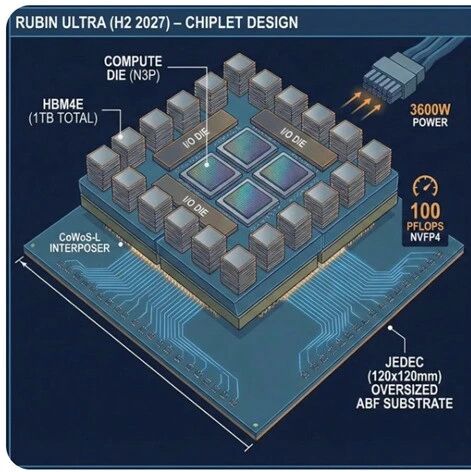
Core Insights - Nvidia has established itself as a dominant supplier in the GenAI revolution, showcasing a clear roadmap for its hardware and software developments in the AI sector [2][3] - The 2023 roadmap reveals Nvidia's annual update plan for its AI system components, with products like GX200 and Rubin R200 GPU accelerators set for release by 2025 [3][4] - Nvidia's market share in AI computing remains substantial, with projections indicating that the company will capture a significant portion of the server market revenue by 2025 [5] Roadmap Developments - The 2023 roadmap marks the first detailed annual update plan for Nvidia's AI systems, including products like Blackwell GPUs and Vera Arm server CPUs [3][4] - Nvidia's 2026 roadmap includes advancements in GPU technology, with the introduction of the "Feynman Ultra" GPU and updates to the ConnectX-10 SmartNIC [4][6] - The roadmap emphasizes the importance of these developments for OEMs and ODMs, as they are crucial for the deployment of AI training and inference systems [4][5] Market Projections - The server market is projected to reach between $420 billion and $450 billion by 2025, with Nvidia expected to generate approximately $190 billion from system material costs [5] - Machines equipped with Nvidia GPUs are anticipated to generate revenues between $275 billion and $325 billion, indicating a market share of 61% to 77% for Nvidia technology [5] - The profitability of AI systems is heavily skewed towards Nvidia, as evidenced by its gross, operating, and net profit margins [5] Technical Specifications - The Rubin R200 GPU is designed to deliver 50 petaflops of FP4 performance, significantly outperforming previous models [9] - The upcoming "Rubin Ultra" GPU is expected to double the GPU chip count and achieve 100 petaflops of FP4 performance, with advanced memory capabilities [16][19] - Nvidia's NVLink technology is set to evolve, with NVLink 6 offering 3,600 GB/sec bandwidth and NVLink 7 projected to reach 7,200 GB/sec [18][21] Future Innovations - Nvidia plans to introduce the "Kyber" rack, which will support a higher number of GPU slots and enhance overall system performance [16][21] - The integration of advanced memory technologies and chip stacking in future products like the Feynman GPU is expected to significantly boost throughput [23] - The roadmap indicates a strategic focus on optimizing both copper and optical interconnects to enhance system efficiency and performance [22][20]

中信证券:聚焦算力链通胀主线 看好英伟达GTC强化AI产业持续增长信心
智通财经网· 2026-03-16 00:33
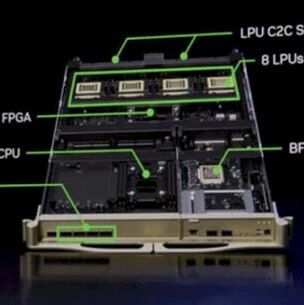
Core Insights - Nvidia is expected to expand its chip product matrix at the upcoming GTC 2026 conference, potentially unveiling details about the Rubin Ultra chip and cabinet, which may lead to innovations in data interconnectivity and power supply design [1] - The global demand for computing power continues to exceed expectations, indicating sustained growth in the upstream sector and price increases, making it a key focus for technology sector investments [1] Group 1 - The Rubin platform introduces a new chip combination that reflects extreme collaborative design [1] - At the 2026 CES, Nvidia launched the full suite of six core chips for the Vera Rubin AI platform, including Rubin GPU, Vera CPU, BlueField-4 DPU, NVLink 6 Switch, ConnectX-9 SuperNIC, and Spectrum-6 Ethernet Switch, all upgraded to TSMC's 3nm process and featuring HBM4 [2] - The new product lineup enhances the synergy between GPU, CPU, and interconnect chips, with a modular design that improves overall cabinet integrity compared to the previous Blackwell generation [2] Group 2 - Nvidia is expected to disclose more details about the Rubin Ultra chip and cabinet at GTC 2026, with significant improvements in data interconnectivity and power supply systems [2] - The architecture of the Rubin Ultra chip is anticipated to include a two-layer super network structure and advanced power supply solutions, addressing the bottlenecks in computing power expansion [2] Group 3 - Nvidia is likely to introduce a new inference chip, LPU, to strengthen its inference product line, designed specifically for LLM inference with a custom chip architecture [3] - The LPU is expected to enhance data storage and retrieval speeds, while the CPX, launched in 2025, may transition to an independent cabinet form [3] Group 4 - The next-generation Feynman architecture is gaining attention, with expectations for Nvidia to showcase related content at GTC 2026 [4] - Feynman is projected to be among the first chips utilizing TSMC's A16 process, with potential innovations in power delivery and 3D stacking technology [4]

Wells Fargo has a message for investors on Nvidia stock price
Yahoo Finance· 2026-03-10 20:23
Core Viewpoint - Wells Fargo analyst Aaron Rakers maintains an overweight rating on Nvidia with a target price of $265, indicating a potential upside of approximately 49% from the current trading price of around $178 ahead of the upcoming GPU Technology Conference (GTC) [1] Group 1: GTC Conference Insights - GTC 2026 is scheduled for March 16-19 in San Jose and is historically a significant stock catalyst for Nvidia [1] - Nvidia has historically outperformed the Philadelphia Semiconductor Index by about 30% in the three months following GTC, with annual gains ranging from 12% to 45% [2] Group 2: Key Catalysts to Watch - Rakers is particularly focused on a pipeline update, noting that Nvidia's committed AI infrastructure pipeline has already exceeded $500 billion, with visibility extending into 2027 [3] - An update that increases the pipeline figure to $600 billion or more would be a strong positive signal for investors [4] - Details on Kyber, Nvidia's next-generation high-density rack architecture, and insights from the GB200 NVL72 rollout are also anticipated [4] - Updates on the Rubin CPX, a GPU designed for long-context AI inference expected to launch in late 2026, will be closely monitored [5] Group 3: Capital Expenditure Context - Rakers' bullish outlook is supported by one of the largest capital spending waves in corporate history, emphasizing the significance of the $600 billion capex wall [7] - Key updates to watch include potential revisions to the committed AI infrastructure pipeline, details on the Kyber architecture, specifics on Rubin CPX, Groq integration outcomes, and announcements regarding custom silicon for hyperscalers like OpenAI [8]
英伟达震惊世界的芯片
半导体行业观察· 2026-02-24 01:23
Core Viewpoint - NVIDIA is set to unveil multiple groundbreaking chips at the upcoming GTC 2026 conference, emphasizing the importance of memory logic integration for future developments [2][4]. Group 1: Background on AI Chip Challenges - The AI chip industry faces three major obstacles: memory bandwidth gap, interconnect power consumption, and structural inefficiencies in LLM inference [4][6][7]. Group 2: Memory Bandwidth Gap - The throughput of the B200 tensor core is 1.57 to 1.59 times higher than that of the H200 under FP16/FP8, and 2.5 times higher under FP4, while memory bandwidth growth lags behind GPU performance improvements [5]. Group 3: Interconnect Power Consumption - In a hypothetical million-GPU cluster, pluggable transceivers consume hundreds of megawatts, with a single 1.6Tbps transceiver consuming about 30 watts, highlighting the power consumption issues in interconnects [6]. Group 4: Structural Inefficiencies in LLM Inference - LLM inference consists of two distinct phases: pre-filling and decoding, which require different hardware capabilities. Separating these phases can increase throughput by 2.35 times [7]. Group 5: Proposed Solutions - **Solution 1: Rubin Ultra Roadmap** Rubin Ultra is expected to feature four GPU compute chips integrated in one package, achieving 100 PFLOPS performance with a power consumption of 3600W [8][10]. - **Solution 2: Silicon Photonic Stacks** NVIDIA has introduced silicon photonic-based network switches, with Quantum-X expected to deliver 115 Tb/s and Spectrum-X up to 400 Tb/s [12][18]. - **Solution 3: Rubin CPX for Inference** The Rubin CPX GPU is designed specifically for inference, utilizing GDDR7 to reduce memory costs significantly while improving performance [19][21]. - **Solution 4: Long-term 3D IC Development** The potential for 3D IC technology, which could stack memory directly on top of GPUs, is being explored, with significant implications for performance and energy efficiency [26][29]. Group 6: Future Expectations - The GTC 2026 conference may reveal specific timelines for the production of Rubin Ultra and the architectural details of the Kyber rack, as well as NVIDIA's collaboration with SK Hynix on 3D chip development [11][33].
黄仁勋预告:“前所未见”
Xin Lang Cai Jing· 2026-02-19 09:33
Core Insights - NVIDIA's CEO Jensen Huang announced the unveiling of "unprecedented" new chips at the upcoming GTC 2026 conference, scheduled for March 15 in San Jose, California, focusing on the new era of AI infrastructure competition [1][7]. Group 1: New Chip Developments - Multiple new chips described as "unprecedented" are expected to be showcased, with speculation around two main directions: the Rubin series derivative chips and the next-generation Feynman architecture chip, which is anticipated to be revolutionary [2][8]. - The Rubin CPX and the Vera Rubin AI series, which has six chips in full production, are part of the expected announcements [2][8]. - The Feynman architecture is expected to optimize for inference scenarios, potentially integrating larger SRAM and LPU to overcome current performance bottlenecks, significantly impacting cloud service providers and enterprise customers reliant on AI inference capabilities [3][9]. Group 2: Strategic Partnerships and Investments - NVIDIA has established a long-term strategic partnership with Meta, focusing on local deployment, cloud, and AI infrastructure, which includes the large-scale deployment of NVIDIA CPUs and millions of Blackwell and Rubin GPUs [4][10]. - The partnership aims to support Meta's long-term AI infrastructure roadmap by building a large-scale data center optimized for training and inference [10]. - NVIDIA has also become a significant investor in the tech industry, recently liquidating its entire stake in Arm Holdings for approximately $140 million, while still planning to utilize Arm's IP in its server CPUs [5][11].
关于英伟达与 Groq 的观点_ SemiBytes_ Our Thoughts on NVDA_Groq
2026-01-04 11:34
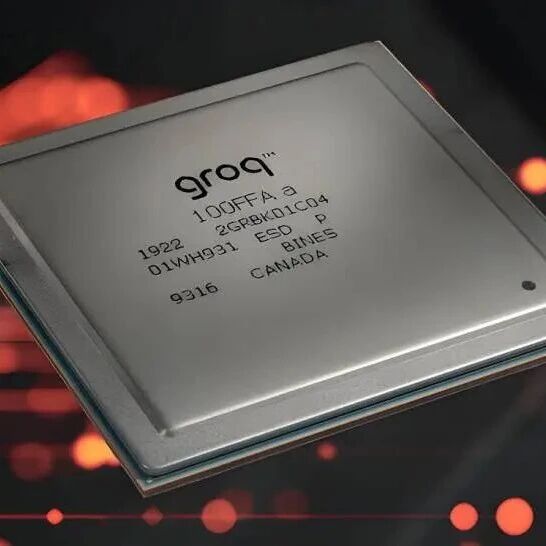
Summary of Key Points from the Conference Call Company and Industry Overview - **Company**: NVIDIA Corporation (NVDA) - **Industry**: US Semiconductors and Semiconductor Equipment Core Insights and Arguments 1. **Licensing Agreement with Groq**: NVIDIA has entered a non-exclusive licensing agreement with Groq for its high-speed inference technology, valued at $20 billion. This deal is expected to enhance NVIDIA's capabilities in high-speed inference applications, which are not optimally served by traditional GPUs due to off-chip high bandwidth memory (HBM) limitations [2][3] 2. **Technological Differentiation**: Groq's technology, particularly its Language Processing Units (LPUs), utilizes 230MB of on-chip SRAM with a bandwidth of 80TB/s, significantly outperforming NVIDIA's GPUs, which have 288GB of HBM at 3.35TB/s. This could lead to a 7.5x increase in inference throughput [3] 3. **Market Positioning**: The integration of Groq's LPUs into NVIDIA's AI factory aligns with NVIDIA's strategy to offer a comprehensive platform that includes software optimization layers and an inferencing operating system, Dynamo. This move is seen as a way to target ultra-low latency applications in the inference market [3] 4. **Future Outlook for NVIDIA**: The outlook for NVIDIA remains positive as the company is expected to see stock price appreciation driven by upward revisions in earnings per share (EPS). The next twelve months price-to-earnings (P/E) multiple is anticipated to remain around 20x, with a focus on visibility into 2027 earnings [2] Additional Important Information 1. **Market Growth**: The inference market is projected to be one of the fastest-growing segments, and NVIDIA's strategic pivots, including the addition of Groq's technology, are aimed at capturing a larger share of this market [2][3] 2. **Analyst Ratings**: NVIDIA currently holds a "Buy" rating with a price target of $190.53 as of December 26, 2025. This reflects a positive sentiment among analysts regarding the company's future performance [21] 3. **Risks**: Key risks for NVIDIA include competition from AMD in GPUs, emerging competition from Intel in ARM-based processors, and broader semiconductor sector risks linked to economic conditions [7] Conclusion NVIDIA's strategic licensing agreement with Groq is a significant development that could enhance its competitive position in the high-speed inference market. The company's focus on integrating advanced technologies and maintaining a robust growth outlook positions it favorably for future performance in the semiconductor industry.
英伟达封死了ASIC的后路?
半导体行业观察· 2025-12-29 01:53
Core Viewpoint - NVIDIA aims to dominate the inference stack with its next-generation Feynman chip by integrating LPU units into its architecture, leveraging a licensing agreement with Groq for LPU technology [1][18]. Group 1: NVIDIA's Strategy and Technology Integration - NVIDIA plans to integrate Groq's LPU units into its Feynman GPU architecture, potentially using TSMC's hybrid bonding technology for stacking [1][3]. - The LPU modules are expected to enhance inference performance significantly, with Groq's LPU set to debut in 2028 [5]. - The Feynman core will utilize a combination of logic and compute chips, achieving high density and bandwidth while maintaining cost efficiency [6]. Group 2: Inference Market Dynamics - The AI industry's computational demands have shifted towards inference, with major companies like OpenAI and Google focusing on building robust inference stacks [9]. - Google’s Ironwood TPU is positioned as a competitor to NVIDIA, emphasizing the need for low-latency execution engines in large-scale data centers [9][10]. - Groq's LPU architecture is designed specifically for inference workloads, offering deterministic execution and on-chip SRAM for reduced latency [10][14]. Group 3: Licensing Agreement and Market Position - NVIDIA's agreement with Groq is framed as a non-exclusive licensing deal, allowing NVIDIA to integrate Groq's low-latency processors into its AI Factory architecture [18][21]. - This strategy is seen as a way to circumvent antitrust scrutiny while acquiring valuable talent and intellectual property from Groq [19][21]. - The transaction is viewed as a significant achievement for NVIDIA, positioning LPU as a core component of its AI workload strategy [16][21].
速递|解读英伟达为何与Groq达成200亿美元巨额交易,“柔性垄断”消弭威胁
Z Potentials· 2025-12-26 03:43
Core Viewpoint - Nvidia has agreed to pay approximately $20 billion for the technology licensing of Groq, a startup aiming to challenge Nvidia's dominance in AI application chips, specifically inference computing chips [1][5]. Group 1: Transaction Details - The deal involves a non-exclusive licensing agreement, allowing Nvidia to design server chips that could be cheaper and faster for running AI applications compared to its existing product line [2]. - Groq's valuation in this deal is about three times higher than its previous funding round valuation of $6.9 billion [1]. - Nvidia plans to integrate Groq's low-latency processors into its AI factory architecture, expanding its platform for broader AI inference and real-time workloads [3]. Group 2: Groq's Background and Performance - Groq was founded in 2016 by Jonathan Ross, who was involved in the early development of Google's AI chips, and has recently launched a cloud business allowing small developers to run open-source AI models [3]. - Groq has raised approximately $1.8 billion from investors, including Blackrock and Tiger Global Management, and has adjusted its revenue forecast downwards due to challenges in competing with Nvidia [6][7]. - The company had projected over $40 million in revenue from its cloud business this year, with overall sales expected to exceed $500 million [8]. Group 3: Market Context and Competition - Nvidia's chips are widely regarded as the most powerful and efficient solutions for developing new AI models, but there is a growing demand for lower-cost alternatives like Groq's chips [2][10]. - Despite Groq's advancements, Nvidia maintains a stronghold in the high-end AI chip market, with its chips being the preferred choice for major cloud service providers [7]. - Other startups are also struggling to challenge Nvidia, with many seeking acquisition opportunities, as seen in Intel's negotiations to acquire AI chip startup SambaNova [11].
Wells Fargo Maintains Underweight on Qualcomm (QCOM) Amid AI Expansion Plans
Yahoo Finance· 2025-10-29 01:24
Core Viewpoint - Wells Fargo maintains an Underweight rating on Qualcomm (QCOM) amid its expansion into AI technologies, highlighting competitive pressures in the semiconductor market [4]. Group 1: Company Developments - Qualcomm has officially launched its AI200 and AI250 accelerator cards and racks, specifically designed for AI inference, indicating a strategic move into datacenter solutions [2]. - The company has secured a deal with Saudi Arabia's Humain to deploy 200MW of Qualcomm AI systems starting in 2026, which could generate approximately $2 billion in revenue [3]. Group 2: Competitive Landscape - Competition in the AI semiconductor space is intensifying, with major players like Intel, AMD, and Nvidia targeting similar markets with their respective products [3]. - Wells Fargo analyst Aaron Rakers noted that Qualcomm's focus on rack-scale systems was unexpected, suggesting a shift in its strategic direction [2]. Group 3: Financial Outlook - Despite competitive challenges, Qualcomm is viewed as an attractive option for income investors due to its consistent dividend payouts, having raised dividends for 21 consecutive years [4]. - Wells Fargo has set a price target of $140 for Qualcomm, reflecting a cautious outlook on the stock's performance [4].
