
Feynman架构芯片

Search documents
盛会直击:英伟达GTC大会四大核心重磅发布
Mei Ri Jing Ji Xin Wen· 2026-03-23 02:47AI Processing
英伟达在GPU领域深耕多年,自1999年发布首款GPU至今,已有约27年时间。其芯片制程从220纳米迭 代至4纳米左右,未来还将向1.6纳米推进,这也是我们较为期待的投资价值。 本轮AI浪潮始于2023年,当时市场主流GPU为A100与H100。截至目前,市场主流GPU已更新为 Blackwell架构芯片。A100与H100的核心技术特征是什么?其中H100芯片性能强劲,在2023年AI浪潮爆 发后,迅速成为市场炙手可热的GPU产品。 H100由中国台湾台积电采用4纳米工艺代工生产,单芯片集成800亿个晶体管,还专门内置了 Transformer模型引擎。为什么要专门针对Transformer做硬件适配?当前国内外我们耳熟能详的各类大模 型,其底层架构基本都是基于Transformer基础架构针对性优化发展而来。 英伟达极具前瞻性地在Hopper架构中,从硬件层面对Transformer做了专项优化,也就是引入了对应的专 用引擎。英伟达也凭借这一核心优势,在短短两年多的时间里,从一家规模中等的企业,成长为全球市 值第一的科技巨头,由此也能充分看到AI产业的强劲爆发力。 英伟达在2023年前后发布的Blackw ...


英伟达Feynman架构引爆,PCB风口全面爆发!
Ge Long Hui A P P· 2026-03-18 04:01
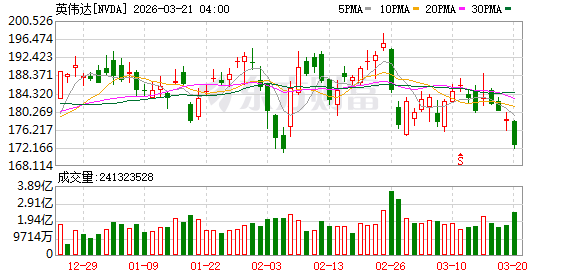
Core Viewpoint - The PCB industry is experiencing a significant surge driven by advancements in AI technology and the increasing demand for high-performance servers, particularly following announcements from Nvidia regarding new AI architectures and their implications for PCB requirements. Group 1: Market Performance - On March 18, the PCB concept stocks saw rapid gains, with notable increases in companies such as Jinlu Electronics and Yunhan Chip City, both rising over 10% [1] - Jinlu Electronics' stock price reached 36.47, reflecting a 10.52% increase, while Yunhan Chip City rose to 170.55, marking a 10.04% gain [2] Group 2: Nvidia's GTC 2026 Conference - Nvidia's GTC 2026 conference highlighted the introduction of the Feynman architecture, which sets extreme requirements for PCB layers (32-44 layers), thermal resistance, and signal transmission rates [6][7] - The new AI server architecture, consisting of 32 trays with 8 LPU chips each, significantly increases the number of PCBs required per server, indicating a new demand surge in the PCB sector [3][7] Group 3: Investment and Growth - Pengding Holdings announced a substantial investment of 11 billion yuan to establish a high-end PCB production base in Jiangsu Province, which is expected to enhance the company's operational scale and product line upgrades [11][14] - The company reported a revenue of 39.147 billion yuan in 2025, reflecting an 11.40% year-on-year growth, and a net profit of 3.738 billion yuan, up 3.25% [17] Group 4: Industry Trends - The PCB industry is entering a high-growth cycle driven by AI computing demands and the electrification and intelligence of automobiles, leading to simultaneous increases in both volume and price [19] - The structural tension in supply and accelerated domestic substitution are key factors supporting the PCB industry's robust performance [20] - Price increases for key materials, such as copper foil substrates and resin-based materials, are expected to further impact PCB production costs and profitability [21]

英伟达豪赌AI“万亿时代”:黄仁勋称芯片收入预期有“强能见度”,目标将继续膨胀
美股IPO· 2026-03-18 00:41
Core Viewpoint - Nvidia's CEO Jensen Huang predicts that the company's revenue from its core architecture products, Blackwell and Rubin, could exceed $1 trillion, excluding upcoming products and new markets, indicating a potential for even greater overall AI business scale [3][4]. Group 1: Revenue Projections - Huang stated that the $1 trillion revenue target is based solely on the Blackwell and Rubin product lines, and does not account for new product launches or market expansions, suggesting that the actual revenue potential could be significantly higher [3][4]. - The revenue forecast has doubled from a previous estimate of $500 billion made four months ago, reflecting the steep upward trajectory of AI demand [4]. - Nvidia's revenue visibility is strong, with high order certainty driven by substantial purchases from cloud providers and AI companies, indicating a supply-demand imbalance in the AI computing market [7]. Group 2: Market Dynamics - Major tech companies like OpenAI, Meta, and Microsoft are heavily investing in AI data center infrastructure, leading to exponential growth in computing demand [8]. - The AI industry has entered a "reasoning era," where real-time computational needs for AI applications are driving demand significantly higher than during the training phase [9][10]. - Nvidia's strategy includes transitioning from selling chips to offering complete AI systems, which could greatly expand its revenue potential beyond just GPU sales [12]. Group 3: Market Reaction - Following Huang's announcement of the $1 trillion revenue forecast, Nvidia's stock initially rose but later experienced a pullback, indicating that while the forecast is impactful, the market had already priced in high growth expectations [13][14]. - Analysts believe that the AI infrastructure market is still in its early stages, with demand accelerating from training to broader application deployment, reinforcing the growth narrative for Nvidia [14][15]. - Huang's statements signal that the AI computing race is far from over, as Nvidia evolves from a chip manufacturer to a key provider of AI infrastructure [16].
英伟达GTC 2026:算力革命、万亿预期与中美AI芯片新格局
Tai Mei Ti A P P· 2026-03-17 04:10
Core Insights - The AI industry competition is shifting from model and algorithm development to a focus on computing power, efficiency, and commercialization [1] - NVIDIA's GTC 2026 conference highlighted the transition of AI from "training" to "inference" as the core of AI commercialization, with a projected global AI infrastructure investment increase from $500 billion to $1 trillion [2][4] - The introduction of the "AI factory" concept and "Token economics" redefines the profitability and development path of AI, emphasizing the importance of inference power [2][3] Investment Outlook - NVIDIA's CEO Huang Renxun projected that the revenue from AI chips could reach at least $1 trillion by 2027, which significantly boosted NVIDIA's stock price and market capitalization [4][5] - The demand for inference is not just a prediction but a current reality, with over 60% of AI companies' costs attributed to inference, necessitating cost reductions [5][6] - NVIDIA's ecosystem, including its CUDA platform, creates a strong barrier to entry for competitors, ensuring its dominance in the general computing power market [6][8] Technological Advancements - The release of the Rubin and Feynman architectures marks a generational leap in AI chip technology, widening the gap between the US and China in AI computing capabilities [7][8] - The advancements in manufacturing processes, such as the transition to 3nm and 1.6nm technologies, highlight the challenges faced by Chinese chip manufacturers due to supply chain restrictions [7][8] Industry Dynamics - The global AI industry is moving towards a "dual-track" model, with the US leading in high-end AI capabilities while China focuses on domestic applications [9][10] - The shift in AI commercialization will allow smaller companies to access AI technologies, promoting widespread adoption across various industries [10][11] - The competition in the AI sector is not limited to individual components but encompasses the entire industry chain, emphasizing the need for strategic adaptation in response to technological and market changes [11]
未知机构:长江电子Feynman问世在即LPU芯片开启PCB又一增长极-20260228
未知机构· 2026-02-28 02:55
Summary of Longjiang Electronics Conference Call Industry Overview - The conference call discusses advancements in the PCB (Printed Circuit Board) industry, particularly focusing on the upcoming launch of the Feynman architecture chip by Nvidia, which is expected to create new growth opportunities in the sector [1]. Key Points and Arguments - Nvidia plans to unveil the Feynman architecture chip at the GTC 2026 conference, with the release occurring earlier than market expectations [1]. - The core technological breakthrough of the Feynman architecture lies in its 3D stacking method, which integrates the LPU (Logic Processing Unit) chip optimized for inference tasks directly onto the GPU (Graphics Processing Unit) computing core, enabling deep physical integration of general and specialized computing [1]. - The new LPU chip is primarily designed for inference, utilizing a high multi-layer approach, with the value of a single chip PCB expected to reach between $300 to $500 [1]. - Key suppliers to watch in this space include Shenghong Technology, Huidian Co., Shenzhen South Circuit, and Jingwang Electronics [1]. Additional Important Insights - The CoWoP (Chip-on-Wafer-on-Panel) technology is anticipated to enter small-scale production by the end of 2027 and large-scale production in 2028, potentially increasing the PCB value per square meter by several times, up to tenfold [1]. - The orthogonal backplane project is progressing steadily, with a new round of sample testing planned for early March. This project is expected to enter mass production in the second half of 2027 [1]. - There is a strong recommendation to focus on undervalued leading companies in this sector, as their cost-performance ratio is expected to become more prominent [1].
黄仁勋预告“世界前所未见”芯片,称所有技术已逼近极限
2 1 Shi Ji Jing Ji Bao Dao· 2026-02-19 12:55
Core Insights - NVIDIA's CEO Jensen Huang announced the unveiling of "unprecedented" new chips at the upcoming GTC 2026 conference, which is expected to further solidify NVIDIA's leadership in AI infrastructure [1][4] - The GTC 2026 conference will take place from March 16 to 19 in San Jose, California, focusing on the new era of AI infrastructure competition [1] - Huang emphasized that the development of these new chips is challenging due to technological limits, but with a strong team, including engineers from SK Hynix, they believe nothing is impossible [1] Product Speculation - Although specific product details were not disclosed, there are two main directions speculated for the new products: 1. Derivative chips from the Rubin series, such as the Rubin CPX, with the Vera Rubin AI series already in mass production [3] 2. The potential early reveal of the next-generation Feynman architecture chip, which may feature revolutionary designs and advanced integration techniques [3] Strategic Partnerships - Huang highlighted that extensive acquisitions and collaborations are key to maintaining NVIDIA's lead in the AI race, with investments across the entire AI technology stack [4] - On February 17, NVIDIA announced a long-term strategic partnership with Meta, focusing on local deployment, cloud, and AI infrastructure, which will involve large-scale deployment of NVIDIA CPUs and GPUs [4]

黄仁勋预告“世界前所未见”芯片,称所有技术已逼近极限
21世纪经济报道· 2026-02-19 12:48
Core Viewpoint - Nvidia's CEO Jensen Huang announced the unveiling of "unprecedented" new chips at the upcoming GTC 2026 conference, which is expected to further solidify Nvidia's leadership in the AI infrastructure sector [1]. Group 1: Upcoming Products - The new products are speculated to focus on two main directions: the Rubin series derivative chips, such as the previously exposed Rubin CPX, and the next-generation Feynman architecture chips, which are considered revolutionary and may utilize broader SRAM integration and 3D stacking technology [3][4]. - Nvidia has already launched the Vera Rubin AI series at CES 2026, with six chips entering full-scale production [3]. Group 2: Strategic Partnerships - Nvidia emphasizes that extensive acquisitions and collaborations are key to maintaining its lead in the AI race, highlighting partnerships with excellent collaborators and startups across the entire AI technology stack [3]. - A recent strategic partnership with Meta was announced, focusing on local deployment, cloud, and AI infrastructure, which will support Meta's large-scale data center optimized for training and inference [4].

黄仁勋预告:“前所未见”
Xin Lang Cai Jing· 2026-02-19 09:33
Core Insights - NVIDIA's CEO Jensen Huang announced the unveiling of "unprecedented" new chips at the upcoming GTC 2026 conference, scheduled for March 15 in San Jose, California, focusing on the new era of AI infrastructure competition [1][7]. Group 1: New Chip Developments - Multiple new chips described as "unprecedented" are expected to be showcased, with speculation around two main directions: the Rubin series derivative chips and the next-generation Feynman architecture chip, which is anticipated to be revolutionary [2][8]. - The Rubin CPX and the Vera Rubin AI series, which has six chips in full production, are part of the expected announcements [2][8]. - The Feynman architecture is expected to optimize for inference scenarios, potentially integrating larger SRAM and LPU to overcome current performance bottlenecks, significantly impacting cloud service providers and enterprise customers reliant on AI inference capabilities [3][9]. Group 2: Strategic Partnerships and Investments - NVIDIA has established a long-term strategic partnership with Meta, focusing on local deployment, cloud, and AI infrastructure, which includes the large-scale deployment of NVIDIA CPUs and millions of Blackwell and Rubin GPUs [4][10]. - The partnership aims to support Meta's long-term AI infrastructure roadmap by building a large-scale data center optimized for training and inference [10]. - NVIDIA has also become a significant investor in the tech industry, recently liquidating its entire stake in Arm Holdings for approximately $140 million, while still planning to utilize Arm's IP in its server CPUs [5][11].
黄仁勋预告“前所未见”的芯片新品,下一代Feynman架构或成焦点
美股IPO· 2026-02-19 08:03
Core Viewpoint - Nvidia's CEO Jensen Huang announced the release of "unprecedented" new chip products at the upcoming GTC conference, sparking market interest in the company's next-generation product roadmap [1][3]. Group 1: New Product Expectations - The new products are speculated to involve either derivatives of the Rubin series or the revolutionary Feynman architecture chip, which is expected to be deeply optimized for inference scenarios [1][6]. - Nvidia recently showcased the Vera Rubin AI series at CES 2026, which includes six new chip designs that have entered full production, leading to expectations for cutting-edge technology announcements at GTC [4][6]. Group 2: Market Dynamics and Product Evolution - The current market environment is characterized by changing computational demands, which Huang's statements reflect regarding the direction of technological evolution [7]. - The shift from pre-training to inference capabilities has become central, with latency and memory bandwidth identified as major bottlenecks, influencing Nvidia's product design direction [8]. - The Feynman architecture is anticipated to address these inference challenges through larger SRAM integration and potential LPU integration, significantly impacting cloud service providers and enterprise customers reliant on AI inference capabilities [8]. Group 3: Strategic Partnerships and Ecosystem Development - Huang emphasized the importance of broader partnerships and investment strategies, indicating that Nvidia is transitioning from a chip supplier to an AI ecosystem builder [8]. - The company is actively investing across the entire AI stack, which encompasses energy, semiconductors, data centers, and applications built on these technologies, aiming to maintain a leading position in the AI infrastructure competition [8].
黄仁勋预告“前所未见”的芯片新品,下一代Feynman架构或成焦点
Hua Er Jie Jian Wen· 2026-02-19 07:34
Core Insights - NVIDIA's CEO Jensen Huang announced that the company will unveil "world's first" new chip products at the upcoming GTC conference, sparking significant market interest in NVIDIA's next-generation product roadmap [1] - The GTC keynote will take place on March 15 in San Jose, California, focusing on the next phase of the AI infrastructure race [1] Potential New Products - The new products are speculated to fall into two main categories: 1. Derivative chips from the Rubin series, such as the previously leaked Rubin CPX, following the recent launch of the Vera Rubin AI series, which includes six chips now in full production [2] 2. The potentially revolutionary Feynman architecture chip, which may utilize broader SRAM integration and possibly 3D stacking technology for Language Processing Units (LPU), although this has not been officially confirmed [2] Market Demand and Product Evolution - NVIDIA is responding to changing computational demands, with a shift from pre-training to inference capabilities becoming central, as indicated by the introduction of Grace Blackwell Ultra and Vera Rubin [3] - The Feynman architecture is expected to be deeply optimized for inference scenarios, addressing performance bottlenecks related to latency and memory bandwidth, which will significantly impact cloud service providers and enterprise customers reliant on AI inference capabilities [3] - Huang emphasized the importance of broader partnerships and investment strategies, indicating NVIDIA's transition from a chip supplier to an AI ecosystem builder, aiming to maintain a leading position in the AI infrastructure competition through acquisitions and collaborations [3]