
SaaS服务

Search documents
300344,暴跌超70%!两大板块,逆市上行
证券时报· 2026-03-31 05:55
Market Overview - The A-share market experienced a decline in the morning session on March 31, with major indices showing varying degrees of decrease. The Shanghai Composite Index fell by 0.38%, the Shenzhen Component Index dropped by 1.45%, the Sci-Tech Innovation Board Index decreased by 1.88%, and the ChiNext Index declined by 2.36% [3][4]. Sector Performance - The home appliance and food and beverage sectors rose against the market trend, with the home appliance sector increasing by over 2%. Leading stock Midea Group surged by 6.05% [2][5]. - The food and beverage sector also showed significant strength, with leading stock Kweichow Moutai rising by over 2% [7]. Notable Stocks - Midea Group announced a share repurchase plan, intending to buy back shares worth no more than 13 billion yuan and no less than 6.5 billion yuan, with a maximum repurchase price of 100 yuan per share [6]. - Kweichow Moutai decided to adjust the sales contract price of its flagship product from 1169 yuan to 1269 yuan per bottle, which is expected to impact its operating performance [8]. Special Cases - A stock, Lifan Technology (300344), entered the delisting arrangement period, with its price plummeting by over 73% during the session. The company faced penalties for false disclosures in its financial reports [10][11][13].





易鑫集团(2858.HK)2025年年度业绩公告点评
Guolian Minsheng Securities· 2026-03-07 13:25
Investment Rating - The report maintains a "Buy" rating for the company with a target price of HKD 3.18, compared to the current price of HKD 2.45 [3]. Core Insights - The company has shown significant results from its asset-light transformation, with an increase in market share in the used car sector [1]. - The overall performance for 2025 met expectations, with total revenue reaching RMB 11.549 billion, a year-on-year increase of 16.27%. The net profit attributable to shareholders was RMB 1.199 billion, up 48.03% year-on-year [8]. - The company’s SaaS service revenue grew by 149.53% year-on-year, significantly contributing to the rapid growth of platform business revenue [8]. Financial Forecasts - Total revenue projections for 2026, 2027, and 2028 are RMB 14.203 billion, RMB 16.078 billion, and RMB 18.323 billion, respectively, with growth rates of 22.98%, 13.20%, and 13.96% [2]. - Net profit attributable to shareholders is expected to be RMB 1.486 billion, RMB 1.765 billion, and RMB 2.035 billion for the same years, reflecting growth rates of 23.95%, 18.77%, and 15.27% [2]. - The company’s earnings per share (EPS) is projected to increase from RMB 0.18 in 2025 to RMB 0.30 by 2028 [2]. Business Highlights - The company’s auto financing transaction volume reached 844,000 transactions in 2025, with a financing transaction amount of RMB 75.148 billion, marking an 8.69% increase year-on-year [8]. - The proportion of used car financing transactions increased, with used car business accounting for 63.63% of transaction volume and 55.99% of transaction value by the end of 2025 [8]. - The company’s SaaS service revenue accounted for 48.44% of platform business revenue by the end of 2025, indicating a strong upward trend [8].
易鑫集团(02858):轻资产转型成效显著,二手车市场份额提升
Guolian Minsheng Securities· 2026-03-07 12:40
Investment Rating - The report maintains a "Buy" rating for the company with a target price of HKD 3.18, compared to the current price of HKD 2.45 [3]. Core Insights - The company has shown significant results from its asset-light transformation, with an increase in market share in the used car sector [1]. - The overall performance for 2025 met expectations, with total revenue reaching RMB 11.549 billion, a year-on-year increase of 16.27%. The net profit attributable to shareholders was RMB 1.199 billion, up 48.03% year-on-year [8]. - The company’s SaaS service revenue surged by 149.53% year-on-year, contributing to a substantial increase in platform business revenue [8]. Financial Forecasts - Total revenue projections for 2026, 2027, and 2028 are RMB 14.203 billion, RMB 16.078 billion, and RMB 18.323 billion, respectively, with growth rates of 22.98%, 13.20%, and 13.96% [2]. - Net profit attributable to shareholders is expected to be RMB 1.486 billion, RMB 1.765 billion, and RMB 2.035 billion for the same years, reflecting growth rates of 23.95%, 18.77%, and 15.27% [2]. - The company’s earnings per share (EPS) is projected to increase from RMB 0.18 in 2025 to RMB 0.30 by 2028 [2]. Business Highlights - The company’s auto financing transaction volume reached 844,000 transactions in 2025, with a financing transaction amount of RMB 75.148 billion, marking an 8.69% increase year-on-year [8]. - The proportion of used car financing transactions increased significantly, accounting for 63.63% of transaction volume and 55.99% of transaction value by the end of 2025 [8]. - The average balance of receivables for financing leases was RMB 29.785 billion, a year-on-year increase of 14.55%, with a net interest margin of 6.00% [8].
易鑫集团:2025年年报点评:量利齐升增势喜人,SaaS业务表现亮眼-20260306
Soochow Securities· 2026-03-06 06:24
Investment Rating - The investment rating for the company is "Buy" (maintained) [1] Core Insights - The company achieved a total revenue of 11.56 billion yuan in 2025, representing a year-on-year growth of 16.9%. The net profit reached 1.199 billion yuan, with a year-on-year increase of 48.0% [7] - The company facilitated approximately 844,000 automotive financing transactions in 2025, a 16.2% increase year-on-year, with a total financing amount of about 75.1 billion yuan, up 8.7% year-on-year. The second-hand car financing became a core growth driver, accounting for 56% of the total financing amount [7] - The transaction platform business generated revenue of 9.29 billion yuan, a 17.7% increase year-on-year, making up 80.4% of total revenue. The SaaS services saw a remarkable growth of 150%, contributing 4.5 billion yuan to the revenue [7] - The self-operated financing business generated revenue of 2.27 billion yuan, a 14% year-on-year increase, accounting for 19.6% of total revenue [7] - The company expects net profits of 1.729 billion yuan and 2.279 billion yuan for 2026 and 2027, respectively, with corresponding year-on-year growth rates of 44% and 32% [7] Financial Forecasts - Total revenue projections for the company are as follows: 9.888 billion yuan for 2024, 11.56 billion yuan for 2025, 13.848 billion yuan for 2026, 16.136 billion yuan for 2027, and 18.663 billion yuan for 2028 [1][18] - Net profit forecasts are 810 million yuan for 2024, 1.199 billion yuan for 2025, 1.729 billion yuan for 2026, 2.279 billion yuan for 2027, and 2.839 billion yuan for 2028 [1][18] - The expected EPS for the years 2026 to 2028 are 0.27 yuan, 0.35 yuan, and 0.44 yuan per share, with corresponding P/E ratios of 8.52, 6.46, and 5.19 [1][7]
易鑫集团(02858):量利齐升增势喜人,SaaS业务表现亮眼
Soochow Securities· 2026-03-06 05:36
Investment Rating - The investment rating for the company is "Buy" (maintained) [1] Core Insights - The company achieved a total revenue of 11.56 billion yuan in 2025, representing a year-on-year growth of 16.9%. The net profit reached 1.199 billion yuan, with a year-on-year increase of 48.0% [7] - The company facilitated approximately 844,000 automotive financing transactions in 2025, a 16.2% increase year-on-year, with a total financing amount of about 75.1 billion yuan, up 8.7% year-on-year. The second-hand car financing became a core growth driver, accounting for 56% of the total financing amount [7] - The transaction platform business generated revenue of 9.291 billion yuan in 2025, a 17.7% increase year-on-year, contributing 80.4% to the company's total revenue. The SaaS services saw a remarkable growth of 150%, reaching 4.5 billion yuan [7] - The self-operated financing business generated revenue of 2.27 billion yuan, accounting for 19.6% of total revenue, with a year-on-year growth of 14% [7] - The company expects net profits of 1.729 billion yuan and 2.279 billion yuan for 2026 and 2027, respectively, with corresponding year-on-year growth rates of 44% and 32% [7] Financial Projections - Total revenue projections for the company are as follows: 9.888 billion yuan for 2024, 11.56 billion yuan for 2025, 13.848 billion yuan for 2026, 16.136 billion yuan for 2027, and 18.663 billion yuan for 2028 [1][18] - Net profit projections are: 810 million yuan for 2024, 1.199 billion yuan for 2025, 1.729 billion yuan for 2026, 2.279 billion yuan for 2027, and 2.839 billion yuan for 2028 [1][18] - The expected EPS for the years 2026 to 2028 are 0.27 yuan, 0.35 yuan, and 0.44 yuan per share, with corresponding P/E ratios of 8.52, 6.46, and 5.19 [1][7]
轻资产神话终结?HALO逻辑背后的资本迁徙
美股研究社· 2026-02-25 11:33
Core Viewpoint - The article discusses a shift in investment logic from traditional light-asset models to a focus on heavy assets with low obsolescence risk, termed HALO (Heavy Assets, Low Obsolescence) [1][2]. Group 1: Shift in Investment Focus - The emergence of AI as a highly efficient "copy machine" is leading to a reevaluation of profit distribution expectations, with traditional light-asset business models losing their premium [2][6]. - Investors are increasingly concerned with which companies are least likely to be replaced by AI, shifting the focus from "who understands AI best" to "who is hardest to replace" [2][10]. Group 2: Impact of AI on Asset Valuation - The valuation of technology companies has historically been based on light-asset models, with giants like Microsoft and Amazon thriving under this paradigm [4]. - The introduction of generative AI is changing the narrative, as it can automate tasks traditionally performed by software, leading to a potential compression of pricing power for single-function software [6][7]. Group 3: Heavy Asset Investment Opportunities - AI is not merely a software revolution but a transformation of foundational infrastructure, with significant investments projected in AI infrastructure by major cloud providers, estimated at nearly $1.5 trillion from 2023 to 2026 [9]. - The physical constraints of AI development, such as power supply and cooling systems, are becoming critical bottlenecks, making companies that can address these issues central to the AI economy [10][12]. Group 4: Long-term vs. Short-term Trends - The HALO strategy may represent a long-term trend rather than a temporary shift, as the demand for energy and computing power driven by AI is expected to be sustained [12][13]. - However, there are risks associated with potential overcapacity in computing power investments, which could lead to a reassessment of heavy asset valuations if AI monetization does not meet expectations [12][14]. Group 5: Broader Implications of HALO - The HALO logic emphasizes the importance of physical infrastructure in the AI era, suggesting that the future flow of profits may increasingly favor those involved in building and maintaining this infrastructure rather than just software developers [14]. - The article concludes that understanding this shift is crucial for investors, as it reflects a fundamental change in wealth distribution and the underlying logic of the economy in the AI age [14].

AI越繁荣,经济越萧条,一夜爆火2028推演长文,引发华尔街巨头恐慌
3 6 Ke· 2026-02-25 08:28
Core Insights - The article discusses the potential impact of widespread AI adoption by 2028, predicting a significant disruption in the job market and economic structure, leading to an "economic plague" despite productivity gains [1][2] - It highlights the phenomenon of "ghost GDP," where corporate profits rise while household incomes decline, resulting in weakened consumer spending [1][14] - The financial sector faces risks as traditional payment models and intermediary industries collapse, potentially dragging the global economy into systemic revaluation [1][3] Group 1: Economic Impact - AI advancements lead to increased layoffs and wage reductions, causing weakened consumer demand and squeezed corporate profits, which in turn drives further investment in AI capabilities [2][3] - The decline in household income begins to affect mortgage payments, leading to bank losses and tighter credit conditions, exacerbating the economic downturn [3][48] - By 2027, the U.S. enters a recession, with a significant drop in consumer spending driven by a decline in white-collar employment [51][52] Group 2: Financial Sector Risks - The private credit market, which expanded significantly, faces challenges as assumptions about perpetual income growth from SaaS assets are proven false, leading to downgrades in debt ratings [55][56] - The housing market shows signs of strain, with significant declines in home prices in major cities, raising concerns about mortgage defaults [63][64] - The financial system's reliance on stable income from white-collar jobs is threatened, as the economic cycle fails to self-correct due to structural shifts towards AI [53][62] Group 3: Policy and Structural Changes - Government responses lag behind the rapid evolution of AI capabilities, leading to a disconnect between fiscal policies and economic realities [70][81] - Proposed legislation aims to address the economic shifts caused by AI, including direct transfers to those displaced by technology [77][81] - The article emphasizes the urgency for society to adapt to the new economic landscape shaped by AI, highlighting the need for faster policy responses and collaborative rule-making [81]


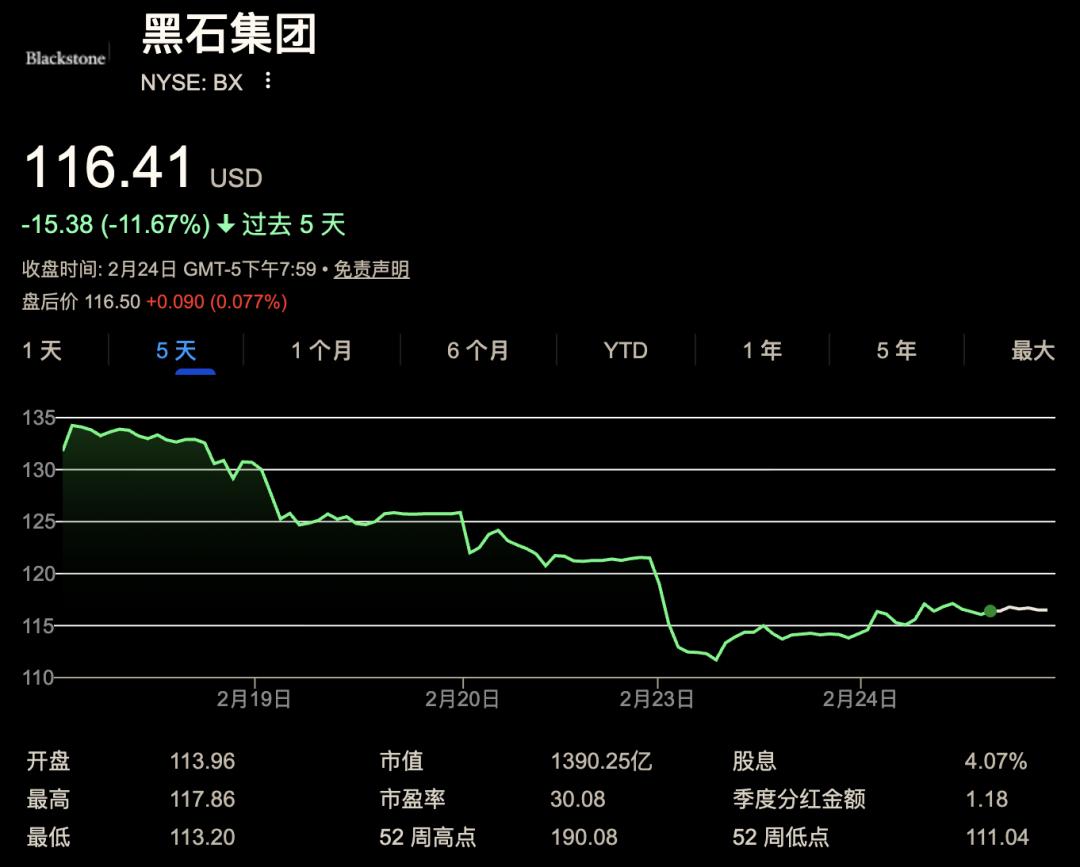
Mistral CEO:AI可能取代超半数企业软件
Sou Hu Cai Jing· 2026-02-24 09:46
Core Viewpoint - The CEO of Mistral AI, Arthur Mense, stated that over half of the software purchased by enterprises today may eventually be replaced by AI, indicating a significant shift towards AI-based applications rather than traditional SaaS services [2][3] Group 1: Impact of AI on Enterprise Software - Mistral AI estimates that more than 50% of current SaaS spending could shift towards AI solutions as companies increasingly opt to build their own AI-based applications [2][3] - The ability of AI to create fully customized applications in a matter of days for various workflows, such as procurement and supply chain, is a key reason enterprises are moving away from traditional software [3] Group 2: Opportunities for Mistral AI - Mistral AI sees a substantial opportunity in this platform shift, with over 100 enterprise clients seeking to modernize their IT systems and move away from outdated, expensive products purchased two decades ago [2] - The recent acquisition of Koyeb, a cloud startup based in Paris, aligns with Mistral AI's strategy to enhance its offerings in the AI space [2] Group 3: Persistence of Core Business Systems - Despite the rise of AI applications, Mense believes that foundational business systems for storing and structuring enterprise data will continue to exist and remain essential for AI applications [2][3]

应星控股再涨超7% 公司称正在探索建立其AI基础设施及SaaS能力
Zhi Tong Cai Jing· 2026-02-24 08:11
Core Viewpoint - Yingxing Holdings (01440) has seen a significant increase in stock price, rising over 40% in the month, with a current price of 10.57 HKD and a trading volume of 13.2 million HKD [1] Group 1: Business Developments - The company has successfully established various forms of collaboration with internationally renowned IP partners [1] - Yingxing Holdings is utilizing the IP from a series on international streaming platforms to design, manufacture, promote, and sell a range of merchandise [1] - A pop-up store has been opened in a shopping center in Hong Kong, along with an online store for selling related products [1] Group 2: AI Infrastructure and SaaS Initiatives - The company is exploring the establishment of its AI infrastructure and Software as a Service (SaaS) capabilities to support its AI-driven business plans [1] - Yingxing Holdings has signed memorandums of understanding with independent third-party AI service providers specializing in cloud computing, green energy AI data centers, integrated smart computing support solutions, customized core algorithms, and specific industry model training [1]
AI时代的一人公司 一个人就是一支队伍
3 6 Ke· 2026-02-12 23:09
Core Insights - The rise of "One-Person Businesses" is transforming the entrepreneurial landscape, allowing individuals to create impactful companies without traditional structures or large teams [3][5][24] - Independent founders leverage AI, global talent networks, and efficient tools to redefine success and operational efficiency [3][7][21] What is a One-Person Business? - A One-Person Business is operated by a single individual who maintains a minimal core structure while utilizing strategic outsourcing, automation, and collaboration networks to amplify their influence [4][6] - Independent founders act as the central visionaries and decision-makers, coordinating resources around business objectives [4] The Era of Independent Founders - The emergence of One-Person Businesses signifies a major shift in entrepreneurship, where individuals can build multimillion-dollar enterprises using just a laptop [5][21] - Data from Crunchbase indicates that startups founded by independent entrepreneurs are the most common type to secure over $10 million in funding and achieve successful exits [7] AI as a Virtual Co-Founder - AI tools serve as tireless partners for independent entrepreneurs, enabling them to perform tasks that previously required entire teams, such as generating marketing content and analyzing user data [7][9] - Successful founders view AI as a collaborator, where they provide creativity and strategy while AI handles execution and analysis [7] Connecting Global Talent Instead of Hiring Full-Time Employees - Independent founders effectively manage flexible networks of remote developers and freelancers instead of traditional full-time teams [8][10] - This model allows for significant cost savings and access to specialized expertise without the burden of managing a large workforce [10] Daily Operations of a One-Person Business - Independent founders focus on strategic tasks while automating or outsourcing other functions, allowing them to operate businesses that typically require many employees [12][15] - Successful entrepreneurs prioritize their time on essential activities, minimizing time spent on infrastructure management [12] Reasons to Maintain a One-Person Structure - Many entrepreneurs choose to remain solo to retain decision-making flexibility and avoid conflicts that can arise in co-founder partnerships [13][15] - Notable examples include Elon Musk with SpaceX, Matt Mullenweg with Automattic, and Ryan Petersen with Flexport, all of whom started as independent founders [13] Challenges of Independent Entrepreneurship - Independent entrepreneurs face unique challenges, including business continuity risks, decision-making isolation, resource limitations, and skill gaps [17][18][19][20] Core Principles for Building a One-Person Business - Key principles for success include designing business processes for automation, mastering asynchronous collaboration, and establishing clear standard operating procedures (SOPs) [21][22] - The potential of One-Person Businesses is expected to grow as AI capabilities and remote collaboration tools continue to evolve [21] Conclusion: The Infinite Possibilities of One-Person Businesses - The rise of One-Person Businesses represents a profound change in value creation logic, demonstrating that significant impact can be achieved without large organizations [24] - This trend signals that with the right strategies and tools, individuals can achieve extraordinary success, emphasizing the importance of agility and technology in the future of business [24]