
Skywork UniPic

Search documents
昆仑万维业绩拐点已现:Q3净利1.9亿元,AI驱动持续增长可期
Cai Jing Wang· 2025-10-30 14:27
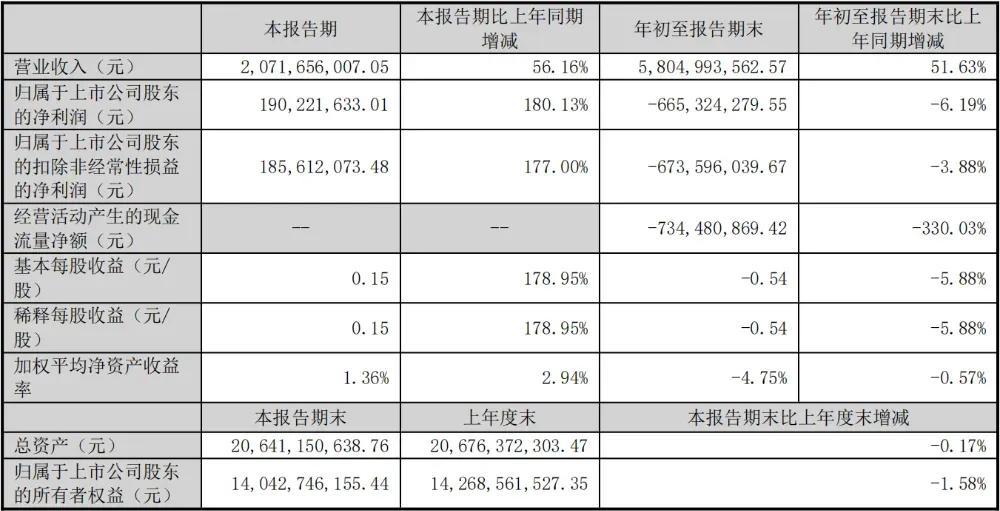
Core Viewpoint - Kunlun Wanwei has successfully returned to profitability in Q3 2025, driven by strategic investments in AI and a strong revenue growth trajectory, indicating a positive transformation in its business model [1][2][10]. Financial Performance - For the first three quarters of 2025, Kunlun Wanwei achieved a revenue of 5.805 billion yuan, representing a year-on-year increase of 51.63%. In Q3 alone, revenue reached 2.072 billion yuan, up 56.16% year-on-year, with net profit attributable to shareholders rising to 190 million yuan, a 180.13% increase [1][2][10]. - The overall gross margin for the company stood at 67%, maintaining a high level [2]. AI Strategy and Technological Development - The company has been focusing on solidifying its technological foundation and accelerating the commercialization of its AI business, which is now entering a harvest phase [2][3]. - R&D expenses increased from 1.144 billion yuan to 1.211 billion yuan in the first three quarters, reflecting the company's commitment to building an AI ecosystem [3][5]. Product Innovations and Market Position - Kunlun Wanwei has launched several advanced AI models, including the Skywork series, which have achieved top rankings in various evaluations, showcasing the company's strength in AI research and application [4][5]. - The company's short drama platform, DramaWave, has seen significant growth, ranking third in overseas short drama platform revenue as of August 2025, with over 4 million downloads in a single month [5][6]. Global Expansion and Revenue Growth - The company reported overseas revenue of 5.4 billion yuan for the first three quarters of 2025, a year-on-year increase of 58%, with overseas revenue accounting for 93% of total revenue [10][11]. - The global market for short dramas is projected to reach 2.473 billion USD in 2025, indicating a robust growth opportunity for Kunlun Wanwei's international business [10]. Future Outlook - The company aims to leverage its unique global platform advantages to integrate AI technology with various business sectors, fostering a new growth paradigm [11][12]. - Analysts suggest that as the company transitions from investment to revenue generation, its growth potential and strategic execution capabilities are likely to be reassessed positively by the market [11][12].

昆仑万维Q3:收入涨56%扭亏,海外短剧APP收入第三,上线漫剧人均看30分钟
3 6 Ke· 2025-10-30 10:13
Financial Highlights - In Q3 2025, Kunlun Wanwei achieved revenue of 2.072 billion yuan, a year-on-year increase of 56.16% [1][2] - The net profit attributable to shareholders reached 190 million yuan, marking a significant year-on-year growth of 180.13% [1][2] - For the first three quarters of 2025, total revenue was 5.805 billion yuan, up 51.63% year-on-year, with overseas business revenue accounting for 93.3% of total revenue [1][2] AI Business Developments - Kunlun Wanwei has launched several AI models since July, including Skywork-R1V 3.0 and Matrix-3D, showcasing strong innovation capabilities [1][2] - The company has also introduced the AI Developer (Vibe Coding Agent) in its overseas product lineup [3] DramaWave Performance - DramaWave, the short drama platform, has seen rapid growth, ranking third in overseas short drama revenue as of August 2025, with monthly downloads exceeding 4 million [3] - In the last 30 days, DramaWave's advertising material volume has increased from approximately 25,000 to 30,000 daily [4] Audience Insights - DramaWave's user demographics show a predominance of female users at 77.59%, with the largest age group being 25-34 years old at 37.96% [9] - In contrast, the audience for anime dramas on the platform is primarily male, with male users making up between 82.25% and 90.91% of the audience for high-exposure anime materials [12]

昆仑万维:第三季度净利润同比增180.13%,AI业务驱动高增长
Zheng Quan Shi Bao Wang· 2025-10-29 13:53
Core Insights - The company reported a significant increase in revenue and profitability for the third quarter of 2025, with total revenue reaching 5.8 billion yuan, a year-on-year growth of 52% [1] - AI-related business revenue saw substantial growth, reinforcing the company's leading position in the industry [1] - The company's overseas business revenue amounted to 5.4 billion yuan, marking a 58% year-on-year increase, with overseas revenue accounting for 93% of total revenue, up 3.6 percentage points from the previous year [1] - The overall gross margin stood at 67%, maintaining a high level [1] - The net profit attributable to shareholders for the third quarter was 190 million yuan, reflecting a year-on-year increase of 180.13% and a turnaround from previous losses [1] AI Model Development - The company has been actively open-sourcing a series of AI models to promote the development of the AI industry ecosystem [2] - Key releases include the Skywork-Reward-V2 series reward model, the multi-modal reasoning model Skywork-R1V 3.0, and the self-regressive multi-modal unified model Skywork UniPic [2] - The company also launched the Matrix-3D model for generating high-quality 3D scenes from single images and the upgraded Matrix-Game 2.0 for interactive world modeling [2] - A significant academic breakthrough was achieved with a paper selected as a Spotlight paper at the NeurIPS 2025 conference [2] AI Assistant and Future Outlook - The company introduced the next-generation AI agent, Skywork Deep Research Agent V2, aimed at lowering the barriers for professional research and application development [3] - The overseas version of the AI Developer (Vibe Coding Agent) was launched as part of the Tian Gong Super Intelligent Agent [3] - The company is making steady progress in the AI and metaverse sectors, with the Opera Neon browser becoming a core traffic entry point for the AI-driven internet [3] - Looking ahead, the company plans to seize historical opportunities in the AI era, increasing investment in AGI, multi-modal, and intelligent agent research and innovation [3] - The company aims to leverage its global platform advantages to integrate AI technology with various business sectors, fostering long-term stable growth and creating greater value for global users and partners [3]
英伟达深夜回应芯片“后门”问题;王健林再转让一座万达广场;理想汽车高管邀请乘龙卡车直播对撞;微软成史上第二家市值破4万亿美元公司
Sou Hu Cai Jing· 2025-08-01 00:50
Group 1 - The National Development and Reform Commission emphasizes the need to stabilize investment and promote consumption, focusing on high-quality development of the "low-altitude economy" and "Artificial Intelligence+" initiatives [4] - The Ministry of Commerce responds to Cheung Kong Group's sale of overseas port assets, stating that the Chinese government will conduct regulatory reviews to protect market competition and national interests [4] - ByteDance clarifies that the average tenure of its employees is 3.0 years, countering claims of a 7-month average [8] Group 2 - Nvidia addresses concerns regarding security vulnerabilities in its chips, asserting that there are no "backdoors" allowing remote access [7] - Wang Jianlin transfers ownership of a Wanda Plaza, indicating ongoing changes in the company's asset management [6] - Ideal Auto's executives invite a rival brand to a live crash test to address safety concerns raised by a recent video [8] Group 3 - Amazon reports a Q2 net profit of $18.16 billion, a 34.7% year-over-year increase, with revenues of $167.7 billion [13] - Apple announces a Q3 net profit of $23.43 billion, a 9% increase, with revenues of $94.04 billion [14] - BMW's net profit for the first half of the year declines by 29% to €4 billion, with sales revenue down 8% [15][16] Group 4 - JD.com plans to acquire CECONOMY AG, valuing the deal at approximately €2.2 billion (over 18 billion RMB) [19][20] - Microsoft becomes the second company globally to surpass a market capitalization of $4 trillion, reporting a Q4 revenue of $76.44 billion [20] - WuXi AppTec plans to place 73.8 million H-shares [20]


豆包图像编辑模型3.0发布,扣子正式开源;1688全面AI化丨AIGC日报
创业邦· 2025-07-31 00:08
Group 1 - Volcano Engine released the Doubao Image Editing Model 3.0 and Doubao Simultaneous Interpretation Model 2.0, enhancing AI cloud-native services and providing tools for enterprises and developers [1] - Microsoft introduced the Copilot mode in the Edge browser, enhancing AI capabilities for reading and understanding web content, generating comparison tables, and voice functions, although it remains in the experimental phase [2] - Kunlun Wanwei launched and open-sourced the Skywork UniPic multimodal unified pre-training model, integrating image understanding, text-to-image generation, and image editing capabilities [3] Group 2 - Alibaba's 1688 platform announced a comprehensive AI upgrade, launching the "1688AI version" app and the free enterprise query tool "88查," focusing on entrepreneurship and sourcing scenarios with integrated AI functionalities [4]

腾讯研究院AI速递 20250731
腾讯研究院· 2025-07-30 16:03
Group 1: ChatGPT Learning Mode - OpenAI has launched a new feature "Learning Mode" for ChatGPT, which uses a Socratic method to help users understand complex concepts [1] - This feature is available for all users, including free, Plus, professional, and team versions, offering interactive prompts, step-by-step answers, and personalized support [1] - The underlying prompts were discovered and made public by developer Simon Willison, allowing the system to adjust teaching strategies based on users' educational backgrounds and knowledge bases [1] Group 2: Grok's Imagine Video Feature - Elon Musk's xAI is set to launch a new image and video generation feature "Imagine" for the Grok iOS app, which supports audio-enabled video generation and can create four video segments at once [2] - The feature has been tested to produce realistic effects with rich details and supports various styles based on user input through voice or text [2] - Imagine will have its own dedicated tab, providing near real-time image generation and different preset modes like Spicy, Fun, and Normal, directly competing with Google's Veo 3 [2] Group 3: Kunlun Wanwei's Skywork UniPic - Kunlun Wanwei has open-sourced a multi-modal unified model called Skywork UniPic, which achieves performance comparable to specialized models with 10 billion parameters using only 1.5 billion parameters [3] - The model employs an autoregressive architecture, integrating image understanding, text-to-image generation, and image editing capabilities [3] - UniPic has reached state-of-the-art levels in multiple benchmark tests through high-quality small data training and a proprietary reward model [3] Group 4: Qunhe Technology's InteriorGS Dataset - Qunhe Technology has released the world's first large-scale 3D semantic dataset, InteriorGS, which includes 1,000 detailed 3D Gaussian semantic scenes covering over 80 types of indoor environments [4][5] - The dataset integrates 3D Gaussian technology with the proprietary spatial model SpatialLM, creating a closed loop between reality and virtuality, positioning it as the "ImageNet" for embodied intelligence [5] - The SpatialVerse platform has collaborated with institutions like Google, Stanford, and Intel to provide simulation data training for companies like Zhiyuan Robotics, aiming to overcome the Sim2Real challenge [5] Group 5: TuoZhu Technology's MakerWorld - TuoZhu Technology's 3D model platform MakerWorld has fully integrated Tencent's mixed 3D, with expected monthly usage surpassing 100,000 calls [6] - The mixed 3D technology achieves high-precision modeling at 0.1mm, with geometric resolution reaching 1024 levels, allowing models to be printed directly without repair [6] - The platform supports quick generation from text and image inputs, significantly lowering the barriers to 3D modeling and design cycles [6] Group 6: WPS Lingxi Office AI - WPS Lingxi has integrated AI deeply into its Office software, enabling one-stop completion of tasks like document writing, PPT creation, document reading, and data analysis [7] - It utilizes atomic operation technology to intelligently identify modification boundaries, addressing pain points in PPT and document editing [7] - In addition to creation features, it offers AI search, knowledge base, and AI document chat functionalities, enhancing both work efficiency and creative quality [7] Group 7: Volcano Engine's SeedEdit 3.0 - Volcano Engine has launched the SeedEdit 3.0 image editing model, emphasizing instruction adherence, subject retention, and quality control [8] - The model allows various image editing operations through natural language commands, competing with GPT-4o and Gemini 2.5 Pro in tasks like text modification and background replacement [8] - It is based on the text-to-image model Seedream 3.0, employing multi-stage training strategies and adaptive time-step sampling to achieve an 8x inference speedup, reducing runtime from 64 seconds to 8 seconds [8] Group 8: Google NotebookLM Video Overviews - Google has updated its AI note-taking tool NotebookLM, introducing the "Video Overviews" feature that automatically generates structured videos from user-uploaded notes, PDFs, and images [10] - Users can customize video content based on learning themes, knowledge bases, and learning goals, enhancing personalized learning experiences [10] - This feature is now available to all English users, with the NotebookLM Studio panel upgraded to support multiple output versions in one notebook [10] Group 9: Li Auto's VLA Driver Model - Li Auto has introduced the industry's first mass-produced VLA (Vision-Language-Action) driver model with the i8 model, set to be OTA pushed to all AD Max models equipped with Thor-U and Orin-X platforms in August [11] - The VLA model can understand natural language commands, set speed based on past memories, and assess risks in complex driving conditions, marking a shift from "behavior imitation" to "intent understanding" in assisted driving [11] - The development of VLA relied on 1.2 billion kilometers of effective data and a 13 EFLOPS training platform, reducing testing costs from 18 yuan per kilometer to 0.5 yuan [11] Group 10: Eric Schmidt on China's AI Development - Former Google CEO Eric Schmidt stated at the WAIC conference that China's AI technology has made significant progress in two years, with models like DeepSeek, Mini Max, and Kimi reaching global leadership [12] - The key difference in AI development between China and the U.S. is China's "open weights" strategy, which Schmidt believes is crucial for rapid AI advancement [12] - Schmidt advocates for enhanced Sino-U.S. AI cooperation, emphasizing the importance of open dialogue and trust-building to address AI misuse risks and ensure human safety and dignity [12]
昆仑万维推出并开源Skywork UniPic
Zheng Quan Ri Bao Wang· 2025-07-30 07:14
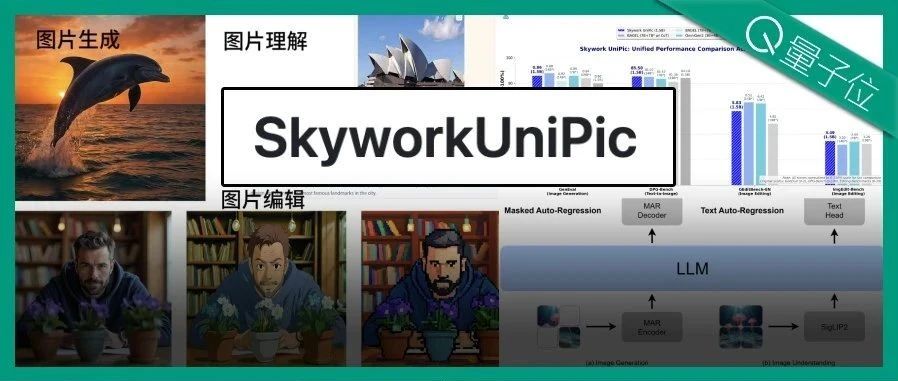
Core Insights - Kunlun Wanwei Technology Co., Ltd. has launched and open-sourced the Skywork UniPic model, which integrates image understanding, text-to-image generation, and image editing capabilities into a single framework [1][2] - The model is based on large-scale high-quality data for end-to-end pre-training, demonstrating strong generalization and transferability [1] Group 1: Model Architecture - Skywork UniPic features a unified multimodal model architecture that deeply integrates three core tasks: image understanding, text-to-image generation, and image editing [1] - Traditional multimodal models often rely on VQ or VAE encoders, which focus more on visual details than semantic information, potentially weakening image understanding capabilities [1] - The Skywork UniPic team has made key adjustments in representation methods, utilizing the MAR encoder for visual representation in the image generation path and introducing SigLIP2 as the backbone for the image understanding path [1] Group 2: Performance and Efficiency - The model completes an end-to-end optimization process, enabling collaborative training and mutual enhancement of the three core capabilities, overcoming technical bottlenecks in traditional methods [2] - Skywork UniPic maintains a compact parameter size of 1.5 billion, achieving state-of-the-art (SOTA) scores without the use of Chain of Thought (CoT), nearing the performance of larger models that utilize CoT [2] - The model has reached an industry SOTA score of 85.5 on the DPG-Bench complex instruction generation benchmark [2]
1.5B参数撬动“吉卜力级”全能体验,国产开源之光多模态统一模型,来了
量子位· 2025-07-30 04:48
Core Viewpoint - The article discusses the emergence of the Skywork UniPic model, which integrates multi-modal capabilities in AI, showcasing its performance and potential impact on the industry [1][2][4]. Group 1: Model Features and Performance - Skywork UniPic is a 1.5 billion parameter model that achieves performance comparable to larger models, demonstrating high "performance density" and can run smoothly on consumer-grade graphics cards [10][12]. - The model excels in various tasks, including image understanding, text-to-image generation, and image editing, with notable scores in GenEval and DPG-Bench benchmarks [25][26][27]. - Skywork UniPic utilizes an autoregressive model architecture, allowing for deep integration of image generation within a multi-modal framework, distinguishing it from mainstream diffusion models [30][33]. Group 2: Data and Training Strategies - The model's training is based on a refined dataset approach, utilizing high-quality image-text pairs for pre-training, which enhances its semantic representation capabilities [37][42]. - A progressive multi-task training strategy is employed, focusing on one task at a time to ensure stability and performance across understanding, generation, and editing tasks [53][60]. - The team implemented specialized reward models to ensure high-quality training data, significantly improving the model's performance in both image generation and editing tasks [48][50]. Group 3: Industry Implications and Trends - The rise of native multi-modal unified models like Skywork UniPic indicates a shift in the AI landscape, emphasizing efficiency and user experience over sheer scale [61][63]. - The open-source approach taken by companies like Kunlun Wanwei is fostering innovation and accessibility in AI technology, allowing broader participation in AI development [65][68]. - The article highlights the potential for a creative explosion in AI applications, driven by user-friendly tools that lower the barriers to entry for utilizing AI [69].
昆仑万维:正式推出并开源多模态统一预训练模型Skywork UniPic
Zheng Quan Shi Bao Wang· 2025-07-30 03:04
Core Insights - Kunlun Wanwei officially launched and open-sourced the "Skywork UniPic," a self-regressive multimodal unified pre-training model that integrates image understanding, text-to-image generation, and image editing capabilities within a single model [1][2] - The model is based on large-scale high-quality data for end-to-end pre-training, demonstrating strong generalization and transferability [1] - Skywork UniPic follows the self-regressive paradigm of GPT-4o, marking the maturity of multimodal unified pre-training models in the AI field [1] Model Architecture - Traditional multimodal models often rely on VQ or VAE encoders, which focus more on visual details than semantic information, potentially weakening image understanding [1] - The Skywork UniPic team adopted the Harmon architecture design and made key adjustments in representation methods, using MAR encoders for visual representation in image generation and SigLIP2 as the backbone for image understanding [1][2] - The architecture allows for collaborative training and mutual enhancement of generation, understanding, and editing capabilities, overcoming technical bottlenecks in traditional methods [2] Efficiency and Design Philosophy - Skywork UniPic maintains the simplicity and efficiency of self-regressive models while achieving deep collaboration across tasks through shared encoders, laying a solid foundation for practical deployment of multimodal unified models [2] - The model features a compact parameter size of 1.5 billion, embodying the design philosophy of "small yet beautiful" technology aesthetics [2] - Over the past six months, the company has open-sourced several state-of-the-art models across various fields, with Skywork UniPic now joining the "Skywork" open-source family [2]