
StarV Air2

Search documents
中国AI眼镜军团CES霸场,27家公司组团秀肌肉,2026百镜大战
Xin Lang Cai Jing· 2026-01-09 09:01
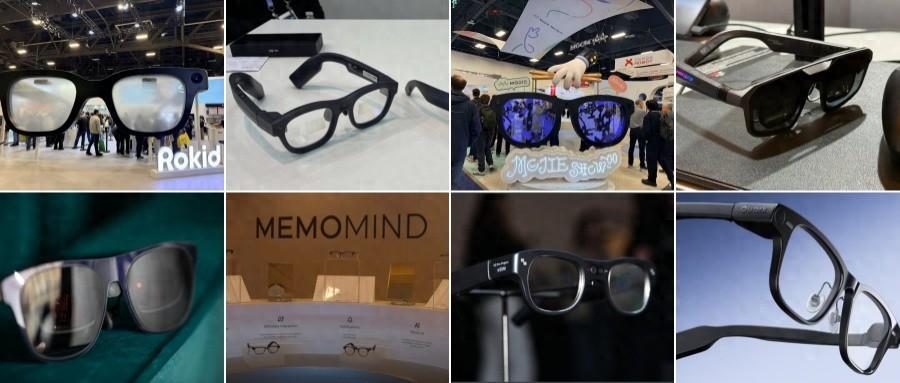
Core Insights - The CES 2023 showcased a significant presence of Chinese manufacturers in the smart glasses and VR/AR market, indicating a shift in industry dynamics with local players gaining traction [2][44] - The Chinese smart glasses market is projected to see substantial growth, with shipments expected to reach 623,000 units by Q3 2025, reflecting a year-on-year increase of 62.3% [4][46] - The event highlighted the competitive landscape, with numerous companies unveiling innovative products, suggesting a "battle of the glasses" in the coming years [42][85] Group 1: Major Players - Rokid attracted attention with its giant glasses display and launched the Rokid Style, claimed to be the lightest full-feature AI glasses at 38.5 grams, starting at $299 [7][48] - INMO introduced two key products: INMO Go3, which offers real-time translation in 261 languages, and INMO AIR3, the first mass-produced 1080P wireless AR glasses, which sold out quickly [9][53] - XREAL showcased the ROG Xreal R1, the first gaming glasses with a 240Hz refresh rate, and announced the upcoming XREAL 1S, featuring a proprietary chip for 3D content conversion [14][57] Group 2: Cross-Industry Innovations - Alibaba presented the Quark AI glasses S1, which allows interaction through voice commands and boasts a battery life of 7 hours, powered by dual flagship chips [22][66] - XGIMI launched its MemoMind AI glasses, marking its entry into the smart glasses market with two series [27][70] Group 3: Emerging Startups - Gyges Labs introduced the world's first AI note-taking ring, which gained significant media attention for its unique functionality [30][73] - MicroVision unveiled the M6 series of AR glasses, which feature hardware that can be sustainably upgraded without replacing the entire device [32][75] - Various smaller companies showcased innovative products, contributing to a diverse and competitive landscape in the smart glasses sector [40][83]

更名不到一年,“星纪魅族科技”改回原名“魅族科技”
Guo Ji Jin Rong Bao· 2025-07-01 14:41
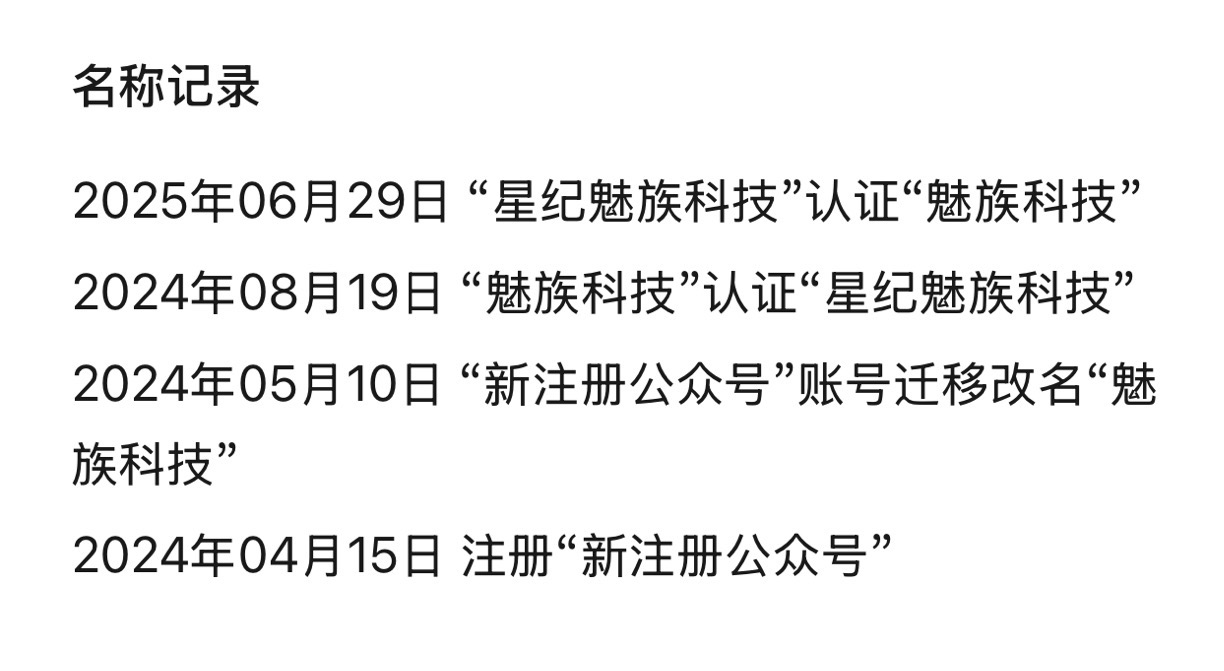
Core Viewpoint - The recent rebranding of "Starry Meizu Technology" back to "Meizu Technology" raises questions about potential strategic adjustments within the company, occurring less than a year after a previous major rebranding effort [1] Group 1: Company Changes - The official accounts related to Meizu Technology have removed the "Starry" prefix, indicating a shift back to the original branding [1] - Personnel changes have been noted, with Huang Zhipan taking over as the legal representative and CEO of Zhuhai Starry Meizu Information Technology Co., Ltd., succeeding Su Jing [2] - The company structure shows that Zhuhai Meizu Technology Co., Ltd. and Hubei Starry Meizu Technology Co., Ltd. each hold a 50% stake in the company, with Huang Zhipan being the brother of the founder, Huang Zhang [2] Group 2: Strategic Developments - The rebranding coincides with the third anniversary of Geely's acquisition of Meizu Technology, which has led to significant structural changes and strategic investments [4] - The establishment of the Starry Meizu Group aimed to integrate various technologies, including automotive systems and XR technology, alongside traditional smartphone offerings [4] - The Flyme Auto system has achieved over 1.16 million sales in collaboration with various automotive brands, indicating a successful entry into the automotive technology market [4] Group 3: Product Focus and Market Position - Meizu has launched several AR smart glasses, but the domestic market for smart glasses remains underdeveloped, with no standout products achieving significant sales [5] - The company aims to regain a top position in the domestic mid-to-high-end smartphone market within three years, with plans to establish 1,000 integrated offline experience stores [6] - The upcoming Meizu 22 series is positioned as a flagship product focusing on AI capabilities and compact design, with a strategic shift towards enhancing camera performance [7]
智能眼镜行业深度报告之二:AI、AR眼镜多点开花,传统眼镜赛道的蝶变
Shenwan Hongyuan Securities· 2025-06-25 13:41
Investment Rating - The report maintains a positive outlook on the smart glasses industry, indicating a robust growth trajectory and recommending attention to key players such as 康耐特光学, 明月镜片, 博士眼镜, and 英派斯 [5][31]. Core Insights - The smart glasses market is experiencing rapid growth, driven by the introduction of AI and AR glasses, with significant potential for long-term expansion [2][6]. - The industry is at a pivotal point where traditional eyewear is evolving, and midstream lens manufacturing and downstream eyewear channels remain crucial [3][7]. - The report highlights the increasing integration of advanced functionalities in smart glasses, which enhances user interaction and expands application scenarios [18][19]. Summary by Sections 1. Smart Glasses: AI and AR Glasses Flourishing - AI glasses, exemplified by Meta's RayBan Meta, have ignited market interest, with significant sales growth expected [24][29]. - AR glasses are evolving with continuous optical solution iterations, broadening their application scope [6][18]. - The market is witnessing a surge in domestic players, with companies like 雷鸟创新, Xreal, and Rokid rapidly developing their product lines [4][6]. 2. Transformation of Traditional Eyewear - The midstream lens manufacturing sector is seeing steady global demand growth, with a shift towards higher-value, functional products [4][7]. - Downstream channels, particularly offline retail, play a vital role in capturing consumer trends and facilitating product development [9][7]. - The report emphasizes the importance of collaboration between smart glasses manufacturers and established eyewear retailers to enhance market penetration [9][7]. 3. Key Companies to Watch - 康耐特光学 is positioned as a leading lens manufacturer, focusing on domestic market growth and XR business opportunities [5][31]. - 明月镜片 is enhancing its product structure and actively engaging in high-growth segments like AI glasses [5][31]. - 博士眼镜 is expanding its retail presence and integrating smart glasses into its service offerings [5][31]. - 英派斯 is diversifying into the AI glasses sector while maintaining steady growth in its core fitness equipment business [5][31].



AI硬件,会是下一个万亿市场吗?
Hu Xiu· 2025-06-08 11:44
Core Insights - OpenAI has announced its largest acquisition to date, acquiring AI hardware startup IO for nearly $6.5 billion, aiming to develop a new series of AI devices that will change human-computer interaction [2][4][11] - The founder of IO, Jony Ive, known for his work at Apple, will collaborate with OpenAI in an advisory role, infusing the company with a strong design ethos [2][3] - The new device is expected to be produced by 2027, featuring a compact design similar to the iPod Shuffle, with capabilities for voice interaction and environmental awareness, but lacking a display [5][14] Group 1: Strategic Intent - OpenAI's acquisition of IO is part of a larger strategy to enhance its distribution capabilities and reach more users, moving beyond reliance on third-party platforms [11][19] - The company recognizes that the competitive edge in AI is shifting from model performance to user interaction and distribution methods [7][8] - OpenAI aims to create a new category of AI hardware that integrates seamlessly into daily life, inspired by the concept of an omnipresent AI companion as depicted in the film "Her" [12][13][14] Group 2: Market Dynamics - The AI hardware market is projected to reach $474.1 billion by 2030, with a compound annual growth rate of 38.73% [9] - The current landscape shows a surge in AI hardware products, with various companies, including startups, making significant strides in the market [16][17] - Despite the involvement of major tech companies, there remains a viable opportunity for startups to carve out niche markets within the AI hardware space [19]
最新AI眼镜格局报告:百镜大战拉开序幕,阿里DeepSeek高通成幕后赢家
量子位· 2025-06-05 10:28
Core Viewpoint - The article discusses the rising popularity and competitive landscape of AI glasses, highlighting the transition from niche tech enthusiasts to a broader consumer base, and the ongoing "battle of the hundred glasses" in the market [1][3]. Group 1: Market Overview - AI glasses are increasingly recognized as a hot category in AI hardware, with various products like Ray-Ban Meta and Rokid Glasses gaining traction [1][3]. - The current market features a limited number of AI glasses available for immediate delivery, despite numerous announcements of upcoming products [5]. - The integration of large language models and multi-modal capabilities is enhancing the functionality of AI glasses, making them more appealing to consumers [3][6]. Group 2: Competitive Landscape - The report identifies key players in the AI glasses market, including major manufacturers and emerging startups, with a focus on their unique advantages based on their existing business models [27][29]. - The competition is characterized by a diverse range of products, with XR companies leading the market, accounting for over half of the released AI glasses [31]. Group 3: Technological Advancements - The integration of advanced models like Tongyi Qianwen and DeepSeek is crucial for enhancing the semantic understanding and multi-modal interaction capabilities of AI glasses [6]. - Qualcomm's Snapdragon AR1 chip is highlighted as a dominant choice among manufacturers due to its high maturity and performance in image processing and AI capabilities [8][10]. Group 4: Product Features and Trends - Common features of AI glasses include AI voice interaction and translation, with variations in additional functionalities depending on the product type [12]. - AI shooting glasses are currently leading in sales volume, with products like Ray-Ban Meta and Thunder V3 being prominent examples [14][15]. - The future of AI glasses is expected to evolve towards a comprehensive smart wearable solution that integrates various functionalities, including audio, camera, and display capabilities [17][22]. Group 5: Competitive Factors - The competitiveness of AI glasses is influenced by several factors, including design, hardware, software, model capabilities, and content ecosystem [19][21]. - Different stages of product development emphasize varying competitive elements, with the current focus on providing specific functional tools and future aspirations towards a more integrated service experience [22].

2024年消费级AR眼镜市场动态与行业趋势洞察
艾瑞咨询· 2025-05-14 12:41
Core Insights - The report highlights the rapid evolution of consumer-grade AR glasses, driven by advancements in optical display and AI integration, leading to a competitive landscape among various manufacturers [1][2][4]. Industry Status - Continuous R&D investment in the AR sector by domestic and international companies is fostering technological innovation and product development. Major players include internet giants, smartphone manufacturers, and AR startups, with a significant shift towards AI integration in AR glasses [2][19]. - The domestic AR glasses market is characterized by a strong presence of local brands such as Starry Sky Meizu, Thunderbird Innovation, XREAL, Rokid, and INMO, collectively referred to as the "Five Little Dragons" of AR glasses, which are rapidly gaining market share against foreign competitors [2][19][21]. Market Overview - In 2024, AR glasses sales reached 286,000 units, with Q4 witnessing record-high sales due to new product launches. Leading brands dominate the market, each carving out niches based on specific advantages [2][23][26]. - The market is expected to maintain momentum into 2025, with ongoing product innovations enhancing portability, functionality, and technology [23][29]. Company Analysis - The report provides an in-depth analysis of leading brands such as Starry Sky Meizu, Thunderbird Innovation, and XREAL, focusing on their product launches, technological advancements, and ecosystem collaborations [3][34][46]. - Starry Sky Meizu is noted for its significant investment in optical waveguide technology and AI integration, positioning itself as a leader in the AR glasses market [42][44]. Technological Trends - Optical waveguide technology is identified as a key driver for the future of consumer-grade AR glasses, offering advantages in lightweight design, high transparency, and display quality [8][50]. - The integration of AI into AR glasses is enhancing user experience and expanding application scenarios, making these devices more appealing to consumers [51][52]. Competitive Landscape - The competitive dynamics of the AR glasses market are influenced by short-term hardware specifications and popular products, while long-term success will depend on cross-device collaboration, developer ecosystems, and data asset depth [55].

星纪魅族发布智能眼镜线下支付功能
news flash· 2025-04-29 01:10
Core Insights - Starry Meizu launched the world's first smart glasses with offline payment functionality on April 29 in Hong Kong [1] - This feature is a result of deep collaboration with Ant International's Alipay+ cross-border payment technology team [1] - The payment function will be first available on the StarV Air2 product and is expected to be rolled out across new products in Q3 of this year [1] - The payment can be completed through voice recognition without the need for a mobile phone, filling a gap in the smart glasses industry regarding payment capabilities [1]
一周要闻·阿联酋&卡塔尔|中东北非首次,MWC落户卡塔尔/星纪魅族进军中东
3 6 Ke· 2025-04-21 10:34
Group 1 - Starry Meizu officially enters the Middle East market, launching multiple products including the Meizu 21 series smartphones and various smart wearable devices [2] - New Hope Group signs a 15-year LNG purchase agreement with ADNOC, committing to an annual supply of approximately 1 million tons of LNG, marking the largest LNG contract between the UAE and a Chinese partner [2] - Zhejiang Construction International and Alawael Group sign a strategic cooperation agreement to exclusively collaborate on engineering and construction projects in the Middle East, excluding Saudi Arabia [2] Group 2 - Shanghai Foreign Economic Group and Tadweer Group sign a memorandum of understanding to develop a facility in Abu Dhabi that converts industrial solid waste into green building materials [3] - UNCTAD and the UAE Ministry of Investment sign a memorandum to enhance cooperation in investment policy formulation and sustainable economic development [3] - UAE establishes the Global Energy Efficiency Alliance to improve energy efficiency across various sectors, aiming to double the rate of energy efficiency improvements by 2030 [3] Group 3 - Dubai International Airport retains its title as the world's busiest international airport for the 11th consecutive year, serving 92.3 million passengers in the previous year, a 6.1% increase from 2023 [4] - Abu Dhabi's tourism sector is projected to contribute 62 billion dirhams (approximately 16.9 billion USD) to the economy by 2025, with a 13% year-on-year growth [4] - Dubai South's MBRAH completes the first phase of its aerospace supply chain zone, covering 1.29 million square feet, with ongoing expansion projects [4] Group 4 - Abu Dhabi launches a life sciences cluster expected to contribute 25.6 billion USD to GDP and create 30,000 medical jobs by 2045 [5] - UAE updates tax regulations, adopting OECD guidelines on global anti-base erosion rules, furthering its commitment to international tax standards [5] - Ajman reports a 41% year-on-year increase in real estate transaction value, reaching 2.06 billion dirhams in March 2025 [6]

