
TSLP单抗

Search documents
ai制药在药物发现当期影响和未来前景
2026-03-20 02:27
Summary of AI Pharmaceutical Industry Conference Call Industry Overview - The AI pharmaceutical industry's core objective is to increase clinical conversion rates by 3-4% and shorten the R&D cycle to 8-9 years, with a critical window for validating technology effectiveness expected during the intensive disclosure of Phase II clinical data in 2026-2027 [1][6] - The market valuation logic is shifting from "platform premium" to "pipeline value," leading to higher stock price volatility compared to traditional biotech firms [1][3] Key Insights and Arguments - AlphaFold2 has shifted the R&D focus from small molecules to large molecules and de novo design, although over 70% of the current clinical pipeline still consists of low molecular weight drugs [1][5] - AI's contribution to the CRO industry is incremental rather than disruptive, primarily reflected in model training orders and increased exploratory demand [1][6] - The main technical bottlenecks include the "black box problem" of models and unexpected biological risks in large molecule de novo design [1][9] - MNC strategic movements serve as industry benchmarks, with companies like Eli Lilly investing in GPU robotic laboratories to create closed-loop systems for drug development [1][10] Market Performance and Company Analysis - Major AI pharmaceutical companies include domestic representatives like Insilico Medicine and Jingdai Technology, with market capitalizations around HKD 30-40 billion (approximately USD 4-5 billion) [2] - Tempus AI, the highest-valued global company, peaked at USD 19 billion in October 2025 but has since significantly declined, indicating a cooling market recognition of AI drug data value [2][3] - Companies like Schrödinger, Recursion, and Relay Therapeutics have seen their market caps drop to 15%-40% of their peak values from mid-2021 [3] - Generate Biomedicines, recently listed with a focus on generative antibodies, has seen its market cap decrease from USD 2.2 billion at listing to approximately USD 1.5 billion [3] Clinical Trial Insights - To assess AI pharmaceutical breakthroughs, two core indicators are suggested: statistical differences in Phase III clinical trial success rates and the emergence of high-market-value, pure AI pharmaceutical companies [2][6] - The ultimate goal of AI pharmaceutical technology is to enhance clinical conversion rates and reduce R&D costs, with less than 200 AI-discovered or designed drug molecules currently in clinical trials [6][10] Investment Considerations - Evaluating the future of the AI pharmaceutical industry involves monitoring MNC strategic movements, pipeline success rates, and the uniqueness of data assets [10][11] - MNCs are cautious, often preferring to purchase AI pharmaceutical services rather than invest heavily in AI technologies, with their decision-making logic remaining similar to traditional drug pipeline evaluations [10][11] - Unique data assets, including both successful and failed molecular data, are crucial for optimizing models and represent a core competitive advantage [10][11] Company-Specific Insights - Companies like Baiaosaitu, which possess foundational physical platforms (e.g., model animals) and leverage AI for screening, are expected to benefit from the AI pharmaceutical trend in the short term [12][13] - Baiaosaitu's "thousand mice, ten thousand antibodies" platform has accumulated significant unique data, enhancing its market position and attracting BD transactions [12][13] - The long-term value of Baiaosaitu's platform will depend on the antibody success rates compared to other platforms, which will require more time to validate [12][13]
健康元:公司研发的TSLP单抗核心适应症为中重度COPD治疗
Zheng Quan Ri Bao Wang· 2026-02-03 12:13
Core Viewpoint - The company is advancing its TSLP monoclonal antibody for the treatment of moderate to severe COPD, with significant progress in clinical trials, positioning it as a leader in the domestic market for similar projects [1] Clinical Development - The Phase II clinical trials are progressing smoothly, and the Phase III clinical trial has completed CDE filing, with preparations underway [1] - The product targets the upstream TSLP pathway to block airway inflammation at its source, showing potential to reduce acute exacerbation rates in patients [1] Competitive Landscape - Currently, only AstraZeneca/Amgen's Tezepelumab has been commercialized, approved solely for asthma, while COPD indications are still in Phase III trials globally [1] - Other domestic companies are exploring similar indications, but the company's focus on COPD and its leading development progress provide a significant competitive edge [1] Market Strategy - The company has a well-established academic promotion system and commercialization channels in the respiratory field, enabling rapid market integration upon product launch [1] - Future plans include accelerating clinical progress, seizing research and registration opportunities, and exploring additional indications to maximize market potential [1]

健康元接待8家机构调研,包括淡水泉、安通基金、深圳市国安保证担保、西安金本科技等
Jin Rong Jie· 2026-02-03 09:45
Core Insights - The company is actively advancing the sales preparation for its influenza drug, Mapasavir capsules (Yilikan®), across various channels, with online sales launched on major e-commerce platforms and offline distribution in key pharmacies and hospitals [1][3] - The development of the pediatric formulation of Mapasavir, suitable for children aged 2-12, is progressing well, having entered Phase III clinical trials in November 2025 [4] - The TSLP monoclonal antibody, targeting moderate to severe COPD, is in Phase III clinical trials and is leading in progress compared to similar projects in China [5][6] - The Nav1.8 inhibitor for pain management has completed Phase I trials and is moving into Phase II, focusing on postoperative pain [7] - The company is leveraging AI technology across the drug development process, enhancing efficiency and innovation capabilities [8] - The company is making significant strides in international expansion, with projects in Vietnam, Indonesia, and the establishment of subsidiaries in the Philippines and the Netherlands [2][9] Sales and Marketing Strategy - The company is enhancing the accessibility of Mapasavir capsules through partnerships with online platforms and academic teams to educate healthcare providers and patients [3] - A comprehensive marketing strategy is being implemented to promote the pediatric formulation of Mapasavir, focusing on optimizing taste and dosage for better adherence [4] Research and Development - The TSLP monoclonal antibody is positioned to address unmet needs in COPD treatment, with a focus on reducing acute exacerbation rates [5][6] - The Nav1.8 inhibitor is strategically targeting a clear clinical need in postoperative pain management, which may shorten the overall development cycle [7] - AI applications are being integrated into various stages of drug development, from molecular discovery to commercial patient services [8] International Expansion - The acquisition of Vietnam's IMP company is progressing, aimed at strengthening the company's position in the Southeast Asian market [2][9] - The construction of a factory in Indonesia is underway, intended to produce specialty active pharmaceutical ingredients for the European and American markets [2][9] - The company is establishing a regulatory and sales framework in Southeast Asia and the EU, with successful GMP compliance checks in Malaysia [2][9]
跨国药企转型战略深度分析:出海提速,集采时代的跨国创新突围
Ge Long Hui· 2026-01-22 05:10
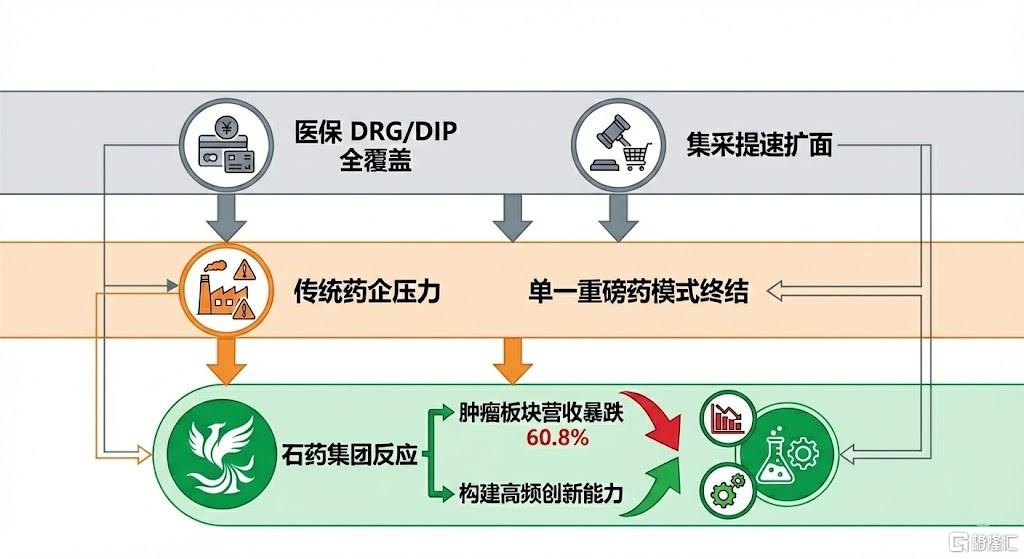
Core Insights - The article discusses the critical strategic transition period for major Chinese pharmaceutical companies, highlighting the shift from raw materials to innovative drugs as a significant phase from 2012 to 2020, and the upcoming "rebirth period" from 2024 to 2026, where companies will face asset clearance and build global competitiveness [1][2]. Industry Transformation Core Logic - The transformation involves a stabilization at the bottom of the market as the risks from centralized procurement are fully released by 2025, allowing companies to build a solid development safety margin [3]. - Companies are reinforcing their competitive advantages in key therapeutic areas despite facing patent cliffs, with new clinical evidence expected to reshape the ischemic stroke emergency market [3]. - The internationalization of leading companies is being re-evaluated, with overseas licensing agreements providing stable cash flow and validating their global rights value [3]. Macro Environment and Industry Background - The Chinese pharmaceutical industry is entering a reform phase characterized by significant price pressures on mature generic drugs and older innovative drugs due to changes in medical insurance payment methods and accelerated centralized procurement [4][6]. - Large pharmaceutical companies with strong cash flow are positioned to leverage acquisition and collaboration opportunities during a capital winter, enhancing their resilience against industry cycles [6]. Financial Structure Analysis - Revenue data from 2020 to 2025 shows a transition from stable growth to structural adjustment, with total revenue expected to decline significantly in 2025 [9][10]. - The oncology sector is experiencing a notable revenue drop due to centralized procurement impacts, while the raw materials sector is showing resilience with an 11.9% growth in 2025 [10]. - Despite revenue pressures, leading companies are maintaining or increasing R&D budgets, with R&D expenses expected to account for 21.9% of revenue in 2024 [12]. Business Layout and Treatment Areas - The business landscape of transitioning pharmaceutical companies is highly diversified, with ongoing efforts in traditional areas like cardiovascular and neurological treatments, as well as high-growth sectors like oncology and immunomodulation [13]. - The neurological drugs segment remains a cornerstone, with new products expected to drive growth despite challenges from patent expirations [17]. - The oncology sector is undergoing restructuring with the introduction of differentiated new products to support recovery [18]. - The anti-infection sector is showing resilience, driven by increased demand for antibiotics due to seasonal illnesses [19]. R&D Pipeline and Innovation Ecosystem - Leading companies have established a comprehensive innovation ecosystem with multiple technology platforms, including ADCs and GLP-1 products, with over 300 projects in development by the end of 2025 [20][25]. - ADC technology is highlighted as a key area of competitive advantage, with promising products in clinical trials [22]. - The GLP-1 product matrix is being developed to capture the growing market for weight loss and diabetes management, with several products in advanced clinical stages [25]. Key Clinical Milestones for 2026 - 2026 is anticipated to be a pivotal year for the realization of innovation pipeline results, with several core products expected to achieve significant clinical milestones [26][27].

健康元(600380):2025年三季报点评:聚焦呼吸领域,静待创新研发成果落地
GUOTAI HAITONG SECURITIES· 2025-11-19 09:11
Investment Rating - The report maintains a rating of "Accumulate" with a target price of 15.26 CNY, compared to the current price of 12.27 CNY [6][13]. Core Insights - The company focuses on the respiratory field, having developed over 10 innovative Class 1 drugs, with Marpatsivavir capsules expected to be the first to achieve commercial success [2][13]. - Revenue projections for 2025-2027 are 156.98 billion, 160.12 billion, and 165.30 billion CNY, with growth rates of 0.5%, 2.0%, and 3.2% respectively [13]. - The net profit attributable to the parent company is forecasted to be 13.96 billion, 14.54 billion, and 15.38 billion CNY for the same period, with growth rates of 0.7%, 4.1%, and 5.7% respectively [13]. Financial Summary - Total revenue for 2023 is projected at 16,646 million CNY, with a decrease of 2.9% from the previous year [4]. - The net profit attributable to the parent company for 2023 is estimated at 1,443 million CNY, reflecting a decline of 4.0% [4]. - Earnings per share (EPS) for 2023 is expected to be 0.79 CNY, with a projected decrease to 0.76 CNY in 2024 [4]. Strategic Focus - The company has established a systematic pipeline and differentiated advantages in the respiratory field, covering key indications such as asthma and chronic obstructive pulmonary disease (COPD) [13]. - International expansion is a core strategic direction, with ongoing projects in Vietnam and Indonesia to strengthen its presence in Southeast Asia and the European market [13]. Clinical Development - The clinical development of TSLP monoclonal antibody for COPD is progressing well, with preparations for Phase III trials underway [13]. - The global innovative mechanism (FIC) oral inhibitor is actively advancing through Phase II clinical trials [13].
健康元发布三季报:稳健发展再进阶 创新药提速兑现
Zheng Quan Shi Bao Wang· 2025-10-26 13:04
Core Viewpoint - Health元 is transitioning from a "research investment phase" to a "value realization phase" in its innovative drug development, with significant progress in multiple core products, particularly the flu treatment drug, Marpapsavir, which is expected to be launched in 2024 [2][5] Financial Performance - In the first three quarters of 2025, Health元 achieved operating revenue of 11.478 billion yuan and a net profit of 1.091 billion yuan, with basic earnings per share of 0.6 yuan [1] Innovation Pipeline - The company has a robust innovation pipeline with over 20 first-class innovative drugs, 10 of which have entered critical phases beyond Phase II, indicating a well-structured pipeline matrix [3] - Marpapsavir, a novel drug for treating influenza, has completed Phase III clinical trials and is set to submit for market approval in August 2024, showcasing its unique advantages in rapid efficacy and single-dose administration [2][3] R&D System - Health元 has established a comprehensive R&D system focusing on respiratory, digestive, mental health, and assisted reproduction fields, creating a closed-loop process from early target exploration to clinical development and commercialization [3] - The company has increased R&D investment by 15% year-on-year in the first half of 2025, emphasizing clinical advancement of innovative drugs and core technology upgrades [3] Sustainable Development - The company maintains a healthy cash flow supported by stable contributions from mature businesses, allowing for continued investment in R&D while ensuring financial health [4] - Since 2020, Health元 has completed a share repurchase plan totaling 3.2 billion yuan, with a dividend payout of 0.20 yuan per share for the 2024 fiscal year, reflecting a commitment to shareholder returns [4] Future Outlook - Health元 aims to accelerate the market launch of core products like Marpapsavir and deepen its comprehensive R&D layout, reinforcing its technological advantages in key therapeutic areas [5]
特应性皮炎专题报告:掘金百亿AD蓝海:现有疗法仍可优化,双抗药物有望破局
SINOLINK SECURITIES· 2025-09-16 09:16
Investment Rating - The report indicates a positive outlook for the atopic dermatitis (AD) market, highlighting significant unmet medical needs and potential for new therapies, particularly in small molecules and biologics [4][10][12]. Core Insights - Atopic dermatitis is a chronic, recurrent inflammatory skin disease characterized by severe itching, affecting approximately 600-700 million patients globally, with around 67 million in China, indicating a substantial unmet demand for effective treatments [1][18][20]. - Recent advancements in small molecules and biologics have marked a new phase in AD treatment, with several new products entering the market, although the number remains limited [1][10][32]. - JAK inhibitors have shown excellent efficacy but come with safety concerns, while TYK2 inhibitors are emerging as a promising new option due to their selective action and potentially better safety profile [2][11][12]. - Biologics targeting IL-4Rα and IL-13 have demonstrated significant efficacy in improving skin lesions, with IL-31 showing strong itch relief capabilities [3][12][13]. - The development of dual/multi-target antibodies is seen as a new strategy to enhance treatment efficacy by combining the advantages of different targets [4][13][21]. Summary by Sections Investment Highlights - The AD market has immense potential, with a pressing need for effective therapies [4][10]. - The patient population is large, with over 600 million affected globally, necessitating urgent treatment options [1][18]. Disease Characteristics - AD is characterized by chronic inflammation and severe itching, significantly impacting patients' daily lives [1][14]. - The disease burden is heavy, with a complex pathogenesis involving multiple factors, primarily driven by Th2-type inflammation [21][24]. Current Treatment Landscape - Traditional therapies have safety concerns, leading to a shift towards biologics and small molecules [32][35]. - JAK inhibitors are the most approved class of drugs for AD, but they carry black box warnings due to safety issues [11][12]. - Emerging therapies, particularly TYK2 inhibitors, show promise for better safety and efficacy [2][11]. Biologics and Emerging Therapies - Currently approved biologics include IL-4Rα, IL-13, TSLP, and IL-31, with ongoing research into additional targets [3][12][13]. - Dual/multi-target antibodies are being explored to improve treatment outcomes and extend dosing intervals [4][13][21]. Market Potential - The report emphasizes the significant market potential for AD treatments, with projected growth driven by increasing patient numbers and the introduction of innovative therapies [4][10][20].


健康元(600380):公司信息更新报告:利润稳健增长,创新药布局加速
KAIYUAN SECURITIES· 2025-08-25 03:13
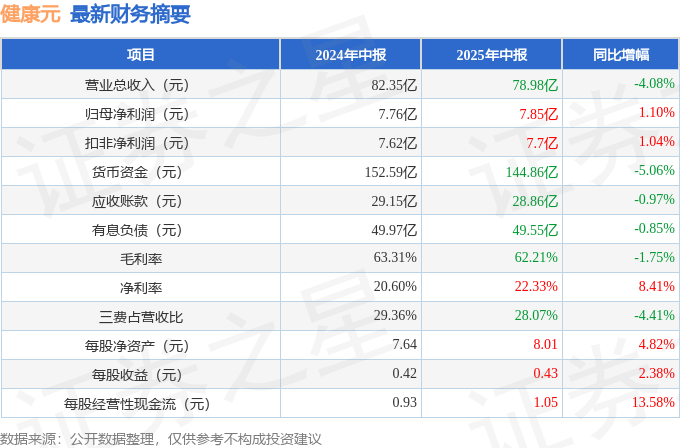
Investment Rating - The investment rating for the company is "Buy" (maintained) [1] Core Views - The company reported a stable profit growth with an accelerated layout in innovative drugs, maintaining a "Buy" rating. In H1 2025, the company achieved revenue of 7.898 billion yuan (down 4.08% year-on-year) and a net profit attributable to shareholders of 785 million yuan (up 1.10%) [5][6] - The company has a strong focus on respiratory diseases, with over 10 innovative drugs in the pipeline, and is making significant progress in clinical trials for various treatments [6] Financial Summary - In H1 2025, the company's gross margin was 62.21% (down 1.10 percentage points), and the net profit margin was 22.33% (up 1.73 percentage points) [5] - The company expects net profits attributable to shareholders to be 1.463 billion yuan, 1.568 billion yuan, and 1.715 billion yuan for 2025, 2026, and 2027 respectively, with corresponding EPS of 0.80 yuan, 0.86 yuan, and 0.94 yuan per share [5][8] - The current stock price corresponds to a PE ratio of 16.1, 15.0, and 13.7 for the years 2025, 2026, and 2027 respectively [5] Research and Development - The company has made multiple breakthroughs in research and development, particularly in the respiratory field, with innovative drugs targeting COPD and influenza [6] - The company is advancing its clinical trials for various drugs, including a non-opioid pain relief medication, which aims to provide safer alternatives for pain management [6]
健康元2025年中报简析:净利润同比增长1.1%
Zheng Quan Zhi Xing· 2025-08-23 22:57
Financial Performance - Health元 reported a total revenue of 7.898 billion yuan for the first half of 2025, a decrease of 4.08% year-on-year [1] - The net profit attributable to shareholders was 785 million yuan, reflecting a year-on-year increase of 1.1% [1] - The gross margin was 62.21%, down 1.75% from the previous year, while the net margin increased by 8.41% to 22.33% [1] - Total operating expenses were 2.217 billion yuan, accounting for 28.07% of revenue, a decrease of 4.41% year-on-year [1] - Earnings per share rose to 0.43 yuan, a 2.38% increase compared to the previous year [1] Business Evaluation - The company's return on invested capital (ROIC) for the previous year was 9.39%, indicating average capital returns [2] - The net profit margin was reported at 19.1%, suggesting a high added value for the company's products or services [2] - The company has experienced two loss years since its IPO, indicating a relatively fragile business model [2] Accounts Receivable - The accounts receivable to profit ratio has reached 208.16%, suggesting a need for attention to the company's accounts receivable situation [3] Fund Holdings - The largest fund holding in Health元 is the Guolian An Small Cap Selected Mixed Fund, which has increased its holdings to 4.355 million shares [4] - The fund's recent performance shows a 37.7% increase over the past year [4] Innovation Pipeline - The company has over 20 first-class innovative drugs in development, with more than 10 in key research stages [5] - The innovative drug pipeline includes a new oral PREP inhibitor for COPD, which has completed Phase I clinical trials and is advancing to Phase II [6] - The company is also developing a pediatric formulation of its flu drug, aimed at improving acceptance among children [10] Internationalization Strategy - The company is focusing on internationalization, with plans to establish sales subsidiaries in the Netherlands and the Philippines [13] - A strategic partnership has been formed with Kalbe Group in Indonesia to set up a raw material drug factory targeting high-end markets [13] Shareholder Returns - The company has completed a share buyback plan totaling 2.7 billion yuan over the past five years and has increased cash dividends by nearly 10% year-on-year [14]
【私募调研记录】红筹投资调研健康元
Zheng Quan Zhi Xing· 2025-08-04 00:10
Group 1 - The core viewpoint of the article highlights the recent research conducted by a well-known private equity firm, Hongchou Investment, on a listed company, focusing on its innovative transformation strategy and product pipeline [1] - The company, Jian Kang Yuan, is advancing its prescription drug segment, concentrating on key therapeutic areas such as respiratory, digestive, mental health, reproductive assistance, and pain relief, with over 20 first-class innovative drugs in development [1] - The company plans to submit the application for the Marpacisavir capsule for market approval in August 2024, and has received clinical trial approval for a pediatric dry suspension formulation [1] Group 2 - The company is conducting Phase II clinical trials for TSLP monoclonal antibodies targeting moderate to severe COPD in China, and has completed Phase I trials for PREP inhibitors and Nav1.8 inhibitors, moving towards Phase II trials [1] - A systematic innovation drug layout for COPD has been established, creating three pathways for solutions, including a pediatric formulation that enhances medication acceptance based on weight [1] - Internationalization is a key strategic direction, with the establishment of a new sales subsidiary, collaboration with Kalbe Group for factory construction, and acquisition of the Vietnamese pharmaceutical company IMP [1] Group 3 - Over the past five years, the company has completed share buybacks totaling 2.7 billion, and has introduced a new annual dividend plan with increased cash dividend efforts [1]