VCD

Search documents
段永平、葛卫东、裘国根等投资界大佬,冲进全球富豪榜!
私募排排网· 2026-03-15 03:06
Core Insights - The 2026 Hurun Global Rich List highlights the growing influence of Chinese private equity investors, reflecting the maturation of China's capital markets and the redefinition of the asset management industry [2] Group 1: Wealth Rankings - Shen Nanpeng of Sequoia China ranks 785th with a wealth of 40 billion RMB [3] - Ge Weidong of Chaos Investment ranks 871st with a wealth of 35.5 billion RMB [10] - Zhang Lei of Hillhouse Capital ranks 1013th with a wealth of 26.5 billion RMB [7] - Duan Yongping of H&H International ranks 2207th with a wealth of 14.5 billion RMB [12] - Qiu Guogen and Luo Yifu of Chongyang Investment rank 3635th with a wealth of 7.5 billion RMB [4] Group 2: Investment Strategies and Achievements - Qiu Guogen and Luo Yifu have successfully managed Chongyang Investment, with a significant focus on long-term investments, exemplified by their 6 billion RMB investment in Xinhecheng, yielding over 1 billion RMB in profits over eight years [5][6] - Zhang Lei's Hillhouse Capital has grown to manage over 500 billion USD, with notable investments in companies like JD.com and Blue Moon, emphasizing the importance of logistics and supply chain in competitive advantage [8][9] - Ge Weidong's investment strategies in futures have led to significant profits, including a notable gain during the cotton futures market in 2010 and the "copper futures battle" in 2014, showcasing his market acumen [11] - Duan Yongping's investment philosophy emphasizes value investing, with a focus on companies like Apple and Tencent, and he has a significant presence in the U.S. stock market with a portfolio valued at approximately 17.49 billion USD [12][13][14] Group 3: Notable Investments and Market Impact - Shen Nanpeng's Sequoia China has invested in over 1500 companies, with more than 160 having gone public, reflecting a broad investment strategy across various sectors [15][16] - The investment landscape is increasingly characterized by a focus on technology and consumer sectors, with major players like Hillhouse and Sequoia leading the charge in identifying high-potential opportunities [15][16]


归乡记 | 时间酿年味,团圆暖人心
Xin Lang Cai Jing· 2026-02-16 17:15
Group 1 - The essence of the New Year celebration is rooted in the concept of family reunion, which is considered sacred and significant by the elder generation [2][5] - The preparation for the New Year, such as writing Spring Festival couplets, is a ritual that embodies respect and tradition, highlighting the importance of family heritage [3][4] - The atmosphere during the New Year’s Eve, characterized by warmth and togetherness, is cherished as a precious time that reflects the value of family bonds [5] Group 2 - The father's experience during the New Year reflects the changes brought by modernization, including the introduction of new products and technologies that alter traditional practices [6][9] - The evolution of communication methods, such as telephone greetings and later the use of VCDs for entertainment, signifies a shift towards a more connected and modern celebration [10][12] - The father's embrace of new traditions, like using a VCD to watch the Spring Festival Gala, contrasts with the grandfather's nostalgia for traditional celebrations [10][21] Group 3 - The current generation experiences the New Year as a blend of traditional and modern practices, with technology facilitating connections across distances [15][16] - The transformation of gift-giving, from physical red envelopes to digital ones, illustrates the adaptation of customs to contemporary lifestyles while maintaining the underlying sentiment [17][18] - The essence of the New Year remains unchanged, focusing on the desire for reunion and good fortune, despite the evolving forms of celebration [22]
“电动车大部分会死掉”,段永平未下场却搅动造车圈,巨亏250亿元的众泰汽车开启“重生局”?
3 6 Ke· 2025-12-12 01:41
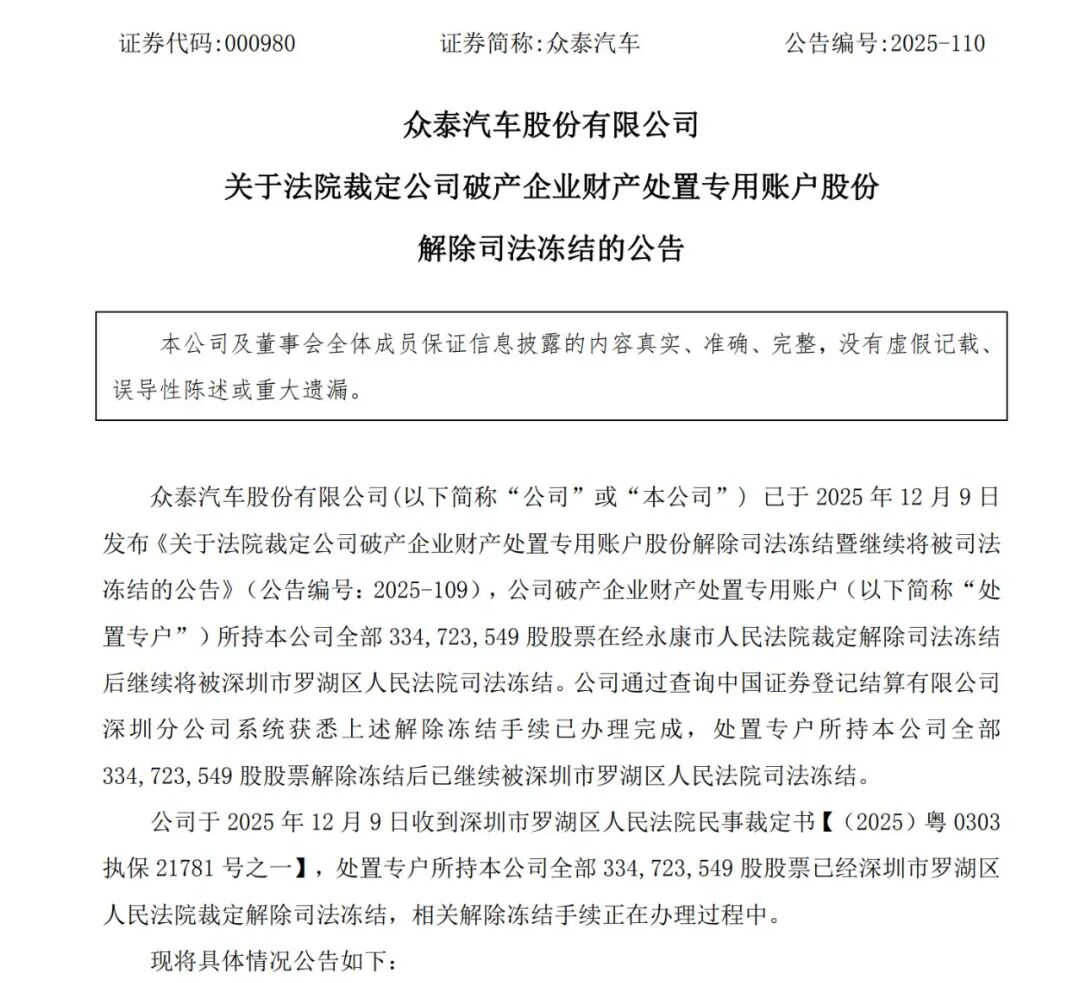
Core Insights - The article discusses the intertwining developments in the capital market involving Dan Yongping and Zotye Automobile, highlighting potential investment opportunities and strategic shifts in the automotive industry [1][14]. Group 1: Dan Yongping's Influence - Dan Yongping, a notable figure in the business world, has recently re-emerged in the public eye, discussing investments and wealth philosophy, particularly emphasizing his investment logic of "buying companies" rather than just stocks [5][7]. - His investment in Tesla reflects a shift in his perspective, moving from skepticism to active investment, indicating a keen interest in the electric vehicle sector despite his caution about the industry's future viability [7][8]. - Dan Yongping's past successes in the electronics industry and his strategic approach to investments position him as a significant player in potential automotive ventures, although he has denied any plans to directly enter the car manufacturing space [5][7][8]. Group 2: Zotye Automobile's Restructuring - Zotye Automobile has been undergoing significant management changes, with new executives from both the "Chery system" and "Bubugao system" taking key positions, suggesting a strategic realignment aimed at revitalizing the company [1][4][13]. - The company has faced severe financial difficulties, reporting cumulative losses exceeding 25 billion yuan over six years, yet its stock price has seen a notable increase, indicating market speculation about its restructuring efforts [10][14]. - The recent appointments of executives with backgrounds in Chery and Bubugao are interpreted as potential steps towards a merger or collaboration, although no official confirmation has been made regarding direct investments or takeovers [1][13][14]. Group 3: Market Speculation and Future Outlook - The intersection of Dan Yongping's investment philosophy and Zotye's management changes has led to speculation about the potential for a significant transformation within the company, leveraging both capital and manufacturing expertise [9][14]. - Analysts suggest that the combination of Bubugao's capital operation skills and Chery's manufacturing experience could provide Zotye with the necessary resources to navigate its current challenges and pivot towards a more sustainable business model [9][14]. - The ongoing developments in Zotye's restructuring are seen as a critical case study for understanding the dynamics of the automotive industry and the role of capital in driving transformation [14].

走进段永平的“隐形家办”H&H:解码千亿级投资版图
3 6 Ke· 2025-11-27 08:09
Core Insights - Duan Yongping is recognized for his exceptional achievements in both industry and investment, having founded well-known brands like "Little Tyrant" and "BBK" while also making significant investments in companies like Apple and Tencent, earning him the title of "China's Buffett" [1][5] - H&H International Investment, the only management account publicly tracking Duan's investments through the U.S. 13F filings, has reached an AUM of $21.9 billion as of January 29, 2025 [1][8] Group 1: Entrepreneurial Journey - Duan Yongping was born in 1961 in a scholarly family and graduated from Zhejiang University, later working in various roles before venturing into business in Guangdong [2] - In 1989, he transformed a loss-making electronics factory into "Little Tyrant," achieving an annual output value of 1 billion yuan within four years [2][4] - In 1995, he founded BBK Electronics, which successfully launched products that met the modernization needs of Chinese families in the 1990s [4] Group 2: Investment Philosophy - Duan's investment philosophy is heavily influenced by the idea of "buying companies" rather than just stocks, emphasizing the importance of understanding a company's future cash flows [5][7] - He made a significant investment in NetEase during the dot-com bubble, purchasing shares at $0.6 and later selling them for over $70, yielding a return of over 100 times [5][10] Group 3: H&H Investment Strategy - H&H focuses on long-term stock investments and options strategies, relying on fundamental analysis to identify undervalued companies [8] - As of the third quarter of 2025, H&H's portfolio is valued at approximately $14.7 billion, with a concentration in 11 companies, including Apple, Berkshire Hathaway, and NVIDIA [8][11] Group 4: Recent Portfolio Adjustments - In the third quarter, Duan increased his stake in Berkshire Hathaway by over 53% while reducing his holdings in Alibaba and NVIDIA by more than 25% [11][12] - Apple remains the largest holding in H&H's portfolio, accounting for 60.42% of the total value, with a market value of approximately $8.87 billion [11][12] Group 5: Philanthropic Endeavors - Duan Yongping has made significant contributions to education, including a $40 million donation to Zhejiang University, which was the largest single donation to a mainland university at the time [13] - His philanthropic approach emphasizes long-term impact and efficiency, with a focus on sustainable charitable practices [16][18]


段永平用两个字赚了千亿
36氪· 2025-11-18 09:53
Core Viewpoint - The article emphasizes the importance of understanding business fundamentals and maintaining a grounded approach in both entrepreneurship and investment, as exemplified by Duan Yongping's career and philosophy [2][5][11]. Group 1: Duan Yongping's Background and Career - Duan Yongping is recognized for his dual success in both the real economy and investment, founding brands like Xiaobawang and establishing BBK Electronics, which later evolved into companies like OPPO and Vivo [5][7]. - After retiring at the age of 40, Duan Yongping moved to the United States, prioritizing family and personal interests over corporate ambitions, which he believes allowed for a more balanced life [7][9]. - He attributes his early retirement to the capabilities of his team, stating that he stepped back to allow younger talents to lead [9]. Group 2: Investment Philosophy - Duan Yongping's investment strategy is centered around the principle that "buying stocks means buying companies," emphasizing the need to understand the underlying business rather than focusing solely on stock price fluctuations [15][16]. - His notable investment in NetEase, where he purchased shares during a market downturn, exemplifies his belief in understanding the business model and long-term value rather than succumbing to market panic [15][16]. - He has invested in a limited number of companies over the past two decades, including Apple and Moutai, indicating a preference for deep understanding over chasing trends [16][17]. Group 3: Business Principles - Duan Yongping advocates for a "not-to-do list," which includes avoiding OEM production, not engaging in price negotiations, and maintaining integrity in business practices, which he believes helps minimize errors [13][11]. - He emphasizes the importance of doing the right things and having a calm mindset, especially in the face of temptations, to ensure sound decision-making [11][12]. - His approach to business is characterized by a focus on brand building and long-term vision rather than short-term gains, as demonstrated by his refusal to take on large orders that did not align with his company's goals [13].


段永平用两个字赚了千亿
3 6 Ke· 2025-11-16 21:59
Group 1 - The core viewpoint of the articles revolves around Duan Yongping's humble approach to success in both business and investment, emphasizing his belief in understanding the companies he invests in rather than chasing market trends [1][12] - Duan Yongping's background includes founding the Xiaobawang brand and later establishing the BBK Electronics Company, which led to the creation of several successful brands like OPPO and Vivo [4][9] - His investment philosophy is characterized by a focus on understanding the business model and value of the companies he invests in, such as NetEase, Apple, and Moutai, rather than merely speculating on stock prices [11][12] Group 2 - Duan Yongping's "not-to-do list" includes avoiding OEM production, which he believes would hinder brand development and competitiveness [8][9] - He emphasizes the importance of making decisions based on what is right rather than solely on financial gain, which he considers a key to achieving financial freedom [5][6] - His notable investment in NetEase during the internet bubble, where he bought shares at a low price, showcases his ability to remain calm and rational in the face of market panic, leading to significant returns [11][12]
段永平用两个字赚了千亿
凤凰网财经· 2025-11-16 13:10
Core Viewpoint - The article highlights the entrepreneurial spirit and investment philosophy of Duan Yongping, emphasizing his humility and practical approach to business and investment [3][4]. Group 1: Personal Background and Career - Duan Yongping was born in Nanchang, Jiangxi, and faced challenges during his childhood, which instilled a sense of independence in decision-making [4]. - He left unsatisfactory jobs quickly, including a brief stint at Beijing Electronic Tube Factory and a small company in Guangdong, before finding success at Xiaobawang [4][7]. - After leaving Xiaobawang due to unfulfilled promises of equity, he founded BBK Electronics in Dongguan [7]. Group 2: Business Philosophy - Duan emphasizes a grounded approach to business, stating that true financial freedom comes from doing what one loves without being driven by money [8]. - He believes in a principle of "doing the right thing" and maintaining a calm mindset, which he refers to as "本分 + 平常心" (being principled and having a normal heart) [9][10]. - The "not-to-do list" established by BBK includes avoiding OEM production, which he believes would hinder brand development [12][13]. Group 3: Investment Strategy - After retirement, Duan shifted focus to investing, realizing that understanding a company is more important than stock price fluctuations [14]. - He made a significant investment in NetEase during the dot-com bubble, purchasing shares at a low price, which later yielded a return of over 100 times [16][17]. - Duan's investment philosophy centers on understanding the business deeply, as demonstrated by his investments in companies like Apple and Moutai, which he believes have unique value propositions [18][19].


捷佳伟创:已向客户成功交付了钙钛矿电池整线设备、多种尺寸PVD、RPD、蒸镀、激光等设备
Mei Ri Jing Ji Xin Wen· 2025-10-13 09:32
Core Viewpoint - The company, Jiejia Weichuang, is actively engaged in the development of perovskite solar cell technology while maintaining its focus on TOPCon technology, indicating a commitment to innovation and meeting customer demands in the photovoltaic sector [2]. Company Developments - Jiejia Weichuang has successfully delivered perovskite solar cell production line equipment to customers, showcasing its capability in providing comprehensive solutions in this emerging technology [2]. - The company is continuously innovating and breaking through in the perovskite equipment field, aligning with technological advancements and customer needs [2]. Industry Trends - The photovoltaic industry is witnessing ongoing developments in various technologies, including TOPCon, XBC, and perovskite, highlighting a dynamic and evolving market landscape [2].
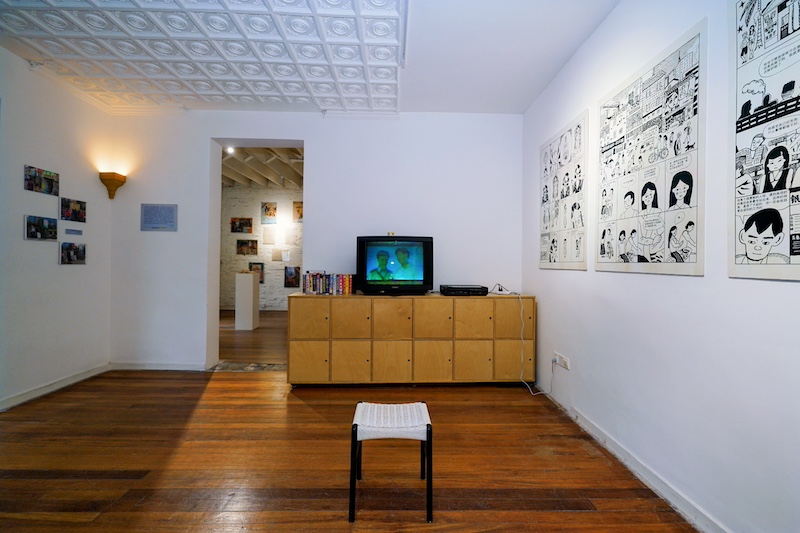
曾遍布大街小巷的录像厅,记录了一段大众流行文化的历史
Di Yi Cai Jing· 2025-08-06 04:43
Core Viewpoint - The exhibition "Go to the Video Hall! Return to the 1980s Urban Movie Experience" curated by scholar Hou Yiyang highlights the cultural significance of video halls in China during the late 20th century, particularly during a period of transformation in the film industry and societal changes [1][9]. Group 1: Historical Context - Video halls emerged during a time of significant social change in China, roughly extending until the turn of the century, with various cities documenting their ticket prices and operating conditions [3]. - The peak period for video hall screenings was from the late 1980s to the early 1990s, coinciding with a low point in Chinese box office revenues, where video tapes fulfilled the needs of moviegoers [9]. - The 1990s saw the domestic production of video machines, making home viewing more accessible and leading to a decline in video hall attendance as people began renting tapes for home viewing [9]. Group 2: Cultural Significance - Video halls were a widespread cultural phenomenon, not limited to major cities, and were characterized by their flexibility and accessibility, allowing individuals to convert their living rooms into viewing spaces [6]. - The social aspect of watching videos, such as gathering with friends or dating, was emphasized as more appealing than the act of watching itself, creating a sense of nostalgia for communal experiences [11]. - The exhibition aims to collect oral histories and materials related to video halls, reflecting on their role in shaping movie culture and audience experiences during the 1980s [11]. Group 3: Personal Accounts and Anecdotes - Personal memories from individuals who experienced video halls provide a richer narrative than historical documents, illustrating the communal entertainment culture in various settings, including mining communities [5]. - The exhibition features artifacts like newspaper clippings discussing the popularity of video halls, showcasing their significance in urban entertainment landscapes [3]. Group 4: Evolution of Viewing Habits - The transition from video halls to home viewing marked a significant shift in consumer behavior, with the introduction of VCDs and DVDs further diminishing the role of video halls in public culture [9]. - The impact of foreign films, particularly in the late 1990s, brought audiences back to cinemas, although many still sought out pirated video tapes of these films [9].