Visual Studio Code

Search documents
Datadog Launches MCP Server to Provide AI Agents with Secure, Real-Time Access to Unified Observability Data
Globenewswire· 2026-03-09 13:00
Core Insights - Datadog has launched its MCP Server, which is designed to enhance debugging, automation, and AI operations at scale for developers embedding AI agents into workflows [1][2][3] Group 1: Product Features - The MCP Server provides access to live observability data, allowing teams to debug using their preferred AI coding agents or Integrated Development Environments (IDEs) with real-time telemetry [1][7] - It simplifies data access for AI workflows by offering a dynamic, purpose-built protocol for agent communication, reducing the risk of breaking changes [7] - The MCP Server enables custom AI agents to leverage Datadog's proactive detection and remediation signals, allowing them to investigate and respond to issues automatically [7] Group 2: Market Position and Strategy - Datadog aims to transform complexity into clarity and enhance security for global businesses, addressing the challenges faced by engineering teams in operationalizing AI agents [2][3] - The company emphasizes the importance of secure, governed access to production data and reduced integration overhead to meet compliance requirements as AI becomes standard practice across industries [2][3] - Datadog's unified observability platform integrates various capabilities, including infrastructure monitoring and application performance monitoring, to support digital transformation and cloud migration for organizations of all sizes [5]


华为云“码道”代码智能体开启公测,支持 GLM-4.7 和 DeepSeek-V3.2
Xin Lang Cai Jing· 2026-02-11 10:32
Core Insights - Huawei Cloud officially launched "CodeArts," an AI-powered coding assistant, in January 2023, which integrates IDE, autonomous development mode, and code library indexing capabilities, currently in public beta for 10,000 users [1][8] - The personal version of "CodeArts" is available for free to developers, while the enterprise version will be announced later [1][8] - The product utilizes GLM-4.7 and DeepSeek-V3.2 models and supports JetBrains series and Visual Studio Code IDEs [1][8] Product Features - "CodeArts" combines essential programming capabilities such as project-level code generation, code continuation, research knowledge Q&A, and unit test case generation, significantly enhancing developer productivity and providing a high-quality coding experience [2][9] - The tool allows users to input requirements, enabling the AI to generate code directly [3][11] Copyright and Usage - Huawei Cloud states that the copyright of the code generated by the AI belongs to the user, emphasizing that "CodeArts" functions as a tool that responds to user inputs without creative autonomy [5][13]


懵了!JetBrains 刚停掉 Fleet IDE,又推新工具 Air。网友:把开发者当小白鼠?
程序员的那些事· 2025-12-15 02:06
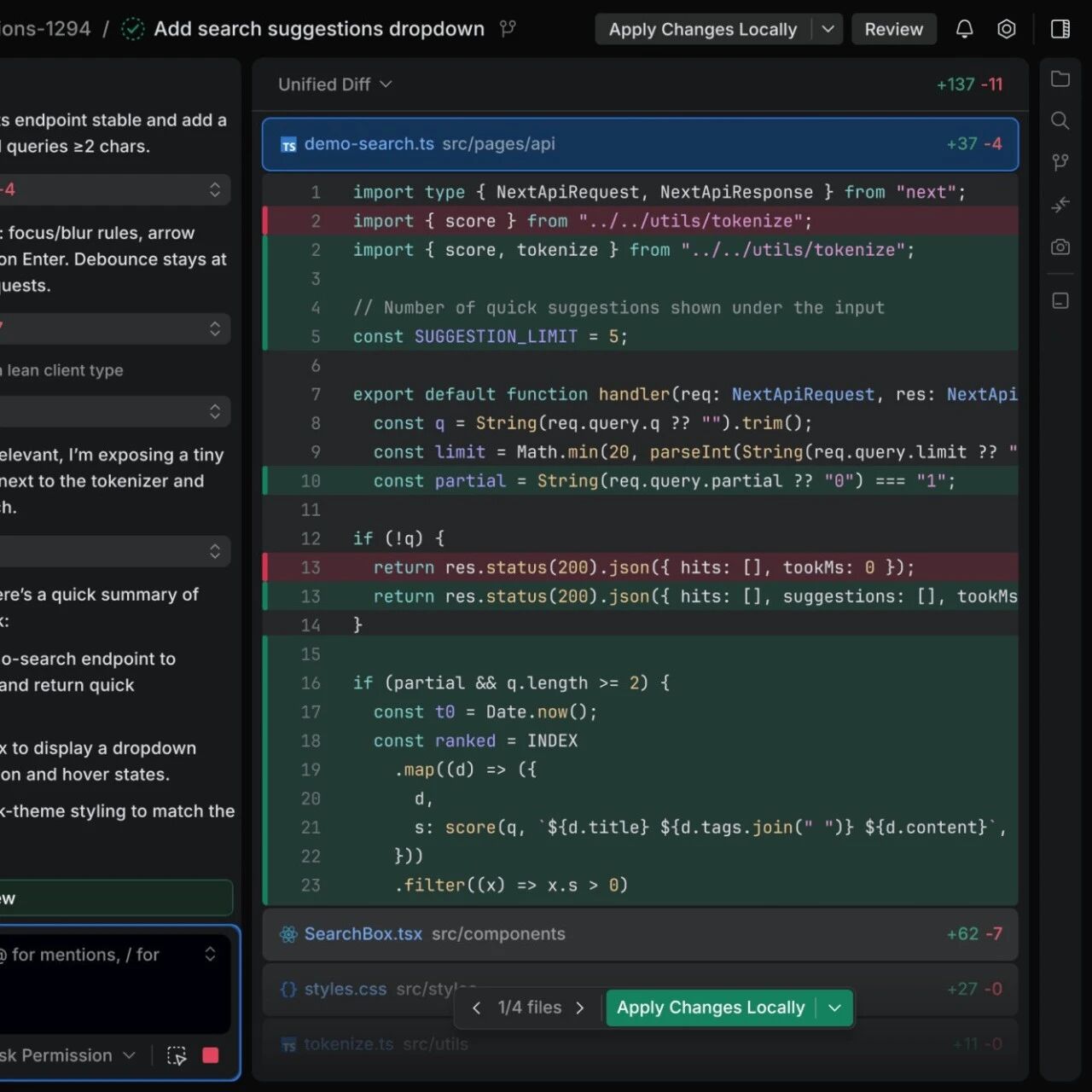
Core Viewpoint - JetBrains has decided to discontinue its Fleet IDE, which has been in public preview since its launch in 2021, and will focus on a new intelligent development environment called Air, indicating a shift in strategy to adapt to market trends and developer needs [3][4][8]. Group 1: Fleet IDE Discontinuation - Fleet IDE was intended to be a lightweight, collaborative tool that could adapt to remote projects, developed in response to the competitive pressure from Microsoft’s Visual Studio Code [3]. - Despite some initial interest, the majority of developers preferred the established IntelliJ tools due to its robust plugin ecosystem and the uncertainty surrounding Fleet's prolonged preview status [4]. - JetBrains announced that Fleet will no longer be available for download after December 22, 2025, citing confusion among users and a diversion of company resources as reasons for this decision [4][5]. Group 2: Transition to Air - The new tool, Air, is built on the Fleet platform and aims to introduce a novel workflow where developers guide an intelligent assistant to generate code, which they then review [5][8]. - Air is currently in public preview and requires a subscription to Anthropic services for access, with plans to support additional operating systems and features in the future [7]. - The decision to pivot to Air reflects JetBrains' ongoing strategy to keep pace with the evolving landscape of AI development tools, similar to offerings from AWS, Google, and Microsoft [8]. Group 3: Developer Reactions - Some developers expressed disappointment over the discontinuation of Fleet, feeling that it had the potential to compete effectively with VS Code [8]. - There are concerns among developers that instead of creating new tools, JetBrains should integrate intelligent features into its existing, mature IDEs, which are already well-regarded [9].
专家解读“AI应用创业”产业链
2025-12-12 02:19
Summary of Key Points from the Conference Call Industry Overview - The discussion revolves around the **AI application startup industry**, focusing on software development tools and backend services like BaaS (Backend as a Service) [1][2][5]. Core Insights and Arguments 1. **Design Tools**: - Figma and Sketch are leading design tools, with Figma being web-based and supporting real-time collaboration, while Sketch is limited to Mac OS [3][4]. - Adobe XD and Photoshop are also used but are less efficient for multi-page handling [3]. 2. **Development Tools**: - Visual Studio Code (VS Code) is the most widely used IDE due to its free access and extensibility [3][4]. - For mobile development, Android Studio and Xcode are recommended, along with cross-platform frameworks like Flutter and React [4]. 3. **Backend Services**: - BaaS simplifies backend management, allowing developers to focus on core business logic [5]. - Firebase is highlighted as a BaaS provider with easy integration into the Google Cloud ecosystem but has limitations in real-time updates and cost management as traffic increases [1][17]. 4. **AI's Role in Software Development**: - AI tools like Cursor, GitHub Copilot, and Tabnine lower the barriers to programming, but complex functionalities still require professional developers [2][32]. - The development of large language models has made it easier for individual creativity to translate into applications [2][33]. 5. **Cost Reduction Strategies**: - Utilizing SaaS can significantly reduce development costs, but it limits customization [7]. - BaaS options like Firebase and Superbase reduce the need for backend developers and operations staff [8][19]. 6. **Advantages and Disadvantages of BaaS**: - Advantages include ease of use, real-time data synchronization, and automatic scaling [9]. - Disadvantages involve migration difficulties, rising costs with increased traffic, and limited customization [9]. 7. **Custom Backend Frameworks**: - Custom frameworks allow complete control and predictable costs but are slower to develop and require manual scaling [10]. 8. **Microservices Architecture**: - This architecture is beneficial for AI applications as it allows independent updates and scaling of services, supporting multiple programming languages and frameworks [14]. 9. **Market Share in Cloud Services**: - Amazon AWS holds 30%-40% of the global server market, followed by Microsoft Azure at around 20% and Google Cloud at approximately 10% [25]. 10. **Cost Comparisons**: - Verso offers competitive pricing compared to AWS, especially for small-scale applications, where AWS can become significantly more expensive [26][27]. Other Important Insights - The need for a comprehensive ecosystem that includes design tools, IDEs, cross-platform frameworks, and cloud services is emphasized for AI-assisted software development [5]. - The challenges of mobile development include the separation of backend and frontend systems, which complicates the development process [13]. - Security solutions vary based on the scale of the website, with small sites using cost-effective options like Cloudflare, while larger enterprises require more robust solutions [30]. This summary encapsulates the key points discussed in the conference call, providing insights into the current state and challenges of the AI application startup industry and software development landscape.

前端真的要下岗?别只看 Cursor,Gemini3 现在更会写代码了,macOS UI 手拿把掐~
菜鸟教程· 2025-11-21 03:31
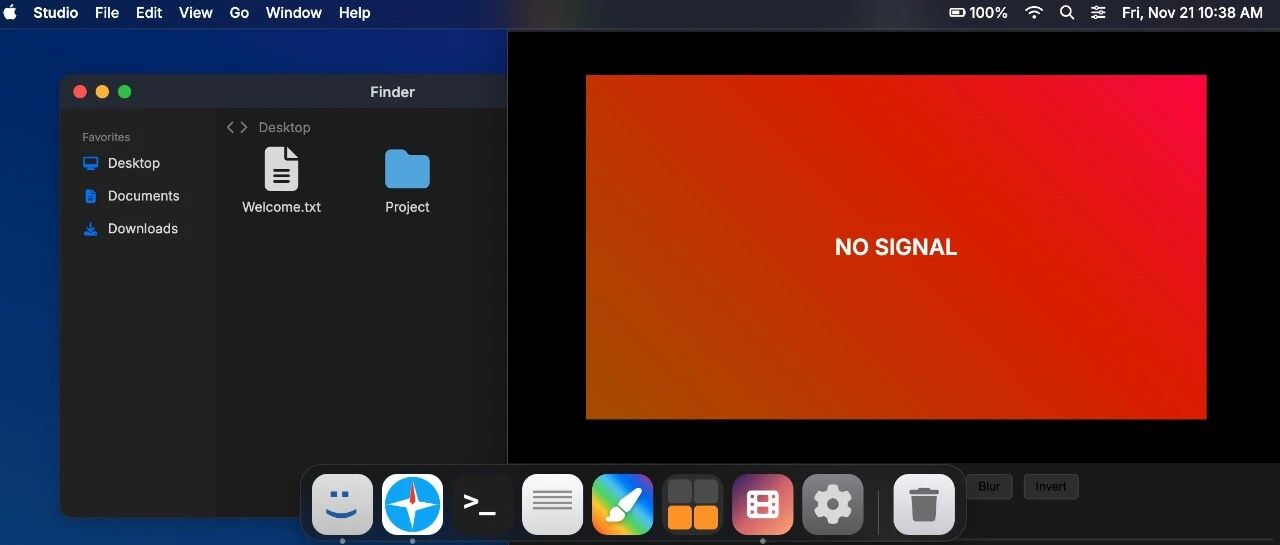
Core Insights - Google has launched its new model Gemini 3.0 Pro, which has excelled in four categories: website development, game development, 3D design, and UI components [1] - Gemini 3.0 Pro is capable of independently completing the entire front-end and interaction development process, showcasing its advanced capabilities beyond mere coding assistance [1][3] - In user testing, Gemini 3 Pro demonstrated the most stable performance, natural coding, flexible design, and accurate details, leading the competition among similar tools [3][4] Performance Comparison - In a human-judged evaluation, Gemini 3 scored 72 out of a maximum of 100, outperforming competitors like Claude and GPT 5.1 Codex in various tasks [5] - Specific tasks included building a web app to explain a Transformer model, where Gemini scored 7, and developing a 2D physics sandbox, where it scored 8, indicating its strong performance in complex development scenarios [5] Development Tools - Google has introduced a new development tool called Antigravity, which is a branch of Visual Studio Code, indicating a competitive landscape for coding tools [12][16] - Antigravity aims to facilitate the development of agents that can operate computers and complete tasks autonomously, integrating deeply with Gemini 3 [16] Market Position - The current trend shows a proliferation of VS Code branches as major companies seek to create their own versions, highlighting the competitive nature of the development tools market [14] - Gemini 3.0 Pro is currently available for free trial, which could attract users who have previously invested in other coding tools like Cursor, Claude Code, and GitHub Copilot [14] Future Implications - The capabilities of Gemini 3 suggest that traditional front-end development roles may be at risk as AI tools become more proficient in generating functional applications [17] - The AI landscape is rapidly evolving, with companies racing to update their models, leading to a situation where the strongest model is always the next one [28]

VS Code 有哪些快捷键?一篇文章,全部搞定!
菜鸟教程· 2025-09-01 03:30
Core Points - The article provides a comprehensive list of commonly used keyboard shortcuts for Visual Studio Code on Windows, aimed at improving coding efficiency and productivity [3][6][13]. Group 1: Common Operations - Key shortcuts for general operations include: - Ctrl + Shift + P / F1: Command Palette - Ctrl + P: Quick Open file - Ctrl + Shift + N: New window - Ctrl + Shift + W: Close current window [6][13]. Group 2: Basic Editing - Essential editing shortcuts include: - Ctrl + X: Cut line without selection - Ctrl + C: Copy line without selection - Alt + ↑ / ↓: Move line up or down - Ctrl + Shift + K: Delete line [6][13]. Group 3: Navigation - Navigation shortcuts facilitate quick movement within the code: - Ctrl + T: Show all symbols - Ctrl + G: Go to a specific line - Ctrl + Shift + O: Jump to symbols within a file [7][13]. Group 4: Search and Replace - Search and replace functionalities are enhanced with: - Ctrl + F: Find - Ctrl + H: Replace - Alt + Enter: Select all occurrences of the search term [14][38]. Group 5: Multi-Cursor and Selection - Multi-cursor editing is supported by: - Alt + Click: Insert additional cursor - Ctrl + Shift + L: Select all occurrences of the current selection - Ctrl + F2: Select all occurrences of the current word [15][36]. Group 6: Code Intelligence - Code intelligence features include: - Ctrl + Space: Trigger suggestions - F12: Go to definition - Ctrl + K Ctrl + F: Format selection [8][16]. Group 7: Editor Management - Editor management shortcuts allow for efficient workspace organization: - Ctrl + \: Split editor - Ctrl + K Ctrl + ← / →: Switch between editor groups - Ctrl + W: Close editor [9][40]. Group 8: File Management - File management shortcuts streamline file operations: - Ctrl + N: New file - Ctrl + O: Open file - Ctrl + S: Save file [18][41]. Group 9: Display and Debugging - Display and debugging shortcuts enhance user experience: - F11: Toggle full screen - F5: Start or continue debugging - Ctrl + `: Open integrated terminal [10][42].

多姆克卸任,GitHub并入微软CoreAI:1.5亿开发者何去何从?
3 6 Ke· 2025-08-15 00:02
Core Insights - The departure of GitHub CEO Thomas Dohmke marks a significant turning point in Microsoft's developer ecosystem and cloud computing strategy, raising concerns about the integration of GitHub into Microsoft's CoreAI division [2][4][9] - Under Dohmke's leadership, GitHub transformed into a core pillar of Microsoft's AI strategy, growing to 150 million developers and establishing key AI tools like Copilot, which has attracted 20 million users [2][4] Impact of Departure - Dohmke's exit could disrupt GitHub's independent developer culture, which has been a key attraction for global developers, while potentially accelerating AI tool development [4][5][8] - The restructuring involves integrating GitHub directly into the CoreAI department, led by former Meta executive Jay Parikh, without appointing a new CEO, which raises concerns about decision-making efficiency [4][5] AI Integration and Development - The integration of GitHub into CoreAI is seen as a move to enhance AI tool development speed, but it risks undermining the platform's innovative foundation [5][9] - GitHub's AI development tools, including Copilot Chat and GitHub Actions, have seen significant usage growth, with GitHub Actions processing 3 billion minutes of work per month, a 64% year-over-year increase [4][7] Market Position and Competition - Microsoft holds a substantial advantage with a large developer ecosystem, which is crucial for AI training data accumulation, as developers use tools like Copilot daily [7][9] - Investors are advised to monitor key metrics such as Copilot's market penetration, GitHub Actions' user activity, and Azure AI Foundry's growth to gauge GitHub's continued success post-restructuring [8][9] Long-term Outlook - The integration of GitHub into CoreAI reflects Microsoft's long-term commitment to AI-driven software development, with the potential to reshape the industry landscape [9][10] - While short-term stock volatility may occur due to leadership changes, the long-term outlook remains positive, as GitHub's AI tools are embedded in millions of developers' workflows [9][10]


GitHub CEO卸任引关注:微软(MSFT.US)AI战略遇挑战,智能编程赛道竞争白热化
Zhi Tong Cai Jing· 2025-08-12 07:04
Core Insights - GitHub is facing intense competition in the AI coding tools sector, with CEO Thomas Dohmke announcing his departure to return to a founder role, leaving the transition until the end of the year [1] - Under Dohmke's leadership since 2021, GitHub has been integrated into Microsoft's CoreAI platform, which was established in January 2023 [1][3] - GitHub claims to have over 150 million registered developers, doubling from 73 million in October 2021, indicating significant growth [2] Company Developments - Dohmke's exit is part of a broader strategy as GitHub continues to align with Microsoft's AI initiatives, particularly through the Copilot tool, which has reached 20 million users and a 75% increase in enterprise customers [2] - GitHub's leadership will report directly to Julia Liuson, a CoreAI executive, indicating a shift in operational structure [1] Market Position and Challenges - Despite its early advantages, GitHub faces challenges from emerging tools like Cursor, Replit, and Windsurf, which are gaining traction in the "vibecoding" space [2] - A recent developer survey shows that 76% of respondents use Microsoft Visual Studio Code, with Cursor at 18%, highlighting competitive pressures [2] Future Outlook - Dohmke expressed confidence in a future with a billion developers empowered by AI agents, positioning GitHub as a key player in this innovation landscape [3] - The integration of GitHub into Microsoft's ecosystem raises questions about maintaining its open-source spirit while adapting to new efficiency evaluation systems [3]
Microsoft's GitHub chief is leaving as competition ramps up in AI coding market
CNBC· 2025-08-11 18:42
Core Insights - GitHub CEO Thomas Dohmke is leaving the company to pursue founding opportunities, with no immediate successor named [1][3] - Microsoft acquired GitHub for $7.5 billion in 2018, and Dohmke has been CEO since mid-2021 [2] - GitHub is now part of Microsoft's CoreAI organization, which is focused on AI infrastructure and development [3][4] Company Performance - GitHub has over 150 million registered developers, a significant increase from 73 million in October 2021 [5] - Microsoft reports continued growth from GitHub's Copilot, with 20 million users and a 75% increase in Copilot Enterprise customers quarter over quarter [7] Competitive Landscape - GitHub faces increasing competition from AI-powered coding tools, including Anysphere's Cursor, Replit, and Windsurf [5] - A recent Stack Overflow survey indicates that 76% of developers use Microsoft's Visual Studio Code, while 18% use Cursor, and nearly 10% use Anthropic's Claude Code [6]

高管中位年薪13.9万美元领跑,工程经理位居第二,AI Agent尚未成主流,Stack Overflow年度报告出炉
3 6 Ke· 2025-07-31 09:53
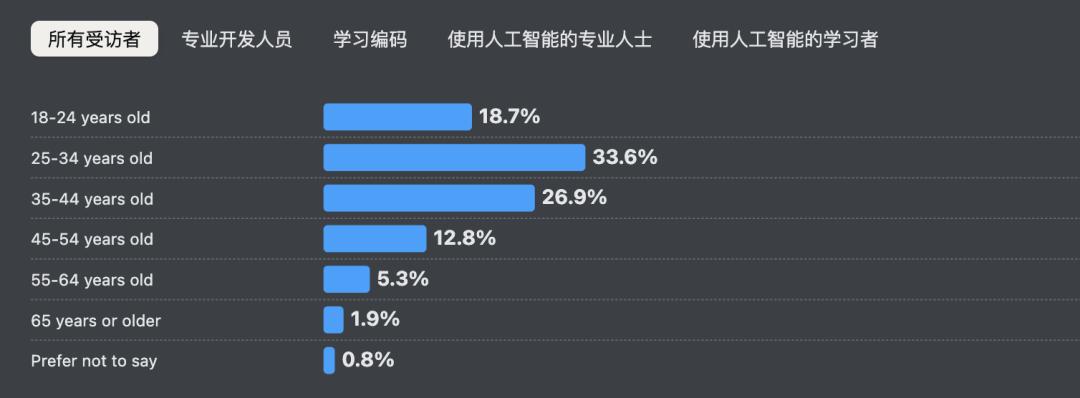
Core Insights - The 2025 Developer Survey by Stack Overflow reveals significant trends in developer tool usage, particularly regarding AI tools and programming languages, highlighting both opportunities and challenges in the industry. AI Tools and Developer Sentiment - Over 84% of respondents are using or planning to use AI tools in development, an increase from 76% last year [42] - Despite high usage, only 3% of developers have a high level of trust in AI-generated results, with 46% expressing distrust [46][47] - Developers report that 66% find AI tools frustrating due to generating "almost correct but not entirely accurate" results [2][58] - AI Agents have not yet become mainstream, with 38% of developers indicating no plans to use them [64] Programming Languages and Trends - JavaScript remains the most used programming language, while Python has seen a notable increase of 7 percentage points from 2024 to 2025 [20] - Rust is the most loved programming language, with 72% of users planning to continue using it [22] - The survey indicates a growing interest in learning new programming languages, with 69% of developers investing time in new skills [12] Developer Demographics and Education - Developers aged 25-34 make up 33.6% of the workforce, although this demographic has decreased compared to last year [4] - The proportion of developers with a bachelor's degree has risen to 30%, up from 24% last year, indicating a trend towards higher educational qualifications in programming [8] Job Satisfaction and Compensation - Only 25% of developers report being satisfied with their current jobs, indicating a low overall satisfaction level [3] - Median salaries for senior management roles exceed $130,000, while salaries for founders, architects, and product managers range from $92,000 to $104,000 [3] Database and Cloud Technologies - PostgreSQL is the most commonly used database among developers, followed by MySQL and SQLite [24] - Docker has seen a significant increase in usage, with a 17 percentage point rise, making it the fastest-growing tool in the survey [27] Web Frameworks and Development Tools - Node.js remains the leading web framework with a usage rate of 48.7%, followed by React at 44.7% [30] - Visual Studio Code continues to dominate as the preferred IDE, with a usage rate of 75.9% [32] Future of AI in Development - Developers express a cautious approach towards AI, preferring to maintain human oversight in critical tasks, with 75.8% unwilling to use AI for deployment and monitoring [50] - The relationship between AI and developers is evolving, with a strong preference for human judgment in quality and correctness [60]