YU7 Max

Search documents
购买一辆高配新能源车 为何交付时间会很久?
Zhong Guo Xin Wen Wang· 2026-01-30 10:16
Core Viewpoint - The delivery cycle for high-end electric vehicles in China is significantly longer than for lower-end models, primarily due to supply chain pressures and increased complexity in high-end configurations [1][2][3]. Group 1: Delivery Cycles - High-end models like the YU7 Max and ES8 have delivery cycles of 28-31 weeks and 11-12 weeks respectively, while lower configurations have much shorter cycles [1]. - The Zeekr 9X shows a stark contrast in delivery times, with low and mid-tier versions taking 2-6 weeks, while high and top versions take 19-22 weeks, a difference of approximately 15 weeks [1]. Group 2: Supply Chain Issues - Three main factors contribute to the long delivery times for high-end models: supply pressure on key automotive components, rising battery prices, and a global imbalance in memory chip supply [2][3]. - The price of battery-grade lithium carbonate has been rising since June 2025, increasing the procurement costs for power batteries and affecting production capacity, especially for high-end models with larger battery packs [2]. - The demand for automotive memory chips is being squeezed by the growing needs of data centers, which has led to longer procurement cycles for automotive applications [2][3]. Group 3: Industry Response - Companies are urged to address the long delivery times by adjusting product planning, delivery schedules, and marketing strategies [3]. - Zeekr has announced a compensation plan for customers whose delivery times exceed the expected dates, offering a daily subsidy of 200 yuan, up to a maximum of 12,000 yuan [3]. - Experts believe that while current supply chain pressures will impact delivery, they are not expected to lead to widespread production halts, but rather adjustments in model configurations and delivery timelines [3][4]. Group 4: Future Outlook - Supply chain pressures typically have a cyclical nature, with expectations that the current situation may ease within 3-6 months, although the current chip shortage may last longer than previous instances [4]. - Experts anticipate that with capacity release and supply chain adjustments, the pressures on component availability will gradually diminish within 3 to 6 months [4].
小米首次上架现车,最高减2.2万元!雷军回应准新车开售
Nan Fang Du Shi Bao· 2025-12-12 12:33
Core Viewpoint - Xiaomi has launched a "current vehicle selection" feature for its cars, allowing consumers to purchase new and nearly new vehicles directly through the Xiaomi Auto app, marking the company's first foray into immediate vehicle sales [2][4]. Group 1: Vehicle Offerings - The current vehicle selection includes three categories: brand new vehicles, official display vehicles, and nearly new vehicles, all of which have passed strict quality inspections [2][4]. - The nearly new vehicles are original new cars that have undergone repairs due to transportation issues and have completed official restoration and pre-sale inspections [4]. Group 2: Sales and Discounts - The vehicles available for the current selection include the YU7 Max, SU7 Max, and SU7 Ultra models, with discounts of 22,000 yuan for YU7 Max, 8,000 yuan for SU7 Max, and 19,000 yuan for SU7 Ultra [4]. - The current vehicle selection is open to all users, including those who have locked orders but have not yet received their vehicles [2]. Group 3: Production and Delivery - With the stabilization of production at Xiaomi's second-phase factory, the company has shifted from long waiting times to immediate vehicle availability [6]. - As of December 2, Xiaomi has exceeded a cumulative delivery of 500,000 vehicles since April 3, 2024, and has surpassed its initial annual delivery target of 350,000 vehicles for 2025 [6]. - In November, Xiaomi's vehicle deliveries exceeded 40,000 units for the third consecutive month, achieving a year-on-year growth of 99.7% and capturing a market share of 3.5% [6].


寒武纪回应原CTO索赔42.87亿元;泰州队夺得首届苏超冠军;王腾称将离开手机行业;段永平回应向一高校捐赠1万股茅台股票丨邦早报
创业邦· 2025-11-02 01:35
Group 1: New Energy Vehicle Deliveries - Xiaopeng Motors delivered 42,013 vehicles in October, setting a new monthly record and achieving a total of 355,209 deliveries from January to October, a year-on-year increase of 190% [1] - NIO delivered 40,397 vehicles in October, a year-on-year increase of 92.6%, with a total of 241,618 vehicles delivered year-to-date, up 41.9% [1] - Leap Motor delivered 17,342 vehicles in October, marking a year-on-year increase of 301.5% and a month-on-month increase of 13.7% [1] - Li Auto delivered 31,767 vehicles in October, with a cumulative total of 1,462,788 vehicles delivered as of October 31, 2025 [1] - Xiaomi Motors continued to deliver over 40,000 vehicles in October [1] - Zero Run delivered 70,289 vehicles in October, a year-on-year increase of over 84% [1] - Zeekr delivered 61,636 vehicles in October, a year-on-year increase of 9.8% [1] - BAIC New Energy sold 30,542 vehicles in October, with Arcfox sales exceeding 23,000 vehicles, a year-on-year increase of 110% [1] - Lantu delivered 17,218 vehicles in October, with a year-on-year increase of 82% for the January-October period [1] - Avita sold 13,506 vehicles in October [2] - Zhijie Motors surpassed 10,000 vehicle deliveries in October [2] Group 2: Xiaomi Automotive Developments - Xiaomi's vehicle delivery cycle has been shortened again, with the YU7 model expected to be delivered in 35-38 weeks, a reduction of 10 weeks from the original timeline [4][5] - The YU7 Pro is expected to be delivered in 34-37 weeks, shortened by 8 weeks, while the YU7 Max is expected in 32-35 weeks, shortened by 4 weeks [5] Group 3: Global Automotive Market Insights - By September 2025, China's share of the global automotive market is projected to reach 38%, with a total global sales volume of 8.55 million vehicles, a year-on-year increase of 10% [23] - From January to September 2025, global automotive sales reached 70.53 million units, a year-on-year increase of 6%, with China contributing 24.32 million units, up 13% [23] - The U.S. automotive market saw sales of 12.58 million units, an increase of 4%, while the Indian market grew by 2% to 4 million units [23]



小米15周年,豪赌与耐心
3 6 Ke· 2025-09-29 04:22
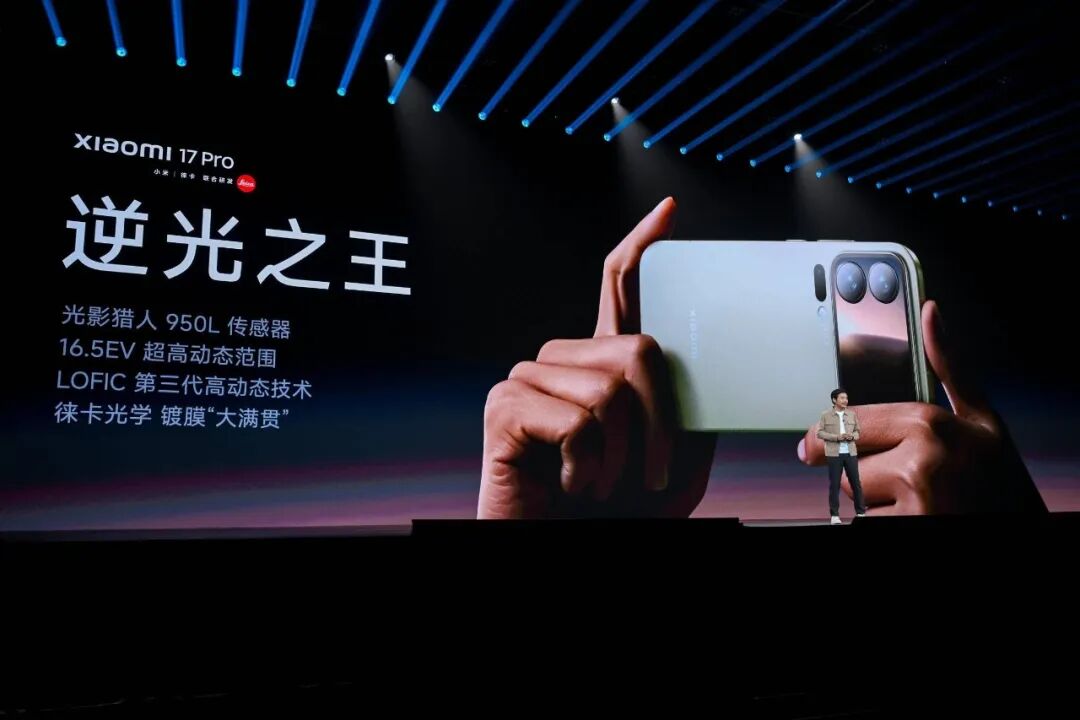
Core Insights - The core theme of the recent speech by Xiaomi's founder Lei Jun is "change," highlighting the company's transformation from an internet company to a hard-tech company, as well as its high-end strategy advancement [1] Product Launch and Pricing - Xiaomi introduced the 17 series smartphones, customized automotive services, and various new products such as TVs, washing machines, routers, and speakers, with noticeable price increases [3] - The starting price for the automotive customization service is 100,000 yuan, targeting high-end models like YU7 Max and SU7 Ultra [3] - The new router is priced at 1,699 yuan and the speaker at 1,999 yuan, exceeding traditional Xiaomi user price expectations [3] Competitive Positioning - Lei Jun emphasized that Xiaomi's standard version of the 17 series is designed to be comparable to the iPhone 17 Pro, showcasing a commitment to high performance [4] - Xiaomi 17 features aggressive specifications, including a 7,000mAh battery, which is nearly double the iPhone 17's 3,692mAh, offering a battery life of 22.1 hours, surpassing the iPhone by 11.5 hours [9] Technological Advancements - The Xiaomi 17 series utilizes the fifth-generation Snapdragon 8 processor, manufactured with the latest 3nm process technology, and claims to maintain lower temperatures than the iPhone 17 during intensive use [4] - The device also features a new red-emitting material developed in collaboration with LumiBlue, which reportedly has higher luminous efficiency than the best imported materials [7] AI and User Experience - The introduction of a back screen feature allows users to set clocks and notifications, catering to the growing trend of "rear selfies" among social media users [9] - AI functionalities were mentioned briefly, focusing on AI-assisted image generation for wallpapers [10] Chip Development Strategy - Xiaomi's journey in chip development has been tumultuous, with the company previously halting its chip project in 2018 due to low sales and high R&D costs [11] - The company is now planning to release its next generation of chips, aiming for a minimum of 10 million units per generation to achieve breakeven [12] - Xiaomi will continue to collaborate with Qualcomm and MediaTek while testing its self-developed chips in suitable products [12] Long-term Vision - Lei Jun stated that developing self-made SoCs is essential for Xiaomi's success, requiring a commitment of at least ten years and an investment of 50 billion yuan [12]
大行评级|高盛:上调小米目标价至66港元 秋季发布会有正面惊喜
Ge Long Hui· 2025-09-26 02:35
Core Viewpoint - Goldman Sachs published a research report indicating that Xiaomi has launched the flagship Xiaomi 17 smartphone series, which includes the 17, 17 Pro, and 17 Pro Max, while also introducing the 15T series in international markets and upgrading to HyperOS 3.0, alongside six new high-end AIoT products [1] Group 1 - Xiaomi's 17 Pro smartphone features competitive pricing and differentiated innovative functions, which may attract more consumers to upgrade from basic models and expand its consumer base [1] - The introduction of customized services for the YU7 Max and SU7 Ultra demonstrates Xiaomi's commitment to solidifying its leadership position in the high-end automotive market by making luxury service experiences more accessible [1] - Starting in 2025, all Xiaomi air conditioners sold will come with a 10-year free warranty service, including central air conditioning, indicating Xiaomi's strategy to enhance service offerings to capture market share in the Chinese air conditioning sector [1] Group 2 - Goldman Sachs has moderately raised Xiaomi's 12-month SOTP-based target price from HKD 65 to HKD 66, maintaining a "Buy" rating [1]
小米集团:2025 年秋季发布会回顾- 生态全链高端化;17 ProPro Max 创新成焦点;买入评级
2025-09-26 02:32
Xiaomi Corp. (1810.HK) Conference Call Summary Company Overview - **Company**: Xiaomi Corp. - **Ticker**: 1810.HK - **Market Cap**: HK$1.5 trillion / US$198.1 billion - **Enterprise Value**: HK$1.3 trillion / US$172.5 billion - **Current Price**: HK$59.45 - **Target Price**: HK$66.00 - **Upside Potential**: 11.0% [1][21] Key Product Launches - **Xiaomi 17 Series**: Launched flagship smartphones including Xiaomi 17, 17 Pro, and 17 Pro Max with innovative features and competitive pricing starting from Rmb4,499 for the base model [1][25] - **AIoT Products**: Introduction of 6 new premium AIoT products including tablets, TVs, routers, and smart speakers, with a focus on the European market [1][44] - **HyperOS 3.0**: Upgraded operating system with enhanced efficiency and AI capabilities [1][46] Core Insights 1. **Smartphone Pricing Strategy**: - The 17 Pro's pricing is Rmb200-500 lower than previous versions, potentially attracting more consumers and increasing market share in the Rmb5k+ segment [2][27] - Xiaomi's market share in the Rmb5-6k segment was approximately 15% in 2Q25, compared to 25% in the Rmb4-5k segment [2][21] 2. **Electric Vehicle (EV) Commitment**: - Launched customization services for YU7 Max and SU7 Ultra, aiming to strengthen its position in China's premium auto market [3][22] - Average delivery capacity is expected to increase as the run rate approaches 10k units/week [3][22] 3. **AIoT Warranty Service**: - Announced a 10-year free warranty for all ACs sold from 2025, surpassing the industry standard of 6 years [4][20] Financial Projections - **Revenue Growth**: - Projected revenue for 2024 is Rmb365.9 billion, increasing to Rmb737.6 billion by 2027 [7][21] - Total revenue growth rates are expected to be 35.0% in 2024, 29.2% in 2025, and 20.0% in 2027 [15][21] - **Earnings Per Share (EPS)**: - New EPS estimates are Rmb1.07 for 2024, Rmb1.56 for 2025, and Rmb2.62 for 2027 [7][21] - **Profit Margins**: - EBITDA margin projected to increase from 8.4% in 2024 to 11.9% in 2027 [15][21] Market Dynamics - **AIoT Revenue Growth**: Expected to moderate in 2026 due to a higher base, with a notable slowdown in growth rates [50][21] - **Competitive Landscape**: Xiaomi's pricing strategy aims to capture market share from competitors, particularly in the premium smartphone segment [27][21] Additional Considerations - **Upcoming Events**: - Monitoring EV delivery capacity ramp-up and Singles' Day GMV data [22][21] - Anticipation of new EV model filings with MIIT [22][21] - **Investment Recommendation**: - Maintain a "BUY" rating with a target price of HK$66, reflecting a modest increase from previous estimates [21][1] This summary encapsulates the key points from the Xiaomi conference call, highlighting product launches, financial projections, and strategic insights into the company's market positioning and future outlook.