Z9GT

Search documents
研报掘金丨长江证券:维持比亚迪“买入”评级,盈利能力有望继续提升
Ge Long Hui· 2026-02-12 07:10
Group 1 - BYD's overall sales in January reached 210,000 units, representing a year-on-year decline of 30.1% and a month-on-month decline of 50.0% [1] - Passenger vehicle sales totaled 206,000 units, with a year-on-year decrease of 30.7% and a month-on-month decrease of 50.5% [1] - Export sales remained strong at 100,000 units in January, showing a year-on-year increase of 43.3% [1] Group 2 - Domestic inventory reduction is ongoing, positioning the company to embrace a new cycle [1] - The expansion of the overseas vehicle matrix and the launch of plug-in hybrid models abroad are expected to sustain monthly export sales growth [1] - The introduction of high-end models such as Z9GT, Z9, Leopard 8, N9, and N8L is anticipated to enhance market penetration and improve per-vehicle profitability [1] Group 3 - The company is committed to its strategic transformation towards intelligent driving, with the release of the Super e platform marking a significant innovation in pure electric technology [1] - The product lineup for high-end markets is being accelerated with a rich reserve of models from brands like Tengshi, Yangwang, and Fangchengbao [1] - Continued efforts in overseas expansion and the enhancement of overseas channels and vehicle matrix are expected to further improve profitability [1] Group 4 - The company forecasts a net profit attributable to shareholders of 35 billion yuan by 2025, corresponding to a PE ratio of 23X, maintaining a "buy" rating [1]


中国车企深入巴西腹地
Cai Jing Wang· 2026-01-06 13:38
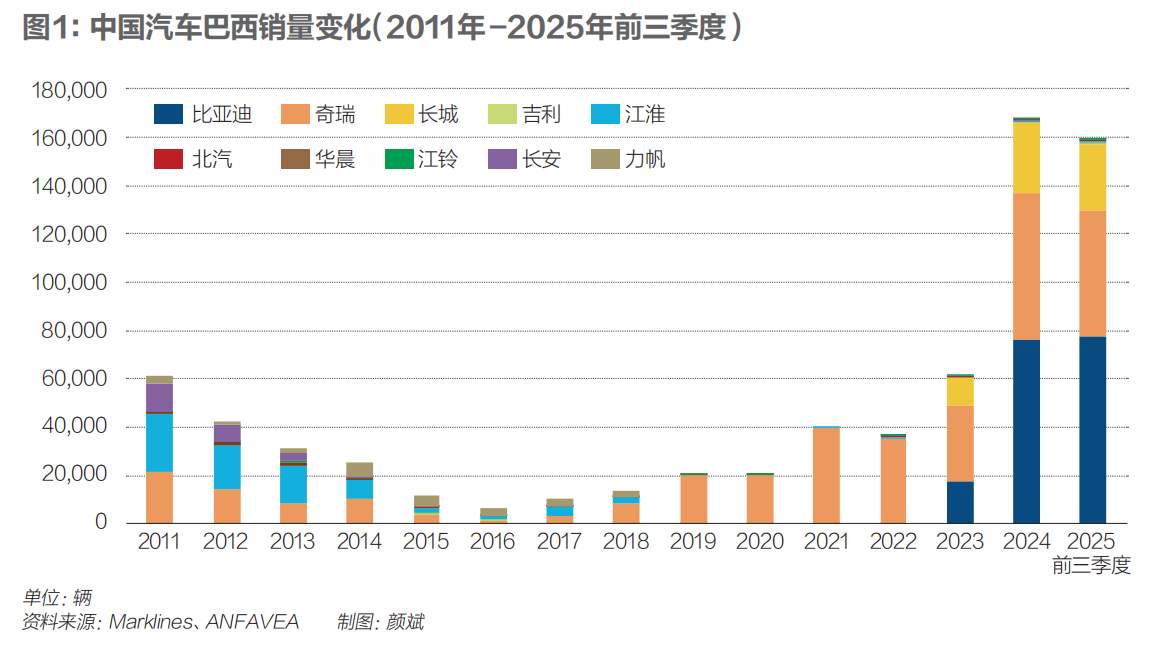
Core Insights - Chinese automotive brands are rapidly establishing a foothold in the Brazilian market, with nearly 40% representation at the São Paulo International Motor Show, showcasing a significant shift in market dynamics [1][3] - The success of Chinese companies in Brazil hinges on their ability to localize supply chains and enhance after-sales services, addressing past shortcomings [1][4] Group 1: Market Presence and Strategy - The São Paulo International Motor Show marked a collective appearance of Chinese brands, with notable participation from companies like BYD, Great Wall, and Chery, indicating a strong market presence [1][2] - Chinese brands are adopting high pricing strategies, with BYD's Tang L model priced at 399,900 reais (approximately 530,000 RMB), reflecting a shift towards the premium segment [1] - The overall market share of Chinese automotive companies in Brazil has surpassed 10%, establishing them as emerging players in the local automotive industry [3] Group 2: Historical Context and Evolution - The journey of Chinese automotive companies in Brazil can be divided into distinct phases: the initial wave from 2009 to 2014, a rebuilding phase from 2015 to 2020, and a resurgence starting in 2021 [7] - The first wave (2009-2014) was characterized by low-cost strategies and heavy marketing, but faced challenges due to a lack of localization and subsequent government policies that increased import taxes on non-localized vehicles [8][11] - The second phase saw companies like Chery pivoting to local partnerships, which helped improve brand perception and sales, with CAOA Chery achieving a 122% sales increase by 2018 [12] Group 3: Technological and Market Adaptation - The current wave (2021 onwards) is marked by significant capital investment and a focus on local production, with companies like Great Wall acquiring existing factories to establish a manufacturing base [13] - Chinese companies are leveraging advanced technologies in electric and hybrid vehicles, with BYD and Great Wall forming a duopoly in the Brazilian new energy vehicle market [14][20] - The adaptation to local market conditions includes developing vehicles that cater to Brazil's unique energy structure, particularly the prevalence of ethanol as a fuel source [27][28] Group 4: Challenges and Opportunities - The Brazilian automotive market presents challenges such as a highly unequal income distribution and specific consumer preferences for smaller vehicles due to parking constraints [23][24] - Chinese brands are addressing these challenges by offering compact, technologically advanced vehicles that appeal to middle-class consumers, moving away from the low-cost strategy of the past [25] - The Brazilian government's "MOVER" plan aims to stimulate local investment in high-efficiency vehicles, providing a framework for Chinese companies to align their strategies with national goals [29][32] Group 5: Future Outlook - The success of Chinese automotive companies in Brazil will depend on their ability to integrate technology transfer, deepen local market engagement, and enhance supply chain capabilities [33] - The potential for Chinese brands to act as a catalyst for innovation in the Brazilian automotive sector is recognized by the government, which seeks to leverage their presence for broader industrial upgrades [19][32]


从全年销量看腾势:一个跑通的高端品牌样本
Tai Mei Ti A P P· 2026-01-03 09:57
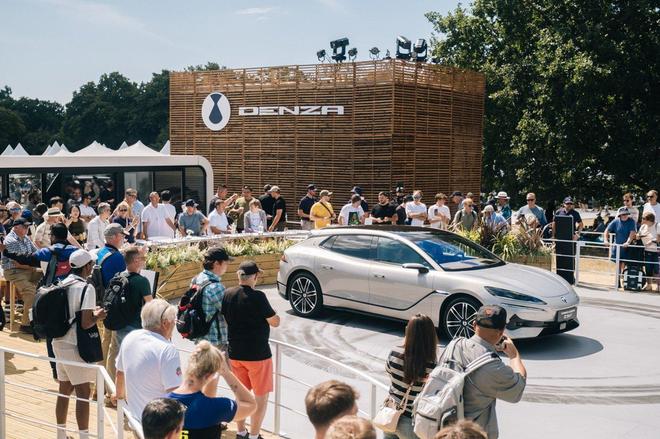
Core Viewpoint - Tengshi's performance in 2025 reflects a stable growth trajectory in the high-end electric vehicle market, distinguishing itself from competitors who rely on aggressive pricing strategies and promotions [2][6][20]. Sales Performance - In December 2025, Tengshi achieved a monthly sales volume of 18,139 units, representing a month-on-month increase of 36.8% and a year-on-year increase of 20.5%. The total annual sales reached 157,134 units, marking a year-on-year growth of 24.7% [2]. - The average transaction price for the brand remained high at 361,000 yuan, indicating a strong position in the high-end market segment [2][23]. Market Dynamics - The Chinese electric vehicle market is experiencing a clear segmentation: the low-end market is declining post-subsidy, the mid-range market is engaged in price wars, and the high-end market is showing significant differentiation [6][20]. - Tengshi's strategy diverges from the prevalent market trend by focusing on stable growth without resorting to frequent model updates or short-term incentives [7][8]. Brand Positioning - Tengshi has transitioned from being a new brand in the growth phase to a more mature brand with predictable growth capabilities in the high-end price range [8][20]. - The brand's ability to maintain a stable average transaction price without relying on price reductions signifies a robust underlying technology and market validation [8][24]. Product Strategy - The D9 model serves as a pivotal point in Tengshi's high-end strategy, successfully redefining the MPV market and establishing a new commercial logic [9][12]. - The introduction of the N8L model indicates Tengshi's capability to replicate its success in the competitive family SUV market, which is characterized by a multitude of choices and cautious consumer decision-making [13][16]. Business Model Evolution - Tengshi is moving towards a dual-core strategy with both D9 and N8L models, enhancing its resilience against market fluctuations [18]. - The brand's diversified product line improves its risk structure and supports long-term performance through stable channel confidence and inventory strategies [18][26]. User Engagement - Tengshi's user base is shifting from price sensitivity to a focus on suitability, indicating a maturation in consumer decision-making processes [25]. - The brand's channels are evolving into long-term partners rather than mere sales conduits, reflecting confidence in product stability and pricing [26]. Technological Foundation - Tengshi has developed a comprehensive technological brand matrix, emphasizing sustainable and verifiable user experiences, which is crucial for long-term brand trust [27]. - The ongoing investment in technology and product development is establishing a solid foundation for Tengshi's high-end positioning [27][29]. Global Expansion - With a firm foothold in the high-end market, Tengshi is now poised to explore international opportunities, challenging the notion that high-end status can be achieved through rapid scaling or subsidies [28][29]. - The brand's stable growth model may serve as a benchmark for other Chinese brands aiming to establish themselves in the high-end market without relying on low pricing strategies [29].
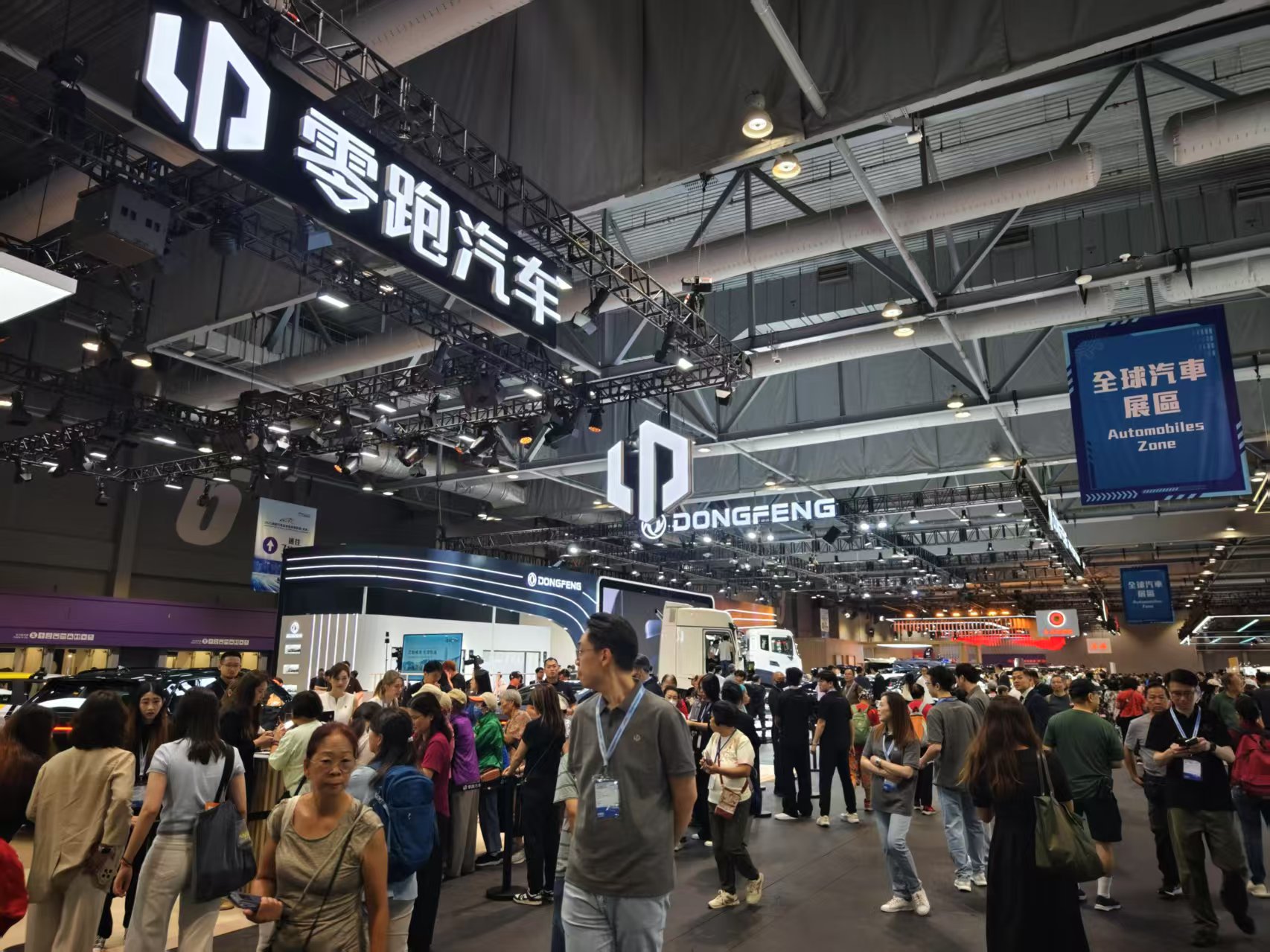
“右舵”市场集体秀肌肉,内地11家车企亮相香港国际车博会
Di Yi Cai Jing· 2025-06-12 11:46
Core Viewpoint - The auto expo in Hong Kong showcases the strength of Chinese automakers, highlighting their advancements in electric vehicles and technology, while also serving as a strategic platform for global expansion [1][8]. Group 1: Event Overview - The auto expo, themed "New Cars, New Journey," covers over 55,000 square meters with seven core exhibition areas, including global automotive, supply chain, and innovation technology [2]. - Eleven major Chinese automakers, including SAIC, BYD, and Dongfeng, participated, alongside new entrants like Leap Motor and Xpeng [1][4]. Group 2: Featured Vehicles and Technologies - BYD showcased popular models such as SEALION 7, SEAL, and ATTO 3, while Changan presented its new energy brands [4]. - Chery Group made a significant impact with its largest-ever exhibition outside mainland China, focusing entirely on new energy vehicles and showcasing advanced technologies like high-efficiency engines and intelligent solutions [4][5]. Group 3: Market Trends and Government Policies - The Hong Kong government has implemented tax reduction policies for electric vehicles under HKD 500,000, significantly boosting sales [6]. - From January to April 2023, the registration of electric vehicles in Hong Kong reached 8,916, with a penetration rate of 68%, led by BYD's SEALION 07 EV [6]. Group 4: Strategic Importance of Hong Kong - Hong Kong is positioned as a crucial gateway for Chinese automakers to enter international markets, leveraging its unique geographical and financial advantages [8][9]. - The city aims to become a hub for innovation and technology, connecting local enterprises with global capital and resources [9][10]. Group 5: Future Aspirations - Companies like Chery and Xpeng express intentions to utilize Hong Kong as a launchpad for international capital markets and advanced technology deployment [10].