
mRNA新冠疫苗

Search documents
金融破段子 | 股价回调9成多,当“成功”被简单外推
中泰证券资管· 2026-01-12 11:32
Core Viewpoint - The article discusses the dramatic decline of a prominent American biotech company, referred to as M Company, which was once celebrated for its COVID-19 vaccine but has since faced significant financial challenges and operational setbacks [2][3]. Group 1: Company Performance - Four years ago, M Company reached a market peak of nearly $200 billion and held $18 billion in cash, but its market value has since shrunk by over 90% [2]. - The company's revenue peaked at $19.3 billion in 2022 but is projected to drop to $6.848 billion in 2023 and further to $3.236 billion in 2024, indicating a steep decline in sales [3]. - Following the decline in revenue, M Company has incurred continuous losses due to high fixed costs associated with research, personnel, and production capacity [3]. Group 2: Expansion and Challenges - M Company expanded rapidly during the pandemic, increasing its workforce from under 1,000 to nearly 6,000 and expanding its pipeline from over ten to more than thirty projects [3]. - Despite the expansion, the company has struggled to generate significant revenue from new vaccine approvals, with only $200,000 in revenue from vaccines approved post-COVID [3]. Group 3: Market Dynamics and Future Outlook - The initial optimism surrounding mRNA technology was based on its rapid development and approval processes, which may not be replicable in standard pharmaceutical development [5]. - The article emphasizes the need for caution in assuming that short-term successes will translate into long-term competitive advantages, highlighting the complexities of drug development and market competition [5].


从中国mRNA疫苗到全球研发“新势力”:石药集团的创新远征与价值共生
Cai Jing Wang· 2025-12-30 05:02
Core Insights - The core strategy of the company is to embed "innovation" as its primary engine for survival and growth in the competitive global pharmaceutical industry [1][2] Group 1: Innovation Strategy - The company has committed approximately 5.7 billion yuan annually to research and development, focusing on six core areas including oncology and neuropsychiatry, with over 200 projects in the pipeline [2] - The innovation approach is systematic and platform-based, encompassing eight major technology platforms such as mRNA, ADC, and cell therapy, enabling the company to produce clinically valuable outcomes [2] - The company has transitioned from "fast followers" to "source innovators" in the pharmaceutical sector, exemplified by its development of an mRNA COVID-19 vaccine and a leading drug for stroke treatment [2] Group 2: Global Expansion - The company has established a global R&D network with five centers and over 2,000 high-end researchers, allowing it to leverage global insights and meet stringent market standards [3] - A significant milestone was achieved with the hypertension drug "Xuan Ning" receiving full FDA approval, marking the first innovative drug from a Chinese company to achieve this status [3] - The strategic R&D collaboration with AstraZeneca on an AI platform signifies the company's evolution from a product exporter to a co-builder of key R&D technology platforms, with overseas licensing contracts exceeding $16.6 billion [3] Group 3: Industry Positioning - The company has built a diversified product system covering finished drugs, active pharmaceutical ingredients, and functional foods, establishing a strong foundation for innovation [4] - Its leading position in the active pharmaceutical ingredient sector allows the company to play a crucial role in maintaining the stability and safety of the global pharmaceutical supply chain [4][5] - The company holds 15 CEP certificates and 24 DMF registrations, reflecting its commitment to quality and gaining trust in global markets [5] Group 4: Social Responsibility - The company's innovation philosophy emphasizes creating value for a broad patient base, addressing both major diseases and common conditions [5] - Through the Hebei Shiyao Puen Charity Foundation, the company engages in public welfare activities, converting business success into social benefits [5] - The overarching theme of "value co-existence" highlights the company's commitment to contributing to global health while ensuring that innovations benefit every individual [6]
元动力 —— 中美生物医药投资对比分析
3 6 Ke· 2025-12-12 09:33
Core Insights - The article emphasizes the importance of industry research as a driving force for investment, particularly focusing on the investment landscape in the biopharmaceutical sectors of China and the United States [1]. Investment Overview - The article discusses the investment landscape in the biopharmaceutical sector, highlighting successful venture capital (VC) cases in the U.S., such as Moderna, Alnylam Pharmaceuticals, and Intuitive Surgical, showcasing their growth trajectories and market impacts [2][4][6][9][11]. Investment Data Comparison - U.S. biopharmaceutical investments peaked at approximately $60.2 billion in 2021 but have since declined, with projections indicating a drop to $14.2 billion by 2025, reflecting challenges such as IPO market freezes and high interest rates [14]. - In China, the investment structure has shifted, with a notable decrease in early-stage financing from 42.15% in 2023 to 31.12% in 2024, while mid-to-late stage financing has slightly increased [16]. Medical System Differences - The U.S. healthcare system is characterized by high medical costs, with commercial insurance playing a crucial role in covering expenses, while the Chinese system is more influenced by government-led initiatives [27][28][29]. - The U.S. healthcare expenditure reached $4.6 trillion in 2023, accounting for 16.7% of GDP, with private health insurance being the largest payer [29]. Investment Strategies and Trends - U.S. venture capital firms are increasingly taking on active roles in company creation and development, moving beyond traditional financial investment to become integral in strategic and operational aspects [23]. - The article notes a trend towards "base + fund" ecosystems, where real estate investment trusts (REITs) focus on life sciences, creating environments conducive to innovation and collaboration [24]. Recent Financing Cases - Recent financing cases in the U.S. biopharmaceutical sector include significant investments in companies like Pathos AI and Eikon Therapeutics, indicating a focus on advanced technologies and clinical applications [25]. Comparative Analysis of LP Structures - The article contrasts the limited partner (LP) structures in the U.S. and China, noting that U.S. LPs are primarily composed of private capital seeking financial returns, while Chinese LPs are often government-led, focusing on strategic industry development [49][50].


CureVac与辉瑞/BioNTech专利纠纷达成和解 葛兰素史克(GSK.US)获高额赔偿
Zhi Tong Cai Jing· 2025-08-08 08:56
Core Insights - CureVac NV has reached a settlement with Pfizer and BioNTech regarding long-term patent disputes over mRNA vaccines, resulting in a payment of up to $500 million to its former partner GlaxoSmithKline (GSK) and a 1% royalty on future vaccine sales [1][2] - The settlement comes as BioNTech seeks to acquire CureVac for approximately $1.25 billion, with GSK set to receive an upfront payment of $370 million and an additional $130 million upon completion of the acquisition [1] - GSK, which previously collaborated with CureVac on COVID-19 vaccine development, will continue to pursue legal action against BioNTech and Pfizer for alleged patent infringements despite the settlement [2] Group 1 - The settlement resolves ongoing litigation between CureVac, Pfizer, and BioNTech but does not conclude GSK's legal actions [2] - GSK had previously restructured its partnership with CureVac, agreeing to pay up to $1.4 billion for rights to mRNA flu and COVID-19 vaccines developed by CureVac [1] - GSK will receive a 1% royalty on sales of flu, COVID-19, and related combination mRNA vaccines sold by Pfizer-BioNTech in the U.S. and an additional 1% on sales outside the U.S. after BioNTech's acquisition of CureVac [1]


千亿mRNA赛道拐点渐至 云顶新耀“双轮驱动”再升级
Xin Hua Cai Jing· 2025-07-04 06:09
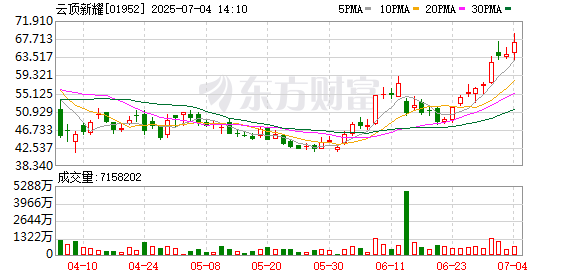
Core Insights - The mRNA technology, initially recognized for its role in COVID-19 vaccines, is now being explored for broader therapeutic applications, particularly in oncology and autoimmune diseases [2][3] - The mRNA vaccine pipeline has seen a decline post-pandemic, with significant revenue drops reported by major players like Moderna and BioNTech [3][4] - Cloud-based innovations in mRNA technology, such as personalized cancer vaccines, are emerging as potential game-changers in the pharmaceutical industry [4][5] Industry Overview - The mRNA vaccine and therapy market is projected to grow at a compound annual growth rate (CAGR) of 16.8%, increasing from $46.83 billion in 2023 to $101.8 billion by 2028 [13] - The industry is witnessing a shift from pandemic-driven demand to a focus on personalized medicine and innovative treatment solutions [4][5] Company Developments - Cloud-based pharmaceutical company, CloudTop New Horizon, has developed an AI+mRNA platform and is advancing its pipeline in personalized cancer vaccines, with EVM16 showing promising clinical results [5][6] - The company has established a GMP production facility in China, enabling localized production of mRNA drugs and addressing scalability challenges in the industry [11] - CloudTop's dual strategy of "License In" and "License Out" is enhancing its revenue streams and positioning it for international collaborations with top pharmaceutical companies [12] Competitive Landscape - The mRNA technology race is intensifying, with various companies, including CloudTop, competing to establish their platforms and pipelines [5][6] - CloudTop's differentiation lies in its focus on personalized vaccines and a universal design for broader applicability, aiming to reduce costs and production times [7][8] - The integration of AI in mRNA development is seen as a critical factor for success, with CloudTop's proprietary algorithms enhancing its capabilities in identifying tumor antigens [10]
mRNA巨头亏损背后,中国药企能否接棒下一个增长极
2 1 Shi Ji Jing Ji Bao Dao· 2025-07-01 04:53
Core Insights - The mRNA industry is transitioning from a pandemic-driven boom to a critical transformation phase, with significant potential in cancer immunotherapy and personalized medicine [1][6][7] - Major players like BioNTech and Moderna are adjusting their strategies in response to declining revenues from COVID-19 vaccines, focusing on expanding their cancer treatment pipelines [6][7] Industry Developments - mRNA technology has shown promise in various applications beyond vaccines, including therapeutic vaccines, cancer immunotherapy, and regenerative medicine [4][5] - The market potential for mRNA cancer vaccines is projected to reach hundreds of billions of dollars, driven by their accessibility and personalization capabilities [1][4] Company Strategies - BioNTech has made strategic acquisitions to enhance its capabilities in mRNA cancer immunotherapy, including a $1.25 billion acquisition of CureVac [1] - Moderna is facing financial challenges, with a projected revenue drop of 33% in 2025, leading to workforce reductions [6][7] Market Dynamics - The Chinese mRNA sector is experiencing a bifurcation, with some companies like Simao Biotechnology facing financial difficulties, while others are making significant advancements [8][9] - Chinese companies are gaining international recognition, with successful FDA approvals for innovative mRNA cancer vaccines [9] Future Outlook - The mRNA industry is expected to evolve towards a model where drug development is based on "coding nucleic acid sequences," potentially revolutionizing treatment for various diseases [5][10] - The success of Chinese mRNA companies in the competitive landscape will depend on their ability to leverage business development opportunities for rapid monetization [10]