
Ke Ji Ri Bao

Search documents
生物育种:攥紧中国种子 端稳中国饭碗
Ke Ji Ri Bao· 2025-11-05 06:20
Core Insights - The cotton industry in Xinjiang is experiencing robust growth, with a projected total production of 5.686 million tons in 2024, accounting for 92.2% of China's total cotton output and 22.7% of global production [1][2] - The advancement of biological breeding technology is crucial for the sustainable development of the cotton industry, with significant support from the government during the 14th Five-Year Plan [1][4] Group 1: Cotton Industry Development - Xinjiang's cotton production is set to reach a historical high, with the region producing 8.2% of the world's cotton on only 3.5% of the global cotton area [1] - The introduction of over 30 new cotton varieties with superior traits, such as high yield and disease resistance, has been achieved through modern breeding techniques [2][3] - The new cotton variety, Jinmian No. 2, shows a 13.2% yield increase compared to traditional varieties, with a planned cultivation area of 850,000 acres in 2024 [2] Group 2: Agricultural Technology and Food Security - The global agricultural landscape is facing challenges such as climate change and pest threats, necessitating the development of high-yield and resilient crop varieties [2][4] - The breeding of new corn varieties, such as Dongke 1188 and Zhongdan 1130, has been prioritized to enhance yield and adaptability, with yield increases of 12.2% and 10.1% respectively compared to traditional varieties [4][5] - The focus on self-reliance in seed technology is essential for ensuring food security and supporting the agricultural sector's growth in China [4][5]
科学家“算”出新型电池材料 能“锁住”能量充得更快
Ke Ji Ri Bao· 2025-11-05 05:44
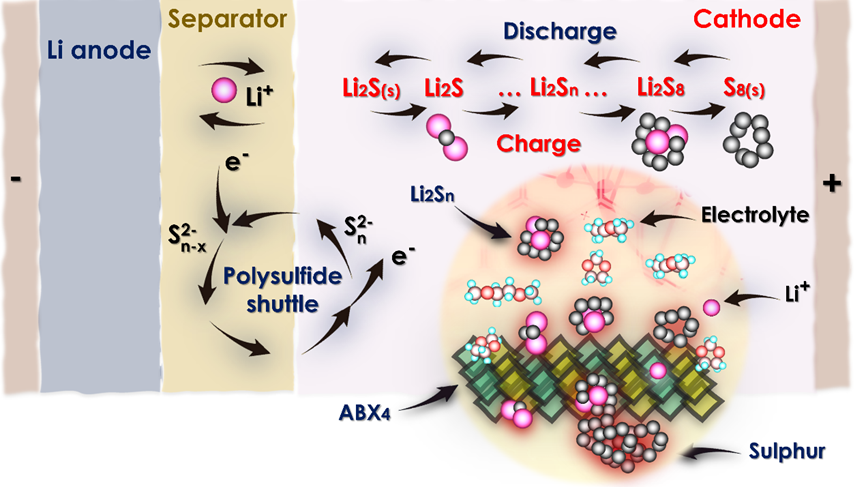
Core Insights - A research team from Tianjin University, in collaboration with Shanghai Jiao Tong University and other institutions, has predicted a new class of two-dimensional topological disulfide monolayer materials (HfTiTe4, ZrTiTe4, and HfZrTe4), providing significant theoretical support for the development of high-performance battery technologies [1][3] Group 1: Material Properties - The new two-dimensional materials exhibit rich lithium and sodium ion storage sites and ultra-fast ion transport capabilities, significantly enhancing battery fast-charging performance [3] - The theoretical capacity for lithium ion storage in these materials is 1.60 Ah per gram, while for sodium ions, it is 1.35 Ah per gram [3] - The diffusion barriers for ions in the materials are low, at 0.206 eV for lithium and 0.046 eV for sodium, outperforming many existing two-dimensional materials [3] Group 2: Stability and Efficiency - The materials possess unique chemical properties and adsorption capabilities that effectively stabilize polysulfides, mitigating the "shuttle effect" and improving battery cycle stability and charging efficiency [3] - They maintain good thermal stability and kinetic performance across a wide temperature range from room temperature to approximately 227°C, making them suitable for high-temperature applications in electric vehicles and industrial energy storage systems [4]

打通核电站冷源系统“生命线” 广东陆丰核电5、6号机组有新进展
Ke Ji Ri Bao· 2025-11-05 05:44
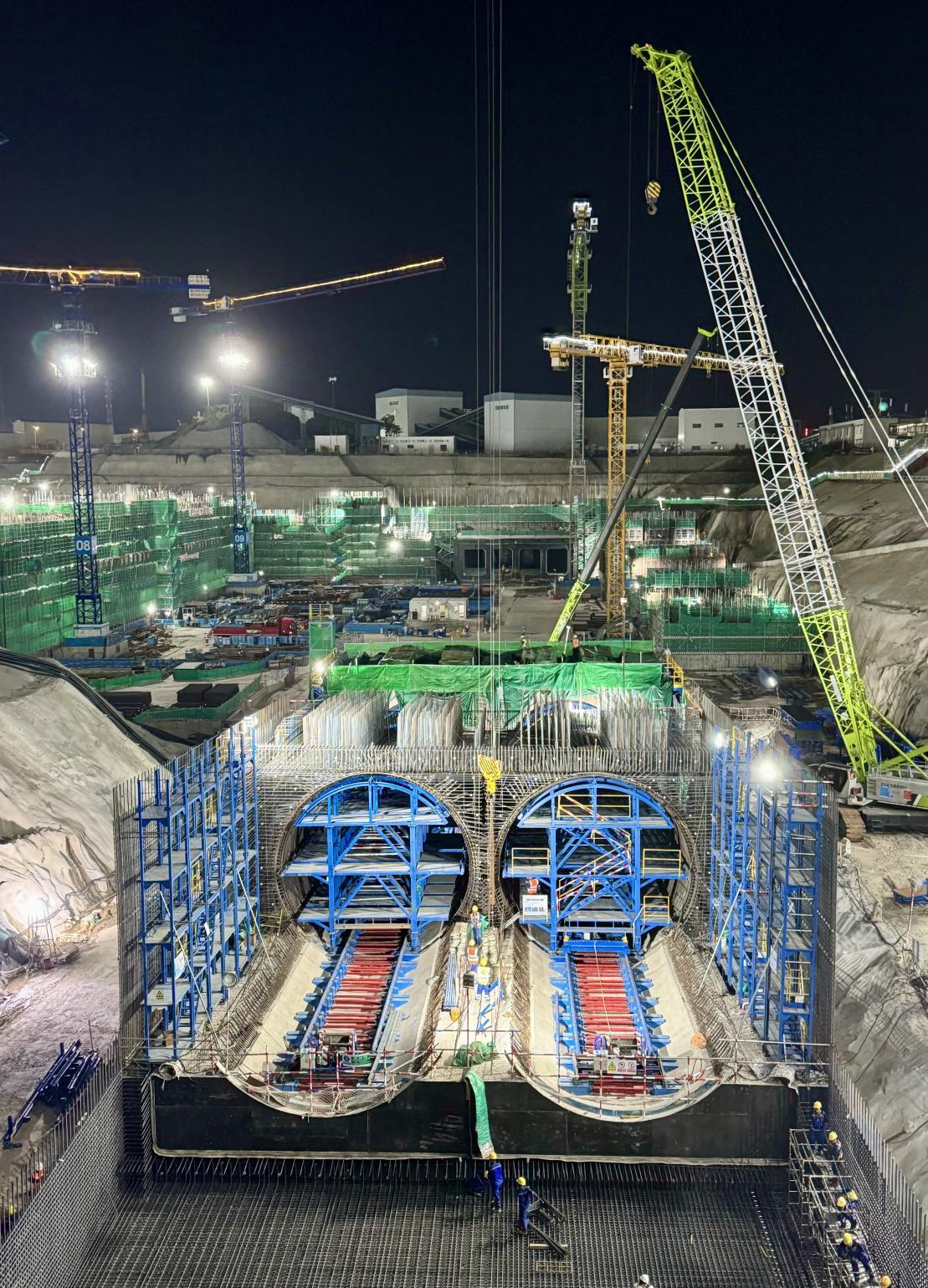
Core Viewpoint - The successful completion of the main structure construction for the cooling water intake and seepage prevention project of the Lufeng Nuclear Power Unit 5 and 6 lays a solid foundation for the commercial operation of the units, highlighting the project's significance in promoting clean energy utilization and enhancing energy security in the Guangdong region [1]. Group 1: Project Overview - The Lufeng Nuclear Power project is crucial for advancing clean energy use and supporting the green low-carbon transition in the eastern Guangdong region [1]. - The project involves complex geological conditions, including high groundwater levels and strong permeability of sand layers, necessitating innovative construction techniques [1][4]. Group 2: Construction Techniques - The project team adopted high-pressure jet grouting technology to control seepage in the seepage wall, ensuring a manageable construction environment for deep foundation excavation and support [1]. - A unique construction plan combining seepage walls, deep foundations, and segmented large submerged pipes was developed to address the challenges posed by the project's structural features and site constraints [3]. - The innovative design of a "track-mounted hydraulic walking platform + custom arc steel formwork" system improved formwork assembly efficiency by approximately 30% and increased concrete pouring efficiency by about 25% [3]. Group 3: Quality Control - A comprehensive quality control system was established at the project's outset to ensure traceability and reliability, with all data recorded digitally for future reference [4]. - The project team implemented a rigorous process to ensure that every rebar and concrete mix ratio is documented, creating a quality archive that supports long-term operational safety [4]. Group 4: Risk Management - The deep foundation excavation, reaching a depth of 30 meters, posed significant risks, which were mitigated through advanced simulation and monitoring techniques [5]. - The project team optimized the support system from five concrete supports to a composite system of three concrete supports and localized steel supports, enhancing safety while reducing costs [5].
将阳光"一分为二" 硅太阳能电池中实现稳定"单线态裂分"效应
Ke Ji Ri Bao· 2025-11-05 05:27
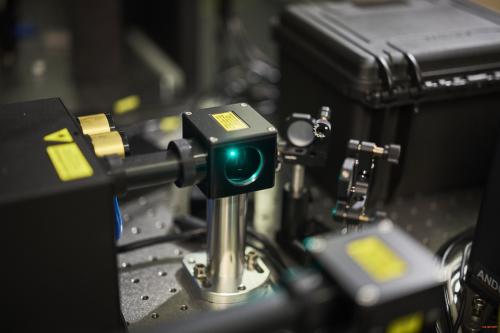
Core Insights - A research team from the University of New South Wales in Australia has achieved a significant breakthrough in solar technology by discovering a stable organic material that enables the "singlet fission" effect in silicon solar cells, potentially enhancing photovoltaic conversion efficiency [1][3] Group 1: Technology Breakthrough - The "singlet fission" process allows a single photon to split into two energy packets, effectively converting wasted thermal energy from sunlight into additional electricity [3] - By overlaying a thin layer of organic molecules on the surface of silicon cells, high-energy photons can undergo fission, generating two lower-energy excited states and injecting more charge into the silicon layer, significantly increasing current output [3] Group 2: Efficiency Potential - Current commercial silicon solar cells have a maximum conversion efficiency of approximately 27%, with a theoretical limit of 29.4%. The introduction of the "singlet fission" mechanism could potentially raise this theoretical efficiency to 45% [3] - The research team utilized dibenzothiophene-dione (DPND), a stable industrial pigment, which demonstrates excellent durability and compatibility with silicon cells, allowing for long-term outdoor application [3] Group 3: Practical Application - This is the first instance of achieving singlet fission on silicon materials using a stable organic molecule based on industrial pigments, which are already widely used in automotive coatings, indicating sufficient chemical stability for outdoor use [3] - The technology can be integrated by simply applying a new layer of material onto existing silicon cells, facilitating easier adoption in the market [3]

广深铁路今启全新运行图 速度与密度双提升
Ke Ji Ri Bao· 2025-11-05 04:15
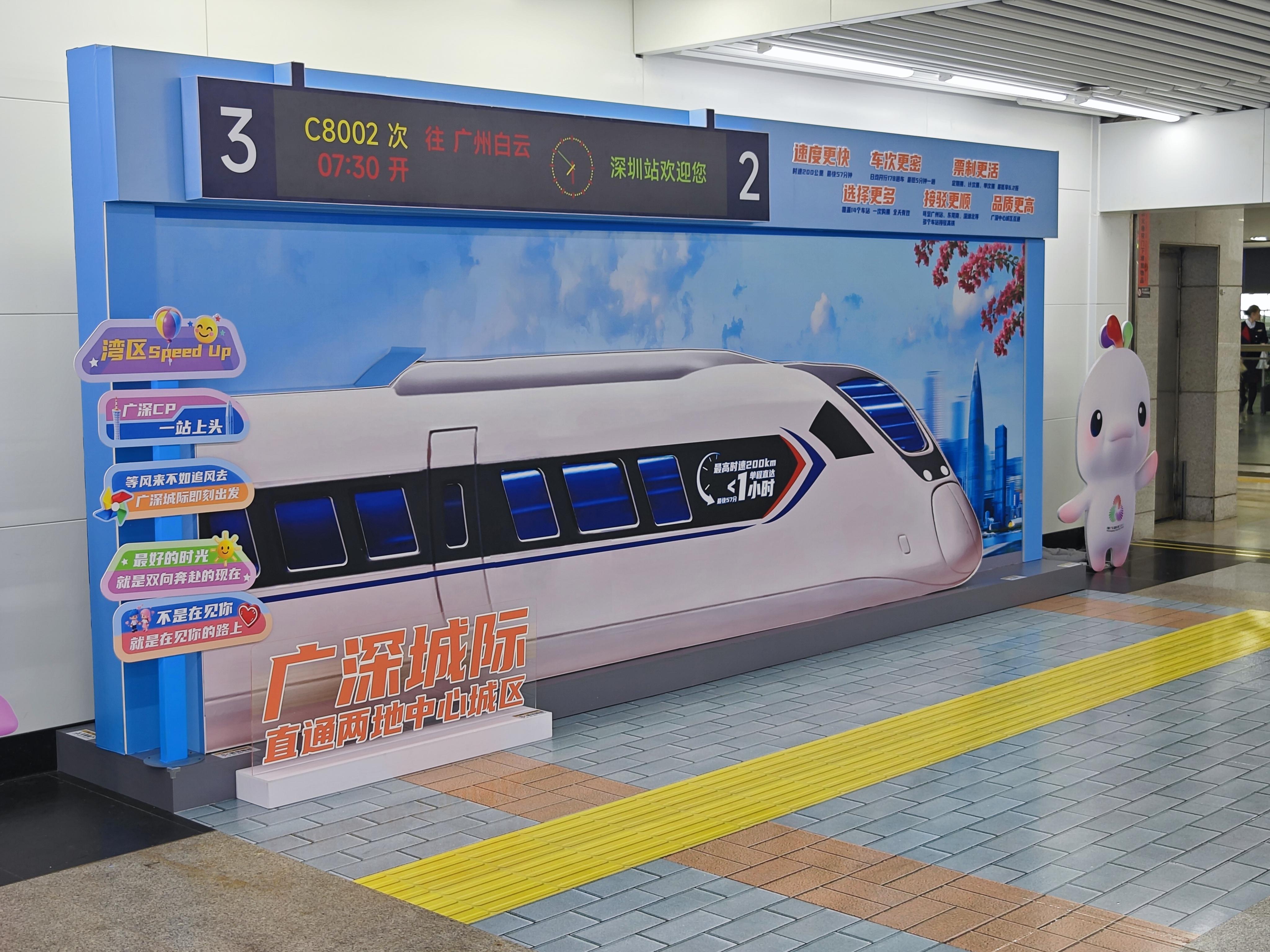
Core Points - The new train schedule for the Guangzhou-Shenzhen Railway has been implemented, enhancing both speed and frequency of service [1][4][9] Speed Enhancement - The fastest travel time between Shenzhen and Guangzhou East is now 56 minutes, representing a 6.7% improvement [1] - A "1-hour commuting circle" is established between the central business districts of Guangzhou (Tianhe CBD) and Shenzhen (Futian CBD, Luohu District) [1] Frequency Improvement - The average number of daily train services has increased to 178, with trains departing every 13 minutes on average [1] - The minimum interval between train departures has been reduced to 5 minutes, facilitating a more convenient "on-demand" service model [1] Ticketing and Accessibility - The railway has introduced various ticketing options, including "regular tickets" and "single journey tickets," with discounts of up to 38% for 30-day/60-trip regular tickets [4] - Single journey tickets remain valid all day, allowing passengers to board any train on the same day at designated stations [4][9] Connectivity and Network Integration - The new schedule complements the Guangzhou-Shenzhen-Hong Kong High-Speed Railway and the Ganzhou-Shenzhen High-Speed Railway, covering 14 stations and creating a comprehensive transportation network [4][9] - Enhanced connections to other transport hubs, such as Guangzhou Station and Baiyun Airport, enable seamless transfers between different modes of transport [4][9]

亚太首秀!特斯拉Cybercab亮相2025进博会
Ke Ji Ri Bao· 2025-11-05 02:54
Core Viewpoint - Tesla's Cybercab, showcased at the 8th China International Import Expo, is designed for future autonomous ride-hailing fleets, featuring no steering wheel or pedals and capable of traveling approximately 10 kilometers on 1 kilowatt-hour of electricity [1] Group 1 - The Cybercab has two seats and is part of Tesla's vision for autonomous transportation [1] - The expo featured a total of 461 new products, technologies, and services [1]

【科技日报】国科大副校长王艳芬当选发展中国家妇女科学组织副主席
Ke Ji Ri Bao· 2025-11-05 02:34
Core Points - The 7th General Assembly of the Organization for Women in Science for the Developing World (OWSD) took place in Bogotá, Colombia from November 3 to 7, highlighting the organization's commitment to promoting women in science [1] - Wang Yanfen, Vice President of the University of Chinese Academy of Sciences, was elected as the Vice President of OWSD, reflecting the increasing influence of Chinese scientists in international scientific organizations [1] - Wang Yanfen has been recognized for her contributions to ecological research and her efforts in promoting international scientific cooperation, particularly for the development of female researchers [1] Summary by Categories Leadership and Influence - Wang Yanfen's election as OWSD Vice President signifies a recognition of China's contributions to global scientific development and gender equality [1] - The election underscores the growing role of Chinese scientists in international platforms [1] Contributions to Science and Gender Equality - Wang Yanfen has been actively involved in initiatives that support female scientists, enhancing their visibility and collaboration on the international stage [1] - OWSD, established in 1989 and affiliated with UNESCO, aims to empower women in science, with China being a founding member [1] Future Commitments - Wang Yanfen expressed her commitment to fostering collaboration in the Asia-Pacific region and creating more opportunities for female researchers to address global challenges [1]
硅太阳能电池中实现稳定“单线态裂分”效应
Ke Ji Ri Bao· 2025-11-05 02:01
Core Insights - A research team from the University of New South Wales in Australia has achieved a significant breakthrough in solar technology by discovering a stable organic material that enables "singlet fission" in silicon solar cells, potentially enhancing photovoltaic conversion efficiency [1][2] Group 1: Technology and Mechanism - "Singlet fission" is a unique physical process that allows one photon to split into two energy packets, effectively converting wasted thermal energy from sunlight into additional electricity [1] - By overlaying a thin layer of organic molecules on the surface of silicon cells, high-energy photons can undergo fission within this layer, generating two lower-energy excited states and injecting more charge into the underlying silicon layer, significantly increasing current output [1] Group 2: Efficiency and Potential - Current commercial silicon solar cells have a maximum conversion efficiency of about 27%, with a theoretical limit of 29.4%. The introduction of the "singlet fission" mechanism could potentially raise this theoretical efficiency to 45% [1] - The research team utilized dibenzothiophene (DPND), an industrial pigment with excellent durability, which can operate stably in air and humid environments, proving compatible with silicon cells for energy multiplication [1][2] Group 3: Practical Application - This is the first instance of achieving singlet fission on silicon materials using stable organic molecules based on industrial pigments, which are already widely used in automotive coatings, indicating their chemical stability for long-term outdoor applications [2] - The technology can be integrated by simply applying a new layer of material onto existing silicon cells [2]
浙江海盐实现电网故障高精度定位
Ke Ji Ri Bao· 2025-11-05 01:01
Core Insights - The company has successfully developed an intelligent measurement system that enhances the power grid's ability to "think," improving fault location efficiency by over 50% through digital technology empowerment [1] Group 1: Technology and Innovation - The intelligent measurement system utilizes graph neural network technology to effectively handle the complex topology and fault characteristic data of the distribution network [1] - A fault location model based on graph convolutional networks and graph attention networks has been established, achieving high-precision fault location in the distribution network [1] - Compared to traditional fault location methods, graph neural network technology shows significant advantages in accurately identifying fault locations, reducing misjudgments and omissions [1] Group 2: Industry Recognition and Application - The technology titled "Intelligent Judgment and Accurate Geographic Location Technology for Distribution Network Faults Based on Graph Neural Networks" has been selected as a typical case for the 2025 Power Information Communication New Technology Conference, indicating industry recognition of this innovation [1] - The intelligent system has been fully implemented in the Haiyan power grid [1]
基于超导量子芯片的暗物质搜寻新架构提出
Ke Ji Ri Bao· 2025-11-05 01:01
Core Insights - The research team from the University of Science and Technology of China has developed a scalable dark matter search architecture based on superconducting qubit systems, successfully validating it through experimental tests on multi-qubit superconducting chips [1][2] - Dark matter constitutes approximately 25% of the total mass of the universe, with ultra-light bosonic dark matter candidates like axions and dark photons gaining significant attention in recent years [1] - The proposed architecture aims to address the technical challenges of balancing measurement range and detection sensitivity in dark matter searches, which have been a limitation in existing experimental setups [2] Summary by Sections - **Research Development** - The team has integrated multiple frequency-tunable superconducting qubits on a single chip to create a scalable dark matter search framework [2] - A 3-qubit superconducting chip was designed to simultaneously search for dark photons in three energy ranges: 15.632–15.638, 15.838–15.845, and 16.463–16.468 micro-electron volts [2] - **Experimental Results** - The experimental results provided the most stringent coupling limits for dark photons within the specified energy ranges, improving upon previous astronomical observation-based limits by 1 to 2 orders of magnitude [2] - **Future Implications** - This work demonstrates the potential applications of superconducting qubits in particle physics and lays the groundwork for achieving broader mass ranges and higher precision in dark matter detection in the future [2]