
超导量子芯片

Search documents
“量子计算的ChatGPT时刻,可能比人们预期来得更早”
投中网· 2026-03-22 07:00
Core Viewpoint - The quantum technology sector is rapidly evolving from a pioneering phase to one focused on enterprise applications, with significant investment activity indicating a shift towards commercialization [4][6][24]. Group 1: Industry Overview - There are currently over 237 companies involved in quantum technology across various subfields, including quantum computing, communication, materials, and security [8]. - Among these, 42 companies specialize in quantum computing, with a notable increase in investment activity in recent years [14][19]. - The investment landscape has changed dramatically, with 36 investments recorded in 2025, marking a historical high, and 13 investments already completed in the first three months of 2026 [12][10]. Group 2: Investment Trends - In 2024, global investment in quantum technology surpassed $1 billion, reflecting a growing interest in the sector [6][27]. - Notable investments include a €1 billion Series B round for French quantum computing company Alice & Bob and a total of $450 million in Series E funding for SandboxAQ [28]. - The emergence of dedicated funds, such as Quantonation Ventures, highlights the increasing recognition of quantum technology's potential for commercialization [26][27]. Group 3: Regional Insights - Beijing leads in the number of quantum technology companies with 50, followed by Guangdong (39), Jiangsu (28), and others [9]. - Hefei, a non-first-tier city, has the highest concentration of quantum computing companies, attributed to the influence of the University of Science and Technology of China [17]. Group 4: Company Highlights - Turing Quantum has raised over $1 billion across seven funding rounds, achieving a valuation of approximately $7 billion [19]. - Logic Bit, incubated from Zhejiang University's superconducting quantum computing team, has recently completed significant funding rounds, showcasing the high technical and talent requirements in the quantum computing startup landscape [22][23].


10亿加持!5家企业攻坚硬科技“卡脖子”领域
是说芯语· 2026-03-17 10:26
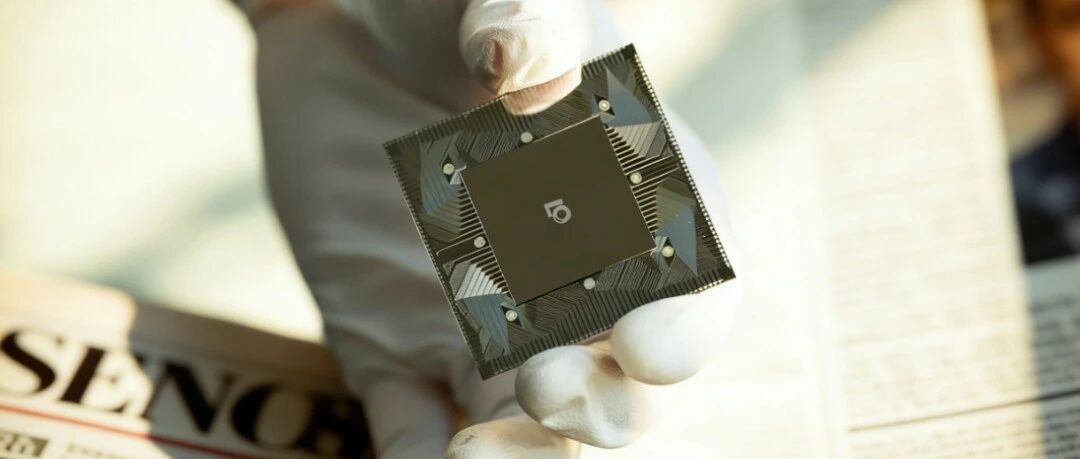
Group 1 - Langxi Technology has completed nearly 80 million RMB in Pre-A round financing, attracting top investment institutions in the hard technology and semiconductor fields, laying a solid foundation for future industrial resource integration [2] - The company focuses on high-capacity silicon capacitors, overcoming traditional capacitor performance limitations in high-frequency, high-temperature, and high-stability scenarios, making it suitable for AI servers and high-speed communication hardware [2] - The funds from this round will be allocated to three core areas: enhancing core technology R&D for high-capacity silicon capacitors, optimizing automated production lines, and deepening the high-end passive components and advanced packaging materials sector [3] Group 2 - Blue Star Guangyu has announced nearly 500 million RMB in C round financing, with participation from several well-known investment institutions, highlighting its core value in the aerospace laser communication field [5] - The company has developed a complete product matrix covering "air, space, and sea" laser communication solutions, filling domestic technology gaps in laser communication terminals [5] - The financing will focus on expanding production capacity and continuous R&D, aiming to upgrade production lines to meet the market demand for low-cost, high-performance laser communication terminals [6] Group 3 - Micro Chong Semiconductor has successfully completed several million RMB in strategic financing, focusing on non-linear optical detection technology for semiconductor front-end processes [8] - The company aims to break the foreign monopoly in this niche by providing advanced semiconductor measurement solutions, significantly improving wafer detection efficiency and precision [8] - The funds will be used for core technology R&D, market expansion, and team building to strengthen technical barriers and accelerate domestic substitution [9] Group 4 - Xulun Technology has completed over 100 million RMB in A3 and A4 round strategic financing, with investments from notable industry funds, reflecting strong recognition of its core competitiveness in semiconductor materials [11] - The company specializes in advanced packaging materials for semiconductors, breaking the long-standing monopoly of Japanese firms in high-end semiconductor adhesive films [12] - The financing will be directed towards upgrading production lines and supporting systems, while continuing to invest in R&D and talent development to enhance competitiveness [13] Group 5 - Logic Bit Technology has completed two rounds of financing totaling several hundred million RMB, focusing on superconducting quantum computing and aiming for practical technology breakthroughs [15] - The company, incubated from a top superconducting quantum computing team at Zhejiang University, has developed a complete technology system for quantum computing [16] - The funds will be used to accelerate the development of quantum computing chips and systems, addressing key technical challenges such as scalability and quantum error correction [16]
逻辑比特完成两轮数亿元融资,量子计算进入主流VC射程
暗涌Waves· 2026-03-17 00:58
Core Viewpoint - The article discusses the recent financing rounds of Logical Qubit, a superconducting quantum computing company, highlighting the growing interest and investment in quantum computing as a disruptive narrative in the market [2][3]. Financing and Investment Landscape - Logical Qubit recently completed pre-A+ and pre-A++ financing rounds totaling several hundred million yuan, marking its first foray into market-oriented fundraising outside Zhejiang province [2][3]. - The global quantum computing market is projected to exceed $800 billion by 2035, with China expected to capture over 15% of this market share [4]. - In 2023, global quantum computing financing faced challenges but showed signs of recovery in 2024, with total funding rebounding to $2.015 billion, particularly in the hardware sector [4]. Company Overview and Competitive Edge - Founded in 2022, Logical Qubit is one of the earliest teams in China to conduct multi-qubit superconducting quantum computing research, with a core team originating from Zhejiang University [3][5]. - The company has achieved significant technical milestones, including setting world records for the number of globally entangled qubits and developing advanced quantum chips [5]. - Logical Qubit's revenue is projected to reach several tens of millions by 2025, primarily from research institutions and universities [8]. Market Position and Future Outlook - The company aims to leverage its proprietary superconducting quantum chips and measurement control systems to maintain cost efficiency and drive revenue growth [10][11]. - The CEO emphasizes the importance of balancing technical innovation with commercialization, indicating a strong focus on practical applications of quantum computing [9][10]. - The company does not view itself as merely a domestic alternative but as a competitor aiming to surpass international players in technology and application [16][20]. Technological Path and Vision - Logical Qubit is committed to the superconducting route for quantum computing, citing its advantages in integration and speed compared to other methods [13][15]. - The company believes that achieving general-purpose quantum computing will take until around 2032-2035, while specialized quantum computers will begin to outperform classical supercomputers in specific applications within the next 3-5 years [8][9]. - The founder's vision is to transform quantum computing from a laboratory concept into a commercially viable product that can significantly impact society [18][20].
架起64米量子高速公路 深圳超导量子网络迎新突破
2 1 Shi Ji Jing Ji Bao Dao· 2026-02-28 03:36
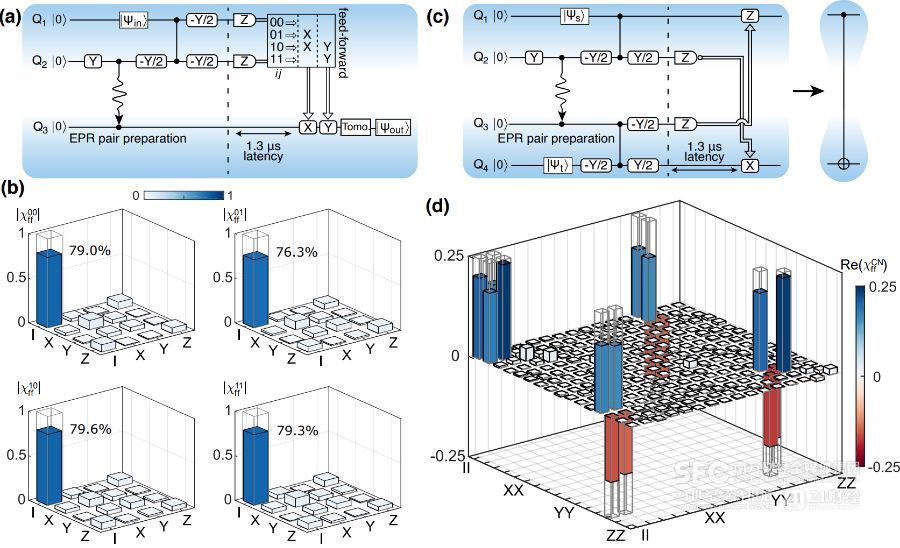
Core Viewpoint - The Shenzhen International Quantum Research Institute, in collaboration with Tsinghua University, has achieved a significant breakthrough in superconducting quantum networks by successfully demonstrating long-distance quantum teleportation over 64 meters with a fidelity of 78.3%, marking a critical advancement in distributed quantum computing technology [1][3][9]. Group 1: Research Achievements - The research team established a low-loss quantum channel of 64 meters between superconducting quantum chips, enabling high-quality long-distance quantum state transmission and entanglement generation [3][4]. - The team successfully demonstrated deterministic quantum teleportation of an unknown state with an average fidelity of 78.3%, surpassing the classical limit of 50% [8]. - The execution of a CNOT two-qubit quantum logic gate across two chips was achieved with a fidelity of 70.2%, indicating the potential for remote control of quantum bits in distributed quantum computing networks [8][9]. Group 2: Implications for Quantum Computing - This breakthrough provides a complete and feasible experimental scheme for constructing long-distance microwave quantum networks based on superconducting quantum circuits, overcoming a major technical barrier in distributed quantum computing [9][10]. - The successful demonstration of high-fidelity quantum communication over distances of several tens of meters paves the way for connecting quantum processors located in different cryogenic systems or laboratories [9][10]. - The research opens new avenues for foundational studies in microwave quantum electrodynamics and quantum optics, providing an ideal experimental platform for future research [9].
未知机构:中泰机械量子科技系列在不确定性中超越未来1量子科技行业-20260228
未知机构· 2026-02-28 02:30
Summary of Quantum Technology Industry Conference Call Industry Overview and Growth Expectations - **Industry Positioning and Growth Rate**: The quantum technology industry is positioned as a future industry, with a significant catalytic year expected in 2026. The annual compound growth rate from 2025 to 2035 is projected to reach 70% to 80%, indicating a doubling in size each year. The commercialization window is anticipated to be within the next 5-10 years [1][1][1] - **National Strategy and International Competition**: Quantum technology is recognized as a strategic industry by national policies, with ongoing competition among the US, EU, and China. The 14th Five-Year Plan elevates the development of the quantum industry, focusing on enhancing public investment and social financing efficiency to catch up. In the first three quarters of 2025, US quantum companies raised over $4 billion, while China's social financing was less than one-tenth of that amount, primarily relying on public industrial investment [1][1][1] Quantum Communication and Security Technology - **Technical Features and Implementation**: The core value of quantum communication lies in its security, relying on quantum state measurement collapse and the no-cloning theorem. Currently, the industry is focused on Quantum Key Distribution (QKD), which transmits keys via quantum channels and messages via classical channels, enhancing security levels. Domestic company GuoAn Quantum has already implemented this in some backbone and local networks [2][2][2] - **Derivative Technology Pathways**: QKD serves as a temporary solution, while Post-Quantum Cryptography (PQC) is a new encryption system based on classical computing that needs to be advanced before large-scale quantum computing is realized. This involves system modifications and multi-party collaboration, currently in the standardization and verification phase, with varying technology quality [2][2][2] - **Industry Leadership Attributes**: Quantum communication security is the first area where quantum technology is being applied, driven by high-security demands in military and defense as well as industry cultivation [2][2][2] Quantum Computing Industry - **Technical Route Landscape**: Quantum computing is exploring four main technical routes: superconducting, ion trap, photonic, and neutral atom, with no mature quantum computers yet. The superconducting route is the most developed, relying on semiconductor micro-nano processing technology, while ion trap and photonic routes have some industrial chain foundations. The neutral atom route has seen rapid development in the past 2-3 years, driven by the US [2][2][2] Key Industry Components - **Dilution Refrigerators**: A core supporting device for the superconducting route, with the US banning exports to China after 2023. Domestic company Liangqi Technology has achieved breakthroughs, with revenues of 70 million yuan in the first half of 2025 and an expected net profit of over 50 million yuan, holding a 31% market share. The global market is approximately $500 million, with potential to reach $10 billion by 2030 if the superconducting route explodes [3][3][3] - **Superconducting Quantum Chips**: Manufacturing relies on electron beam lithography and other equipment, with low material costs but high R&D and maintenance costs. If the superconducting route becomes central, the market size could exceed $10 billion by 2030 [3][3][3] - **Low-Temperature Cables**: These connect ultra-low temperature chips with room temperature control systems, accounting for 8%-10% of total costs, and are a critical component of quantum computers [4][4][4] Commercialization Timeline - **General Quantum Computer Commercialization**: The commercialization window for general quantum computers is expected within the next 5-10 years, with 2030 being a crucial milestone. Companies like IBM and Google plan to deliver quantum computers with general computing capabilities by 2029-2030, supporting experimental quantum error correction and some commercial scenarios. Domestic superconducting manufacturers are slightly behind the US but are expected to catch up within the same timeline [4][4][4] - **Specialized Quantum Computers**: Key players include D-Wave internationally and Boson Quantum domestically (planning to go public in 2026), focusing on combinatorial optimization problems with lower preparation difficulty and better application realization than general machines. The global market for specialized quantum computers is expected to reach over $10 billion by 2027 [4][4][4] Quantum Technology Ecosystem and Policies - **China-US Industry Ecosystem Gap**: China has comparable technology to the US (with some indicators even superior), but there is a significant gap in industrialization and application ecosystems. The US is industry-led, with major companies and startups forming a closed loop through early investments. In contrast, China has relied on policy leadership, with major companies like Alibaba and Baidu retreating due to sanction concerns, primarily driven by national key laboratories [5][5][5] - **14th Five-Year Policy Direction**: The core goal is to promote industrialization, focusing on hardware manufacturing capabilities and foundational application realization. Policies emphasize simultaneous advancement of upstream industrial chain development and downstream enterprise application layout, exploring scenarios. Local governments execute differentiated strategies, with regions like Beijing, Anhui, and Guangdong fostering industrialization while weaker areas focus on research [5][5][5] Key Companies and Investment Directions - **Quantum Communication and Security**: Keda GuoAn Quantum is a global leader in quantum communication equipment manufacturing and security solutions, turning profitable last year. They provide integrated secure communication networks and deliver superconducting quantum computers and core components to research clients, participating in subsequent research projects [6][6][6] - **Quantum Measurement and Hardware**: - Hexin Instruments plans to acquire a 56% stake in Liangqi Technology, a core supplier of domestic dilution refrigerators (holding a 31% market share) [6][6][6] - Guangdian Measurement collaborates with GuoAn Quantum to establish a joint laboratory for quantum precision measurement, along with the Shenzhen Innovation Institute of the China Metrology Institute to create a quantum precision measurement service platform in the Guangdong-Hong Kong-Macao Greater Bay Area [6][6][6] - **Investment Layouts**: - CIMC Vehicles indirectly invests in Liangxuan Technology through the Shenzhen Bay Angel Phase III Fund, which completed C-round financing and successfully delivered superconducting systems overseas in early 2020 [6][6][6] - Jinka Intelligent indirectly holds less than 1% of Guokexin Quantum Communication Company with an investment of 50 million yuan, exploring applications in government affairs and finance, as well as quantum encryption for IoT and big data [6][6][6] - **Undiscovered Niche Directions**: - Precision instruments and measurement testing equipment, such as Puyuan Precision's quantum computing microwave measurement and control systems, and vacuum environment/sample pretreatment equipment from companies like Zhu Guang Technology and Xuedilong [7][7][7] - Optical components and laser equipment from companies like Yongxin Optical, Fujing Technology, and Huagong Technology, which are core supports for photonic/ion trap routes [7][7][7] - Refrigeration, vacuum, and low-temperature equipment from companies like Western Superconducting's low-temperature cables [7][7][7] - Semiconductor/precision processing equipment from companies like Jingce Electronics and Zhongwei Company, which support superconducting quantum chip equipment [7][7][7]
25起+超25亿! 量子科技赛道加速升温
Xin Lang Cai Jing· 2026-02-22 12:36
Core Viewpoint - The quantum technology sector in China is experiencing rapid advancements and significant investment, indicating a shift from research to practical applications, with major breakthroughs in quantum key distribution and quantum computing technologies [3][4][11]. Investment Trends - In the past year, the quantum technology sector has seen a total financing amount of 2.516 billion yuan, with 25 financing events recorded [4]. - Investment institutions such as Dongfang Jiafu, Junlian Capital, and Zhongke Chuangxing are heavily focusing on the quantum technology sector, indicating its strategic importance [5][10]. - The investment landscape is characterized by frequent equity financing actions, with state-owned and private capital collaborating to target high-quality projects [5][6]. Key Projects and Companies - Notable projects include the "Weiming Quantum Network," the world's first large-scale quantum key distribution network developed by Peking University [3]. - Logic Bit Technology, a company specializing in superconducting quantum systems, has achieved significant milestones and secured multiple rounds of financing, including a recent angel round led by various investors [8][13]. - Turing Quantum has completed several rounds of financing, with significant amounts raised in January 2026 alone, showcasing strong investor interest [15][16]. Market Dynamics - The quantum technology sector is witnessing a surge in investment, with projects focusing on specialized quantum computing and integration with AI and supercomputing [11]. - The financing events are increasingly characterized by larger amounts, with several projects exceeding 100 million yuan in funding [11][18]. - The strategic importance of quantum technology has been recognized at the national level, with it being prioritized in the 14th Five-Year Plan [4][10].
四川量子科技如何破局? 昂然代表建言用好“后发优势”
Xin Lang Cai Jing· 2026-02-06 15:51
Core Viewpoint - Quantum technology is emerging as a key driver of global technological transformation and a new focus of international competition, with Sichuan Province aiming to leverage its "latecomer advantage" to make breakthroughs in this field [1]. Group 1: Current Status and Challenges - Sichuan's government report emphasizes the strategic layout for future industries, including quantum technology, indicating a commitment to this sector [1]. - The current development of quantum technology in Sichuan shows a "partially leading, overall parallel" pattern compared to early adopters like Beijing and Hefei, highlighting Sichuan as a "newcomer" in this race [1]. - Significant shortcomings exist in Sichuan's quantum technology development, including reliance on external suppliers for high-end chips and specialized software, and a lack of leading enterprises, resulting in low investment levels [1]. - Despite having over a hundred universities and research institutions in Chengdu, there remains a substantial talent gap in quantum technology, along with insufficient public service platforms and application scenarios [1]. Group 2: Strategic Development Plans - Sichuan has formulated the "Action Plan for Breakthrough Development of Quantum Technology Industry," aiming to establish itself as a core growth pole for the national quantum technology industry, focusing on quantum computing, quantum communication, and quantum precision measurement [2]. - The establishment of the Sichuan Quantum Technology Institute and the launch of the Sichuan Quantum Technology Industry Fund are intended to create a dual support system for talent cultivation and capital assistance [2]. - The strategy emphasizes a differentiated approach, concentrating resources on specific advantageous areas such as building a superconducting quantum chip packaging and testing base, and developing quantum measurement instruments for resource exploration and medical fields [2]. Group 3: Recommendations for Implementation - The focus should be on promoting practical applications to enhance local foundational research, with initiatives like "Quantum + Smart Chengdu," "Quantum + Power Grid Security," and "Quantum + Geological Disaster Warning" [2]. - It is recommended to enhance the leveraging effect of funds, efficiently utilizing the provincial quantum technology industry fund and special funds from technology departments to support enterprises in obtaining product orders and market validation [2]. - Talent development should involve deepening industry-education integration, with universities like the University of Electronic Science and Technology of China and Sichuan University playing a crucial role in training talent aligned with the needs of the quantum industry [2][3].
清华75后,融资数亿
3 6 Ke· 2026-01-22 01:25
Core Insights - The quantum computing sector has seen significant investment, with Liangxuan Technology recently securing hundreds of millions in Series C funding, bringing its total funding to several hundred million since its inception in 2018 [2][3] Company Overview - Liangxuan Technology, founded in 2018 and headquartered in Shenzhen, has completed six rounds of financing, accumulating several hundred million in total [2] - The company has developed the world's first programmable desktop quantum computer, which has been sold to over 40 countries, and has also produced superconducting quantum chips and measurement control systems for export [2][3] Industry Challenges and Solutions - The traditional quantum computers are heavy (weighing around one ton) and expensive (costing several million dollars), making them inaccessible for most universities and research institutions [3] - Liangxuan Technology addresses this by offering a desktop quantum computer that, while not the most powerful, meets educational needs and is more affordable, priced at 400,000 yuan (approximately $60,000) [15] Market Transition and Future Outlook - The industry is transitioning from educational and research applications to industrial applications, with significant advancements expected by 2028 in fields like drug screening and new material design [5][21] - The quantum computing market is projected to exceed $1 billion in revenue by 2025, with potential growth to between $28 billion and $72 billion by 2035 [21][22] Product Development and Innovation - Liangxuan Technology's first product, the "Gemini" quantum computer, was introduced in 2020, weighing 90 kg and designed for educational use [15] - The company has also developed superconducting quantum chips, with the first exports occurring in November 2023, marking a significant milestone for Chinese companies in the global market [16] Investment and Growth Trajectory - The investment landscape for quantum computing has accelerated, with $700 million and $1.4 billion invested in 2020 and 2021, respectively, surpassing the total investment of the previous decade [19] - Liangxuan Technology has maintained a financing rhythm of approximately one round every 18 months, with a significant increase in orders, particularly for its superconducting products, which are expected to dominate sales by 2024 [21]
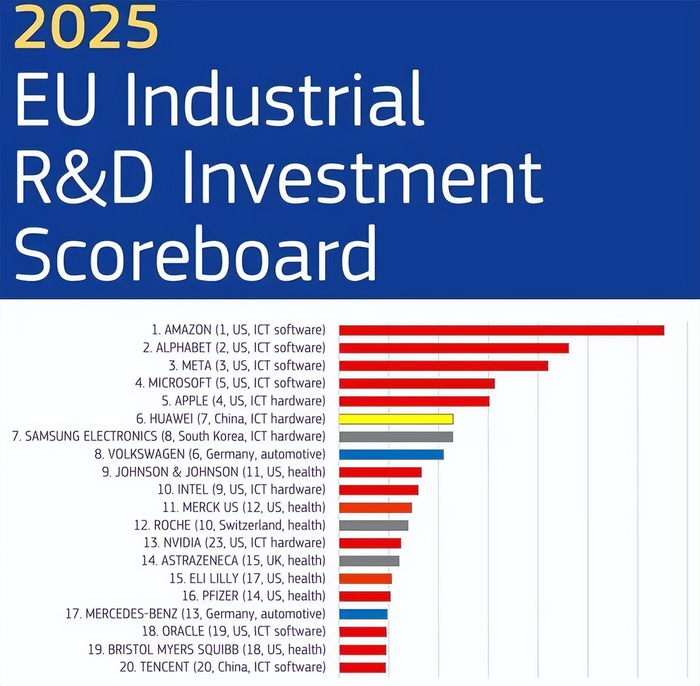
欧盟发布研发榜单:华为以229.4亿欧元成唯一进入前十的中国企业
Xin Lang Cai Jing· 2026-01-07 05:24
Core Insights - The article highlights the significant position of Huawei in global R&D investment, ranking sixth with an investment of €22.94 billion, showcasing China's shift from "catching up" to "keeping pace" in technology competition [4][12] R&D Investment Overview - The EU's 2025 Global R&D Investment Top 100 list shows that the US has 674 companies, accounting for 47.1% of total R&D investment, while China has 525 companies at 16.1%, and the EU has 318 companies at 16.2% [1] - Huawei's R&D expenses for the first half of 2025 reached ¥96.95 billion, representing 22.7% of its revenue, equating to approximately ¥5.36 billion spent daily, which is significantly higher than competitors like Apple and Xiaomi [5][6] Strategic Focus Areas - Huawei's R&D strategy is not merely about cost but targets critical areas, such as semiconductor technology, with over 7,000 engineers dedicated to developing the Kirin and Ascend chips, aiming to overcome technological barriers [6][9] - The company has established a comprehensive capability loop in three key areas: computing power, quantum technology, and operating systems, moving beyond isolated breakthroughs [7][8][10] Technological Innovations - In computing power, Huawei has innovated through architecture rather than relying on EUV lithography, creating a "supercomputer" with the Atlas960 Super PoD, which supports 15,488 computing cards and achieves a total computing power of 30 EFLOPS [8] - In quantum technology, Huawei focuses on core technology breakthroughs and industry applications, having secured a patent for superconducting quantum chips that significantly reduce qubit interference [9] - The HarmonyOS has evolved from being Android-compatible to redefining standards, with significant R&D investment leading to the release of HarmonyOS 5.0, which enhances task efficiency across devices [10] Implications and Challenges - Huawei's entry into the top ten of global R&D investment is a milestone for Chinese technology, reflecting a deeper transformation in global innovation dynamics [12] - Despite the achievements, the article notes that outside of Huawei, few Chinese companies rank highly in R&D, indicating a need for broader industry growth and support for long-term investment strategies [12]
国盾量子:签订专利实施许可合同暨关联交易
2 1 Shi Ji Jing Ji Bao Dao· 2025-11-25 11:45
Core Viewpoint - The company intends to renew implementation licensing contracts with the University of Science and Technology of China for 7 patents and 5 proprietary technologies that recently expired, with specific profit-sharing arrangements based on product sales net profit [1] Summary by Categories Licensing Agreements - The company previously signed 5 implementation licensing contracts with the University of Science and Technology of China, which have now expired [1] - The renewal of these contracts involves 7 patents and 5 proprietary technologies [1] Profit-Sharing Arrangements - For 3 patents and the "All-Fiber Cold Atom Interferometer Technology," the profit-sharing will be 50% of the product sales net profit [1] - For 2 patents and the "Single Photon Detector System Calibration Technology," the profit-sharing will be 30% of the sales net profit [1] - The remaining 5 patents and 4 proprietary technologies, which include areas such as single photon radar, quantum computing control equipment, and superconducting quantum chips, will have a profit-sharing of 25% of the sales net profit [1] Approval Process - The related transactions have been approved by the company's board of directors and supervisory board, and the independent directors have also consented [1] - The agreements still require approval from the shareholders' meeting [1]