
Ke Ji Ri Bao

Search documents
《科技服务业标准体系建设指南(2025版)》发布
Ke Ji Ri Bao· 2026-02-11 06:50
工业和信息化部、科技部、住房城乡建设部等五部门近日联合印发《科技服务业标准体系建设指南 (2025版)》(以下简称《指南》),发挥标准对科技服务业的支撑和引领作用,推进科技服务业高质 量发展。 工业和信息化部有关负责人介绍,科技服务业是运用现代科学知识和技术手段,围绕科技创新全链条发 展、科技成果高效率转化,向社会提供智力服务的新兴产业,主要包括研究开发服务、技术转移转化服 务、企业孵化服务、技术推广服务、检验检测认证服务、信息技术服务、工程技术服务、科技金融服 务、知识产权服务、科技咨询及其他科技服务等。 《指南》提出,到2027年,新制定科技服务业国家标准和行业标准40项以上,初步构建满足科技服务业 高质量发展的标准体系,面向超过1000家企业开展贯标工作;到2030年,新制定科技服务业国家标准和 行业标准80项以上,基本建成满足科技服务业高质量发展的标准体系,标准服务企业成效更加凸显。 科技服务业标准体系结构包括基础通用、重点领域、管理保障等3个部分。其中,基础通用标准主要规 范科技服务业通用性技术和要求,是其他科技服务业标准的底层支撑;重点领域标准主要规范研究开发 服务、技术转移转化服务、企业孵化服务 ...
促进民营经济高质量发展|搭平台破壁垒,三秦大地涌动创新潮
Ke Ji Ri Bao· 2026-02-11 05:53
Core Viewpoint - The article highlights the significant progress made by Shaanxi Province in supporting the development of the private economy, aiming for a historic increase in its value-added contribution to exceed 50.3% by 2025, thereby playing a crucial role in the province's overall economic landscape [1] Group 1: Policy Initiatives - Shaanxi has prioritized the private economy, with provincial leaders actively engaging in discussions and problem-solving for private enterprises, resulting in the efficient resolution of 326 business challenges through a closed-loop response mechanism [2] - The province has published a comprehensive "Support Policy Handbook" for private enterprises, containing 225 policies that are easily accessible and user-friendly, allowing businesses to find benefits akin to looking up a dictionary [2] - Financial relief measures have been implemented, including a 50% reduction in taxes and fees for small and micro enterprises, creating a market space of nearly 700 billion yuan for small businesses through government procurement [2] Group 2: Innovation and Development - Shaanxi is transforming enterprises from "bystanders" to "innovation partners" by identifying and promoting application scenarios across various sectors, with a total investment of nearly 900 million yuan [4] - The "Chang'an Twelve Hours: Joy of the City" project exemplifies this approach, investing 300 million yuan to create a cutting-edge cultural and technological performance complex, providing clear business opportunities for private enterprises in digital creativity and smart hardware [4] Group 3: Financial Support - To address financing challenges for private and small enterprises, Shaanxi has introduced a combination of "fiscal interest subsidies" and "credit empowerment," with the provincial government providing up to 3.5 percentage points in loan interest subsidies for new projects in manufacturing and high-tech sectors, mobilizing over 23 billion yuan in bank funds [5] - The "Qin Xin Rong" platform has aggregated 120 million credit records, assisting nearly 380,000 businesses in securing over 440 billion yuan in loans, significantly lowering financing barriers [5] Group 4: Systemic Reform and Ecosystem - The support for the private economy in Shaanxi is shifting from traditional management and support to deeper levels of empowerment and co-development, inviting broader societal participation to transform technological and industrial advantages into tangible growth [6]
五部门部署有序推进低空场景通信网络建设
Ke Ji Ri Bao· 2026-02-11 05:33
Core Viewpoint - The Ministry of Industry and Information Technology, along with four other departments, has issued an implementation opinion to strengthen the capacity of the information and communication industry to support the development of low-altitude infrastructure, which is crucial for the low-altitude economy [1] Group 1: Low-altitude Infrastructure Development - Low-altitude infrastructure is identified as a critical foundation for the development of the low-altitude economy, with the information and communication industry playing a significant role in supporting communication, monitoring, navigation, and intelligent networking systems [1] - The opinion sets a target for 2027, aiming for a nationwide ground mobile communication network coverage rate of no less than 90% along low-altitude public flight routes, with improvements in multi-fusion perception solutions and navigation service levels [1] Group 2: Key Tasks and Implementation - The opinion outlines ten key tasks, including advancing low-altitude scene communication network coverage, enhancing navigation precision services, and supporting the construction of low-altitude intelligent networking systems [1] - Specific measures include utilizing existing 5G infrastructure to enhance coverage in low-altitude application hotspots and exploring the integration of low-altitude communication, navigation, and monitoring functions [2]
非常罕见!黑洞“干饭”现场,被中国卫星捕捉
Ke Ji Ri Bao· 2026-02-11 03:50
Core Insights - The "Tian Guan" satellite may have captured a rare event of a medium-mass black hole tearing apart and consuming a white dwarf star, which, if confirmed, would be the first clear observation of such an extreme cosmic phenomenon, significantly enhancing the understanding of black hole activity and high-energy astrophysical mechanisms [1][3] Group 1 - The "Tian Guan" satellite's wide-field X-ray telescope, "Wan Xing Tong," discovered an exceptionally bright and rapidly changing X-ray source, designated EP250702a, on July 2, 2025, in the outskirts of a distant galaxy [1] - Observations indicated that X-ray radiation was present at the location approximately one day before a significant gamma-ray burst, suggesting that the physical engine of the explosion was activated much earlier than traditional gamma-ray bursts [1] - The characteristics of the event, including its high brightness and rapid evolution, could not be explained by common astrophysical explosion models, leading the scientific team to propose that a medium-mass black hole was involved in the disruption of a white dwarf star [1][3] Group 2 - The research team noted that the rapid decay and high brightness of the event imply that the consumed celestial body had a very high density, which aligns with the characteristics of a white dwarf star [3] - The estimated mass of the black hole involved is less than approximately 75,000 times that of the Sun, based on gamma-ray data from the Fermi satellite, and the event's location in the outskirts of the galaxy rules out the possibility of a supermassive black hole [3] - Only a medium-mass black hole would possess the capability to tear apart a dense body like a white dwarf, resulting in the observed brief, intense, and high-energy jets [3]



推动更多温室气体减排项目落地见效
Ke Ji Ri Bao· 2026-02-11 03:06
全国温室气体自愿减排交易市场(简称"CCER市场")建设迈入快速发展新阶段。近日,生态环境部会 同自然资源部、水利部、农业农村部等部门,发布了油气田回收利用、盐沼和海草床植被修复、农业废 弃物资源化利用、新能源利用等领域的12项温室气体自愿减排项目方法学。 自2024年1月重启以来,CCER市场有序运行,在推动降碳增汇、引导绿色投资方面的作用初步显现。 此次12项温室气体自愿减排项目方法学的发布,对CCER市场来说有何意义?对企业等CCER市场相关 主体有何影响?在方法学的指导下,相关主体如何高质量参与自愿减排市场?针对这些问题,科技日报 记者采访了有关专家。 既是"法官"又是"尺子" 据统计,截至目前,我国共发布温室气体自愿减排项目方法学18个,其中2023年发布4个,2024年发布2 个,2025年发布12个。 保障碳信用"含金量" 温室气体自愿减排项目方法学是核证项目设计与实施的技术准则,其科学性至关重要,直接关系到交易 主体的收益、整个市场的信誉度和生命力。吴宏杰说,温室气体自愿减排项目方法学通过项目实施及监 测数据管理要求、第三方项目审定与核查要点,以及项目监测数据与全国碳市场管理平台联网等方式, ...
“减肥神药”也能治骨关节炎 科学家找到关键证据!
Ke Ji Ri Bao· 2026-02-11 02:46
2月9日,中国科学院深圳先进技术研究院医药所研究员童丽萍、陈棣、约翰·斯彼克曼团队联合暨南大 学副教授张还添团队在《细胞·代谢》上发表最新研究。他们发现司美格鲁肽对代谢性骨关节炎展现出 显著的软骨保护作用,且这一疗效独立于其减重功效之外。 (文章来源:科技日报) 该研究中,研究团队首先通过高脂饮食构建了肥胖小鼠模型,并利用内侧半月板失稳手术建立了代谢性 骨关节炎小鼠模型。研究人员将小鼠分为两组:一组接受司美格鲁肽治疗,另一组则进行严格限制饮食 的"配对饲养",使两组小鼠的体重下降幅度与药物治疗组完全一致。 12周后,研究发现,药物治疗组的小鼠,其软骨退化、滑膜炎、骨赘形成均显著减轻,软骨机制蛋白表 达恢复。相比之下,"配对饲养"组虽与药物治疗组体重变化一致,却未展现软骨保护效果。"这一对照 实验表明,司美格鲁肽对骨关节炎的软骨保护作用,独立于其减重效果,打破了'依靠减重改善骨关节 炎'的传统认知。"陈棣介绍。 该研究首次揭示司美格鲁肽能够重塑骨关节细胞中的糖代谢规律,从而改善骨关节炎的关键作用机制, 为代谢性骨关节炎的临床治疗研究提供了潜在的药物开发新靶点。 司美格鲁肽是一种GLP-1受体激动剂类药物,最初用 ...
北伏公司破产甩锅中国机器设备荒谬至极
Ke Ji Ri Bao· 2026-02-11 02:38
一位昵称"circuspabygget"的北伏公司工程师,也在美国"红迪(Reddit)"论坛上表示,没有任何证据表 明存在蓄意破坏,那纯粹是维尔德朗的阴谋论。他认为,导致北伏公司倒闭的最大原因是管理层的错误 决策,特别是在产量远低于预期的情况下,仍在推进耗资巨大的扩张项目。 事实正是如此,北伏公司成立后忙于媒体宣传、融资圈钱、盲目扩张、四处建厂,却没有建立起最基础 的制造能力。而影响制造能力的因素,绝不仅仅只有机器设备。据瑞典《诺兰报》调查,北伏公司各个 生产线上普遍存在管理混乱、效率低下等问题。还有知情人士爆料称,由于生产工艺设计严重不合理, 其高达80%的产品质量不合格。 这种经营方式的结果就是耗费越来越多,而收入远远赶不上支出,最终融资耗尽、企业倒闭。据统计, 2023年1月-9月,北伏公司每月亏损超过1亿美元,但电池交付容量仅79.8兆瓦时,不到2024年计划产能 的0.5%。 其实北伏公司的悲剧在成立之初就已注定。据欧洲科技新闻网站《阿里夫报告》报道,对于一家声称要 革新绿色能源电池的公司来说,北伏公司的领导团队缺少一个关键要素——实际经验:竟然没有一位高 管之前建造过电池工厂。 近日,一些瑞典媒 ...
【科技日报】我自研电池技术可支撑设备极端低温下“即插即用”
Ke Ji Ri Bao· 2026-02-11 01:53
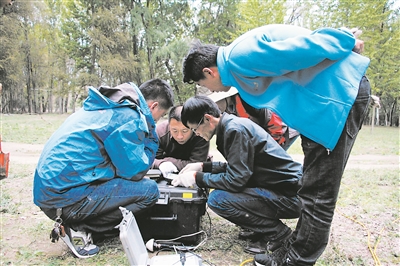
张盟表示,该成果有望破解极寒地区电池"怕冻"的困境,为我国乃至全球在高寒条件下的森林防 火、电力巡检、应急通信等作业场景注入"温暖能量"。技术的推广应用,将使我国在极寒环境下的能源 自主性与科技装备可靠性将实现战略性提升,也有望为全球面临类似挑战的地区提供中国解决方案。 (原载于《科技日报》 2026-02-11 03版) 记者10日从中国科学院大连化学物理研究所获悉,该所陈忠伟研究员团队在黑龙江漠河完成超低温 锂电池实地测试,标志着我国自主研发的电池技术已能支撑各类设备在极端低温下实现"即插即用",破 解了极寒地区电池能源供给难题。 团队低温电池技术负责人张盟副研究员介绍,团队自主研发的超低温电池技术及配套人工智能电源 管理系统通过创新性地设计耐低温电解液、开发准固态功能性隔膜,并融合先进的AI电池管理算法, 解决了传统锂电池在低温下活性骤降、续航锐减甚至无法工作的行业痛点。据悉,在零下34摄氏度的极 寒环境中,无需任何外部保温措施的超低温锂电池,静置超过8小时后仍能保持超过85%的有效容量, 并成功驱动工业级无人机完成长续航飞行与多项任务模拟。 ...
甘斌:为青藏高原大地“做B超”
Ke Ji Ri Bao· 2026-02-11 01:53
◎科技日报记者 张添福 临近春节,许多人已踏上返乡归途,青海省环境地质勘查局地质环境调查分院院长甘斌依然忙着分析物 探数据。窗外,青藏高原的寒风凛冽,他的思绪也随风潜入大地深处。 "20多年来,我的工作就是利用先进物探技术,为青藏高原大地'做B超'。"甘斌说。 甘斌(左二)与物探技术人员在开展大深度地热探测试验。受访者供图 探测出干热岩后,甘斌所在团队在西宁市大堡子镇利用从地下抽出的高温、高矿化度热水为建筑供暖。 不过,这类热水极易产生水垢,堵塞管道。甘斌和团队设计出"只取热,不取水"的封闭循环系统,并巧 妙结合太阳能,成功解决了水垢难题。 2025年,甘斌被授予全国先进工作者称号。 时间回溯到2024年9月,青海省西宁市一场罕见的暴雨过后,某处居民楼底层的基板隆起、变形,房屋 随时可能坍塌,周围建筑也面临垮塌的风险。接到通知的甘斌立刻带队赶到现场。地质雷达扫描结果显 示,基板下并非坚实的土层,而是一个巨大的空洞。"现场情况比我们预想的更复杂。"甘斌回忆 道,"支撑基板的土层非常薄,下面几乎是空的。" "我去吧。"甘斌平静地说。他没多说什么,而是穿好防护服,手持一把铁锹,在一位消防员的陪同下, 被吊车缓缓送入 ...
【科技日报】中等质量黑洞“进食”白矮星事件或首次被捕捉
Ke Ji Ri Bao· 2026-02-11 01:53
记者10日从中国科学院国家天文台获悉,"天关"卫星可能首次捕捉到中等质量黑洞撕裂并吞噬白矮 星的罕见事件。若最终获得证实,这将是人类首次清晰捕捉到此类极端宇宙现象,对理解黑洞活动规律 及高能天体物理机制具有重要意义。相关研究成果以封面文章形式发表于《科学通报》杂志。 (原载于《科技日报》 2026-02-11 02版) 2025年7月2日,"天关"卫星的宽视场X射线望远镜"万星瞳",在巡天中发现了一个异常明亮且剧烈 变化的X射线源。随后,全球多台望远镜联合观测确认,这一编号为EP250702a的事件发生在一个遥远 星系的外围区域。 "天关"卫星观测数据显示,在剧烈的伽马射线爆发出现前约一天,X射线辐射就已在此位置持续出 现。"这个'前奏'至关重要,它意味着爆发的物理引擎很早就启动了,不同于传统的伽马射线暴。"论文 共同第一作者、中国科学院国家天文台李东悦博士解释道。 该事件呈现出亮度极高、演化极快且位于星系外围等特征,难以用常见的天体爆发模型解释。综合 所有数据,"天关"科学团队提出了最合理的解释:一个中等质量黑洞正在撕裂一颗白矮星。 为何是这对组合?研究团队指出,该事件"衰减极快"与"亮度极高"并存,暗示被 ...