
Zhong Guo Fa Zhan Wang

Search documents
山东日照:“筑巢引凤”发展绿色建材产业
Zhong Guo Fa Zhan Wang· 2026-01-27 08:45
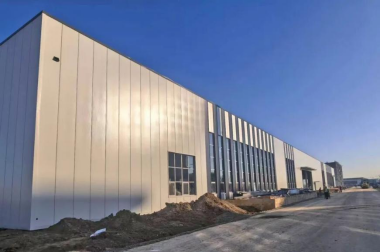
Core Insights - The new green eco-friendly stone crystal floor project in Rizhao Economic Development Zone is being developed by Shandong Helisenyuan Plastic Co., Ltd. with an investment of 200 million yuan, covering an area of over 22,000 square meters and expected to produce 12 million square meters annually, generating an estimated annual output value exceeding 500 million yuan, with products aimed for overseas markets such as South Africa [3][4] Group 1: Project Overview - The project features six production lines currently under installation, with a production capacity that positions it at the upstream of the industry [3] - The project is strategically located in Rizhao Economic Development Zone due to its unique "port export advantage" and "green steam convenience," which provide dual competitive strengths [3][4] Group 2: Logistics and Cost Efficiency - The logistics efficiency and cost are critical for export-oriented enterprises, with the factory located just a half-hour drive from Rizhao Port, facilitating a "front port, back factory" layout [4] - This strategic location is projected to save 70% on inland transportation costs, significantly enhancing product price competitiveness and delivery efficiency [4] Group 3: Environmental Impact and Energy Efficiency - The project utilizes high-temperature steam as a heat source for its production process, which is more energy-efficient and environmentally friendly compared to traditional methods that rely on natural gas or boilers [4] - The use of zero-carbon steam from China Everbright Environmental Energy (Rizhao) Co., Ltd. is expected to reduce natural gas consumption and carbon emissions by 30%, while completely avoiding sulfur dioxide emissions [4] Group 4: Economic and Employment Impact - The project is expected to create approximately 100 jobs upon its production launch in March and will promote the development of the calcium powder supply chain in Rizhao [6] - The semi-automated production line is designed to increase daily output by 50% while reducing labor requirements by one-third [6] - Future plans include a second phase of expansion to add fully automated production lines for new composite material flooring, further enhancing capacity and technological standards [6]

南方电网构建能源用户生态新范式
Zhong Guo Fa Zhan Wang· 2026-01-27 08:32
中国发展网讯 李刚 陈敏 曲大鹏 廖耀华 张岚岚 熊晖 记者皮泽红报道 1月23日,中国电力企业联合会用 户生态分会成立大会暨南方电网首届用户生态合作伙伴大会在广州召开。大会以"共创·共享·共赢:构建 能源用户生态新范式"为主题,汇聚了政、产、学、研、用等领域近两百名代表,共同见证分会揭牌成 立,并现场发布多项创新成果,推动16家生态伙伴集中签约入驻,标志着我国能源用户生态建设步入规 范化、协同化发展的新阶段,为能源电力行业绿色低碳高质量发展注入强劲新动能。 凝聚行业共识 作为中电联用户生态分会秘书处单位及能源生态系统服务商,南方电网公司近年来持续深化从"服务提 供者"向"生态赋能者"的转型,已在平台开放、数据赋能、资源聚合等方面取得一系列务实成果。例 如,南方电网公司线上统一服务入口"南网在线"于2025年完成体系化升级,向合作伙伴全面开放能力中 心与开发框架,多家优质服务商已接入"南网在线",共同为用户提供智能用电、能效管理等多元化服 务。截至目前,"南网在线"注册用户已突破1.1亿,互联网业务办理率达99.12%,成为国内领先的能源 生态服务平台。 同时,南方电网公司依托能源领域可信数据空间国家试点,推 ...
2025年新增8家试点银行 山东省银行外汇展业改革成效显著
Zhong Guo Fa Zhan Wang· 2026-01-27 07:53
Core Viewpoint - The reform of bank foreign exchange operations is a significant initiative by the State Administration of Foreign Exchange, aimed at enhancing the convenience of cross-border trade and investment for real enterprises through streamlined foreign exchange processes [1] Group 1: Reform Implementation - Shandong Province is one of the first regions to pilot the bank foreign exchange operation reform, emphasizing high-level institutional openness in the foreign exchange sector [1] - By the end of 2025, the number of pilot banks will increase to 11, including 8 new banks, with 6 banks achieving full coverage of their branches across the province [1] - The types of pilot banks have expanded from state-owned and joint-stock banks to include foreign banks, with preparations for 2 legal entity banks underway [1] Group 2: Policy Support for Quality Enterprises - The reform aims to facilitate quality enterprises by providing policy guidance and operational support for identifying first-class clients, resulting in 3,157 first-class clients recognized by pilot banks by the end of 2025 [2] - The volume of business processed via instructions reached $36.3 billion, marking an 80% increase year-on-year, with some banks reporting that 78% of their cross-border receipts come from first-class clients [2] Group 3: Institutional Improvements - The State Administration of Foreign Exchange issued the "Bank Foreign Exchange Business Due Diligence Exemption Regulations (Trial)" to clarify the review responsibilities of banks, promoting the benefits of the reform to more enterprises [2] - The Shandong Provincial Branch has developed guidelines for the self-regulatory mechanism of foreign exchange and cross-border RMB, providing banks with channels for appealing suspected violations [2] Group 4: Risk Management and Monitoring - Pilot banks are encouraged to leverage information technology to enhance foreign exchange risk monitoring, achieving a balance between promoting openness and managing risks [3] - The reform has benefited various sectors, including high-tech, equipment manufacturing, cross-border e-commerce, and international logistics, covering both key credit clients and numerous small enterprises [3] - By 2026, the State Administration of Foreign Exchange plans to guide reformed banks to expand their pilot programs nationwide, with ongoing support for local banks in Shandong [3]
截至2025年末,山东省科技贷款余额2.8万亿元,同比增长15.5%
Zhong Guo Fa Zhan Wang· 2026-01-27 07:53
中国人民银行山东省分行信贷政策管理处副处长丁岩表示,下一步,人行山东省分行将进一步聚焦科 技、产业、金融深度融合,以更高标准、更强举措全力写好山东科技金融大文章。 制定实施全省科技金融阶段性发展规划,深化股贷债保担整合联动,完善全生命周期接力式科技金融服 务体系,打造山东特色科技金融工作品牌。 牢牢抓住科技创新和技术改造再贷款政策优化窗口期,引导金融机构持续加大政策支持企业、项目的信 贷投入,创新与各类别、各阶段科技企业发展相适配的金融产品服务。 充分发挥山东省科技金融统筹推进机制作用,加强部门间信息共享、问题共商、人才共育,凝聚最大合 力支持山东省科技金融高质量发展。 中国发展网讯 记者高杨报道 1月23日,记者从中国人民银行山东省分行举行的2025年山东省金融统计数 据新闻发布会上获悉,人民银行山东省分行始终高度重视科技金融工作,按照人民银行总行和山东省 委、省政府工作部署,锚定"努力争当高水平科技自立自强排头兵",突出强化政策引导、工作协同、产 品创新,引导金融机构优化资源配置和服务供给,以高质量科技金融服务赋能山东省科技创新能力和水 平进一步提升。截至2025年末,全省科技贷款余额2.8万亿元,同比增 ...
2025年滨州粮油副食类价格稳定,蔬菜价格上涨,猪肉和鸡蛋价格下降
Zhong Guo Fa Zhan Wang· 2026-01-27 07:53
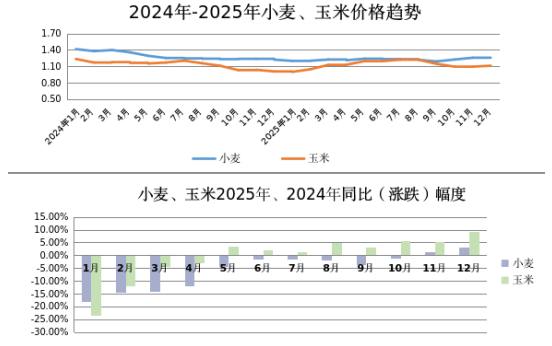
Core Insights - The average price of 60 essential consumer goods in Binzhou, Shandong Province is projected to be 12.19 yuan per jin in 2025, a decrease of 2.63% compared to the previous year [1] - Prices for grains and aquatic products remain stable, while beef and vegetable prices have increased, and prices for raw grains, pork, lamb, eggs, and fruits have decreased [1] Grain Prices - The average price of wheat for the year is expected to be 1.22 yuan per jin, down 5.51% from 2024, with a slight increase in the fourth quarter [2] - The average price of corn is projected to be 1.13 yuan per jin, remaining stable compared to 2024, with seasonal fluctuations throughout the year [2] Oil and Rice Prices - Prices for flour and rice have remained stable, with special flour at 2.38 yuan per jin and standard flour at 2.05 yuan per jin, while peanut oil and soybean oil have decreased by approximately 6% [3] Pork and Beef Prices - The average purchase price of live pigs is 7.03 yuan per jin, down 16.96% from 2024, and pork prices average 15.21 yuan per jin, a decrease of 5.35% [6] - Fresh beef prices have increased to an average of 31.42 yuan per jin, up 22.16% from the previous year, influenced by previous supply reductions and tightening import policies [6] Lamb and Egg Prices - The average price of fresh lamb is 36.38 yuan per jin, down 10.55% year-on-year, with a price trend that initially declined before rising [7] - The average price of eggs is 3.65 yuan per jin, reflecting a significant decrease of 20.66% compared to last year, with a notable drop in the second half of the year [10] Vegetable and Fruit Prices - The average price of 22 types of vegetables is 3.31 yuan per jin, down 6.88% year-on-year, showing a "V" shaped trend influenced by reduced planting areas and adverse weather conditions [12] - The average price of five types of fruits is 3.42 yuan per jin, showing a slight decrease of 3.42% compared to last year, with mixed trends among different fruit types [13]
守护能源生命线 聊城市茌平区“三零”行动护航高质量发展
Zhong Guo Fa Zhan Wang· 2026-01-27 07:53
排查工作精准聚焦两大领域核心要点:电力领域重点把控电网运行、设备可靠性、危险性作业监护等关 键环节;输油气管道领域聚焦高后果区管理、第三方施工防控等六大维度。通过"四不两直"暗查暗访、 专家专业排查、企业全员上报等方式,构建全方位、无死角排查网络。 中国发展网讯近日,山东省聊城市茌平区电力安全生产专业委员会办公室与输油气管道安全生产专业委 员会办公室联合印发通知,聚焦能源生命线安全守护,正式启动全区电力和输油气管道领域"三零"专项 行动,行动将持续至年底。此次行动以"隐患排查'零死角'、重大隐患'零容忍'、安全生产'零事故'"为核 心目标,扎实落实安全生产治本攻坚三年行动部署要求,为区域经济社会高质量发展筑牢能源安全保 障。 行动坚持"人民至上、生命至上"根本遵循,秉持"监管引领、企业主责、政企联动、精准防控"工作思 路,精准破解行业安全治理突出问题,坚决杜绝一般及以上生产安全责任事故和影响重大的能源供应突 发事件。 行动严格遵循"边查边改、立行立改"原则,建立动态隐患清单与整改台账,严格落实月度信息报送机 制。下一步,茌平区将持续强化部门协同联动与常态化督导,推动各项举措落地落细,切实守护辖区能 源供应安全 ...
山东阳谷:季节性需求和供应调整共同推动近期生猪价格上涨
Zhong Guo Fa Zhan Wang· 2026-01-27 07:53
中国发展网讯山东省阳谷县发展和改革局从阳谷县闫楼镇顺鑫良种养殖场了解到,1月26日生猪、仔猪 价格分别为6.7元/500克、15.5元/500克,上周同期价格分别6.7元/500克、14.5元/500克,与上周相比生 猪价格持平,仔猪价格上涨6.90%;上月同期价格分别为5.9元/500克、9.5元/500克,与上月同期价格相 比分别上涨13.56%、63.16%。 该局预计,目前,处于春节备货旺季,叠加养殖端"缩量挺价"(大型猪企控价,散户惜售),生猪、仔猪 价格将有所上涨。春节后消费淡季来临(腌腊、备货需求消退),前期压栏的生猪可能集中出栏,叠加终 端需求疲软,价格将会出现阶段性回调。(阳谷县发展和改革局胡春云) 阳谷县发展和改革局分析了生猪价格变动原因:近期生猪价格上涨主要是季节性需求和供应调整共同推 动的,但整体供应充足。自12月下旬以来,气温有所下降,已进入腌腊旺季,季节性需求或拉动猪价温 和上涨,叠加元旦备货需求,拉动了猪肉市场的消费,市场供应暂时收紧。 ...
2025年山东省金融运行呈现“量稳、价降、面扩”的良好态势
Zhong Guo Fa Zhan Wang· 2026-01-27 07:53
Core Viewpoint - The People's Bank of China Shandong Branch is focused on implementing a moderately loose monetary policy and enhancing financial support in key areas to foster economic growth in Shandong Province by 2025 [1] Financial Performance - Financial indicators in Shandong Province show stable growth, with social financing scale, loans, and deposits reaching CNY 25.9 trillion, CNY 16.3 trillion, and CNY 19.0 trillion respectively, marking year-on-year growth of 9.0%, 8.2%, and 9.1%, outpacing national averages [2] - Financing costs have decreased, with a reduction in policy interest rates leading to annual savings of CNY 16.9 billion for businesses and residents. The average interest rate for new corporate loans was 3.57%, down 0.19 percentage points year-on-year, while personal housing loans averaged 3.05%, down 0.01 percentage points [2] - The coverage of loans has expanded, with 310,000 enterprises receiving loan support by the end of December, an increase of 33,000 from the beginning of the year [2] Credit Structure Optimization - The balance of corporate loans reached CNY 10.9 trillion, growing by 12.6% year-on-year, which is 4.4 percentage points higher than the overall loan growth rate. The increase in corporate loans for the year was CNY 1.2 trillion, a record high for the same period [3] - Structural monetary policy tools have been effectively utilized, with over CNY 190 billion in loans issued for technological innovation and carbon reduction initiatives [3] - Loans in the "Five Major Articles" sector reached CNY 6.7 trillion, growing by 15.6% year-on-year, accounting for 78.9% of the total loan increase [3] Investment and Consumption - Investment efforts have intensified, with loans for fixed assets and infrastructure reaching CNY 4.2 trillion and CNY 4.9 trillion respectively, growing by 10.2% and 14.0% year-on-year [4] - Consumer finance has improved, with medium- and long-term consumer loans (excluding personal housing loans) reaching CNY 448.03 billion, up 10.9% year-on-year, and household medium- and long-term operating loans at CNY 586.23 billion, up 9.8% [4] Foreign Trade and Investment - Measures to support foreign trade and investment have been robust, with pilot business transactions totaling CNY 93.3 billion, a 35% increase year-on-year [5] - The use of cross-border RMB has expanded, with cross-border RMB transactions reaching CNY 1.5 trillion from January to November, a 16.2% increase year-on-year [6] Future Outlook - The People's Bank of China Shandong Branch plans to continue implementing a moderately loose monetary policy, enhancing financial support for green, low-carbon, and high-quality development, and ensuring effective financial services for the real economy [6]
1月26日青岛市重要民生商品价格监测日报告
Zhong Guo Fa Zhan Wang· 2026-01-27 07:53
中国发展网讯1月26日青岛市价格认证和监测中心价格监测科市场巡查显示:超市、农贸市场粮油及其 他重要民生商品储备充足,销售情况平稳,未出现断档脱销、价格异常波动情况,总体价格运行在合理 区间。 鸡蛋价格上涨鸡蛋平均价格为4.23元,较昨日上涨1.44%; 蔬菜价格上涨蔬菜批发市场成交量较增加8.55%。各农贸市场、超市蔬菜品种丰富、供应稳定,整体价 格上涨,批发价格为2.69元,较昨日价格上涨1.13%; 海产品品种价格平稳鲅鱼为11元、牡蛎为7.5元、带鱼平均价格为15元、海明虾为34元,虾皮为35元、 干海带为19.67元,均与昨日持平,个别产品销量略有波动,市场整体较为平稳。(青岛市价格认证和监 测中心陈超何向东) 粮食价格平稳大米(一级长粒)为3.21元(平均零售价格,每500克,下同)、面粉(特一粉)为2.37元、花生油 (5升桶装)为133.20元,与昨日持平; 肉类价格小幅波动五花肉为14.16元,较昨日下跌0.35%;精瘦肉14.73元,较昨日下跌0.47%;牛肉为 37.70元、羊肉为41.40元,与昨日持平; ...
四川广元发布“国企带民企、民企助民企”供需清单 政企携手激发市场新活力
Zhong Guo Fa Zhan Wang· 2026-01-27 07:45
中国发展网讯1月23日下午,一场别开生面的供需发布会隆重举行——广元市举办"国企带民企、民企助 民企"供需清单发布会,推动国企民企从"各自为战"走向"抱团共赢",为区域产业链协同发展注入新动 能。来自全市26家国有企业、100余家个体工商户和民营企业的负责人,以及市级相关部门、各县(区) 民营办负责同志齐聚一堂,共同见证并参与了这场务实高效的对接盛会。 据悉,此次发布的供需清单覆盖能源、数字、农业、交通、文旅、食品等多个领域,既有原材料、零部 件采购需求,也有技术合作、市场开拓、服务配套等多元意向。为确保清单"活起来""落下去",广元将 建立"一对一"跟踪服务机制,定期组织专题对接,并计划在铝基新材料、食品饮料等重点产业链开展深 度协作,推动形成若干有竞争力的产业集群。 "国企实力强、资源广,民企机制活、创新快,双方携手一定能闯出新天地(301277)。"一位参会民营 企业负责人感慨道。另一位国企代表则表示:"带动民企发展,也是壮大我们自己。产业链完整了,竞 争力才真正上得去。" 创新不止于形式,更在于长效。广元将以此为契机,着力构建常态化、制度化、可持续的国企带民企工 作机制,通过政策引导、服务保障、环境营 ...
