Zhong Guo Neng Yuan Wang

Search documents
彭萨纳融资开发隆贡若稀土矿
Zhong Guo Neng Yuan Wang· 2025-12-10 09:17
Core Viewpoint - Pensana has secured a strategic investment of $100 million to support its supply chain from mining to magnet production, specifically for the Longonjo rare earth project in Angola [1][2]. Group 1: Investment Details - The strategic investor has subscribed to 95 million ordinary shares, pending due diligence on the Longonjo project and shareholder approval for the share issuance [1]. - In addition to the $100 million investment, the company will issue 2.85 million new ordinary shares to institutional investors for a total consideration of $3 million [2]. Group 2: Project Development - The funds will be utilized for the construction of the Longonjo mine and to supplement exploration efforts, aiming to extend the mine's lifespan and position it as one of the largest rare earth mines globally [2]. - The construction of Longonjo is progressing well, with the major shareholder, the Angola Sovereign Wealth Fund (FSDEA), having recently prepaid $25 million of a loan [2]. Group 3: Future Production - Once operational in 2027, Longonjo is expected to become one of the largest rare earth production mines, capable of supporting the production of 10,000 tons of rare earth permanent magnets [2]. Group 4: Financial Advisory - ABG Sundal Collier has been appointed as the financial advisor and intermediary for the strategic investor transaction [3].
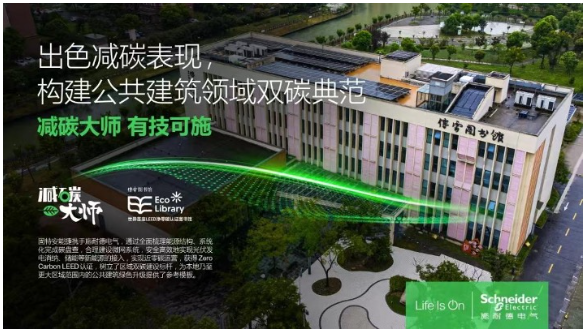
从工厂到建筑:施耐德电气新型电力系统落地案例综述
Zhong Guo Neng Yuan Wang· 2025-12-10 09:11
Core Insights - The construction of a new power system is a key pathway for energy transition and achieving carbon neutrality goals, driven by Schneider Electric's dual focus on digitalization and electrification [1][10] - Schneider Electric's first New Power System Innovation Center opened in Suzhou, marking a significant step in technology research and application in the field [2][10] Group 1: Innovation Center and Technology Development - The Innovation Center focuses on key technologies and application needs, providing integrated hardware and software solutions throughout the lifecycle of energy management [2] - Key technological areas include direct current technology, solid-state technology, and energy operation management, aimed at addressing technical challenges in grid upgrades and new energy ecosystems [2] Group 2: Industrial Applications - Schneider Electric's comprehensive solutions in industrial settings help high-energy-consuming enterprises achieve refined and green energy management [4] - A case study of a leading home appliance manufacturer showed a 98% local consumption rate of photovoltaic energy, saving 7.3 million kWh annually and reducing carbon emissions by 6,710 tons [4] Group 3: Public Building Solutions - The "New Power Green Triangle" solution integrates energy sources, networks, loads, and storage to facilitate low-carbon transformation in public buildings [5] - The Fulei Library project achieved an 88% self-consumption rate of photovoltaic energy and received LEED net-zero carbon certification, demonstrating effective energy management [6] Group 4: Commercial Building Innovations - Schneider Electric explored the potential of fully direct current buildings in the ABN-Amro CircI bank project, reducing energy loss and enhancing safety and efficiency [8] - The implementation of a DC 350V distribution and microgrid system showcased the technical potential of direct current technology in improving energy utilization [8] Group 5: Green Infrastructure and Cost Optimization - In a large industrial park case, Schneider Electric's solutions achieved over 50% green electricity self-sufficiency and reduced electricity costs by 0.2 yuan per kWh [9] - A project at a 5A scenic area parking lot focused on near-zero carbon charging stations, reducing carbon emissions by 39% and electricity costs by 0.135 yuan per kWh [9] Group 6: Overall Impact and Future Outlook - Schneider Electric's successful applications in the new power system have transitioned from conceptual ideas to practical implementations across various scenarios [10][11] - The integration of digitalization and electrification in energy management is expected to play a foundational and long-lasting role in constructing new power systems [11]

中国石油天然气冬供全面进入数智时代
Zhong Guo Neng Yuan Wang· 2025-12-10 09:10
Core Viewpoint - The article highlights the advancements in China's natural gas supply chain, emphasizing the integration of digital technologies and smart systems to enhance efficiency and safety in operations during the winter heating season [2][7]. Group 1: LNG Supply and Operations - A ship carrying 150,000 cubic meters of LNG docked at the Jiangsu Rudong LNG receiving station, marking the 20th LNG vessel received since the winter supply began [2]. - The maximum daily gasification output reached 84 million cubic meters, setting a historical high for gasification capacity [2]. - The National Development and Reform Commission predicts a longer heating season with peak energy demands expected to reach historical highs [2]. Group 2: Digital and Smart Technologies - China National Petroleum Corporation (CNPC) is integrating big data, IoT, and simulation technologies into the entire natural gas supply chain, marking the transition to a "smart" era in natural gas supply [2]. - The use of an explosion-proof inspection robot has increased inspection efficiency, allowing one person to operate a robot for eight inspections a day, compared to the previous requirement of two people for four inspections [4]. - Various advanced technologies, including laser gas detection vehicles and pipeline sentinels, are now standard in CNPC's operations, significantly improving inspection efficiency and accuracy [5]. Group 3: Operational Systems and Safety - The Jiangsu Rudong LNG receiving station employs six key systems, including distributed control and safety instrument systems, to ensure stable and efficient operations [5]. - These systems work together like a "nervous network," gathering vast amounts of information to assist staff in making precise judgments and actions, while also providing timely alerts in case of anomalies [5]. Group 4: Customer Service and Digital Empowerment - CNPC is developing a digital empowerment system that integrates smart operations, sales, and customer service, improving cross-regional dispatch response efficiency by 30% and data sharing efficiency by 40% [7]. - The company is transforming gas management through a "smart network" that allows real-time collaboration across various operational scenarios [8]. Group 5: Supply Capacity and Impact - CNPC's energy network covers 31 provinces and Hong Kong, with an annual gas supply exceeding 240 billion cubic meters, supporting key sectors such as agriculture, electricity, industry, and transportation [9]. - The company aims to ensure a balanced supply and demand during the heating season by closely monitoring gas supply conditions and temperature changes [9].


协同创新结硕果!陕鼓动力携手宁夏润夏完成国内首例硝酸机组“汽改电”项目
Zhong Guo Neng Yuan Wang· 2025-12-10 09:03
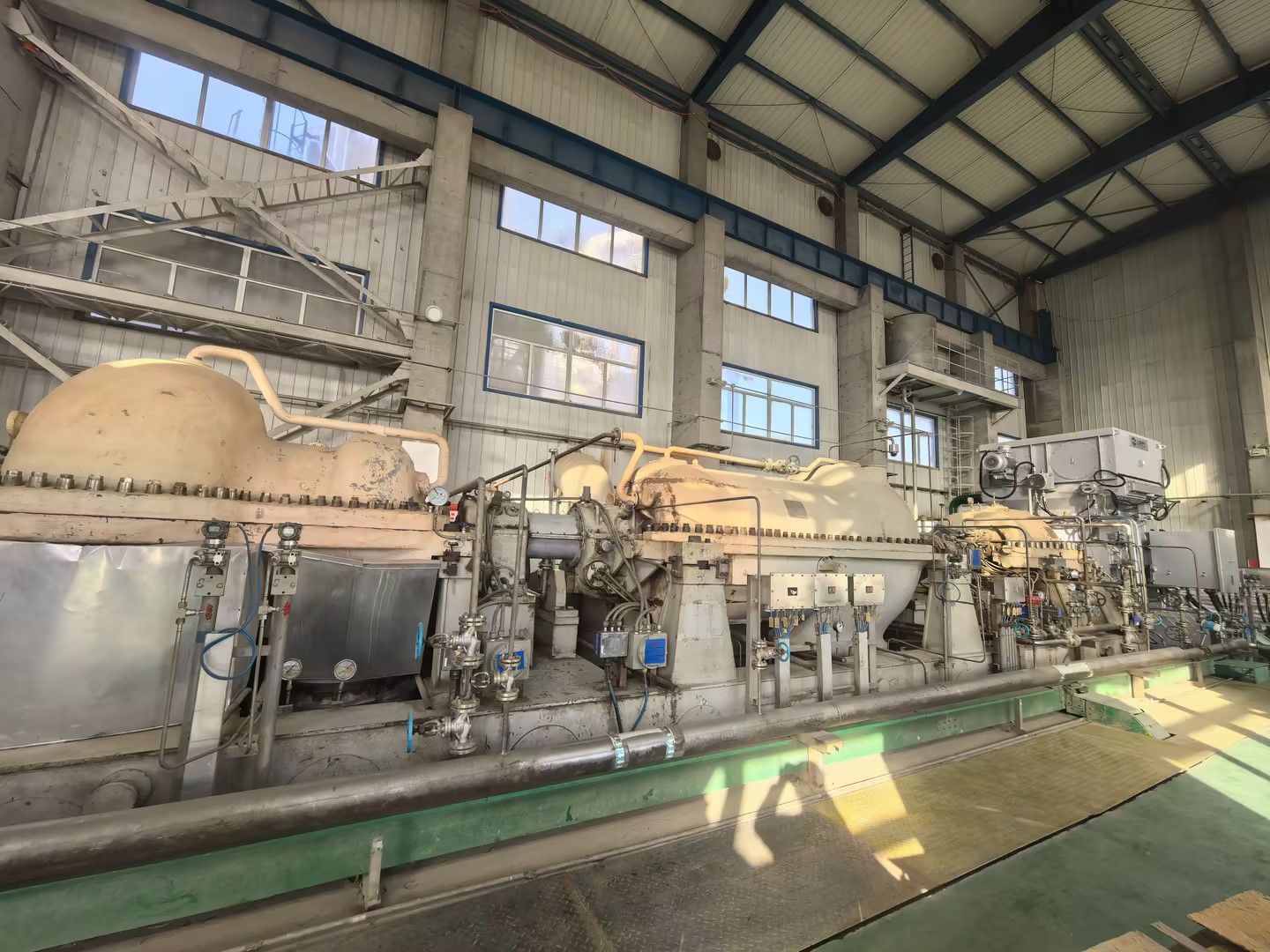
Core Insights - Ningxia Runxia Energy Chemical Co., Ltd. has successfully tested a domestically produced high-speed motor for its 150,000 tons/year nitric acid unit, marking a significant technological breakthrough in the field of nitric acid production in China [1] - The project, contracted by Xi'an Shaangu Power Co., Ltd., demonstrates a replicable and efficient domestic technology path for high-speed motor-driven nitric acid units, contributing to the low-carbon upgrade of China's process industry [1][3] Industry Context - The implementation of the "dual carbon" strategy in China has led to the shutdown or transformation of traditional coal-fired boilers, necessitating a green transition in high-energy-consuming industries [3] - Companies face the choice of either investing heavily in new steam systems or seeking new driving methods, such as the "steam-to-electric" conversion, which offers advantages like reduced equipment, smaller footprint, and higher efficiency [3] Technological Advancements - Shaangu has developed the largest operational "360,000 tons/year high-efficiency wide working condition nitric acid unit" in China, showcasing its leading technology and extensive experience in the field [3][4] - The project involved deep collaborative research and development, addressing challenges such as critical speed matching and control system integration, ensuring high-quality project execution [4][5] Strategic Implications - The successful implementation of the "steam-to-electric" conversion not only represents a breakthrough in domestic production but also positions Shaangu as a leader in defining technological paths and standards for the industry [5] - This shift reflects a broader transformation of the industrial ecosystem, moving from merely providing key equipment to leading the upgrade of the entire supply chain in alignment with national low-carbon industrial goals [5]

BMI谨慎看好明年全球采矿业前景
Zhong Guo Neng Yuan Wang· 2025-12-10 08:19
Group 1 - The core viewpoint of the report is a cautiously optimistic outlook for most metals in 2026, with expectations of slight price increases due to reduced tariff uncertainties, strong demand related to net-zero emissions transitions, and supply tightness [1][2] - BMI predicts that gold prices will continue to rise in 2026 but may decline below $4,000 per ounce later in the year as monetary easing policies tighten, particularly with the Federal Reserve potentially halting interest rate cuts [2][3] - The report emphasizes that industrial policies will remain a key strategy for countries to secure critical minerals, primarily from the EU and the US [4] Group 2 - Governments are expected to adopt a dual approach by expanding domestic capacity while stabilizing overseas supply through investments and strategic partnerships [5] - The strong merger and acquisition momentum in the metals and mining sector is anticipated to continue into 2026, focusing on minerals required for energy transitions, including copper, lithium, and rare earths [5][6] - Investment in mining projects in frontier markets is expected to remain a focus in 2026, with a shift towards risk-averse development projects [7][8]
国网张家口供电公司经开供电中心:筑牢供暖用电防线 护航高校温暖过冬
Zhong Guo Neng Yuan Wang· 2025-12-10 08:08
Group 1 - The focus of the news is on ensuring stable and safe electricity supply for winter heating in educational institutions, specifically at Hebei University of Architecture [1][2] - The State Grid Zhangjiakou Power Supply Company organized a comprehensive inspection of the heating systems, particularly the electric boilers, using specialized tools to assess their performance and safety [1] - The inspection included monitoring key indicators such as electrical control systems, heating elements, grounding reliability, and temperature control systems to prevent equipment from operating under faulty conditions [1] Group 2 - The company has established a "one-on-one" exclusive service mechanism for universities, emphasizing the importance of safety in winter heating for students and staff [2] - Staff provided training to campus management on daily operation, emergency response, and winter safety electricity usage, assisting in the development of maintenance records and emergency power supply plans [2] - The company plans to increase the frequency of equipment inspections in key areas, including universities and residential communities, while ensuring 24-hour emergency response readiness and adequate repair materials [2]

强势突破10万元/吨!碳酸锂价格创一年半新高,行业“拐点”来了?
Zhong Guo Neng Yuan Wang· 2025-12-10 06:54
Group 1 - The lithium carbonate industry is entering a new cycle after a deep adjustment, with futures prices recently breaking through 100,000 yuan/ton, reaching a new high since June of the previous year [1] - As of December 3, the main contract for lithium carbonate futures was trading between 92,500 and 97,600 yuan/ton, with a closing price of 93,700 yuan/ton [1] - Analysts attribute the price increase to an optimized industry structure and improved demand, indicating a recovery in industry prosperity [1] Group 2 - In the spot market, battery-grade lithium carbonate prices are also in the range of 90,000 to 100,000 yuan/ton, with an average price of 94,350 yuan/ton as of December 3 [2] - The simultaneous rise in futures and spot prices is supported by strong demand expectations and market confidence, driven by rapid growth in the energy storage and new energy vehicle markets [2] - By December 2025, China's production capacity for power, energy storage, and consumer batteries is expected to reach 220 GWh, a 5.3% increase year-on-year [2] Group 3 - The rebound in lithium prices is expected to shift profit margins back to upstream resource companies, with several lithium salt companies showing improved performance in their third-quarter reports [3] - Tianqi Lithium's net profit for the first three quarters was 180 million yuan, recovering from a loss of 5.701 billion yuan in the same period last year [3] - Ganfeng Lithium reported a net profit of 26 million yuan for the first three quarters, a year-on-year increase of 103.99% [3] Group 4 - Companies in the lithium industry are actively seizing opportunities to focus on technological innovation and cost reduction to enhance core competitiveness [5] - Salt Lake Co. has implemented a dual-driven strategy of full industry chain collaboration and lean management to improve cost control and operational efficiency [5] - The company is also advancing digital transformation to enhance overall operational effectiveness and has established an integrated mechanism for production, supply, sales, and storage to adapt to market dynamics [5] Group 5 - To manage price volatility, companies are encouraged to utilize financial tools for risk management, such as hedging with futures contracts to stabilize raw material costs or lock in product sales profits [6] - Analysts suggest using a combination of put and call options to protect inventory value and reduce procurement costs during price fluctuations [6] - The effective use of financial derivatives is seen as a way to enhance risk management capabilities and support stable production operations for companies in the industry [6]


多措并举迎战寒流保供电
Zhong Guo Neng Yuan Wang· 2025-12-10 03:52
目前,沁县电网运行平稳,各项防寒保供电措施落实有序。下一步,该公司将持续加强监测与应急准 备,确保电网安全稳定运行。(张高峰) "三项温度均在正常范围内。"12月9日,在10千伏城西594线路联络开关处,国网沁县供电公司共产党员 服务队员与青年突击队员正在对联络开关进行测温。 近日,气象局发布雨雪冰冻蓝色预警,预警时段为12月11日至13日。为充分应对入当以来的第一场大范 围降雪降温,沁县公司迅速响应,坚决扛牢电力保供主体责任,围绕"早部署、精运维、优服务"主线, 确保电力供应平稳有序。一是精准研判,夯实电网"筋骨"。该公司启动冬季负荷专项研判,结合历史供 电数据与返乡人流趋势,精准梳理电网薄弱环节。通过推进配网改造升级、优化城乡网架结构、实施台 区低压改造与设备更新,有效提升了电网对"煤改电"等新增负荷的接纳与调控能力,为冬季可靠供电提 供了坚强网架支撑。二是科技赋能,开展立体巡检。依托"人工+科技"巡检模式,该公司组织运维力量 对变电站、输电线路开展"拉网式"排查。运用无人机、红外测温仪等装备,精准发现接头过热、绝缘子 老化等隐患。针对秋冬季易发的树线矛盾与线下烧荒风险,集中开展通道隐患专项治理,累计修剪 ...
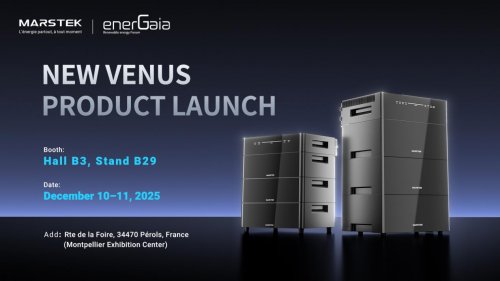
MARSTEK于法国蒙彼利埃国际可再生能源展重磅发布全新VENUS储能系统
Zhong Guo Neng Yuan Wang· 2025-12-10 03:28
Core Insights - MARSTEK showcased its latest VENUS series energy storage and smart charging products at the International Renewable Energy Exhibition in Montpellier, France, on December 10-11, 2025 [1] Product Highlights - The MARSTEK VENUS G is a powerful 5kW bidirectional AC-coupled energy storage system designed for advanced home energy management, featuring a peak output power of 10kW and a flexible capacity range from 5kWh to 30kWh, with 500V V-Boost technology ensuring independent control of each battery cell [3] - The 7kW single-phase electric vehicle AC charger is designed to seamlessly integrate with the MARS I PLUS system, offering dynamic power adjustment from 1.4kW to 7.4kW and automatic load balancing, ensuring durability for indoor and outdoor use [4] - The MARSTEK VENUS D (AC version) is a compact, stackable energy storage system providing 2.5kW bidirectional grid power and backup capability, with each module having a capacity of 2.56kWh, expandable to 15.36kWh, and features AI-driven optimization for efficiency and cost reduction [4] Comprehensive Product Matrix - At the exhibition, MARSTEK not only unveiled the future-oriented VENUS series but also systematically showcased its complete product matrix, including balcony storage solutions and established home energy storage systems, highlighting its innovative capabilities in empowering global household energy [5]
动储需求旺盛,看好磷化工产业链发展前景 | 投研报告
Zhong Guo Neng Yuan Wang· 2025-12-10 03:07
Core Viewpoint - The report from Dongwu Securities highlights the expected growth in demand for phosphate rock driven by emerging sectors, while traditional demand is projected to decline. The overall supply and demand dynamics for phosphate rock and iron phosphate are analyzed for the years 2024 to 2026 [1][2][3]. Demand Side - Phosphate rock demand in China is projected to be 11,320 million tons in 2024, with expectations of 11,802 million tons and 12,414 million tons in 2025 and 2026 respectively. The actual increase in demand is estimated at 482 million tons and 612 million tons [1]. - Emerging sectors, particularly energy storage and power batteries, are expected to drive demand for phosphate rock, with an increase of 393 million tons and 431 million tons in 2025 and 2026 respectively. Iron phosphate is anticipated to contribute significantly to this demand [1]. - Traditional demand for phosphate fertilizers is expected to weaken due to rising raw material prices, with a forecasted decline in phosphate fertilizer production in early 2025 [1]. - Iron phosphate demand is projected to reach 214 million tons in 2024, increasing to 325 million tons and 449 million tons in 2025 and 2026, respectively, with significant contributions from energy storage [1]. Supply Side - Phosphate rock production capacity in China is expected to be 19,447 million tons in 2024, with projections of 21,732 million tons and 24,762 million tons for 2025 and 2026. Effective capacity and production are also expected to increase correspondingly [2]. - The supply of phosphate rock is significantly impacted by environmental safety incidents, leading to a gap between planned and actual production capacity [2]. - The iron phosphate industry is characterized by long-term overcapacity, with effective capacity and production expected to rise from 426 million tons and 205 million tons in 2024 to 499 million tons and 540 million tons in 2025 and 2026, respectively [2]. Price Outlook - The operating rate for phosphate rock capacity is projected to be 58% in 2024, with expectations of 57% and 54% in 2025 and 2026. High-grade phosphate rock prices are expected to remain elevated, while low-grade prices may face slight pressure [3]. - The iron phosphate market is anticipated to experience tight supply conditions, with operating rates expected to improve significantly in 2025 and 2026, indicating a potential supply gap [3]. Recommended Companies - Companies with phosphate iron and phosphate rock layouts are recommended, including Tianci Materials, Hunan YN, and Zhongwei Co. [4]. - Integrated chemical companies with phosphate iron production and phosphate rock resources are expected to benefit from rising phosphate iron prices, with suggested companies including Chuanheng Co., Xingfa Group, and others [4].