Zhong Guo Neng Yuan Wang

Search documents
丰宁公司:绿色希冀筑牢消防安全防线
Zhong Guo Neng Yuan Wang· 2025-11-25 08:00
Core Points - The event focused on "Fire Safety for All, Life First" with an emphasis on "Safe Use of Fire and Electricity" [1] - The company distributed over 260 promotional flyers, 180 safety manuals, and 120 gifts, reaching more than 500 people [2] Group 1 - The event was held on the 34th National Fire Day, aiming to raise awareness about fire safety and electrical safety among the public [1] - Promotional materials included the "Home Electrical Safety Manual" and "Electric Vehicle Charging Safety Tips," highlighting the dangers of improper electrical practices [1] - The company plans to continue its "Fire Safety Promotion into the Community" initiative, targeting various groups to integrate safety knowledge into daily life [2]
丰宁公司:绿色希冀保障设备过冬穿“棉衣”
Zhong Guo Neng Yuan Wang· 2025-11-25 07:59
Core Viewpoint - The company has implemented a "thermal blanket" insulation project for circuit breaker mechanism boxes to mitigate the risks of equipment failure due to extreme low temperatures in the high-cold region of Fengning, ensuring safe winter operation of electrical equipment [1][2]. Group 1: Project Implementation - The company has organized a tailored insulation treatment for each circuit breaker mechanism box, combining external insulation and internal heating to maintain a temperature above 5℃ [2]. - The thermal blanket has effective insulation and waterproofing properties, protecting against wind, snow, and water infiltration [2]. - As of now, the company has completed the installation of thermal blankets on 31 circuit breaker mechanism boxes across 6 substations in the high-cold region [3]. Group 2: Operational Measures - The company emphasizes meticulous execution of each step in the insulation process to ensure both insulation effectiveness and equipment safety [2]. - Future plans include enhancing winter equipment inspections and closely monitoring temperature changes and equipment status to optimize insulation measures [3].
内蒙古鄂温克电厂食堂职工实现100%持证上岗
Zhong Guo Neng Yuan Wang· 2025-11-25 05:45
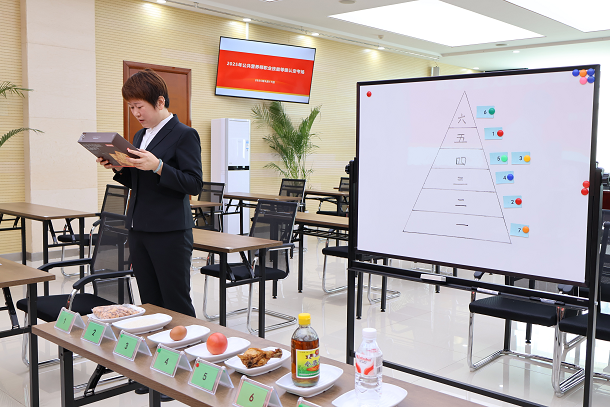
Core Insights - The company has successfully trained 36 staff members to obtain nutritionist qualifications, enhancing the capabilities of its cafeteria as part of the A-level health cafeteria initiative [1][3] Group 1: Training and Development - The cafeteria has implemented a comprehensive training program focused on nutrition, which began in July 2023, aiming for a "health upgrade" [3] - Staff members engaged in systematic study of nutrition fundamentals, dietary principles, and special nutritional needs during their training [3] - The training included theoretical lectures, case discussions, and practical applications, fostering a collaborative learning environment among staff [3] Group 2: Achievements and Impact - All 36 participants successfully passed their assessments, achieving a 100% certification rate [3] - This initiative represents a significant enhancement of the cafeteria team's professional skills and aligns with the company's "people-oriented" philosophy [3] - The successful training and certification contribute to the overall goals of the company's weight management program for the year [3]

内蒙古鄂温克电厂“理论+实操”筑牢消防安全防线
Zhong Guo Neng Yuan Wang· 2025-11-25 05:45
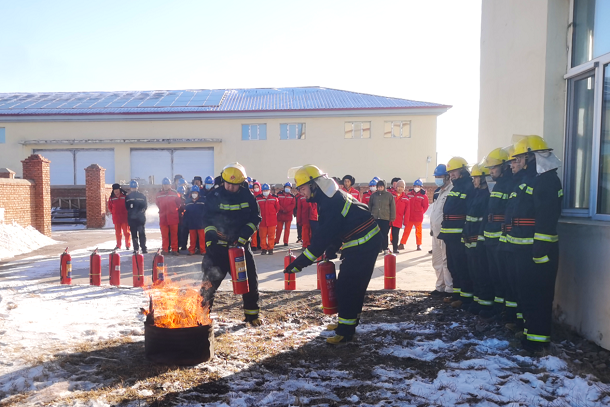
Core Viewpoint - The training session on fire safety conducted by the Ewenki Power Plant emphasizes the importance of practical experience in mastering firefighting techniques and enhancing emergency response capabilities [1][3]. Group 1: Training Overview - The Ewenki Power Plant organized a fire safety course that included both theoretical knowledge and practical experience, aimed at better understanding firefighting operations [1]. - The training covered the correct use of various firefighting equipment, including fire extinguishers, fire hydrants, and positive pressure breathing apparatus, focusing on their operational methods and precautions [3]. Group 2: Practical Application - Participants engaged in hands-on practice by simulating real fire scenarios, allowing them to experience the proper techniques for using fire extinguishers, ensuring they grasped essential operational skills [3]. - The training not only disseminated fire safety knowledge but also improved the company's emergency response capabilities, fostering a culture of collective participation in fire safety efforts [3].
内蒙古鄂温克电厂消防月系列活动筑牢安全防线
Zhong Guo Neng Yuan Wang· 2025-11-25 05:45
Core Viewpoint - The company is actively enhancing its fire safety measures through a series of comprehensive activities aimed at improving awareness and skills among employees [1][3]. Group 1: Fire Safety Activities - The company has launched a series of fire safety promotional activities focusing on five key measures: learning, practicing, checking, promoting, and verifying [1]. - An online quiz on fire safety knowledge was organized, encouraging participation from all employees with prizes to make learning engaging [2]. - Practical training sessions were conducted by professional instructors, covering essential skills such as the operation of fire extinguishers and initial fire response procedures [2]. Group 2: Risk Prevention and Emergency Preparedness - The company implemented a thorough inspection process to identify and rectify fire hazards, ensuring no areas are overlooked [2]. - The design and placement of informative fire safety display boards in key areas aim to enhance the communication of fire safety messages [2]. - Fire evacuation drills were conducted, successfully testing the emergency response plan and the team's ability to work together during a crisis [2][3]. Group 3: Overall Impact - The series of activities has significantly raised the fire safety awareness and skills of the company's employees, thereby strengthening the overall emergency response capabilities [3].
内蒙古鄂温克电厂“减存+增收”处置废油助企提效
Zhong Guo Neng Yuan Wang· 2025-11-25 05:45
通过规范处置流程、筛选优质竞拍方等方式,该厂在确保废油处置环保合规的前提下,将废油资源转化 为企业的经济收益,助力企业增收创效,并进一步降低危险废物危害性,减轻环保储存压力,开辟出企 业绿色发展新通道。 在机组日常运维和检修过程中,该厂产生大量废油,因废油仓储空间受限,导致环保存储风险压力陡 增,根据国家危险废物处置相关要求,该厂主动出击,通过国能e拍平台,快速完成废油处置,短期内 清空存量废油,大幅降低仓储场地的环保运维压力,同时避免废油长期存储可能产生的安全隐患,为后 续管理腾出存储空间,实现"存量清零风险递减"的环保目标。本次处置,该厂以1800元/吨起拍,最终 以3350元/吨的成交价完成交易,较起拍价增收1550元/吨,直接提升了非电力业务收益,这不仅对冲部 分生产运营成本,更证明电厂废料并非"负担",而是可挖掘的"隐形资产"。 截至11月14日,鄂温克电厂依法合规处置废油10.98吨,创效3.68万元,有效保障企业生产和生态环境安 全,为该厂绿色发展奠定坚实基础。 ...
吕佳清:推动中国进入食品级再生塑料新时代的拓路人
Zhong Guo Neng Yuan Wang· 2025-11-25 03:39
Core Viewpoint - The foreign-funded food-grade recycled plastic factory in Jiangxi, operated by Eurogreen Asia Group, exemplifies China's transition towards a high-quality circular economy, driven by national strategies focused on "reducing plastic, lowering carbon emissions, and recycling" [1][3]. Company Overview - Eurogreen Asia Group's Jiangxi factory, known as Eurogreen Longyi New Materials (Jiangxi) Co., Ltd., has become one of the few foreign-funded factories in China capable of producing food-grade rPET (recycled polyethylene terephthalate) in the past two years [3][4]. - The factory's transformation is led by Ms. Lu Jiaqing, who has over 15 years of experience in the recycled plastics industry and emphasizes the importance of a transparent, credible, and replicable system for sustainable operations [3][4]. Technological and Operational Upgrades - The factory underwent a comprehensive upgrade, including redesigning production lines to meet food-grade rPET requirements, enhancing control precision in key processes, and establishing a traceable management system in line with international standards [4][5]. - The factory has achieved stable product quality, allowing it to enter the supply chains of international brands, a significant milestone for domestic enterprises [4][5]. Industry Impact and Policy Engagement - Lu Jiaqing aims to extend the factory's successful model to the broader industry, addressing structural challenges such as policy limitations, technical standards, and market recognition in China's food-grade recycled plastics sector [5][6]. - As a leader in the EU Chamber's working group on promoting open food-grade rPET application policies, Lu has been actively involved in policy discussions and industry feedback, advocating for necessary breakthroughs to elevate China's recycling efforts from "mass recovery" to "high-value recycling" [5][6]. Future Outlook - The Jiangxi factory is changing the narrative of China's role in the global recycled plastics market, aligning technical standards with international benchmarks and establishing a reliable supply chain that meets long-term contract demands [6][7]. - The factory's practices indicate a potential shift in China's plastic circular economy from a follower to a leader, as it adapts to increasing sustainable procurement demands from international brands and stricter regulations [6][7].
人形机器人,产业链协同开启规模化时代 | 投研报告
Zhong Guo Neng Yuan Wang· 2025-11-25 03:05
Core Insights - The Shanghai Composite Index decreased by 3.77% during the week of November 17-21, 2025, with the machinery equipment sector declining by 4.78%, ranking 13th out of 31 in the Shenwan industry classification [1][2] - The machinery equipment industry's PE-TTM valuation fell by 4.73%, with the best-performing sub-sector being engineering machinery components, which increased by 4.80% [1][2] Industry Developments Humanoid Robots - Leading supply chain companies are establishing specialized, global manufacturing systems and accelerating core customer binding, entering a more certain phase of capacity preparation and order fulfillment [2] - Blues Intelligent Robot's Yong'an Park has commenced operations, achieving a full-process integration from new material R&D to core component manufacturing and assembly, with plans to double core component and assembly scale by 2026 [2] - Changying Precision disclosed that it generated approximately 35 million yuan in revenue from two overseas brands in H1 2025, with cumulative deliveries of humanoid robot components exceeding 80 million yuan by August 2025 [2] Semiconductor Equipment - Domestic semiconductor equipment is advancing from single-point breakthroughs to higher precision and more complete process paths, with continuous improvement in industry chain coverage and mass production validation [3] - Saiwei Electronics plans to invest up to 60 million yuan in Chip East to develop mature process lithography machines and related ecosystems, aiming for mass production by 2026 [3] - Zhongke Feimeng's first wafer flatness measurement device has been delivered to HBM customers, covering quality monitoring needs across various advanced processes [3] Controlled Nuclear Fusion - Recent procurement projects from plasma research facilities and fusion energy companies indicate a focus on integrated magnets, low-temperature loading, and complete equipment [4] - The current procurement includes 15 tons of Nb₃Sn superconducting wire with a budget of 75 million yuan and 290 km of REBCO superconducting tape with a budget of 35 million yuan [4] Investment Recommendations - The company suggests focusing on core component suppliers as leading robot manufacturers accelerate product cost reduction and channel expansion [4] - Attention is recommended for domestic equipment suppliers in the thin film deposition and storage testing chains [4] - The tungsten materials and temperature control systems in the controlled nuclear fusion engineering supply chain are expected to benefit from ongoing reactor projects [4]

美联储12月降息预期扰动,铜价高位震荡 | 投研报告
Zhong Guo Neng Yuan Wang· 2025-11-25 03:02
Group 1: Copper - The copper prices are under pressure due to the increasing divergence within the Federal Reserve regarding the potential interest rate cut in December, following better-than-expected U.S. non-farm payroll data [2] - The weekly price changes for copper are as follows: London copper down 1.38%, Shanghai copper down 1.43%, and U.S. copper down 1.07% [2] - Copper inventories across major exchanges have accumulated, with London copper at 155,000 tons (+14.22%), New York copper at 403,000 short tons (+5.66%), and Shanghai copper at 111,000 tons (+1.09%) [2] - Domestic electrolytic copper social inventory stands at 195,000 tons, showing a decrease of 3.28% [2] - The weekly operating rate for electrolytic copper rods is 70.07%, reflecting a week-on-week increase of 3.19 percentage points [2] - In the medium to long term, insufficient capital expenditure in copper mining and frequent supply-side disruptions may lead to a shift from a tight balance to a shortage in the copper supply-demand landscape, potentially driving prices upward [2] Group 2: Aluminum - Aluminum prices have retreated from high levels due to macroeconomic disturbances, with Shanghai aluminum down 2.32% to 21,500 yuan/ton [3] - The current price of alumina has decreased by 0.18% to 2,850 yuan/ton, while the main futures contract for alumina fell 3.22% to 2,731 yuan/ton [3] - The operating capacity for metallurgical-grade alumina reached 90.456 million tons per year, with a weekly operating rate down 0.77 percentage points to 80.40% [3] - London aluminum inventory is at 548,000 tons (-0.79%), while Shanghai aluminum inventory increased by 7.67% to 123,700 tons [3] - The domestic electrolytic aluminum operating capacity is nearing its ceiling, and with stable demand growth, a shortage may emerge next year, suggesting a potential upward trend in aluminum prices [3] Group 3: Lithium - Lithium carbonate prices have increased by 8.40% to 92,300 yuan/ton, while lithium spodumene prices rose by 8.25% to 1,089 USD/ton [4] - The weekly production of lithium carbonate is 22,100 tons, reflecting a 2.7% increase [4] - The inventory of lithium salts has been continuously reduced, indicating a tightening supply situation, with lithium carbonate experiencing 14 consecutive weeks of inventory reduction [4] - The production of lithium iron phosphate in October reached 394,000 tons, marking a year-on-year increase of 51% and a month-on-month increase of 11% [4] - The lithium sector is expected to enter a new demand-driven cycle, with companies in this space likely to see a profit turning point [4] Group 4: Cobalt - Cobalt prices are expected to continue rising due to a tight supply situation, with MB cobalt up 0.74% to 23.83 USD/pound and domestic cobalt prices up 2.02% to 405,000 yuan/ton [5] - The Democratic Republic of the Congo has lifted its cobalt export ban, transitioning to a quota system, but current approvals for cobalt intermediate exports remain pending [5] - The expected transportation time indicates that Congolese raw materials may not arrive until March 2026, maintaining a tight supply-demand balance in the cobalt market [5]
2025M1-10用电量同增5.1%,各地区电力市场化交易实施方案逐步出台 | 投研报告
Zhong Guo Neng Yuan Wang· 2025-11-25 02:04
Core Viewpoint - The report highlights a significant increase in electricity consumption across various sectors, with a total electricity consumption of 857.2 billion kWh in October, representing a year-on-year growth of 10.4% [2][3]. Summary by Category Electricity Consumption - In the first ten months of 2025, total electricity consumption reached 8.17 trillion kWh, showing a year-on-year increase of 5.1%. The breakdown by sector includes: - Primary industry: 1.262 billion kWh, up 10.5% - Secondary industry: 54.781 billion kWh, up 3.7% - Tertiary industry: 16.671 billion kWh, up 8.4% - Urban and rural residents: 353.2 billion kWh, up 6.9% [2][3]. Electricity Pricing and Coal Prices - The national average electricity purchase price in November 2025 decreased by 2% year-on-year but increased by 2.8% month-on-month. The price of thermal coal remained stable at 821 yuan/ton as of November 21, 2025 [3]. Hydropower Data - As of November 21, 2025, the water level at the Three Gorges Reservoir was 174 meters, consistent with previous years. The inflow and outflow rates showed significant increases of 41% and 70% year-on-year, respectively [3]. Generation Capacity and Power Generation - Cumulative power generation for the first ten months of 2025 was 7.43 trillion kWh, reflecting a year-on-year growth of 2.3%. The breakdown of generation sources includes: - Thermal power: -0.4% - Hydropower: -1.6% - Nuclear power: +8.7% - Wind power: +7.6% - Solar power: +23.2% [3]. Investment Recommendations - The report suggests focusing on undervalued thermal power investments, particularly in the Beijing-Tianjin-Hebei region, and highlights opportunities in charging pile and photovoltaic infrastructure investments. Key companies to watch include: - Thermal power: Jingtou Energy, Jingneng Power, Datang Power - Charging pile equipment: Teradyne, Shenghong Co. - Photovoltaic assets: Nanshan Energy, Longxin Group - Hydropower: Changjiang Power [4].